
McDonald's is actively introducing artificial intelligence technology worldwide to improve the operational efficiency of its 43,000 restaurants. This move is not only aimed at optimizing employees’ workflows, but also working to relieve the stress they face in their daily work. Brian Rice, McDonald's chief information officer, said the application of artificial intelligence technology will help employees better handle interactions with customers and suppliers, while also reducing service disruptions by predicting device failures, thereby improving overall service quality.
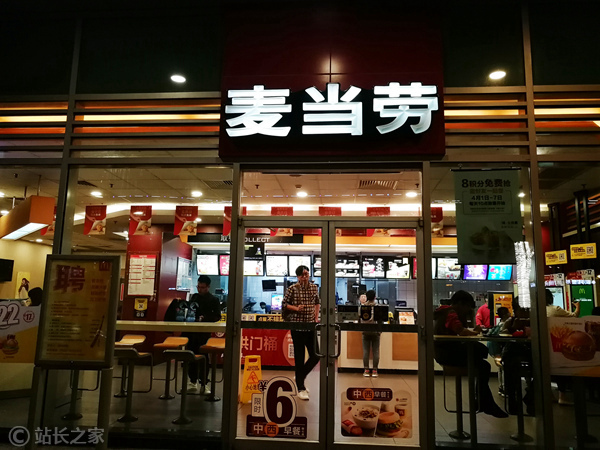
According to the Wall Street Journal, McDonald's has piloted an edge computing platform in some restaurants in the United States since last year and plans to promote it to more stores by 2025. The introduction of this technology has brought many innovations to restaurant operations. For example, through computer vision technology, a fixed camera in the kitchen can automatically check the accuracy of orders before customers pick up their meals, ensuring that every meal meets the standards. In addition, McDonald's has also cooperated with IBM to test an automatic ordering artificial intelligence system that can simplify the drive-thru ordering process and significantly improve the efficiency and accuracy of ordering.
McDonald's has also taken an important step in equipment management. By installing sensors in kitchen equipment, restaurants can collect data in real time, thereby predicting possible failures in equipment such as fryers or ice cream machines. This forward-looking maintenance method not only reduces service interruptions caused by equipment failures, but also extends the service life of the equipment. In addition, edge computing technology also provides restaurant managers with more convenience to help them handle administrative tasks more efficiently. Similar to the "general artificial intelligence virtual manager" that Taco Bell and Pizza Hut are testing, McDonald's technology will also greatly improve scheduling efficiency and reduce management burdens.
Although McDonald's has shown great enthusiasm in promoting artificial intelligence technology, Sandeep Unni, a retail analyst at market research firm Gartner, pointed out that McDonald's still faces many challenges in popularizing this technology to franchised stores and self-operated stores. First, the deployment cost of technology is a factor that cannot be ignored, especially when promoted globally, cost control will become a key issue. Secondly, restaurant operation models and cultural differences in different regions may also affect the implementation effect of technology. Therefore, McDonald's needs to fully consider these factors in the process of technology promotion to ensure its smooth implementation.
Overall, McDonald's is revolutionizing its global restaurant operations by introducing artificial intelligence technology. From automatic checking of order accuracy to predicting equipment failures to simplifying administrative tasks, these innovations not only improve employees' work efficiency, but also bring customers a better dining experience. Despite some challenges in the promotion process, McDonald's' move undoubtedly sets a new benchmark for the digital transformation of the catering industry.