
Since its release in November 2022, ChatGPT has profoundly changed the model of academic writing. A new study of PubMed literature shows that large language models (LLMs) such as ChatGPT have been widely used in writing academic papers, and their impact has even exceeded the COVID-19 epidemic. By analyzing word usage frequency and paper publication status, the researchers revealed the differences in the use of LLMs in different disciplines, countries and journals, as well as the opportunities and challenges this brings.
Since OpenAI released ChatGPT in November 2022, the writing ecology in academia has undergone earth-shaking changes. The latest research reveals that scientists are increasingly relying on artificial intelligence tools like ChatGPT to write research papers, a trend that will be particularly significant in 2024.
Researchers at the University of Tübingen in Germany conducted an in-depth analysis of 14 million PubMed abstracts between 2010 and 2024. They were surprised to find that at least 10% of research papers published in 2024 used large language models (LLMs) such as ChatGPT to assist in the writing process. In some specific fields and countries, this proportion is even alarmingly high.
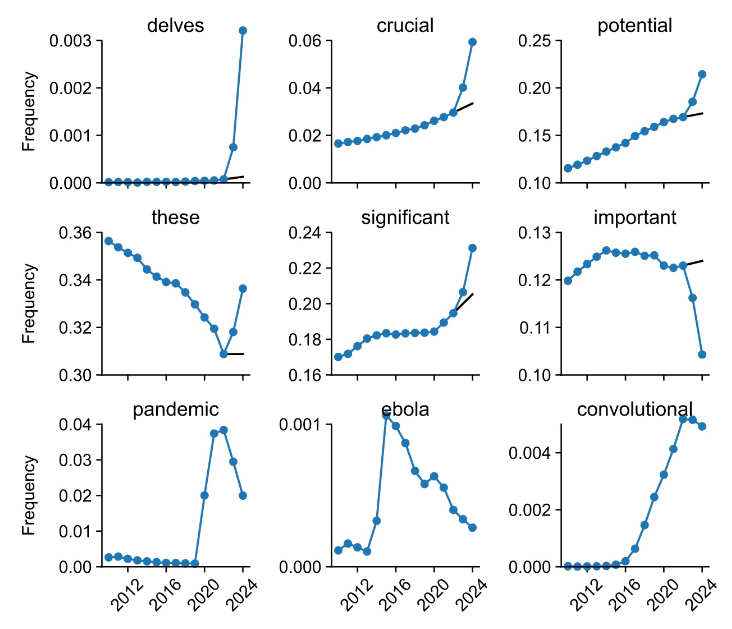
The research results show that LLMs have a profound impact on scientific literature, even surpassing the impact of the COVID-19 epidemic on academic writing. By analyzing changes in word usage frequency, the researchers noticed that the frequency of use of many specific style words, such as "delves", "showcasing" and "underscores", has increased significantly since the release of ChatGPT, reflecting the scientists' shift in writing When writing papers, ChatGPT is increasingly used to polish and modify the text.
The research also revealed differences across disciplines, countries and journals. In fields such as computer science and bioinformatics, LLMs have the highest usage rate, reaching 20%. The usage rate of LLMs is also relatively high in non-English-native countries such as China, South Korea and Taiwan, while the usage rate in English-native countries such as the United Kingdom and New Zealand is lower. In addition, high-prestige journals such as "Nature", "Science" and "Cell" have lower usage rates of LLMs, while some open access journals such as "Sensors" and "Cureus" have higher usage rates.
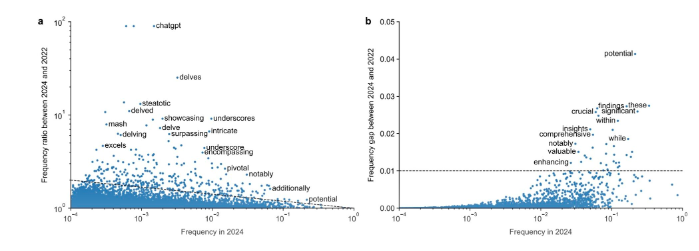
LLMs do an excellent job of improving the language quality and fluency of papers, but they also raise some concerns. For example, LLMs may introduce inaccurate information or reinforce existing biases in scientific discussions. Therefore, how to use these tools reasonably to ensure the authenticity and fairness of academic writing has become an important issue that needs to be solved urgently.
Academia needs to develop clear policies and guidelines regulating the use of LLM in academic writing. Some publishers and funding agencies have banned the use of LLMs in peer review or require public statements about their use. As these tools continue to gain popularity, academics may need to revisit and adjust related policies to ensure the high quality and reliability of scientific research.
This study not only provides us with a comprehensive perspective on the impact of LLMs in academic writing, but also sounds a wake-up call for us. While enjoying the convenience brought by AI, we should also think deeply about how to use this tool to promote rather than hinder the progress of science.
This study provides valuable data and perspective for our understanding of the impact of LLMs on academic writing, and also highlights the importance of maintaining academic integrity and research quality while utilizing AI tools. In the future, the academic community needs to actively explore the reasonable and standardized use of LLMs to ensure that they become an effective tool to promote scientific progress.