PowerSync_System
1.0.0

This project proposes an optimized power delivery solution for EV charging stations using leader election and distributed computing algorithms. By applying cyber-physical systems (CPS) concepts, it enhances charging infrastructure efficiency, supporting sustainable and intelligent energy management.
The project has been implemented in MATLAB Simulink, utilizing the SimEvents, Stateflow, and Simulink Test libraries.

The simulation was developed in MATLAB Simulink R2024a. To run the simulation, the following add-ons must be installed:
Then, follow these steps:
CPS_PowerSync_System.slx, rand.py, and check_variables.m are all within the same directory.CPS_PowerSync_System.slx.Data/base_ws_variables.mat.In the Test directory, there is a modified version of CPS_PowerSync_System.slx, set up to execute and verify the model requirements through the relevant assessments.
To run the tests and analyze the verification of specifications:
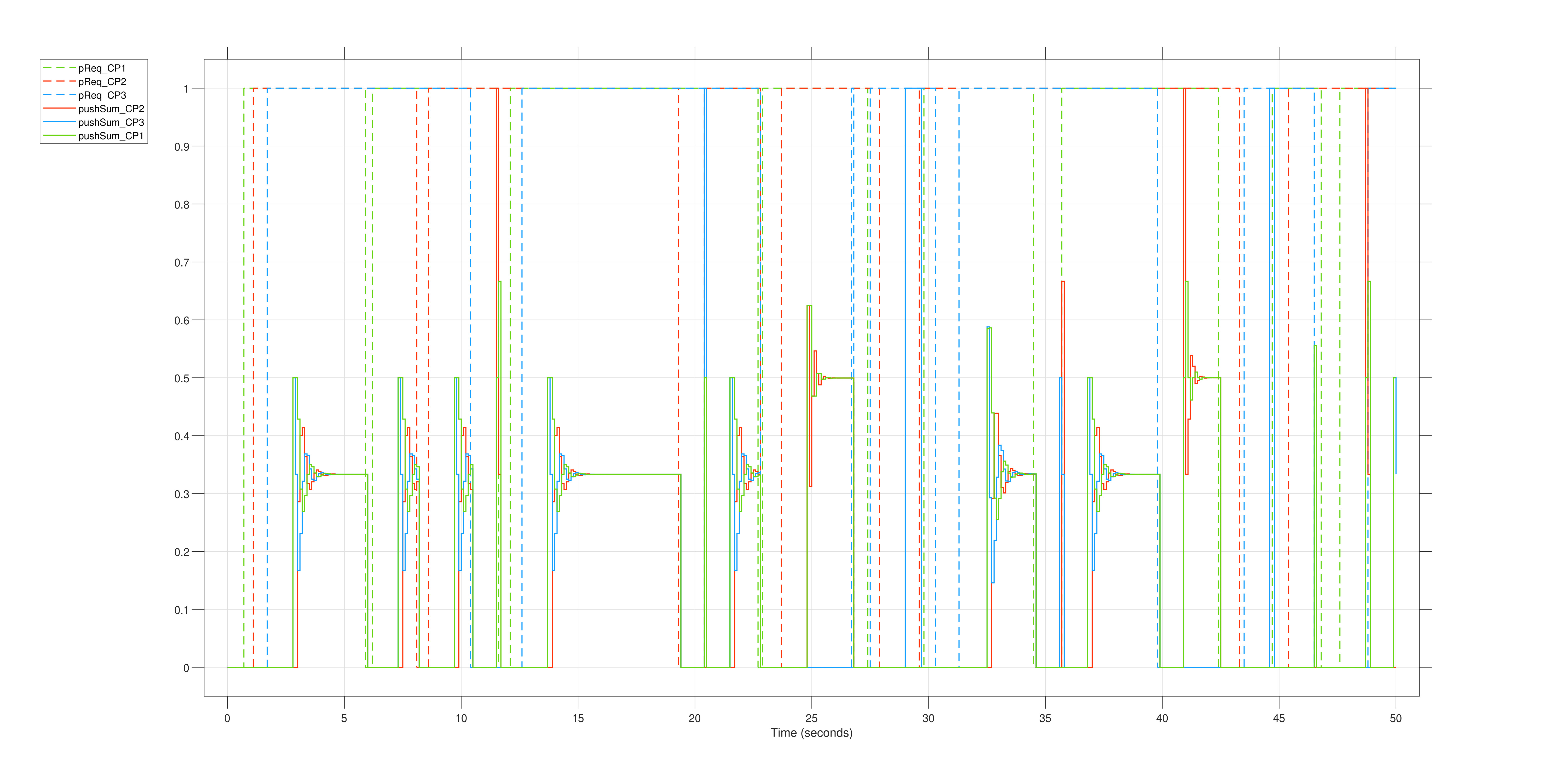
Test/TestCase.mldatx.The functions depicted with continuous lines represent the average value estimates calculated through the Push-Sum modules. The dotted lines represent the power requests. The colors distinguish the different nodes (charging points) in the network.
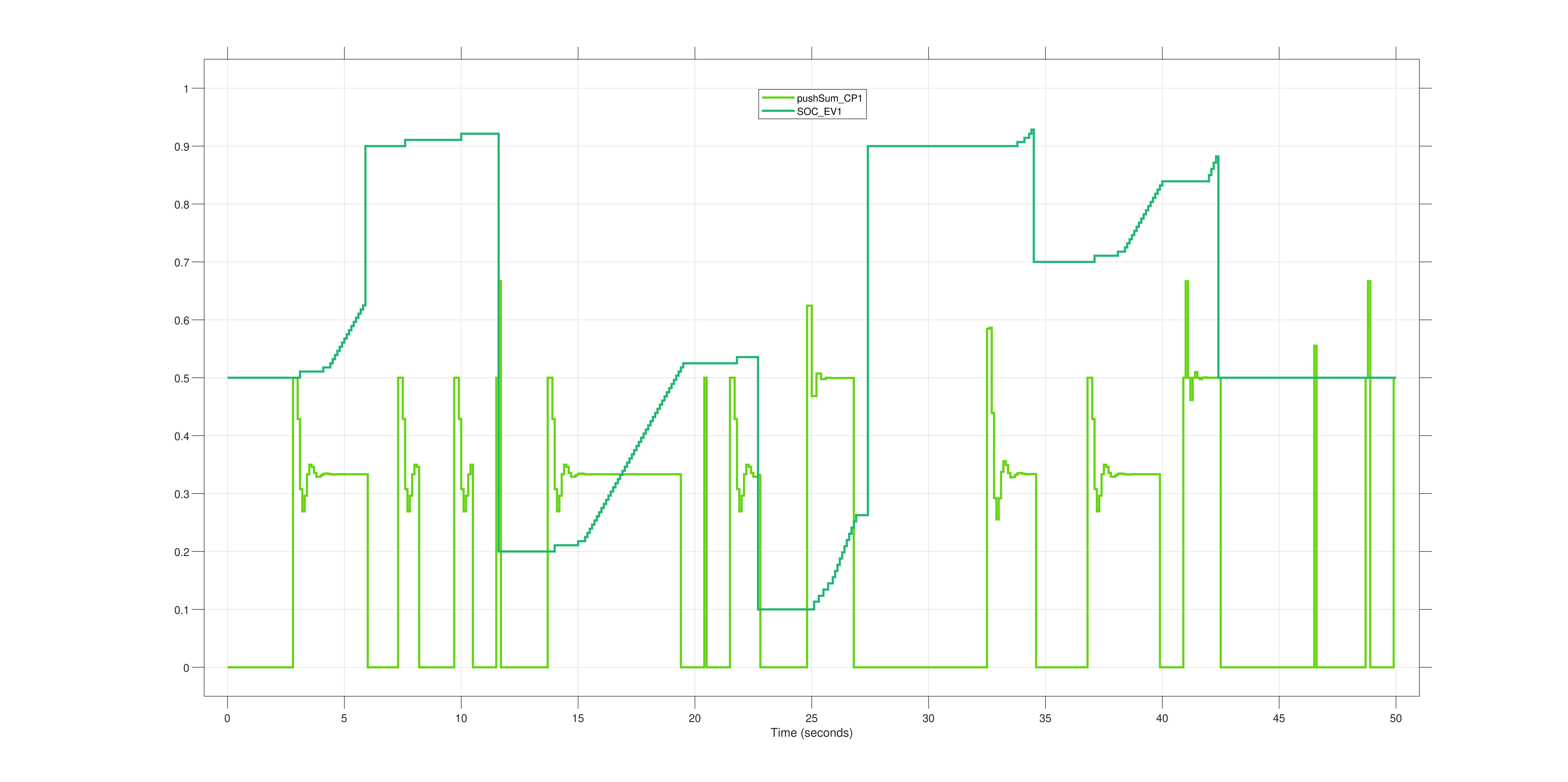
The function represented by the darker color shows the SoC (State of Charge) of the vehicle, while the lighter color represents the average value estimate calculated via the Push-Sum module at charging point 1.
The project has been developed by Gabriele Ciccotelli and Roberto Iuliano.





