face.evoLVe
1.0.0

| ผู้เขียน | Jian Zhao |
|---|---|
| หน้าแรก | https://zhaoj9014.github.io |
รหัสของ face.evolve เปิดตัวภายใต้ใบอนุญาต MIT
✅ CLOSED 02 September 2021 : Baidu Paddlepaddle ควบรวมกิจการอย่างเป็นทางการ Evolve เพื่ออำนวยความสะดวกในการวิจัยและการใช้งานเกี่ยวกับการวิเคราะห์ที่เกี่ยวข้องกับใบหน้า (ประกาศอย่างเป็นทางการ)
✅ CLOSED 03 July 2021 : ให้รหัสการฝึกอบรมสำหรับเฟรมเวิร์ก PaddlePaddle
✅ CLOSED 04 July 2019 : เราจะแบ่งปันชุดข้อมูลที่เปิดเผยต่อสาธารณชนหลายชุดเกี่ยวกับการตรวจจับการต่อต้านการตบ/Livity เพื่ออำนวยความสะดวกในการวิจัยและการวิเคราะห์ที่เกี่ยวข้อง
✅ CLOSED 07 June 2019 : เรากำลังฝึกอบรมรุ่น IR-152 ที่มีประสิทธิภาพดีกว่าบน MS-CELEB-1M_ALIGN_112X112 และจะเปิดตัวรุ่นเร็ว ๆ นี้
✅ CLOSED 23 May 2019 : เราแบ่งปันชุดข้อมูลที่เปิดเผยต่อสาธารณะสามชุดเพื่ออำนวยความสะดวกในการวิจัยเกี่ยวกับการจดจำใบหน้าและการวิเคราะห์ที่แตกต่างกัน โปรดดูที่วินาที Data Zoo สำหรับรายละเอียด
✅ CLOSED 23 Jan 2019 : เราแบ่งปันรายการชื่อและรายการที่ทับซ้อนกันคู่ของชุดข้อมูลการจดจำใบหน้าที่ใช้กันอย่างแพร่หลายหลายชุดเพื่อช่วยนักวิจัย/วิศวกรลบชิ้นส่วนที่ทับซ้อนกันระหว่างชุดข้อมูลส่วนตัวของตนเองและชุดข้อมูลสาธารณะอย่างรวดเร็ว โปรดดูที่วินาที Data Zoo สำหรับรายละเอียด
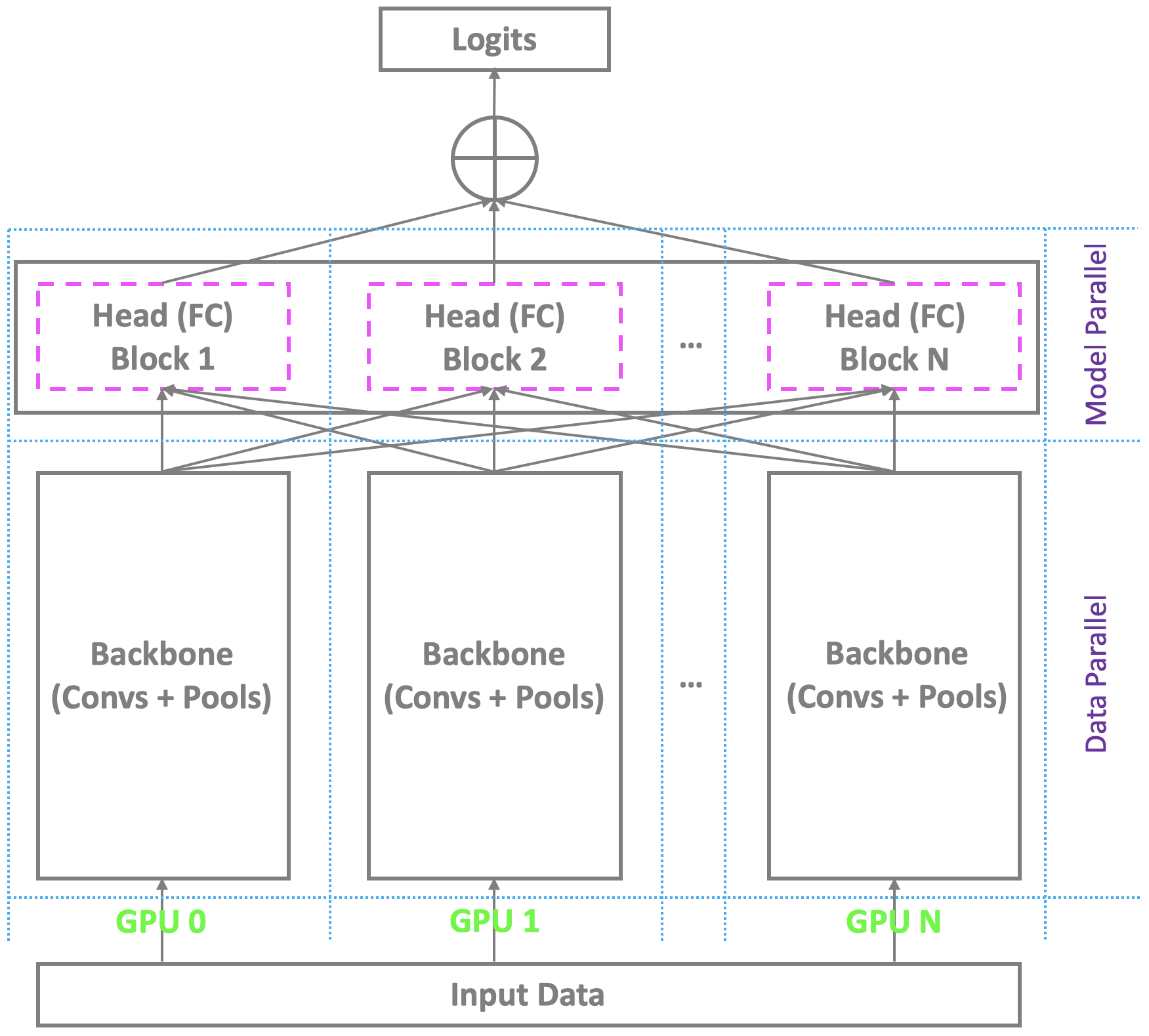
✅ CLOSED 23 Jan 2019 : สคีมาการฝึกอบรมแบบกระจายในปัจจุบันที่มีหลาย GPU ภายใต้ Pytorch และแพลตฟอร์มกระแสหลักอื่น ๆ คล้ายคลึงกับกระดูกสันหลังข้าม Multi-GPus ในขณะที่พึ่งพาอาจารย์เดียวเพื่อคำนวณชั้นในชั้นสุดท้าย นี่ไม่ใช่ปัญหาสำหรับการจดจำใบหน้าทั่วไปที่มีจำนวนตัวตนปานกลาง อย่างไรก็ตามมันต้องดิ้นรนกับการจดจำใบหน้าขนาดใหญ่ซึ่งต้องรับรู้ถึงตัวตนนับล้านในโลกแห่งความเป็นจริง ต้นแบบแทบจะไม่สามารถถือเลเยอร์สุดท้ายที่มีขนาดใหญ่ได้ในขณะที่ทาสยังคงมีทรัพยากรการคำนวณซ้ำซ้อนนำไปสู่การฝึกอบรมชุดเล็ก ๆ หรือแม้กระทั่งการฝึกอบรมที่ล้มเหลว เพื่อแก้ไขปัญหานี้เรากำลังพัฒนาสคีมาการฝึกอบรมแบบกระจายที่มีประสิทธิภาพสูงและมีประสิทธิภาพด้วยหลาย GPU ภายใต้ Pytorch ไม่เพียง แต่รองรับกระดูกสันหลัง แต่ยังเป็นหัวที่มีชั้นที่เชื่อมต่ออย่างเต็มที่ (softmax) เพื่ออำนวยความสะดวกในการจดจำใบหน้าขนาดใหญ่ที่มีประสิทธิภาพสูง เราจะเพิ่มการสนับสนุนนี้ลงใน repo ของเรา
✅ CLOSED 22 Jan 2019 : เราได้เปิดตัว API สกัดฟีเจอร์สองรายการสำหรับการแยกคุณสมบัติจากรุ่นที่ผ่านการฝึกอบรมมาก่อนใช้งานกับฟังก์ชั่นการสร้าง Pytorch และ OpenCV ตามลำดับ โปรดตรวจสอบ ./util/extract_feature_v1.py และ ./util/extract_feature_v2.py
✅ CLOSED 22 Jan 2019 : เรากำลังปรับรุ่น IR-50 ที่ปล่อยออกมาของเราในข้อมูลใบหน้าเอเชียเอกชนของเราซึ่งจะวางจำหน่ายเร็ว ๆ นี้เพื่ออำนวยความสะดวกในการจดจำใบหน้าเอเชียที่มีประสิทธิภาพสูง
✅ CLOSED 21 Jan 2019 : เรากำลังฝึกอบรมรุ่น IR-50 ที่มีประสิทธิภาพดีกว่าบน MS-CELEB-1M_ALIGN_112X112 และจะแทนที่รุ่นปัจจุบันในไม่ช้า
-
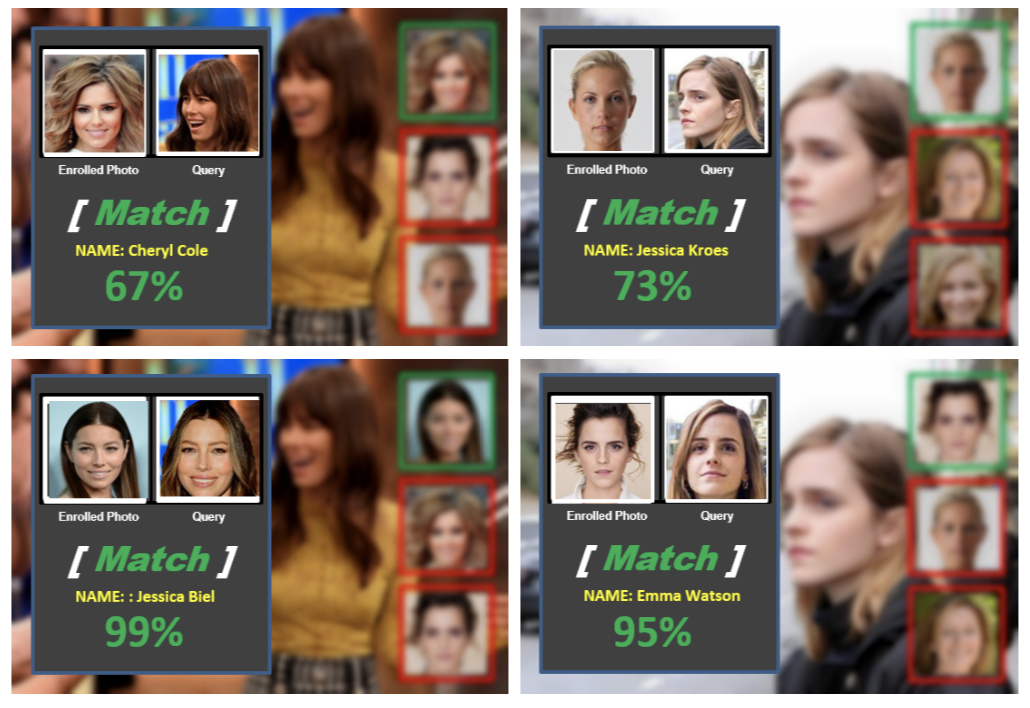
-
pip install torch torchvision )pip install mxnet-cu90 )pip install tensorflow-gpu )pip install tensorboardX )pip install opencv-python )pip install bcolz )ในขณะที่ไม่จำเป็นสำหรับประสิทธิภาพที่ดีที่สุด ขอ แนะนำให้เรียกใช้รหัสโดยใช้ GPU ที่เปิดใช้งาน CUDA เราใช้ 4-8 Nvidia Tesla P40 แบบขนาน
-
git clone https://github.com/ZhaoJ9014/face.evoLVe.PyTorch.gitmkdir data checkpoint log ที่ไดเรกทอรีที่เหมาะสมเพื่อจัดเก็บข้อมูลรถไฟ/VAL/ทดสอบของคุณจุดตรวจและบันทึกการฝึกอบรม ./data/db_name/
-> id1/
-> 1.jpg
-> ...
-> id2/
-> 1.jpg
-> ...
-> ...
-> ...
-> ...
-
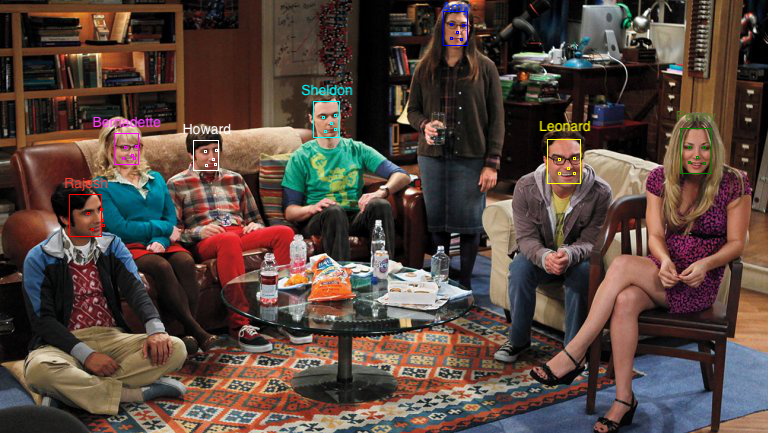

./align from PIL import Image
from detector import detect_faces
from visualization_utils import show_results
img = Image . open ( 'some_img.jpg' ) # modify the image path to yours
bounding_boxes , landmarks = detect_faces ( img ) # detect bboxes and landmarks for all faces in the image
show_results ( img , bounding_boxes , landmarks ) # visualize the resultssource_root dest_root โครงสร้างไดเรกทอรีที่แสดงในการใช้งาน Sec. python face_align.py -source_root [source_root] -dest_root [dest_root] -crop_size [crop_size]
# python face_align.py -source_root './data/test' -dest_root './data/test_Aligned' -crop_size 112
*.DS_Store ซึ่งอาจทำลายข้อมูลของคุณเนื่องจากจะถูกลบออกโดยอัตโนมัติเมื่อคุณเรียกใช้สคริปต์source_root , dest_root และ crop_size กับค่าของคุณเองเมื่อคุณเรียกใช้ face_align.py ; 2) ส่งผ่าน min_face_size ที่กำหนดเองของคุณ, thresholds และ nms_thresholds ค่าไปยังฟังก์ชัน detect_faces ของ detector.py เพื่อให้ตรงกับความต้องการในทางปฏิบัติของคุณ 3) หากคุณพบว่าความเร็วโดยใช้ API การจัดตำแหน่งใบหน้าช้าไปหน่อยคุณสามารถเรียกหน้าซีดการปรับขนาด API เพื่อปรับขนาดภาพที่ขนาดเล็กกว่าครั้งแรกมีขนาดใหญ่กว่าเกณฑ์ (ระบุอาร์กิวเมนต์ของ source_root , dest_root และ min_side กับค่าของคุณเอง) ก่อนที่จะเรียกการจัดตำแหน่ง API: API python face_resize.py
./balancemin_num ใน root ชุดการฝึกอบรมที่มีโครงสร้างไดเรกทอรีดังที่แสดงใน Sec. การใช้งานสำหรับความสมดุลของข้อมูลและการฝึกอบรมแบบจำลองที่มีประสิทธิภาพ): python remove_lowshot.py -root [root] -min_num [min_num]
# python remove_lowshot.py -root './data/train' -min_num 10
root และ min_num กับค่าของคุณเองเมื่อคุณเรียกใช้ remove_lowshot.py โฟลเดอร์: ./
การกำหนดค่า API (กำหนดค่าการตั้งค่าโดยรวมของคุณสำหรับการฝึกอบรมและการตรวจสอบ) config.py :
 import torch

configurations = {
    1 : dict (
        SEED = 1337 , # random seed for reproduce results

        DATA_ROOT = '/media/pc/6T/jasonjzhao/data/faces_emore' , # the parent root where your train/val/test data are stored
        MODEL_ROOT = '/media/pc/6T/jasonjzhao/buffer/model' , # the root to buffer your checkpoints
        LOG_ROOT = '/media/pc/6T/jasonjzhao/buffer/log' , # the root to log your train/val status
        BACKBONE_RESUME_ROOT = './' , # the root to resume training from a saved checkpoint
        HEAD_RESUME_ROOT = './' , # the root to resume training from a saved checkpoint

        BACKBONE_NAME = 'IR_SE_50' , # support: ['ResNet_50', 'ResNet_101', 'ResNet_152', 'IR_50', 'IR_101', 'IR_152', 'IR_SE_50', 'IR_SE_101', 'IR_SE_152']
        HEAD_NAME = 'ArcFace' , # support:  ['Softmax', 'ArcFace', 'CosFace', 'SphereFace', 'Am_softmax']
        LOSS_NAME = 'Focal' , # support: ['Focal', 'Softmax']

        INPUT_SIZE = [ 112 , 112 ], # support: [112, 112] and [224, 224]
        RGB_MEAN = [ 0.5 , 0.5 , 0.5 ], # for normalize inputs to [-1, 1]
        RGB_STD = [ 0.5 , 0.5 , 0.5 ],
        EMBEDDING_SIZE = 512 , # feature dimension
        BATCH_SIZE = 512 ,
        DROP_LAST = True , # whether drop the last batch to ensure consistent batch_norm statistics
        LR = 0.1 , # initial LR
        NUM_EPOCH = 125 , # total epoch number (use the firt 1/25 epochs to warm up)
        WEIGHT_DECAY = 5e-4 , # do not apply to batch_norm parameters
        MOMENTUM = 0.9 ,
        STAGES = [ 35 , 65 , 95 ], # epoch stages to decay learning rate

        DEVICE = torch . device ( "cuda:0" if torch . cuda . is_available () else "cpu" ),
        MULTI_GPU = True , # flag to use multiple GPUs; if you choose to train with single GPU, you should first run "export CUDA_VISILE_DEVICES=device_id" to specify the GPU card you want to use
        GPU_ID = [ 0 , 1 , 2 , 3 ], # specify your GPU ids
        PIN_MEMORY = True ,
        NUM_WORKERS = 0 ,
),
}
Train & Validation API (ทุกคนเกี่ยวกับการฝึกอบรมและการตรวจสอบ เช่น แพคเกจนำเข้าแพคเกจไฮเปอร์พารามิเตอร์และตัวโหลดข้อมูลรุ่นและการสูญเสียและเครื่องมือเพิ่มประสิทธิภาพรถไฟและการตรวจสอบความถูกต้องและการตรวจสอบจุดตรวจ) train.py เนื่องจาก MS-CELEB-1M ทำหน้าที่เป็น ImageNet ในการจดจำใบหน้าที่ยื่นออกมาเราจะฝึกฝนใบหน้าแบบจำลอง Evolve บน MS-CELEB-1M และทำการตรวจสอบความถูกต้องบน LFW, CFP_FF, CFP_FP, AGEDB, CALFW, CPLFW และ VGGFACE2_FP ลองดำน้ำในรายละเอียดกันทีละขั้นตอน
 import torch
import torch . nn as nn
import torch . optim as optim
import torchvision . transforms as transforms
import torchvision . datasets as datasets

from config import configurations
from backbone . model_resnet import ResNet_50 , ResNet_101 , ResNet_152
from backbone . model_irse import IR_50 , IR_101 , IR_152 , IR_SE_50 , IR_SE_101 , IR_SE_152
from head . metrics import ArcFace , CosFace , SphereFace , Am_softmax
from loss . focal import FocalLoss
from util . utils import make_weights_for_balanced_classes , get_val_data , separate_irse_bn_paras , separate_resnet_bn_paras , warm_up_lr , schedule_lr , perform_val , get_time , buffer_val , AverageMeter , accuracy

from tensorboardX import SummaryWriter
from tqdm import tqdm
import os cfg = configurations [ 1 ]
SEED = cfg [ 'SEED' ] # random seed for reproduce results
torch . manual_seed ( SEED )
DATA_ROOT = cfg [ 'DATA_ROOT' ] # the parent root where your train/val/test data are stored
MODEL_ROOT = cfg [ 'MODEL_ROOT' ] # the root to buffer your checkpoints
LOG_ROOT = cfg [ 'LOG_ROOT' ] # the root to log your train/val status
BACKBONE_RESUME_ROOT = cfg [ 'BACKBONE_RESUME_ROOT' ] # the root to resume training from a saved checkpoint
HEAD_RESUME_ROOT = cfg [ 'HEAD_RESUME_ROOT' ] # the root to resume training from a saved checkpoint
BACKBONE_NAME = cfg [ 'BACKBONE_NAME' ] # support: ['ResNet_50', 'ResNet_101', 'ResNet_152', 'IR_50', 'IR_101', 'IR_152', 'IR_SE_50', 'IR_SE_101', 'IR_SE_152']
HEAD_NAME = cfg [ 'HEAD_NAME' ] # support: ['Softmax', 'ArcFace', 'CosFace', 'SphereFace', 'Am_softmax']
LOSS_NAME = cfg [ 'LOSS_NAME' ] # support: ['Focal', 'Softmax']
INPUT_SIZE = cfg [ 'INPUT_SIZE' ]
RGB_MEAN = cfg [ 'RGB_MEAN' ] # for normalize inputs
RGB_STD = cfg [ 'RGB_STD' ]
EMBEDDING_SIZE = cfg [ 'EMBEDDING_SIZE' ] # feature dimension
BATCH_SIZE = cfg [ 'BATCH_SIZE' ]
DROP_LAST = cfg [ 'DROP_LAST' ] # whether drop the last batch to ensure consistent batch_norm statistics
LR = cfg [ 'LR' ] # initial LR
NUM_EPOCH = cfg [ 'NUM_EPOCH' ]
WEIGHT_DECAY = cfg [ 'WEIGHT_DECAY' ]
MOMENTUM = cfg [ 'MOMENTUM' ]
STAGES = cfg [ 'STAGES' ] # epoch stages to decay learning rate
DEVICE = cfg [ 'DEVICE' ]
MULTI_GPU = cfg [ 'MULTI_GPU' ] # flag to use multiple GPUs
GPU_ID = cfg [ 'GPU_ID' ] # specify your GPU ids
PIN_MEMORY = cfg [ 'PIN_MEMORY' ]
NUM_WORKERS = cfg [ 'NUM_WORKERS' ]
print ( "=" * 60 )
print ( "Overall Configurations:" )
print ( cfg )
print ( "=" * 60 )
writer = SummaryWriter ( LOG_ROOT ) # writer for buffering intermedium results train_transform = transforms . Compose ([ # refer to https://pytorch.org/docs/stable/torchvision/transforms.html for more build-in online data augmentation
transforms . Resize ([ int ( 128 * INPUT_SIZE [ 0 ] / 112 ), int ( 128 * INPUT_SIZE [ 0 ] / 112 )]), # smaller side resized
transforms . RandomCrop ([ INPUT_SIZE [ 0 ], INPUT_SIZE [ 1 ]]),
transforms . RandomHorizontalFlip (),
transforms . ToTensor (),
transforms . Normalize ( mean = RGB_MEAN ,
std = RGB_STD ),
])
dataset_train = datasets . ImageFolder ( os . path . join ( DATA_ROOT , 'imgs' ), train_transform )
# create a weighted random sampler to process imbalanced data
weights = make_weights_for_balanced_classes ( dataset_train . imgs , len ( dataset_train . classes ))
weights = torch . DoubleTensor ( weights )
sampler = torch . utils . data . sampler . WeightedRandomSampler ( weights , len ( weights ))
train_loader = torch . utils . data . DataLoader (
dataset_train , batch_size = BATCH_SIZE , sampler = sampler , pin_memory = PIN_MEMORY ,
num_workers = NUM_WORKERS , drop_last = DROP_LAST
)
NUM_CLASS = len ( train_loader . dataset . classes )
print ( "Number of Training Classes: {}" . format ( NUM_CLASS ))
lfw , cfp_ff , cfp_fp , agedb , calfw , cplfw , vgg2_fp , lfw_issame , cfp_ff_issame , cfp_fp_issame , agedb_issame , calfw_issame , cplfw_issame , vgg2_fp_issame = get_val_data ( DATA_ROOT ) BACKBONE_DICT = { 'ResNet_50' : ResNet_50 ( INPUT_SIZE ),
'ResNet_101' : ResNet_101 ( INPUT_SIZE ),
'ResNet_152' : ResNet_152 ( INPUT_SIZE ),
'IR_50' : IR_50 ( INPUT_SIZE ),
'IR_101' : IR_101 ( INPUT_SIZE ),
'IR_152' : IR_152 ( INPUT_SIZE ),
'IR_SE_50' : IR_SE_50 ( INPUT_SIZE ),
'IR_SE_101' : IR_SE_101 ( INPUT_SIZE ),
'IR_SE_152' : IR_SE_152 ( INPUT_SIZE )}
BACKBONE = BACKBONE_DICT [ BACKBONE_NAME ]
print ( "=" * 60 )
print ( BACKBONE )
print ( "{} Backbone Generated" . format ( BACKBONE_NAME ))
print ( "=" * 60 )
HEAD_DICT = { 'ArcFace' : ArcFace ( in_features = EMBEDDING_SIZE , out_features = NUM_CLASS , device_id = GPU_ID ),
'CosFace' : CosFace ( in_features = EMBEDDING_SIZE , out_features = NUM_CLASS , device_id = GPU_ID ),
'SphereFace' : SphereFace ( in_features = EMBEDDING_SIZE , out_features = NUM_CLASS , device_id = GPU_ID ),
'Am_softmax' : Am_softmax ( in_features = EMBEDDING_SIZE , out_features = NUM_CLASS , device_id = GPU_ID )}
HEAD = HEAD_DICT [ HEAD_NAME ]
print ( "=" * 60 )
print ( HEAD )
print ( "{} Head Generated" . format ( HEAD_NAME ))
print ( "=" * 60 ) LOSS_DICT = { 'Focal' : FocalLoss (),
'Softmax' : nn . CrossEntropyLoss ()}
LOSS = LOSS_DICT [ LOSS_NAME ]
print ( "=" * 60 )
print ( LOSS )
print ( "{} Loss Generated" . format ( LOSS_NAME ))
print ( "=" * 60 ) if BACKBONE_NAME . find ( "IR" ) >= 0 :
backbone_paras_only_bn , backbone_paras_wo_bn = separate_irse_bn_paras ( BACKBONE ) # separate batch_norm parameters from others; do not do weight decay for batch_norm parameters to improve the generalizability
_ , head_paras_wo_bn = separate_irse_bn_paras ( HEAD )
else :
backbone_paras_only_bn , backbone_paras_wo_bn = separate_resnet_bn_paras ( BACKBONE ) # separate batch_norm parameters from others; do not do weight decay for batch_norm parameters to improve the generalizability
_ , head_paras_wo_bn = separate_resnet_bn_paras ( HEAD )
OPTIMIZER = optim . SGD ([{ 'params' : backbone_paras_wo_bn + head_paras_wo_bn , 'weight_decay' : WEIGHT_DECAY }, { 'params' : backbone_paras_only_bn }], lr = LR , momentum = MOMENTUM )
print ( "=" * 60 )
print ( OPTIMIZER )
print ( "Optimizer Generated" )
print ( "=" * 60 ) if BACKBONE_RESUME_ROOT and HEAD_RESUME_ROOT :
print ( "=" * 60 )
if os . path . isfile ( BACKBONE_RESUME_ROOT ) and os . path . isfile ( HEAD_RESUME_ROOT ):
print ( "Loading Backbone Checkpoint '{}'" . format ( BACKBONE_RESUME_ROOT ))
BACKBONE . load_state_dict ( torch . load ( BACKBONE_RESUME_ROOT ))
print ( "Loading Head Checkpoint '{}'" . format ( HEAD_RESUME_ROOT ))
HEAD . load_state_dict ( torch . load ( HEAD_RESUME_ROOT ))
else :
print ( "No Checkpoint Found at '{}' and '{}'. Please Have a Check or Continue to Train from Scratch" . format ( BACKBONE_RESUME_ROOT , HEAD_RESUME_ROOT ))
print ( "=" * 60 ) if MULTI_GPU :
# multi-GPU setting
BACKBONE = nn . DataParallel ( BACKBONE , device_ids = GPU_ID )
BACKBONE = BACKBONE . to ( DEVICE )
else :
# single-GPU setting
BACKBONE = BACKBONE . to ( DEVICE ) DISP_FREQ = len ( train_loader ) // 100 # frequency to display training loss & acc
NUM_EPOCH_WARM_UP = NUM_EPOCH // 25 # use the first 1/25 epochs to warm up
NUM_BATCH_WARM_UP = len ( train_loader ) * NUM_EPOCH_WARM_UP # use the first 1/25 epochs to warm up
batch = 0 # batch index for epoch in range ( NUM_EPOCH ): # start training process
if epoch == STAGES [ 0 ]: # adjust LR for each training stage after warm up, you can also choose to adjust LR manually (with slight modification) once plaueau observed
schedule_lr ( OPTIMIZER )
if epoch == STAGES [ 1 ]:
schedule_lr ( OPTIMIZER )
if epoch == STAGES [ 2 ]:
schedule_lr ( OPTIMIZER )
BACKBONE . train () # set to training mode
HEAD . train ()
losses = AverageMeter ()
top1 = AverageMeter ()
top5 = AverageMeter ()
for inputs , labels in tqdm ( iter ( train_loader )):
if ( epoch + 1 <= NUM_EPOCH_WARM_UP ) and ( batch + 1 <= NUM_BATCH_WARM_UP ): # adjust LR for each training batch during warm up
warm_up_lr ( batch + 1 , NUM_BATCH_WARM_UP , LR , OPTIMIZER )
# compute output
inputs = inputs . to ( DEVICE )
labels = labels . to ( DEVICE ). long ()
features = BACKBONE ( inputs )
outputs = HEAD ( features , labels )
loss = LOSS ( outputs , labels )
# measure accuracy and record loss
prec1 , prec5 = accuracy ( outputs . data , labels , topk = ( 1 , 5 ))
losses . update ( loss . data . item (), inputs . size ( 0 ))
top1 . update ( prec1 . data . item (), inputs . size ( 0 ))
top5 . update ( prec5 . data . item (), inputs . size ( 0 ))
# compute gradient and do SGD step
OPTIMIZER . zero_grad ()
loss . backward ()
OPTIMIZER . step ()
# dispaly training loss & acc every DISP_FREQ
if (( batch + 1 ) % DISP_FREQ == 0 ) and batch != 0 :
print ( "=" * 60 )
print ( 'Epoch {}/{} Batch {}/{} t '
'Training Loss {loss.val:.4f} ({loss.avg:.4f}) t '
'Training Prec@1 {top1.val:.3f} ({top1.avg:.3f}) t '
'Training Prec@5 {top5.val:.3f} ({top5.avg:.3f})' . format (
epoch + 1 , NUM_EPOCH , batch + 1 , len ( train_loader ) * NUM_EPOCH , loss = losses , top1 = top1 , top5 = top5 ))
print ( "=" * 60 )
batch += 1 # batch index
# training statistics per epoch (buffer for visualization)
epoch_loss = losses . avg
epoch_acc = top1 . avg
writer . add_scalar ( "Training_Loss" , epoch_loss , epoch + 1 )
writer . add_scalar ( "Training_Accuracy" , epoch_acc , epoch + 1 )
print ( "=" * 60 )
print ( 'Epoch: {}/{} t '
'Training Loss {loss.val:.4f} ({loss.avg:.4f}) t '
'Training Prec@1 {top1.val:.3f} ({top1.avg:.3f}) t '
'Training Prec@5 {top5.val:.3f} ({top5.avg:.3f})' . format (
epoch + 1 , NUM_EPOCH , loss = losses , top1 = top1 , top5 = top5 ))
print ( "=" * 60 )
# perform validation & save checkpoints per epoch
# validation statistics per epoch (buffer for visualization)
print ( "=" * 60 )
print ( "Perform Evaluation on LFW, CFP_FF, CFP_FP, AgeDB, CALFW, CPLFW and VGG2_FP, and Save Checkpoints..." )
accuracy_lfw , best_threshold_lfw , roc_curve_lfw = perform_val ( MULTI_GPU , DEVICE , EMBEDDING_SIZE , BATCH_SIZE , BACKBONE , lfw , lfw_issame )
buffer_val ( writer , "LFW" , accuracy_lfw , best_threshold_lfw , roc_curve_lfw , epoch + 1 )
accuracy_cfp_ff , best_threshold_cfp_ff , roc_curve_cfp_ff = perform_val ( MULTI_GPU , DEVICE , EMBEDDING_SIZE , BATCH_SIZE , BACKBONE , cfp_ff , cfp_ff_issame )
buffer_val ( writer , "CFP_FF" , accuracy_cfp_ff , best_threshold_cfp_ff , roc_curve_cfp_ff , epoch + 1 )
accuracy_cfp_fp , best_threshold_cfp_fp , roc_curve_cfp_fp = perform_val ( MULTI_GPU , DEVICE , EMBEDDING_SIZE , BATCH_SIZE , BACKBONE , cfp_fp , cfp_fp_issame )
buffer_val ( writer , "CFP_FP" , accuracy_cfp_fp , best_threshold_cfp_fp , roc_curve_cfp_fp , epoch + 1 )
accuracy_agedb , best_threshold_agedb , roc_curve_agedb = perform_val ( MULTI_GPU , DEVICE , EMBEDDING_SIZE , BATCH_SIZE , BACKBONE , agedb , agedb_issame )
buffer_val ( writer , "AgeDB" , accuracy_agedb , best_threshold_agedb , roc_curve_agedb , epoch + 1 )
accuracy_calfw , best_threshold_calfw , roc_curve_calfw = perform_val ( MULTI_GPU , DEVICE , EMBEDDING_SIZE , BATCH_SIZE , BACKBONE , calfw , calfw_issame )
buffer_val ( writer , "CALFW" , accuracy_calfw , best_threshold_calfw , roc_curve_calfw , epoch + 1 )
accuracy_cplfw , best_threshold_cplfw , roc_curve_cplfw = perform_val ( MULTI_GPU , DEVICE , EMBEDDING_SIZE , BATCH_SIZE , BACKBONE , cplfw , cplfw_issame )
buffer_val ( writer , "CPLFW" , accuracy_cplfw , best_threshold_cplfw , roc_curve_cplfw , epoch + 1 )
accuracy_vgg2_fp , best_threshold_vgg2_fp , roc_curve_vgg2_fp = perform_val ( MULTI_GPU , DEVICE , EMBEDDING_SIZE , BATCH_SIZE , BACKBONE , vgg2_fp , vgg2_fp_issame )
buffer_val ( writer , "VGGFace2_FP" , accuracy_vgg2_fp , best_threshold_vgg2_fp , roc_curve_vgg2_fp , epoch + 1 )
print ( "Epoch {}/{}, Evaluation: LFW Acc: {}, CFP_FF Acc: {}, CFP_FP Acc: {}, AgeDB Acc: {}, CALFW Acc: {}, CPLFW Acc: {}, VGG2_FP Acc: {}" . format ( epoch + 1 , NUM_EPOCH , accuracy_lfw , accuracy_cfp_ff , accuracy_cfp_fp , accuracy_agedb , accuracy_calfw , accuracy_cplfw , accuracy_vgg2_fp ))
print ( "=" * 60 )
# save checkpoints per epoch
if MULTI_GPU :
torch . save ( BACKBONE . module . state_dict (), os . path . join ( MODEL_ROOT , "Backbone_{}_Epoch_{}_Batch_{}_Time_{}_checkpoint.pth" . format ( BACKBONE_NAME , epoch + 1 , batch , get_time ())))
torch . save ( HEAD . state_dict (), os . path . join ( MODEL_ROOT , "Head_{}_Epoch_{}_Batch_{}_Time_{}_checkpoint.pth" . format ( HEAD_NAME , epoch + 1 , batch , get_time ())))
else :
torch . save ( BACKBONE . state_dict (), os . path . join ( MODEL_ROOT , "Backbone_{}_Epoch_{}_Batch_{}_Time_{}_checkpoint.pth" . format ( BACKBONE_NAME , epoch + 1 , batch , get_time ())))
torch . save ( HEAD . state_dict (), os . path . join ( MODEL_ROOT , "Head_{}_Epoch_{}_Batch_{}_Time_{}_checkpoint.pth" . format ( HEAD_NAME , epoch + 1 , batch , get_time ()))) ตอนนี้คุณสามารถเริ่มเล่นกับ face.evolve และเรียกใช้ train.py ข้อมูลที่เป็นมิตรกับผู้ใช้จะโผล่ออกมาบนอาคารของคุณ:
เกี่ยวกับการกำหนดค่าโดยรวม:

เกี่ยวกับจำนวนชั้นเรียนฝึกอบรม:

เกี่ยวกับรายละเอียดเกี่ยวกับกระดูกสันหลัง:
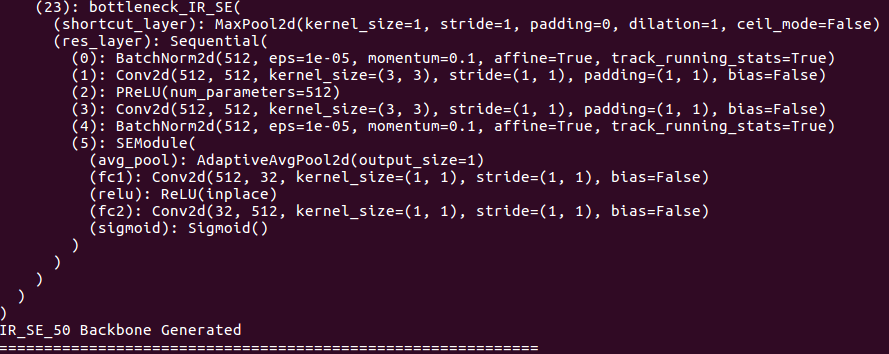
เกี่ยวกับรายละเอียดหัว:

เกี่ยวกับรายละเอียดการสูญเสีย:

เกี่ยวกับรายละเอียดการเพิ่มประสิทธิภาพ:
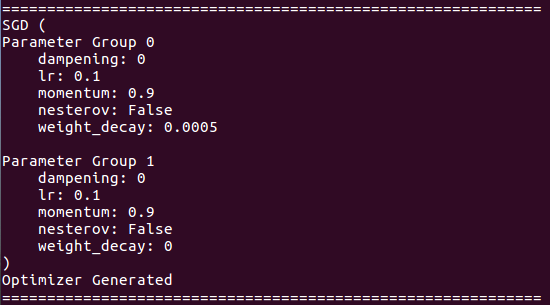
เกี่ยวกับการฝึกอบรมประวัติย่อ:

เกี่ยวกับสถานะการฝึกอบรมและสถิติ (เมื่อดัชนีแบทช์ถึง DISP_FREQ หรือในตอนท้ายของแต่ละยุค):
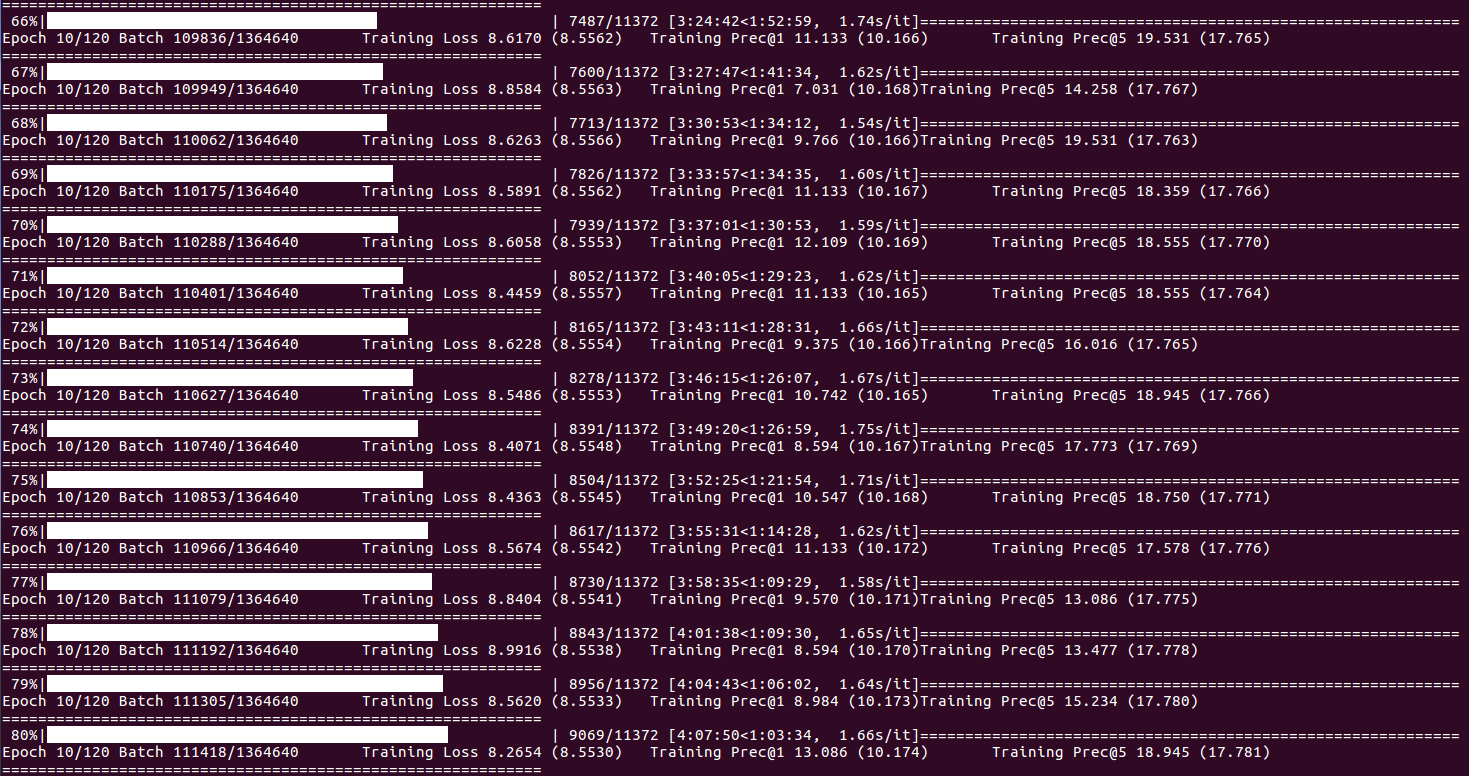
เกี่ยวกับสถิติการตรวจสอบและบันทึกจุดตรวจ (ในตอนท้ายของแต่ละยุค):

ตรวจสอบการเข้าพัก GPU แบบทันทีด้วย watch -d -n 0.01 nvidia-smi
โปรดดูที่วินาที Model Zoo สำหรับน้ำหนักรุ่นเฉพาะและประสิทธิภาพที่สอดคล้องกัน
ฟีเจอร์สกัด API (คุณสมบัติแยกจากรุ่นที่ผ่านการฝึกอบรมมาก่อน) ./util/extract_feature_v1.py (นำไปใช้กับฟังก์ชัน Pytorch Build-in) และ ./util/extract_feature_v2.py (นำไปใช้กับ OpenCV)
แสดงภาพสถิติการฝึกอบรมและการตรวจสอบความถูกต้องด้วย TensorBoardX (ดู Sec. Model Zoo):
tensorboard --logdir /media/pc/6T/jasonjzhao/buffer/log
-
| ฐานข้อมูล | รุ่น | #ตัวตน | #ภาพ | #เฟรม | #Video | ลิงค์ดาวน์โหลด |
|---|---|---|---|---|---|---|
| LFW | ดิบ | 5,749 | 13,233 | - | - | Google Drive, Baidu Drive |
| LFW | Align_250x250 | 5,749 | 13,233 | - | - | Google Drive, Baidu Drive |
| LFW | Align_112x112 | 5,749 | 13,233 | - | - | Google Drive, Baidu Drive |
| Calfw | ดิบ | 4,025 | 12,174 | - | - | Google Drive, Baidu Drive |
| Calfw | Align_112x112 | 4,025 | 12,174 | - | - | Google Drive, Baidu Drive |
| CPLFW | ดิบ | 3,884 | 11,652 | - | - | Google Drive, Baidu Drive |
| CPLFW | Align_112x112 | 3,884 | 11,652 | - | - | Google Drive, Baidu Drive |
| Casia-Webface | RAW_V1 | 10,575 | 494,414 | - | - | Baidu Drive |
| Casia-Webface | RAW_V2 | 10,575 | 494,414 | - | - | Google Drive, Baidu Drive |
| Casia-Webface | ทำความสะอาด | 10,575 | 455,594 | - | - | Google Drive, Baidu Drive |
| MS-CELEB-1M | ทำความสะอาด | 100,000 | 5,084,127 | - | - | Google Drive |
| MS-CELEB-1M | Align_112x112 | 85,742 | 5,822,653 | - | - | Google Drive |
| vggface2 | ทำความสะอาด | 8,631 | 3,086,894 | - | - | Google Drive |
| vggface2_fp | Align_112x112 | - | - | - | - | Google Drive, Baidu Drive |
| ผู้สูงอายุ | ดิบ | 570 | 16,488 | - | - | Google Drive, Baidu Drive |
| ผู้สูงอายุ | Align_112x112 | 570 | 16,488 | - | - | Google Drive, Baidu Drive |
| ijb-a | ทำความสะอาด | 500 | 5,396 | 20,369 | 2,085 | Google Drive, Baidu Drive |
| ijb-b | ดิบ | 1,845 | 21,798 | 55,026 | 7,011 | Google Drive |
| CFP | ดิบ | 500 | 7,000 | - | - | Google Drive, Baidu Drive |
| CFP | Align_112x112 | 500 | 7,000 | - | - | Google Drive, Baidu Drive |
| umdfaces | Align_112x112 | 8,277 | 367,888 | - | - | Google Drive, Baidu Drive |
| ซีเลบา | ดิบ | 10,177 | 202,599 | - | - | Google Drive, Baidu Drive |
| CACD-VS | ดิบ | 2,000 | 163,446 | - | - | Google Drive, Baidu Drive |
| ytf | Align_344x344 | 1,595 | - | 3,425 | 621,127 | Google Drive, Baidu Drive |
| DeepGlint | Align_112x112 | 180,855 | 6,753,545 | - | - | Google Drive |
| Utkface | Align_200x200 | - | 23,708 | - | - | Google Drive, Baidu Drive |
| Buaa-Visnir | Align_287x287 | 150 | 5,952 | - | - | Baidu Drive, PW: XMBC |
| Casia nir-vis 2.0 | Align_128x128 | 725 | 17,580 | - | - | Baidu Drive, PW: 883B |
| oulu-casia | ดิบ | 80 | 65,000 | - | - | Baidu Drive, PW: XXP5 |
| nuaa-impersterdb | ดิบ | 15 | 12,614 | - | - | Baidu Drive, PW: IF3N |
| casia-surf | ดิบ | 1,000 | - | - | 21,000 | Baidu Drive, PW: IZB3 |
| casia-fasd | ดิบ | 50 | - | - | 600 | Baidu Drive, PW: H5UN |
| casia-mfsd | ดิบ | 50 | - | - | 600 | |
| เล่นซ้ำการโจมตี | ดิบ | 50 | - | - | 1,200 | |
| webface260m | ดิบ | 24 เมตร | 2m | - | https://www.face-benchmark.org/ |
 unzip casia-maxpy-clean.zip
cd casia-maxpy-clean
zip -F CASIA-maxpy-clean.zip --out CASIA-maxpy-clean_fix.zip
unzip CASIA-maxpy-clean_fix.zip
 import numpy as np
import bcolz
import os

def get_pair ( root , name ):
    carray = bcolz . carray ( rootdir = os . path . join ( root , name ), mode = 'r' )
    issame = np . load ( '{}/{}_list.npy' . format ( root , name ))
    return carray , issame

def get_data ( data_root ):
    agedb_30 , agedb_30_issame = get_pair ( data_root , 'agedb_30' )
    cfp_fp , cfp_fp_issame = get_pair ( data_root , 'cfp_fp' )
    lfw , lfw_issame = get_pair ( data_root , 'lfw' )
    vgg2_fp , vgg2_fp_issame = get_pair ( data_root , 'vgg2_fp' )
    return agedb_30 , cfp_fp , lfw , vgg2_fp , agedb_30_issame , cfp_fp_issame , lfw_issame , vgg2_fp_issame

agedb_30 , cfp_fp , lfw , vgg2_fp , agedb_30_issame , cfp_fp_issame , lfw_issame , vgg2_fp_issame = get_data ( DATA_ROOT )MS-Celeb-1M_Top1M_MID2Name.tsv (Google Drive, Baidu Drive VGGface2_FaceScrub_Overlap.txt , VGGface2_ID2Name.csv (Google Drive, Baidu Drive), VGGface2_LFW_Overlap.txt (Google Drive, Baidu Drive) CASIA-WebFace_ID2Name.txt (Google Drive, Baidu Drive), CASIA-WebFace_FaceScrub_Overlap.txt CASIA-WebFace_LFW_Overlap.txt LFW_Name.txt FaceScrub_Name.txt Google Drive, Baidu Drive) ไดรฟ์), LFW_Log.txt (Google Drive, Baidu Drive) เพื่อช่วยนักวิจัย/วิศวกรลบชิ้นส่วนที่ทับซ้อนกันระหว่างชุดข้อมูลส่วนตัวของตนเองและชุดข้อมูลสาธารณะอย่างรวดเร็ว-
แบบอย่าง
| กระดูกสันหลัง | ศีรษะ | การสูญเสีย | ข้อมูลการฝึกอบรม | ลิงค์ดาวน์โหลด |
|---|---|---|---|---|
| IR-50 | อาร์คเฟซ | เกี่ยวกับจุดโฟกัส | MS-CELEB-1M_ALIGN_112X112 | Google Drive, Baidu Drive |
การตั้งค่า
INPUT_SIZE: [112, 112]; RGB_MEAN: [0.5, 0.5, 0.5]; RGB_STD: [0.5, 0.5, 0.5]; BATCH_SIZE: 512 (drop the last batch to ensure consistent batch_norm statistics); Initial LR: 0.1; NUM_EPOCH: 120; WEIGHT_DECAY: 5e-4 (do not apply to batch_norm parameters); MOMENTUM: 0.9; STAGES: [30, 60, 90]; Augmentation: Random Crop + Horizontal Flip; Imbalanced Data Processing: Weighted Random Sampling; Solver: SGD; GPUs: 4 NVIDIA Tesla P40 in Parallel
สถิติการฝึกอบรมและการตรวจสอบความถูกต้อง

ผลงาน
| LFW | CFP_FF | cfp_fp | ผู้สูงอายุ | Calfw | CPLFW | vggface2_fp |
|---|---|---|---|---|---|---|
| 99.78 | 99.69 | 98.14 | 97.53 | 95.87 | 92.45 | 95.22 |
แบบอย่าง
| กระดูกสันหลัง | ศีรษะ | การสูญเสีย | ข้อมูลการฝึกอบรม | ลิงค์ดาวน์โหลด |
|---|---|---|---|---|
| IR-50 | อาร์คเฟซ | เกี่ยวกับจุดโฟกัส | เอเชียเอกชนเผชิญกับข้อมูล | Google Drive, Baidu Drive |
การตั้งค่า
INPUT_SIZE: [112, 112]; RGB_MEAN: [0.5, 0.5, 0.5]; RGB_STD: [0.5, 0.5, 0.5]; BATCH_SIZE: 1024 (drop the last batch to ensure consistent batch_norm statistics); Initial LR: 0.01 (initialize weights from the above model pre-trained on MS-Celeb-1M_Align_112x112); NUM_EPOCH: 80; WEIGHT_DECAY: 5e-4 (do not apply to batch_norm parameters); MOMENTUM: 0.9; STAGES: [20, 40, 60]; Augmentation: Random Crop + Horizontal Flip; Imbalanced Data Processing: Weighted Random Sampling; Solver: SGD; GPUs: 8 NVIDIA Tesla P40 in Parallel
ประสิทธิภาพ (โปรดดำเนินการประเมินผลด้วยชุดข้อมูลมาตรฐานเอเชียของคุณเอง)
แบบอย่าง
| กระดูกสันหลัง | ศีรษะ | การสูญเสีย | ข้อมูลการฝึกอบรม | ลิงค์ดาวน์โหลด |
|---|---|---|---|---|
| IR-152 | อาร์คเฟซ | เกี่ยวกับจุดโฟกัส | MS-CELEB-1M_ALIGN_112X112 | Baidu Drive, PW: B197 |
การตั้งค่า
INPUT_SIZE: [112, 112]; RGB_MEAN: [0.5, 0.5, 0.5]; RGB_STD: [0.5, 0.5, 0.5]; BATCH_SIZE: 256 (drop the last batch to ensure consistent batch_norm statistics); Initial LR: 0.01; NUM_EPOCH: 120; WEIGHT_DECAY: 5e-4 (do not apply to batch_norm parameters); MOMENTUM: 0.9; STAGES: [30, 60, 90]; Augmentation: Random Crop + Horizontal Flip; Imbalanced Data Processing: Weighted Random Sampling; Solver: SGD; GPUs: 4 NVIDIA Geforce RTX 2080 Ti in Parallel
สถิติการฝึกอบรมและการตรวจสอบความถูกต้อง

ผลงาน
| LFW | CFP_FF | cfp_fp | ผู้สูงอายุ | Calfw | CPLFW | vggface2_fp |
|---|---|---|---|---|---|---|
| 99.82 | 99.83 | 98.37 | 98.07 | 96.03 | 93.05 | 95.50 |
-
2017 ฉบับที่ 1 ใน ICCV 2017 MS-CELEB-1M การจดจำใบหน้าขนาดใหญ่การจดจำหน้ายากชุด/ชุดการเรียนรู้แบบสุ่ม/ความท้าทายการเรียนรู้ต่ำ Wechat News, Nus ECE News, โปสเตอร์ NUS ECE, ใบรับรองรางวัลสำหรับ TRACK-1, ใบรับรองรางวัลสำหรับ Track-2, พิธีมอบรางวัล
2017 ฉบับที่ 1 เกี่ยวกับสถาบันมาตรฐานและเทคโนโลยีแห่งชาติ (NIST) IARPA Janus Benchmark A (IJB-A) ความท้าทายการตรวจสอบใบหน้าที่ไม่มีข้อ จำกัด และการท้าทายการระบุตัวตน Wechat News
ประสิทธิภาพที่ทันสมัย
-
-
โปรดปรึกษาและพิจารณาอ้างถึงเอกสารต่อไปนี้:
 @article{wu20223d,
title={3D-Guided Frontal Face Generation for Pose-Invariant Recognition},
author={Wu, Hao and Gu, Jianyang and Fan, Xiaojin and Li, He and Xie, Lidong and Zhao, Jian},
journal={T-IST},
year={2022}
}


@article{wang2021face,
title={Face.evoLVe: A High-Performance Face Recognition Library},
author={Wang, Qingzhong and Zhang, Pengfei and Xiong, Haoyi and Zhao, Jian},
journal={arXiv preprint arXiv:2107.08621},
year={2021}
}


@article{tu2021joint,
title={Joint Face Image Restoration and Frontalization for Recognition},
author={Tu, Xiaoguang and Zhao, Jian and Liu, Qiankun and Ai, Wenjie and Guo, Guodong and Li, Zhifeng and Liu, Wei and Feng, Jiashi},
journal={T-CSVT},
year={2021}
}


@article{zhao2020towards,
title={Towards age-invariant face recognition},
author={Zhao, Jian and Yan, Shuicheng and Feng, Jiashi},
journal={T-PAMI},
year={2020}
}


@article{zhao2019recognizing,
title={Recognizing Profile Faces by Imagining Frontal View},
author={Zhao, Jian and Xing, Junliang and Xiong, Lin and Yan, Shuicheng and Feng, Jiashi},
journal={IJCV},
pages={1--19},
year={2019}
}


@inproceedings{zhao2019multi,
title={Multi-Prototype Networks for Unconstrained Set-based Face Recognition},
author={Zhao, Jian and Li, Jianshu and Tu, Xiaoguang and Zhao, Fang and Xin, Yuan and Xing, Junliang and Liu, Hengzhu and Yan, Shuicheng and Feng, Jiashi},
booktitle={IJCAI},
year={2019}
}


@inproceedings{zhao2019look,
title={Look Across Elapse: Disentangled Representation Learning and Photorealistic Cross-Age Face Synthesis for Age-Invariant Face Recognition},
author={Zhao, Jian and Cheng, Yu and Cheng, Yi and Yang, Yang and Lan, Haochong and Zhao, Fang and Xiong, Lin and Xu, Yan and Li, Jianshu and Pranata, Sugiri and others},
booktitle={AAAI},
year={2019}
}


@article{zhao20183d,
title={3D-Aided Dual-Agent GANs for Unconstrained Face Recognition},
author={Zhao, Jian and Xiong, Lin and Li, Jianshu and Xing, Junliang and Yan, Shuicheng and Feng, Jiashi},
journal={T-PAMI},
year={2018}
}


@inproceedings{zhao2018towards,
title={Towards Pose Invariant Face Recognition in the Wild},
author={Zhao, Jian and Cheng, Yu and Xu, Yan and Xiong, Lin and Li, Jianshu and Zhao, Fang and Jayashree, Karlekar and Pranata,         Sugiri and Shen, Shengmei and Xing, Junliang and others},
booktitle={CVPR},
pages={2207--2216},
year={2018}
}


@inproceedings{zhao3d,
title={3D-Aided Deep Pose-Invariant Face Recognition},
author={Zhao, Jian and Xiong, Lin and Cheng, Yu and Cheng, Yi and Li, Jianshu and Zhou, Li and Xu, Yan and Karlekar, Jayashree and       Pranata, Sugiri and Shen, Shengmei and others},
booktitle={IJCAI},
pages={1184--1190},
year={2018}
}


@inproceedings{zhao2018dynamic,
title={Dynamic Conditional Networks for Few-Shot Learning},
author={Zhao, Fang and Zhao, Jian and Yan, Shuicheng and Feng, Jiashi},
booktitle={ECCV},
pages={19--35},
year={2018}
}


@inproceedings{zhao2017dual,
title={Dual-agent gans for photorealistic and identity preserving profile face synthesis},
author={Zhao, Jian and Xiong, Lin and Jayashree, Panasonic Karlekar and Li, Jianshu and Zhao, Fang and Wang, Zhecan and Pranata,           Panasonic Sugiri and Shen, Panasonic Shengmei and Yan, Shuicheng and Feng, Jiashi},
booktitle={NeurIPS},
pages={66--76},
year={2017}
}


@inproceedings{zhao122017marginalized,
title={Marginalized cnn: Learning deep invariant representations},
author={Zhao12, Jian and Li, Jianshu and Zhao, Fang and Yan13, Shuicheng and Feng, Jiashi},
booktitle={BMVC},
year={2017}
}


@inproceedings{cheng2017know,
title={Know you at one glance: A compact vector representation for low-shot learning},
author={Cheng, Yu and Zhao, Jian and Wang, Zhecan and Xu, Yan and Jayashree, Karlekar and Shen, Shengmei and Feng, Jiashi},
booktitle={ICCVW},
pages={1924--1932},
year={2017}
}


@inproceedings{wangconditional,
title={Conditional Dual-Agent GANs for Photorealistic and Annotation Preserving Image Synthesis},
author={Wang, Zhecan and Zhao, Jian and Cheng, Yu and Xiao, Shengtao and Li, Jianshu and Zhao, Fang and Feng, Jiashi and Kassim, Ashraf},
booktitle={BMVCW},
}