face.evoLVe
1.0.0

| 著者 | Jian Zhao |
|---|---|
| ホームページ | https://zhaoj9014.github.io |
face.evolveのコードは、MITライセンスの下でリリースされます。
sporting CLOSED 02 September 2021 : Baidu Paddlepaddleは、正式にface.evolveを統合して、顔関連分析に関する研究とアプリケーションを促進します(公式発表)。
✅ CLOSED 03 July 2021 : PaddlePaddleフレームワークのトレーニングコードを提供します。
✅ CLOSED 04 July 2019 :関連する研究と分析を促進するために、顔のスプーフィングアンチスポーフィング/livening式検出に関するいくつかの公開データセットを共有します。
✅ CLOSED 07 June 2019 : MS-CELEB-1M_ALIGN_112X112でよりパフォーマンスの高いIR-152モデルをトレーニングしており、すぐにモデルをリリースします。
✅ CLOSED 23 May 2019 :不均一な顔認識と分析に関する研究を促進するために、3つの公開されているデータセットを共有します。 SECを参照してください。詳細については、データ動物園。
✅ CLOSED 23 Jan 2019 :いくつかの広く使用されている顔認識データセットの名前リストとペアワイズの重複リストを共有して、研究者/エンジニアが自分のプライベートデータセットとパブリックデータセットの間の重複するパーツをすばやく削除するのに役立ちます。 SECを参照してください。詳細については、データ動物園。
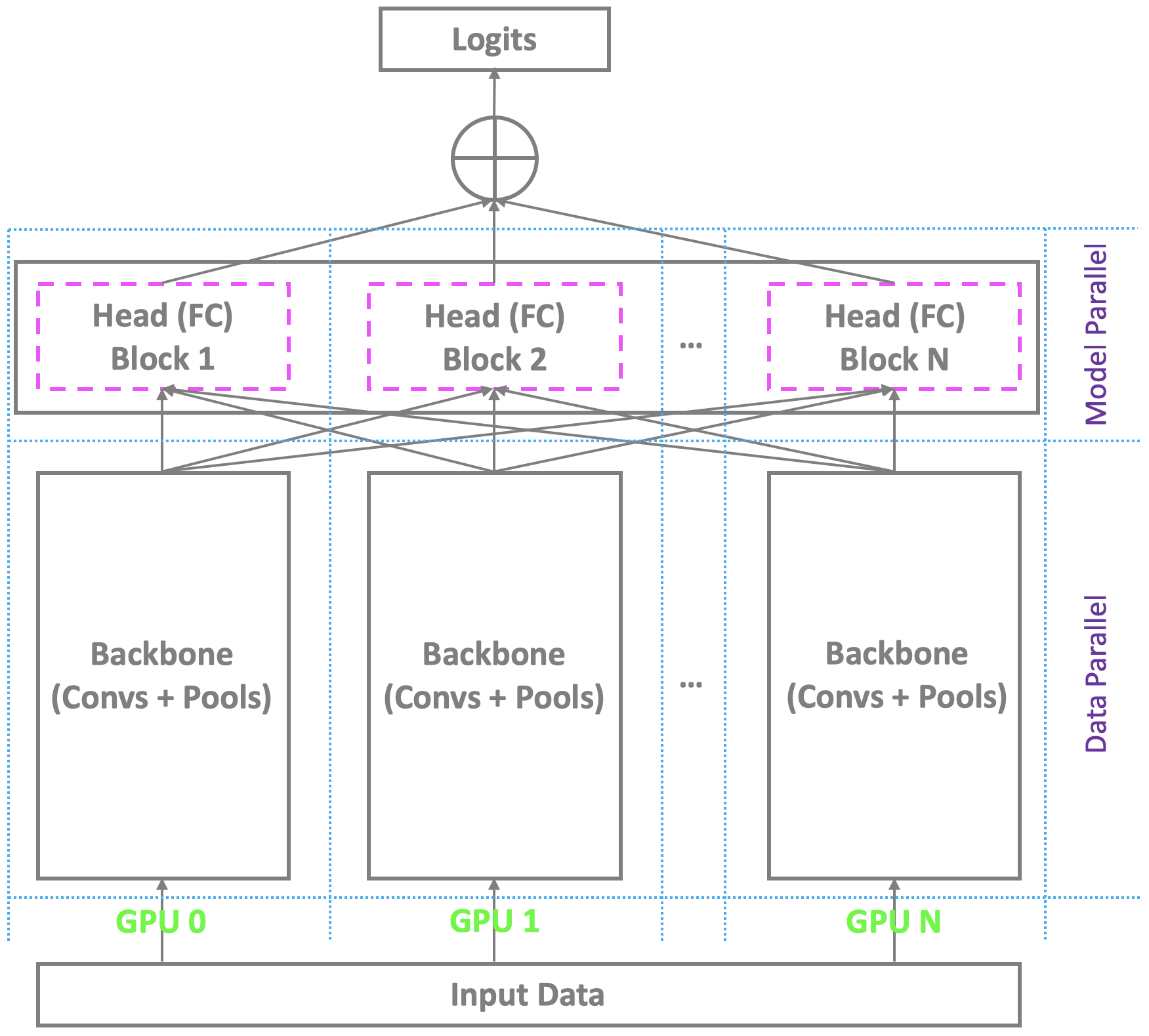
✅ CLOSED 23 Jan 2019 : Pytorchおよびその他の主流のプラットフォームの下でマルチGPUを備えた現在の分散トレーニングスキーマは、単一のマスターに依存して最終的なボトルネック(完全に接続された/ソフトマックス)レイヤーを計算しながら、マルチGPUのバックボーンと類似しています。これは、適度な数のアイデンティティを伴う従来の顔認識の問題ではありません。ただし、大規模な顔認識に苦労しており、現実の世界で何百万ものアイデンティティを認識する必要があります。マスターは、特大の最終層をほとんど保持することはできませんが、奴隷はまだ冗長な計算リソースを持っているため、小さなバッチトレーニングやトレーニングに失敗します。この問題に対処するために、Pytorchの下でマルチGPUを使用した非常にエレガな、効果的で効率的な分散トレーニングスキーマを開発し、バックボーンだけでなく、完全に接続された(ソフトマックス)層を持つヘッドもサポートして、高性能の大規模な顔認識を促進します。このサポートをリポジトリに追加します。
✅ CLOSED 22 Jan 2019 : Pytorchのビルドイン機能とOpenCVでそれぞれ実装された、事前に訓練されたモデルから機能を抽出するための2つの機能抽出APIをリリースしました。 ./util/extract_feature_v1.pyおよび./util/extract_feature_v2.pyを確認してください。
✅ CLOSED 22 Jan 2019 :私たちは、リリースされたIR-50モデルをプライベートアジアフェイスデータで微調整しています。これは、高性能アジアの顔認識を促進するためにまもなくリリースされます。
✅ CLOSED 21 Jan 2019 : MS-CELEB-1M_ALIGN_112X112でよりパフォーマンスの高いIR-50モデルをトレーニングしており、現在のモデルをすぐに置き換えます。
?
?
pip install torch torchvisionをインストール)pip install mxnet-cu90インストール)pip install tensorflow-gpu )pip install tensorboardX )pip install opencv-python )pip install bcolz )必要ありませんが、最適なパフォーマンスのために、CUDA対応GPUを使用してコードを実行することを強くお勧めします。 4-8 Nvidia Tesla P40を並行して使用しました。
?
git clone https://github.com/ZhaoJ9014/face.evoLVe.PyTorch.git 。mkdir data checkpoint log適切なディレクトリでログトレイン/VAL/テストデータ、チェックポイント、トレーニングログを保存します。 ./data/db_name/
-> id1/
-> 1.jpg
-> ...
-> id2/
-> 1.jpg
-> ...
-> ...
-> ...
-> ...
?
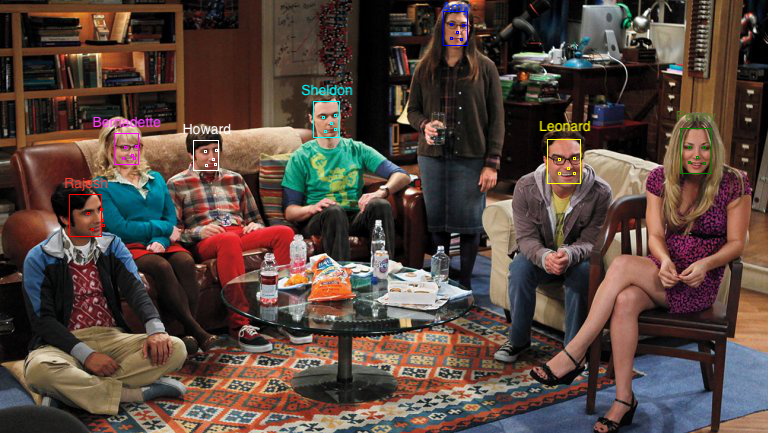

./align from PIL import Image
from detector import detect_faces
from visualization_utils import show_results
img = Image . open ( 'some_img.jpg' ) # modify the image path to yours
bounding_boxes , landmarks = detect_faces ( img ) # detect bboxes and landmarks for all faces in the image
show_results ( img , bounding_boxes , landmarks ) # visualize the resultssource_rootとの顔の検出、画期的なローカリゼーション、およびアフィン変換とのアラインメントを実行し、同じディレクトリ構造を持つ新しいフォルダーdest_rootにアラインされた結果を保存します): python face_align.py -source_root [source_root] -dest_root [dest_root] -crop_size [crop_size]
# python face_align.py -source_root './data/test' -dest_root './data/test_Aligned' -crop_size 112
*.DS_Storeファイルについて心配する必要はありません。face_align.pyを実行するときに、 source_root 、 dest_root 、およびcrop_sizeの引数を独自の値に指定します。 2)カスタムmin_face_size 、 thresholds 、およびnms_thresholds値をdetector.pyのdetect_faces関数に渡して、実際の要件を一致させます。 3)Face Alignment APIを使用して速度が少し遅いことがわかった場合、Face Apiよりも大きいサイズが大きい画像( source_root 、 dest_root 、およびmin_sideの引数を指定)を呼び出す前に、顔のサイズ変更APIを最初にサイズを変更できます。 python face_resize.py
./balancerootのmin_numサンプル未満の低ショットクラスを削除します): python remove_lowshot.py -root [root] -min_num [min_num]
# python remove_lowshot.py -root './data/train' -min_num 10
remove_lowshot.pyを実行すると、自分の値にrootとmin_numの引数を独自の値に指定します。☕
フォルダー: ./
構成API(トレーニングと検証のために全体の設定を構成) config.py :
 import torch

configurations = {
    1 : dict (
        SEED = 1337 , # random seed for reproduce results

        DATA_ROOT = '/media/pc/6T/jasonjzhao/data/faces_emore' , # the parent root where your train/val/test data are stored
        MODEL_ROOT = '/media/pc/6T/jasonjzhao/buffer/model' , # the root to buffer your checkpoints
        LOG_ROOT = '/media/pc/6T/jasonjzhao/buffer/log' , # the root to log your train/val status
        BACKBONE_RESUME_ROOT = './' , # the root to resume training from a saved checkpoint
        HEAD_RESUME_ROOT = './' , # the root to resume training from a saved checkpoint

        BACKBONE_NAME = 'IR_SE_50' , # support: ['ResNet_50', 'ResNet_101', 'ResNet_152', 'IR_50', 'IR_101', 'IR_152', 'IR_SE_50', 'IR_SE_101', 'IR_SE_152']
        HEAD_NAME = 'ArcFace' , # support:  ['Softmax', 'ArcFace', 'CosFace', 'SphereFace', 'Am_softmax']
        LOSS_NAME = 'Focal' , # support: ['Focal', 'Softmax']

        INPUT_SIZE = [ 112 , 112 ], # support: [112, 112] and [224, 224]
        RGB_MEAN = [ 0.5 , 0.5 , 0.5 ], # for normalize inputs to [-1, 1]
        RGB_STD = [ 0.5 , 0.5 , 0.5 ],
        EMBEDDING_SIZE = 512 , # feature dimension
        BATCH_SIZE = 512 ,
        DROP_LAST = True , # whether drop the last batch to ensure consistent batch_norm statistics
        LR = 0.1 , # initial LR
        NUM_EPOCH = 125 , # total epoch number (use the firt 1/25 epochs to warm up)
        WEIGHT_DECAY = 5e-4 , # do not apply to batch_norm parameters
        MOMENTUM = 0.9 ,
        STAGES = [ 35 , 65 , 95 ], # epoch stages to decay learning rate

        DEVICE = torch . device ( "cuda:0" if torch . cuda . is_available () else "cpu" ),
        MULTI_GPU = True , # flag to use multiple GPUs; if you choose to train with single GPU, you should first run "export CUDA_VISILE_DEVICES=device_id" to specify the GPU card you want to use
        GPU_ID = [ 0 , 1 , 2 , 3 ], # specify your GPU ids
        PIN_MEMORY = True ,
        NUM_WORKERS = 0 ,
),
}
Train&Validation API(トレーニングと検証に関するすべての人、 IE 、インポートパッケージ、ハイパーパラメーター&データローダー、モデルと損失とオプティマイザー、トレーニング&検証&セーブチェックポイント) train.py 。 MS-CELEB-1Mは、Face認識の提出のイメージネットとして機能するため、MS-CELEB-1Mでモデルを進化させ、LFW、CFP_FF、CFP_FP、AGEDB、CALFW、CPLFW、VGGFACE2_FPで検証を実行します。段階的に詳細を一緒に掘り下げましょう。
 import torch
import torch . nn as nn
import torch . optim as optim
import torchvision . transforms as transforms
import torchvision . datasets as datasets

from config import configurations
from backbone . model_resnet import ResNet_50 , ResNet_101 , ResNet_152
from backbone . model_irse import IR_50 , IR_101 , IR_152 , IR_SE_50 , IR_SE_101 , IR_SE_152
from head . metrics import ArcFace , CosFace , SphereFace , Am_softmax
from loss . focal import FocalLoss
from util . utils import make_weights_for_balanced_classes , get_val_data , separate_irse_bn_paras , separate_resnet_bn_paras , warm_up_lr , schedule_lr , perform_val , get_time , buffer_val , AverageMeter , accuracy

from tensorboardX import SummaryWriter
from tqdm import tqdm
import os cfg = configurations [ 1 ]
SEED = cfg [ 'SEED' ] # random seed for reproduce results
torch . manual_seed ( SEED )
DATA_ROOT = cfg [ 'DATA_ROOT' ] # the parent root where your train/val/test data are stored
MODEL_ROOT = cfg [ 'MODEL_ROOT' ] # the root to buffer your checkpoints
LOG_ROOT = cfg [ 'LOG_ROOT' ] # the root to log your train/val status
BACKBONE_RESUME_ROOT = cfg [ 'BACKBONE_RESUME_ROOT' ] # the root to resume training from a saved checkpoint
HEAD_RESUME_ROOT = cfg [ 'HEAD_RESUME_ROOT' ] # the root to resume training from a saved checkpoint
BACKBONE_NAME = cfg [ 'BACKBONE_NAME' ] # support: ['ResNet_50', 'ResNet_101', 'ResNet_152', 'IR_50', 'IR_101', 'IR_152', 'IR_SE_50', 'IR_SE_101', 'IR_SE_152']
HEAD_NAME = cfg [ 'HEAD_NAME' ] # support: ['Softmax', 'ArcFace', 'CosFace', 'SphereFace', 'Am_softmax']
LOSS_NAME = cfg [ 'LOSS_NAME' ] # support: ['Focal', 'Softmax']
INPUT_SIZE = cfg [ 'INPUT_SIZE' ]
RGB_MEAN = cfg [ 'RGB_MEAN' ] # for normalize inputs
RGB_STD = cfg [ 'RGB_STD' ]
EMBEDDING_SIZE = cfg [ 'EMBEDDING_SIZE' ] # feature dimension
BATCH_SIZE = cfg [ 'BATCH_SIZE' ]
DROP_LAST = cfg [ 'DROP_LAST' ] # whether drop the last batch to ensure consistent batch_norm statistics
LR = cfg [ 'LR' ] # initial LR
NUM_EPOCH = cfg [ 'NUM_EPOCH' ]
WEIGHT_DECAY = cfg [ 'WEIGHT_DECAY' ]
MOMENTUM = cfg [ 'MOMENTUM' ]
STAGES = cfg [ 'STAGES' ] # epoch stages to decay learning rate
DEVICE = cfg [ 'DEVICE' ]
MULTI_GPU = cfg [ 'MULTI_GPU' ] # flag to use multiple GPUs
GPU_ID = cfg [ 'GPU_ID' ] # specify your GPU ids
PIN_MEMORY = cfg [ 'PIN_MEMORY' ]
NUM_WORKERS = cfg [ 'NUM_WORKERS' ]
print ( "=" * 60 )
print ( "Overall Configurations:" )
print ( cfg )
print ( "=" * 60 )
writer = SummaryWriter ( LOG_ROOT ) # writer for buffering intermedium results train_transform = transforms . Compose ([ # refer to https://pytorch.org/docs/stable/torchvision/transforms.html for more build-in online data augmentation
transforms . Resize ([ int ( 128 * INPUT_SIZE [ 0 ] / 112 ), int ( 128 * INPUT_SIZE [ 0 ] / 112 )]), # smaller side resized
transforms . RandomCrop ([ INPUT_SIZE [ 0 ], INPUT_SIZE [ 1 ]]),
transforms . RandomHorizontalFlip (),
transforms . ToTensor (),
transforms . Normalize ( mean = RGB_MEAN ,
std = RGB_STD ),
])
dataset_train = datasets . ImageFolder ( os . path . join ( DATA_ROOT , 'imgs' ), train_transform )
# create a weighted random sampler to process imbalanced data
weights = make_weights_for_balanced_classes ( dataset_train . imgs , len ( dataset_train . classes ))
weights = torch . DoubleTensor ( weights )
sampler = torch . utils . data . sampler . WeightedRandomSampler ( weights , len ( weights ))
train_loader = torch . utils . data . DataLoader (
dataset_train , batch_size = BATCH_SIZE , sampler = sampler , pin_memory = PIN_MEMORY ,
num_workers = NUM_WORKERS , drop_last = DROP_LAST
)
NUM_CLASS = len ( train_loader . dataset . classes )
print ( "Number of Training Classes: {}" . format ( NUM_CLASS ))
lfw , cfp_ff , cfp_fp , agedb , calfw , cplfw , vgg2_fp , lfw_issame , cfp_ff_issame , cfp_fp_issame , agedb_issame , calfw_issame , cplfw_issame , vgg2_fp_issame = get_val_data ( DATA_ROOT ) BACKBONE_DICT = { 'ResNet_50' : ResNet_50 ( INPUT_SIZE ),
'ResNet_101' : ResNet_101 ( INPUT_SIZE ),
'ResNet_152' : ResNet_152 ( INPUT_SIZE ),
'IR_50' : IR_50 ( INPUT_SIZE ),
'IR_101' : IR_101 ( INPUT_SIZE ),
'IR_152' : IR_152 ( INPUT_SIZE ),
'IR_SE_50' : IR_SE_50 ( INPUT_SIZE ),
'IR_SE_101' : IR_SE_101 ( INPUT_SIZE ),
'IR_SE_152' : IR_SE_152 ( INPUT_SIZE )}
BACKBONE = BACKBONE_DICT [ BACKBONE_NAME ]
print ( "=" * 60 )
print ( BACKBONE )
print ( "{} Backbone Generated" . format ( BACKBONE_NAME ))
print ( "=" * 60 )
HEAD_DICT = { 'ArcFace' : ArcFace ( in_features = EMBEDDING_SIZE , out_features = NUM_CLASS , device_id = GPU_ID ),
'CosFace' : CosFace ( in_features = EMBEDDING_SIZE , out_features = NUM_CLASS , device_id = GPU_ID ),
'SphereFace' : SphereFace ( in_features = EMBEDDING_SIZE , out_features = NUM_CLASS , device_id = GPU_ID ),
'Am_softmax' : Am_softmax ( in_features = EMBEDDING_SIZE , out_features = NUM_CLASS , device_id = GPU_ID )}
HEAD = HEAD_DICT [ HEAD_NAME ]
print ( "=" * 60 )
print ( HEAD )
print ( "{} Head Generated" . format ( HEAD_NAME ))
print ( "=" * 60 ) LOSS_DICT = { 'Focal' : FocalLoss (),
'Softmax' : nn . CrossEntropyLoss ()}
LOSS = LOSS_DICT [ LOSS_NAME ]
print ( "=" * 60 )
print ( LOSS )
print ( "{} Loss Generated" . format ( LOSS_NAME ))
print ( "=" * 60 ) if BACKBONE_NAME . find ( "IR" ) >= 0 :
backbone_paras_only_bn , backbone_paras_wo_bn = separate_irse_bn_paras ( BACKBONE ) # separate batch_norm parameters from others; do not do weight decay for batch_norm parameters to improve the generalizability
_ , head_paras_wo_bn = separate_irse_bn_paras ( HEAD )
else :
backbone_paras_only_bn , backbone_paras_wo_bn = separate_resnet_bn_paras ( BACKBONE ) # separate batch_norm parameters from others; do not do weight decay for batch_norm parameters to improve the generalizability
_ , head_paras_wo_bn = separate_resnet_bn_paras ( HEAD )
OPTIMIZER = optim . SGD ([{ 'params' : backbone_paras_wo_bn + head_paras_wo_bn , 'weight_decay' : WEIGHT_DECAY }, { 'params' : backbone_paras_only_bn }], lr = LR , momentum = MOMENTUM )
print ( "=" * 60 )
print ( OPTIMIZER )
print ( "Optimizer Generated" )
print ( "=" * 60 ) if BACKBONE_RESUME_ROOT and HEAD_RESUME_ROOT :
print ( "=" * 60 )
if os . path . isfile ( BACKBONE_RESUME_ROOT ) and os . path . isfile ( HEAD_RESUME_ROOT ):
print ( "Loading Backbone Checkpoint '{}'" . format ( BACKBONE_RESUME_ROOT ))
BACKBONE . load_state_dict ( torch . load ( BACKBONE_RESUME_ROOT ))
print ( "Loading Head Checkpoint '{}'" . format ( HEAD_RESUME_ROOT ))
HEAD . load_state_dict ( torch . load ( HEAD_RESUME_ROOT ))
else :
print ( "No Checkpoint Found at '{}' and '{}'. Please Have a Check or Continue to Train from Scratch" . format ( BACKBONE_RESUME_ROOT , HEAD_RESUME_ROOT ))
print ( "=" * 60 ) if MULTI_GPU :
# multi-GPU setting
BACKBONE = nn . DataParallel ( BACKBONE , device_ids = GPU_ID )
BACKBONE = BACKBONE . to ( DEVICE )
else :
# single-GPU setting
BACKBONE = BACKBONE . to ( DEVICE ) DISP_FREQ = len ( train_loader ) // 100 # frequency to display training loss & acc
NUM_EPOCH_WARM_UP = NUM_EPOCH // 25 # use the first 1/25 epochs to warm up
NUM_BATCH_WARM_UP = len ( train_loader ) * NUM_EPOCH_WARM_UP # use the first 1/25 epochs to warm up
batch = 0 # batch index for epoch in range ( NUM_EPOCH ): # start training process
if epoch == STAGES [ 0 ]: # adjust LR for each training stage after warm up, you can also choose to adjust LR manually (with slight modification) once plaueau observed
schedule_lr ( OPTIMIZER )
if epoch == STAGES [ 1 ]:
schedule_lr ( OPTIMIZER )
if epoch == STAGES [ 2 ]:
schedule_lr ( OPTIMIZER )
BACKBONE . train () # set to training mode
HEAD . train ()
losses = AverageMeter ()
top1 = AverageMeter ()
top5 = AverageMeter ()
for inputs , labels in tqdm ( iter ( train_loader )):
if ( epoch + 1 <= NUM_EPOCH_WARM_UP ) and ( batch + 1 <= NUM_BATCH_WARM_UP ): # adjust LR for each training batch during warm up
warm_up_lr ( batch + 1 , NUM_BATCH_WARM_UP , LR , OPTIMIZER )
# compute output
inputs = inputs . to ( DEVICE )
labels = labels . to ( DEVICE ). long ()
features = BACKBONE ( inputs )
outputs = HEAD ( features , labels )
loss = LOSS ( outputs , labels )
# measure accuracy and record loss
prec1 , prec5 = accuracy ( outputs . data , labels , topk = ( 1 , 5 ))
losses . update ( loss . data . item (), inputs . size ( 0 ))
top1 . update ( prec1 . data . item (), inputs . size ( 0 ))
top5 . update ( prec5 . data . item (), inputs . size ( 0 ))
# compute gradient and do SGD step
OPTIMIZER . zero_grad ()
loss . backward ()
OPTIMIZER . step ()
# dispaly training loss & acc every DISP_FREQ
if (( batch + 1 ) % DISP_FREQ == 0 ) and batch != 0 :
print ( "=" * 60 )
print ( 'Epoch {}/{} Batch {}/{} t '
'Training Loss {loss.val:.4f} ({loss.avg:.4f}) t '
'Training Prec@1 {top1.val:.3f} ({top1.avg:.3f}) t '
'Training Prec@5 {top5.val:.3f} ({top5.avg:.3f})' . format (
epoch + 1 , NUM_EPOCH , batch + 1 , len ( train_loader ) * NUM_EPOCH , loss = losses , top1 = top1 , top5 = top5 ))
print ( "=" * 60 )
batch += 1 # batch index
# training statistics per epoch (buffer for visualization)
epoch_loss = losses . avg
epoch_acc = top1 . avg
writer . add_scalar ( "Training_Loss" , epoch_loss , epoch + 1 )
writer . add_scalar ( "Training_Accuracy" , epoch_acc , epoch + 1 )
print ( "=" * 60 )
print ( 'Epoch: {}/{} t '
'Training Loss {loss.val:.4f} ({loss.avg:.4f}) t '
'Training Prec@1 {top1.val:.3f} ({top1.avg:.3f}) t '
'Training Prec@5 {top5.val:.3f} ({top5.avg:.3f})' . format (
epoch + 1 , NUM_EPOCH , loss = losses , top1 = top1 , top5 = top5 ))
print ( "=" * 60 )
# perform validation & save checkpoints per epoch
# validation statistics per epoch (buffer for visualization)
print ( "=" * 60 )
print ( "Perform Evaluation on LFW, CFP_FF, CFP_FP, AgeDB, CALFW, CPLFW and VGG2_FP, and Save Checkpoints..." )
accuracy_lfw , best_threshold_lfw , roc_curve_lfw = perform_val ( MULTI_GPU , DEVICE , EMBEDDING_SIZE , BATCH_SIZE , BACKBONE , lfw , lfw_issame )
buffer_val ( writer , "LFW" , accuracy_lfw , best_threshold_lfw , roc_curve_lfw , epoch + 1 )
accuracy_cfp_ff , best_threshold_cfp_ff , roc_curve_cfp_ff = perform_val ( MULTI_GPU , DEVICE , EMBEDDING_SIZE , BATCH_SIZE , BACKBONE , cfp_ff , cfp_ff_issame )
buffer_val ( writer , "CFP_FF" , accuracy_cfp_ff , best_threshold_cfp_ff , roc_curve_cfp_ff , epoch + 1 )
accuracy_cfp_fp , best_threshold_cfp_fp , roc_curve_cfp_fp = perform_val ( MULTI_GPU , DEVICE , EMBEDDING_SIZE , BATCH_SIZE , BACKBONE , cfp_fp , cfp_fp_issame )
buffer_val ( writer , "CFP_FP" , accuracy_cfp_fp , best_threshold_cfp_fp , roc_curve_cfp_fp , epoch + 1 )
accuracy_agedb , best_threshold_agedb , roc_curve_agedb = perform_val ( MULTI_GPU , DEVICE , EMBEDDING_SIZE , BATCH_SIZE , BACKBONE , agedb , agedb_issame )
buffer_val ( writer , "AgeDB" , accuracy_agedb , best_threshold_agedb , roc_curve_agedb , epoch + 1 )
accuracy_calfw , best_threshold_calfw , roc_curve_calfw = perform_val ( MULTI_GPU , DEVICE , EMBEDDING_SIZE , BATCH_SIZE , BACKBONE , calfw , calfw_issame )
buffer_val ( writer , "CALFW" , accuracy_calfw , best_threshold_calfw , roc_curve_calfw , epoch + 1 )
accuracy_cplfw , best_threshold_cplfw , roc_curve_cplfw = perform_val ( MULTI_GPU , DEVICE , EMBEDDING_SIZE , BATCH_SIZE , BACKBONE , cplfw , cplfw_issame )
buffer_val ( writer , "CPLFW" , accuracy_cplfw , best_threshold_cplfw , roc_curve_cplfw , epoch + 1 )
accuracy_vgg2_fp , best_threshold_vgg2_fp , roc_curve_vgg2_fp = perform_val ( MULTI_GPU , DEVICE , EMBEDDING_SIZE , BATCH_SIZE , BACKBONE , vgg2_fp , vgg2_fp_issame )
buffer_val ( writer , "VGGFace2_FP" , accuracy_vgg2_fp , best_threshold_vgg2_fp , roc_curve_vgg2_fp , epoch + 1 )
print ( "Epoch {}/{}, Evaluation: LFW Acc: {}, CFP_FF Acc: {}, CFP_FP Acc: {}, AgeDB Acc: {}, CALFW Acc: {}, CPLFW Acc: {}, VGG2_FP Acc: {}" . format ( epoch + 1 , NUM_EPOCH , accuracy_lfw , accuracy_cfp_ff , accuracy_cfp_fp , accuracy_agedb , accuracy_calfw , accuracy_cplfw , accuracy_vgg2_fp ))
print ( "=" * 60 )
# save checkpoints per epoch
if MULTI_GPU :
torch . save ( BACKBONE . module . state_dict (), os . path . join ( MODEL_ROOT , "Backbone_{}_Epoch_{}_Batch_{}_Time_{}_checkpoint.pth" . format ( BACKBONE_NAME , epoch + 1 , batch , get_time ())))
torch . save ( HEAD . state_dict (), os . path . join ( MODEL_ROOT , "Head_{}_Epoch_{}_Batch_{}_Time_{}_checkpoint.pth" . format ( HEAD_NAME , epoch + 1 , batch , get_time ())))
else :
torch . save ( BACKBONE . state_dict (), os . path . join ( MODEL_ROOT , "Backbone_{}_Epoch_{}_Batch_{}_Time_{}_checkpoint.pth" . format ( BACKBONE_NAME , epoch + 1 , batch , get_time ())))
torch . save ( HEAD . state_dict (), os . path . join ( MODEL_ROOT , "Head_{}_Epoch_{}_Batch_{}_Time_{}_checkpoint.pth" . format ( HEAD_NAME , epoch + 1 , batch , get_time ())))これで、face.evolve and Run train.pyで遊び始めることができます。ターミナルにユーザーフレンドリーな情報が飛び出します:
全体的な構成について:

トレーニングクラスの数:

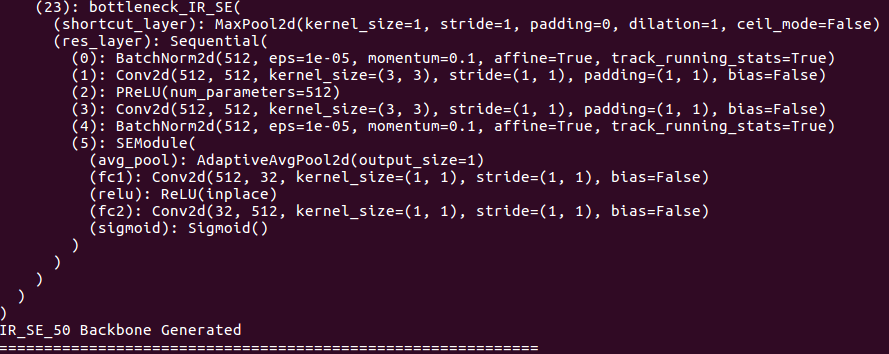
バックボーンの詳細について:
頭の詳細について:

損失の詳細について:

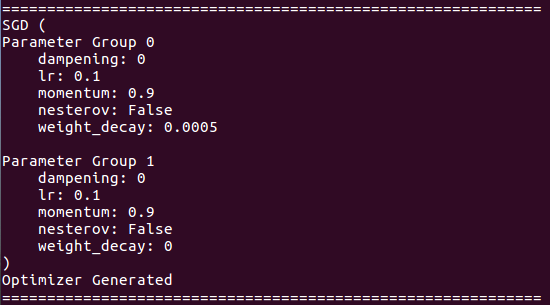
オプティマイザーの詳細について:
履歴書のトレーニングについて:

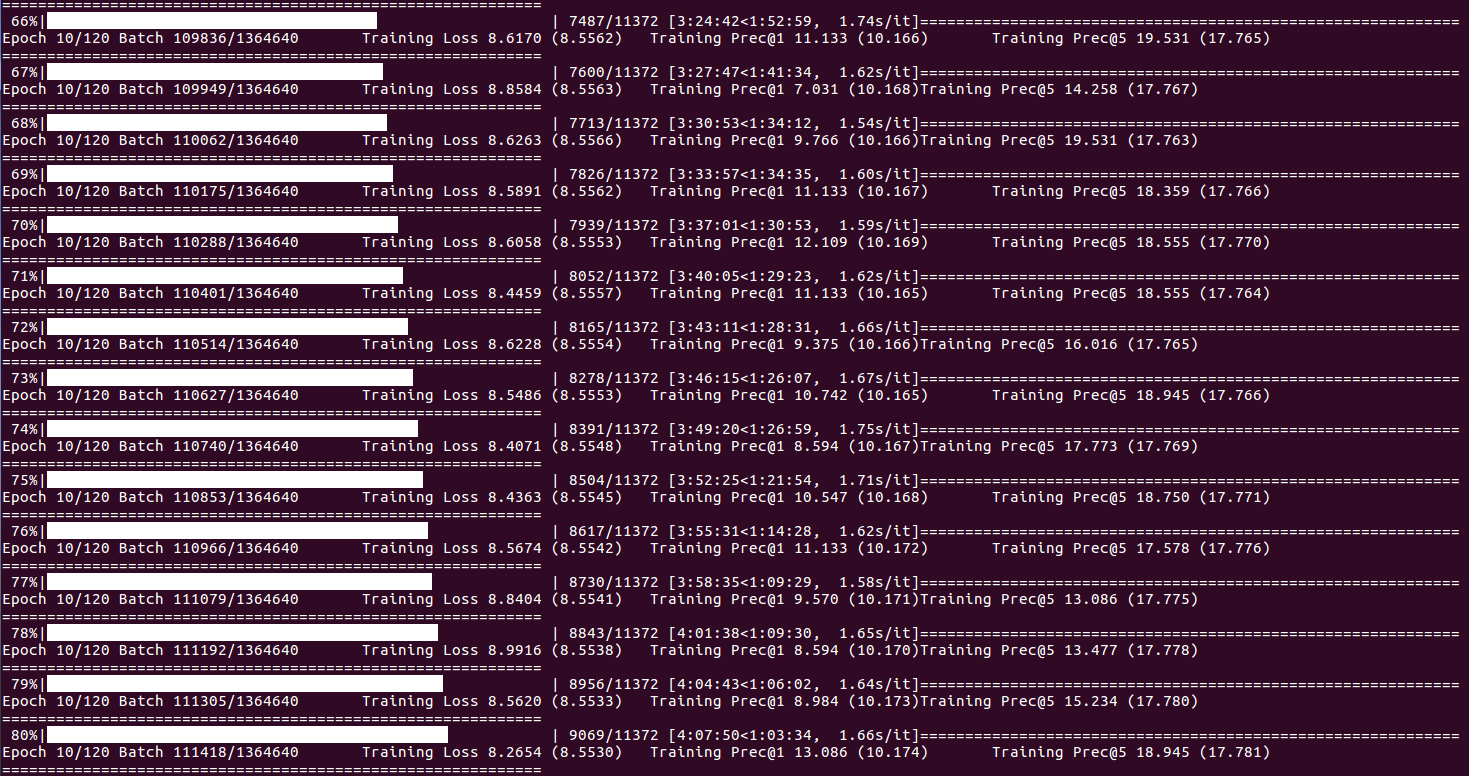
トレーニングのステータスと統計について(バッチインデックスがDISP_FREQ到達した場合、または各エポックの終わりに):
検証統計とチェックポイントを保存する(各エポックの終わり):

watch -d -n 0.01 nvidia-smiでオンザフライGPU占有率を監視します。
SECを参照してください。特定のモデルの重みと対応するパフォーマンスのモデル動物園。
特徴抽出API(事前トレーニングされたモデルから機能を抽出) ./util/extract_feature_v1.py extract_feature_vv1.py(pytorchビルドイン関数で実装)および./util/extract_feature_v2.pyで実装)。
Tensorboardxを使用してトレーニングと検証統計を視覚化します(Sec。ModelZooを参照):
tensorboard --logdir /media/pc/6T/jasonjzhao/buffer/log
?
| データベース | バージョン | #身元 | #画像 | #フレーム | #ビデオ | ダウンロードリンク |
|---|---|---|---|---|---|---|
| LFW | 生 | 5,749 | 13,233 | - | - | Google Drive、Baidu Drive |
| LFW | align_250x250 | 5,749 | 13,233 | - | - | Google Drive、Baidu Drive |
| LFW | align_112x112 | 5,749 | 13,233 | - | - | Google Drive、Baidu Drive |
| Calfw | 生 | 4,025 | 12,174 | - | - | Google Drive、Baidu Drive |
| Calfw | align_112x112 | 4,025 | 12,174 | - | - | Google Drive、Baidu Drive |
| cplfw | 生 | 3,884 | 11,652 | - | - | Google Drive、Baidu Drive |
| cplfw | align_112x112 | 3,884 | 11,652 | - | - | Google Drive、Baidu Drive |
| Casia-Webface | RAW_V1 | 10,575 | 494,414 | - | - | Baidu Drive |
| Casia-Webface | raw_v2 | 10,575 | 494,414 | - | - | Google Drive、Baidu Drive |
| Casia-Webface | クリーン | 10,575 | 455,594 | - | - | Google Drive、Baidu Drive |
| MS-CELEB-1M | クリーン | 100,000 | 5,084,127 | - | - | Googleドライブ |
| MS-CELEB-1M | align_112x112 | 85,742 | 5,822,653 | - | - | Googleドライブ |
| vggface2 | クリーン | 8,631 | 3,086,894 | - | - | Googleドライブ |
| vggface2_fp | align_112x112 | - | - | - | - | Google Drive、Baidu Drive |
| agedb | 生 | 570 | 16,488 | - | - | Google Drive、Baidu Drive |
| agedb | align_112x112 | 570 | 16,488 | - | - | Google Drive、Baidu Drive |
| IJB-A | クリーン | 500 | 5,396 | 20,369 | 2,085 | Google Drive、Baidu Drive |
| IJB-B | 生 | 1,845 | 21,798 | 55,026 | 7,011 | Googleドライブ |
| CFP | 生 | 500 | 7,000 | - | - | Google Drive、Baidu Drive |
| CFP | align_112x112 | 500 | 7,000 | - | - | Google Drive、Baidu Drive |
| umdfaces | align_112x112 | 8,277 | 367,888 | - | - | Google Drive、Baidu Drive |
| セレバ | 生 | 10,177 | 202,599 | - | - | Google Drive、Baidu Drive |
| CACD-VS | 生 | 2,000 | 163,446 | - | - | Google Drive、Baidu Drive |
| YTF | align_344x344 | 1,595 | - | 3,425 | 621,127 | Google Drive、Baidu Drive |
| ディープグリント | align_112x112 | 180,855 | 6,753,545 | - | - | Googleドライブ |
| utkface | align_200x200 | - | 23,708 | - | - | Google Drive、Baidu Drive |
| Buaa-Visnir | align_287x287 | 150 | 5,952 | - | - | Baidu Drive、PW:XMBC |
| Casia Nir-Vis 2.0 | align_128x128 | 725 | 17,580 | - | - | Baidu Drive、PW:883b |
| オウルカシア | 生 | 80 | 65,000 | - | - | Baidu Drive、PW:XXP5 |
| nuaa-imposterdb | 生 | 15 | 12,614 | - | - | Baidu Drive、PW:IF3N |
| casia-surf | 生 | 1,000 | - | - | 21,000 | Baidu Drive、PW:IZB3 |
| Casia-Fasd | 生 | 50 | - | - | 600 | Baidu Drive、PW:H5UN |
| Casia-Mfsd | 生 | 50 | - | - | 600 | |
| リプレイ攻撃 | 生 | 50 | - | - | 1,200 | |
| webface260m | 生 | 24m | 2m | - | https://www.face-benchmark.org/ |
 unzip casia-maxpy-clean.zip
cd casia-maxpy-clean
zip -F CASIA-maxpy-clean.zip --out CASIA-maxpy-clean_fix.zip
unzip CASIA-maxpy-clean_fix.zip
 import numpy as np
import bcolz
import os

def get_pair ( root , name ):
    carray = bcolz . carray ( rootdir = os . path . join ( root , name ), mode = 'r' )
    issame = np . load ( '{}/{}_list.npy' . format ( root , name ))
    return carray , issame

def get_data ( data_root ):
    agedb_30 , agedb_30_issame = get_pair ( data_root , 'agedb_30' )
    cfp_fp , cfp_fp_issame = get_pair ( data_root , 'cfp_fp' )
    lfw , lfw_issame = get_pair ( data_root , 'lfw' )
    vgg2_fp , vgg2_fp_issame = get_pair ( data_root , 'vgg2_fp' )
    return agedb_30 , cfp_fp , lfw , vgg2_fp , agedb_30_issame , cfp_fp_issame , lfw_issame , vgg2_fp_issame

agedb_30 , cfp_fp , lfw , vgg2_fp , agedb_30_issame , cfp_fp_issame , lfw_issame , vgg2_fp_issame = get_data ( DATA_ROOT )MS-Celeb-1M_Top1M_MID2Name.tsv (Google Drive、Baidu Drive)、 VGGface2_ID2Name.csv (Google Drive、Baidu Drive)、 VGGface2_FaceScrub_Overlap.txt (Google Drive、Baidu Drive)、 VGGface2_LFW_Overlap.txt (Google Drive) CASIA-WebFace_ID2Name.txt (Google Drive、Baidu Drive)、 CASIA-WebFace_FaceScrub_Overlap.txt (Google Drive、Baidu Drive)、 CASIA-WebFace_LFW_Overlap.txt FaceScrub_Name.txt Google Drive、Baidu Drive)、 LFW_Name.txt (baidu Drive、baiduドライブ) LFW_Log.txt (Google Drive、Baidu Drive)は、研究者/エンジニアが自分のプライベートデータセットとパブリックデータセットの間の重複する部品をすばやく削除できるようにします。?
モデル
| バックボーン | 頭 | 損失 | トレーニングデータ | ダウンロードリンク |
|---|---|---|---|---|
| IR-50 | アークフェイス | 焦点 | MS-CELEB-1M_ALIGN_112X112 | Google Drive、Baidu Drive |
設定
INPUT_SIZE: [112, 112]; RGB_MEAN: [0.5, 0.5, 0.5]; RGB_STD: [0.5, 0.5, 0.5]; BATCH_SIZE: 512 (drop the last batch to ensure consistent batch_norm statistics); Initial LR: 0.1; NUM_EPOCH: 120; WEIGHT_DECAY: 5e-4 (do not apply to batch_norm parameters); MOMENTUM: 0.9; STAGES: [30, 60, 90]; Augmentation: Random Crop + Horizontal Flip; Imbalanced Data Processing: Weighted Random Sampling; Solver: SGD; GPUs: 4 NVIDIA Tesla P40 in Parallel
トレーニングと検証統計

パフォーマンス
| LFW | CFP_FF | CFP_FP | agedb | Calfw | cplfw | vggface2_fp |
|---|---|---|---|---|---|---|
| 99.78 | 99.69 | 98.14 | 97.53 | 95.87 | 92.45 | 95.22 |
モデル
| バックボーン | 頭 | 損失 | トレーニングデータ | ダウンロードリンク |
|---|---|---|---|---|
| IR-50 | アークフェイス | 焦点 | プライベートアジアの顔のデータ | Google Drive、Baidu Drive |
設定
INPUT_SIZE: [112, 112]; RGB_MEAN: [0.5, 0.5, 0.5]; RGB_STD: [0.5, 0.5, 0.5]; BATCH_SIZE: 1024 (drop the last batch to ensure consistent batch_norm statistics); Initial LR: 0.01 (initialize weights from the above model pre-trained on MS-Celeb-1M_Align_112x112); NUM_EPOCH: 80; WEIGHT_DECAY: 5e-4 (do not apply to batch_norm parameters); MOMENTUM: 0.9; STAGES: [20, 40, 60]; Augmentation: Random Crop + Horizontal Flip; Imbalanced Data Processing: Weighted Random Sampling; Solver: SGD; GPUs: 8 NVIDIA Tesla P40 in Parallel
パフォーマンス(あなた自身のアジアのフェイスベンチマークデータセットで評価を実行してください)
モデル
| バックボーン | 頭 | 損失 | トレーニングデータ | ダウンロードリンク |
|---|---|---|---|---|
| IR-152 | アークフェイス | 焦点 | MS-CELEB-1M_ALIGN_112X112 | Baidu Drive、PW:B197 |
設定
INPUT_SIZE: [112, 112]; RGB_MEAN: [0.5, 0.5, 0.5]; RGB_STD: [0.5, 0.5, 0.5]; BATCH_SIZE: 256 (drop the last batch to ensure consistent batch_norm statistics); Initial LR: 0.01; NUM_EPOCH: 120; WEIGHT_DECAY: 5e-4 (do not apply to batch_norm parameters); MOMENTUM: 0.9; STAGES: [30, 60, 90]; Augmentation: Random Crop + Horizontal Flip; Imbalanced Data Processing: Weighted Random Sampling; Solver: SGD; GPUs: 4 NVIDIA Geforce RTX 2080 Ti in Parallel
トレーニングと検証統計

パフォーマンス
| LFW | CFP_FF | CFP_FP | agedb | Calfw | cplfw | vggface2_fp |
|---|---|---|---|---|---|---|
| 99.82 | 99.83 | 98.37 | 98.07 | 96.03 | 93.05 | 95.50 |
?
ICCVの2017 No.1 2017 MS-CELEB-1M大規模な顔認識ハードセット/ランダムセット/ローショット学習の課題。 Wechat News、Nus ECE News、Nus ECEポスター、トラック1の賞証明書、トラック2の賞証明書、授賞式。
2017 No.1国立標準技術研究所(NIST)IARPA JANUSベンチマークA(IJB-A)制約のない顔検証課題と識別チャレンジ。 Wechat News。
最先端のパフォーマンス
?
?
次の論文を引用することを検討してください。
 @article{wu20223d,
title={3D-Guided Frontal Face Generation for Pose-Invariant Recognition},
author={Wu, Hao and Gu, Jianyang and Fan, Xiaojin and Li, He and Xie, Lidong and Zhao, Jian},
journal={T-IST},
year={2022}
}


@article{wang2021face,
title={Face.evoLVe: A High-Performance Face Recognition Library},
author={Wang, Qingzhong and Zhang, Pengfei and Xiong, Haoyi and Zhao, Jian},
journal={arXiv preprint arXiv:2107.08621},
year={2021}
}


@article{tu2021joint,
title={Joint Face Image Restoration and Frontalization for Recognition},
author={Tu, Xiaoguang and Zhao, Jian and Liu, Qiankun and Ai, Wenjie and Guo, Guodong and Li, Zhifeng and Liu, Wei and Feng, Jiashi},
journal={T-CSVT},
year={2021}
}


@article{zhao2020towards,
title={Towards age-invariant face recognition},
author={Zhao, Jian and Yan, Shuicheng and Feng, Jiashi},
journal={T-PAMI},
year={2020}
}


@article{zhao2019recognizing,
title={Recognizing Profile Faces by Imagining Frontal View},
author={Zhao, Jian and Xing, Junliang and Xiong, Lin and Yan, Shuicheng and Feng, Jiashi},
journal={IJCV},
pages={1--19},
year={2019}
}


@inproceedings{zhao2019multi,
title={Multi-Prototype Networks for Unconstrained Set-based Face Recognition},
author={Zhao, Jian and Li, Jianshu and Tu, Xiaoguang and Zhao, Fang and Xin, Yuan and Xing, Junliang and Liu, Hengzhu and Yan, Shuicheng and Feng, Jiashi},
booktitle={IJCAI},
year={2019}
}


@inproceedings{zhao2019look,
title={Look Across Elapse: Disentangled Representation Learning and Photorealistic Cross-Age Face Synthesis for Age-Invariant Face Recognition},
author={Zhao, Jian and Cheng, Yu and Cheng, Yi and Yang, Yang and Lan, Haochong and Zhao, Fang and Xiong, Lin and Xu, Yan and Li, Jianshu and Pranata, Sugiri and others},
booktitle={AAAI},
year={2019}
}


@article{zhao20183d,
title={3D-Aided Dual-Agent GANs for Unconstrained Face Recognition},
author={Zhao, Jian and Xiong, Lin and Li, Jianshu and Xing, Junliang and Yan, Shuicheng and Feng, Jiashi},
journal={T-PAMI},
year={2018}
}


@inproceedings{zhao2018towards,
title={Towards Pose Invariant Face Recognition in the Wild},
author={Zhao, Jian and Cheng, Yu and Xu, Yan and Xiong, Lin and Li, Jianshu and Zhao, Fang and Jayashree, Karlekar and Pranata,         Sugiri and Shen, Shengmei and Xing, Junliang and others},
booktitle={CVPR},
pages={2207--2216},
year={2018}
}


@inproceedings{zhao3d,
title={3D-Aided Deep Pose-Invariant Face Recognition},
author={Zhao, Jian and Xiong, Lin and Cheng, Yu and Cheng, Yi and Li, Jianshu and Zhou, Li and Xu, Yan and Karlekar, Jayashree and       Pranata, Sugiri and Shen, Shengmei and others},
booktitle={IJCAI},
pages={1184--1190},
year={2018}
}


@inproceedings{zhao2018dynamic,
title={Dynamic Conditional Networks for Few-Shot Learning},
author={Zhao, Fang and Zhao, Jian and Yan, Shuicheng and Feng, Jiashi},
booktitle={ECCV},
pages={19--35},
year={2018}
}


@inproceedings{zhao2017dual,
title={Dual-agent gans for photorealistic and identity preserving profile face synthesis},
author={Zhao, Jian and Xiong, Lin and Jayashree, Panasonic Karlekar and Li, Jianshu and Zhao, Fang and Wang, Zhecan and Pranata,           Panasonic Sugiri and Shen, Panasonic Shengmei and Yan, Shuicheng and Feng, Jiashi},
booktitle={NeurIPS},
pages={66--76},
year={2017}
}


@inproceedings{zhao122017marginalized,
title={Marginalized cnn: Learning deep invariant representations},
author={Zhao12, Jian and Li, Jianshu and Zhao, Fang and Yan13, Shuicheng and Feng, Jiashi},
booktitle={BMVC},
year={2017}
}


@inproceedings{cheng2017know,
title={Know you at one glance: A compact vector representation for low-shot learning},
author={Cheng, Yu and Zhao, Jian and Wang, Zhecan and Xu, Yan and Jayashree, Karlekar and Shen, Shengmei and Feng, Jiashi},
booktitle={ICCVW},
pages={1924--1932},
year={2017}
}


@inproceedings{wangconditional,
title={Conditional Dual-Agent GANs for Photorealistic and Annotation Preserving Image Synthesis},
author={Wang, Zhecan and Zhao, Jian and Cheng, Yu and Xiao, Shengtao and Li, Jianshu and Zhao, Fang and Feng, Jiashi and Kassim, Ashraf},
booktitle={BMVCW},
}