Aptitude
1.0.0

In Wasser wird die Richtung entlang des Baches stromabwärts genannt. Und die Richtung gegen den Strom wird stromaufwärts genannt.
Wenn die Geschwindigkeit eines Bootes in stillem Wasser u km/h beträgt und die Geschwindigkeit des Stroms V km/h beträgt, dann: dann:
Geschwindigkeit stromabwärts = (U + V) km/h.
Geschwindigkeit upstream = (u - v) km/h.
Wenn die Geschwindigkeit stromabwärts km/h ist und die Geschwindigkeit stromaufwärts b km/h beträgt, dann:
Geschwindigkeit in stillem Wasser = 1/2*(a + b) km/h.
Streamrate = 1/2*(a - b) km/h.
Profit, p = sp - cp; Sp> cp
Verlust, L = CP - SP; CP> sp
P% = (p/cp) x 100
L% = (l/cp) x 100
Sp = {(100 + p%)/100} x cp
Sp = {(100 - l%)/100} x CP
Cp = {100/(100 + p%)} x sp
Cp = {100/(100 - l%)} x sp spec
Rabatt = MP - SP
SP = MP -Discou
Für falsches Gewicht beträgt der Gewinnanteil P% = (wahres Gewicht - falsches Gewicht/ falsches Gewicht) x 100 .
Wenn es zwei erfolgreiche Gewinne gibt , heißt
Wenn der Gewinn M% und der Verlust n% beträgt, ist der Nettozweiggewinn oder der Verlust: (Mn-Mn)/100
Wenn ein Produkt mit einem Gewinn von M% verkauft und dann erneut mit n% Gewinn verkauft wird, lautet der tatsächliche Kostenpreis des Produkts: CP = [100 x 100 x P/(100+m) (100+n)] . Im Falle eines Verlustes CP = [100 x 100 x P/(100 m) (100-n)]]
Wenn p% und l% gleich sind, dann dann p = l und % Verlust = P^2/100
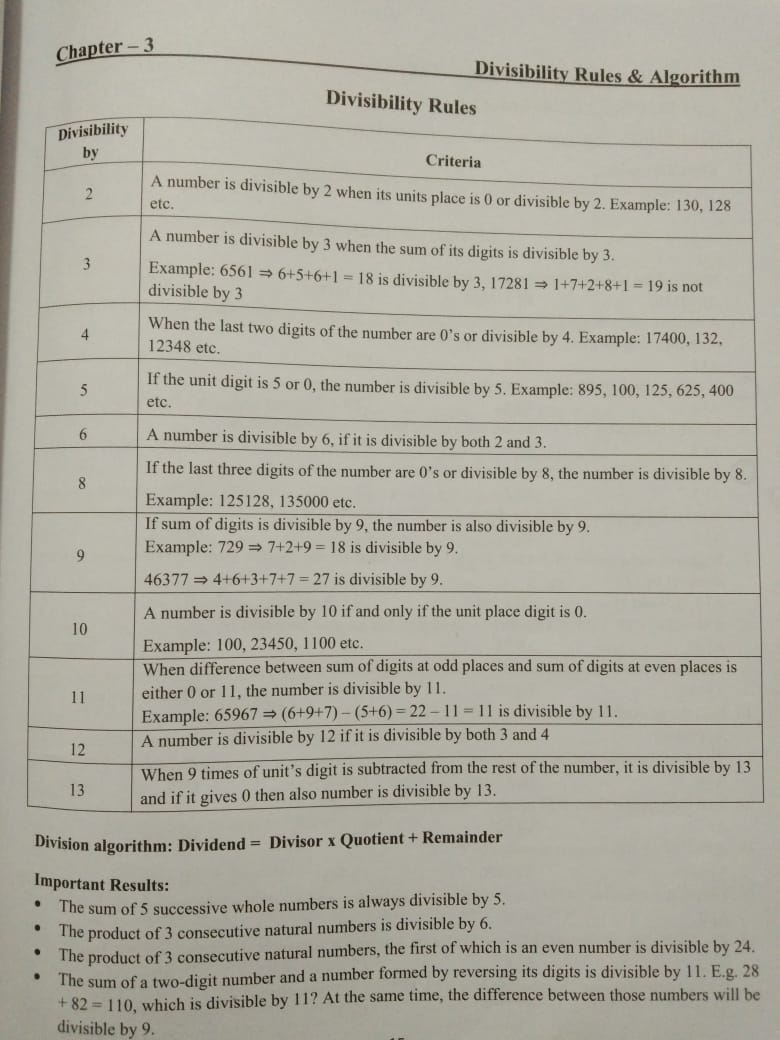
Um die Zahl mit 5 oder 2 zu überprüfen und als diese Zahl (wenn mul mit 5) zu multiplizieren, wenn mul mit 2 (subtrahieren) über die linke Zahl
ZB: 532 DIV von 7
Schritt 1- MUL 2x5 = 10 Schritt 2- Vernachlässigen Sie die Einheitendiffer
Überprüfen Sie die Nummer teilbar, wenn ja, die ursprüngliche Nummer ist ebenfalls teilbar.
Ähnlich multiplizieren Sie es mit 2 und subtrahieren Sie es stattdessen.
Multiplizieren Sie die Ziffer der Einheit mit 5 und substrakt, dass der Wert mit der REST -Ziffer multipliziert wird, wenn diese Multile als die Zahl durch 17 teilbar ist.
ZB: 272 IV von 17
Schritt 1-
Mul 2*5 = 10 ** Schritt 2- **
27-10 = 17 17 ist um 17 teilt, daher ist 272 durch 17 abzweigen.
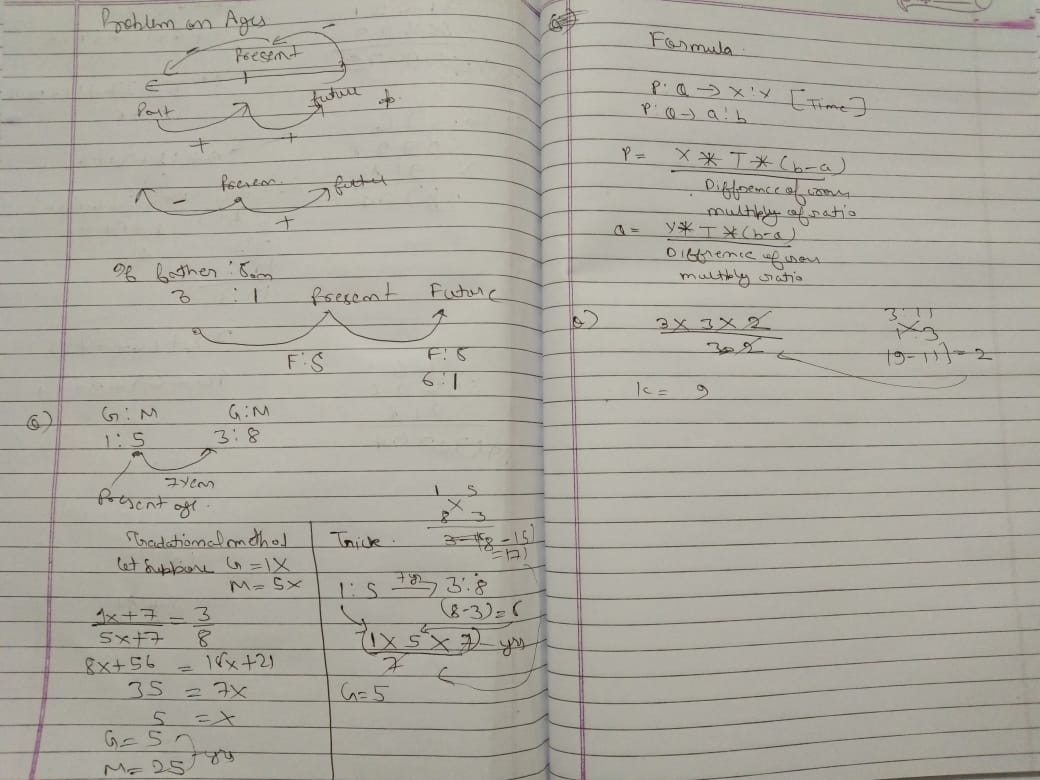
Das Gesicht oder die Zifferblatt des Uhrens ist ein Kreis, dessen Umfang in 60 gleiche Teile unterteilt ist, die als winzige Räume bezeichnet werden.
Stunden Hand und winzige Hand, eine Uhr hat zwei Hände. Die kleinere Hand wird als Stundenhand oder kurze Hand bezeichnet und die größere Hand oder lange Hand genannt.
In 60 Minuten gewinnt die winzige Hand 55 Minuten Räume über der Stundenzeigung.
(In 60 Minuten bewegt sich die Hour -Hand 5 Minuten Räume, während die winzige Hand 60 Minuten Räume bewegt. Tatsächlich beträgt der Raumgewinn der winzigen Hand in Bezug auf die Stunde 6 60 bis 5 = 55 Minuten.)
Beide Hände einer Uhr fällt einmal pro Stunde zusammen.
Die Hände einer Uhr sind in der gleichen geraden Linie, wenn sie übereinstimmen oder zueinander entgegengesetzt sind.
Wenn sich die beiden Hände einer Uhr im rechten Winkel befinden, sind sie 15 Minuten Räume voneinander entfernt.
Wenn sich die Hände einer Uhr in entgegengesetzte Richtungen befinden, sind sie 30 Minuten Räume voneinander entfernt.
Winkel nach Stundenhand in 12 Stunden = 360 ° verfolgt
Winkel von winziger Hand in 60 min verfolgt. = 360 ° .
Theta (auch bekannt als Grad) = 30 x H- (11/2) xm
Reflaxwinkel = 360 - Theta
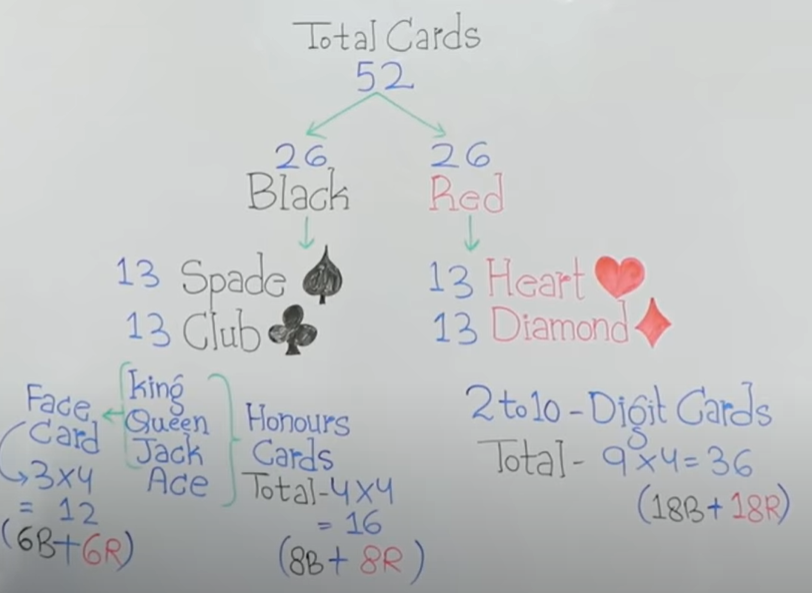
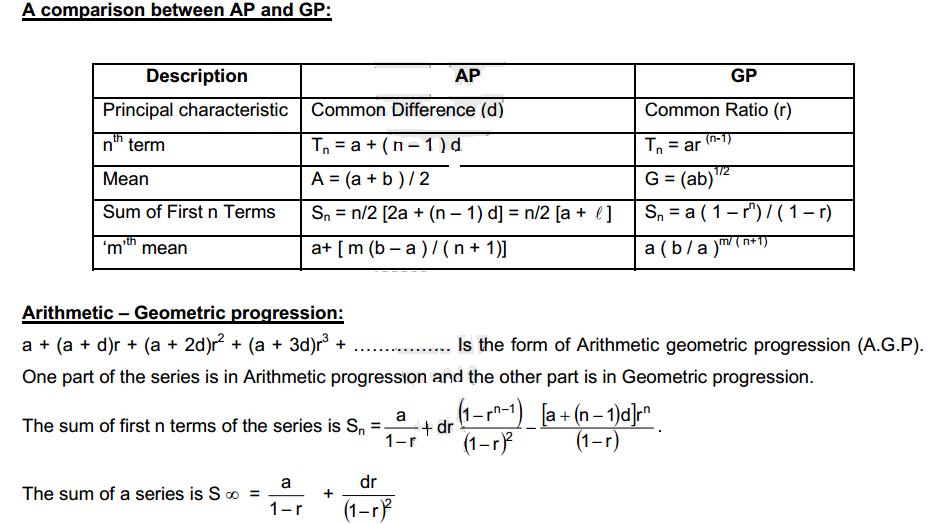

1. Natürliche Zahlen (n) = 1, 2, 3 ,. . . . 2. Ganze Zahlen (W) = 0, 1, 2, 3 ,. . . . 3. Intezers (z) = −∞. . . –2, –1, 0, 1, 2, 3 ,. . . 4. Rationale Zahlen (q) = die Zahlen des Formulars P⁄Q wobei q ≠ 0. z . 5. Irrationale Zahlen (i) = die Zahlen der Form x1⁄n ≠ Intezer. Auch π und E auch irrationale Zahlen, die sie nicht terminieren und nicht wieder aufnehmen .
Andere Arten von Zahlen: a. Sogar Zahlen: Zahlen, die genau durch 2 teilbar sind. Diese Zahlen sind im Format von 2n. B. Ungewöhnliche Zahlen: Zahlen, die Rest 1 ergibt, wenn sie durch 2. Zahlen geteilt werden. Diese Zahlen befinden sich im Format von 2n ± 1. C. Primzahlen: Die Zahlen, die durch 1 teilbar sind, und die Zahl selbst sind Primzahlen. Die geringste Primzahl ist 2. D. Zusammengesetzte Zahlen: Die Zahlen sind durch mehr als 2 Zahlen teilbar.
ungerade ± ungerade = sogar;
Sogar ± gleich = sogar;
Sogar ± ungerade = ungerade
ungerade × ungerade = ungerade;
Sogar × sogar = sogar;
Sogar × ungerade = gleichmäßig.
ungerade (eine beliebige Zahl) = ungerade
sogar (eine beliebige Zahl) = sogar
(a - b) 2 = (a2 + b2 - 2ab)
(a + b) 2 = (a2 + b2 + 2ab)
(a + b) (a - b) = (a2 - b2)
(a3 + b3) = (a + b) (a2 - ab + b2)
(A3 - B3) = (A - B) (A2 - AB + B2)
(a + b + c) 2 = a2 + b2 + c2 + 2 (ab + bc + ca)
(A3 + B3 + C3 - 3ABC) = (A + B + C) (AR> 2 + B2 + C2 - AB - BC - AC)
Schnelle Tipps und Tricks
STEP1: Wenn die angegebenen Ausdrücke vereinfacht werden, müssen erste Klammern in der Reihenfolge entfernt werden: '––', '()', '{}', '[]'
STEP2: Die Operationen sollen ausschließlich in der Reihenfolge durchgeführt werden: Teilung, Multiplikation, Addition und Subtraktion
Bodmas ist die Verknüpfung, die verwendet wird, um sich an das Verfahren zur Vereinfachung zu erinnern.
B: Klammer
O: Bestellung (dh Strom, Quadratwurzel usw.)
D: Division (von links nach rechts)
M: Multiplikation (von links nach rechts)
A: Addition (von links nach rechts)
S: Subtraktion (von links nach rechts)
STEP1: Wenn die angegebenen Ausdrücke vereinfacht werden, müssen erste Klammern in der Reihenfolge entfernt werden: (), {}, []
STEP2: Die Operationen sollen ausschließlich in der Reihenfolge durchgeführt werden: Teilung, Multiplikation, Addition und Subtraktion
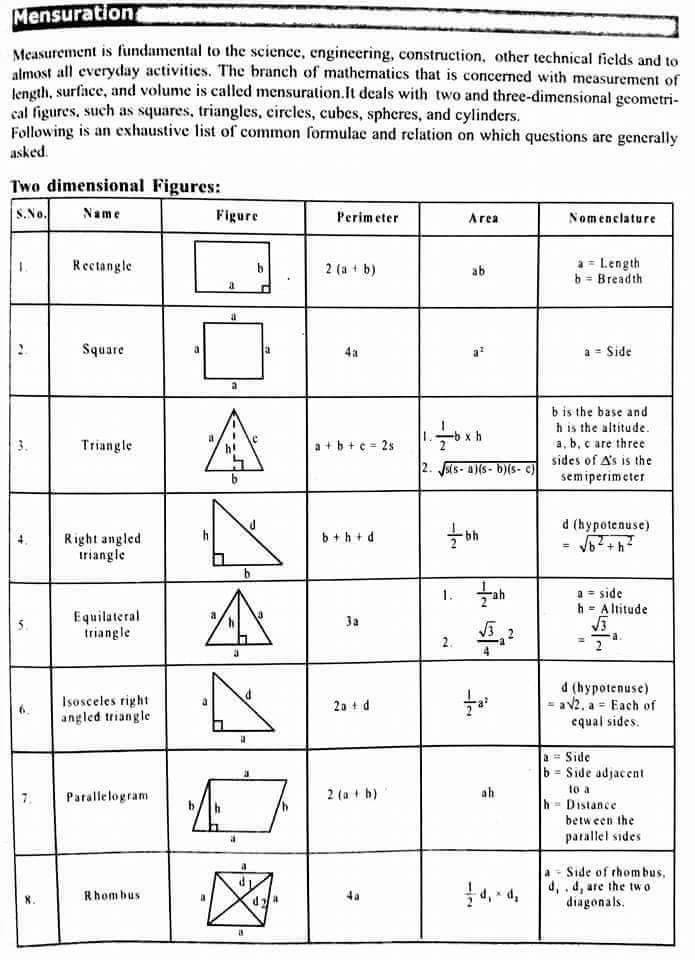
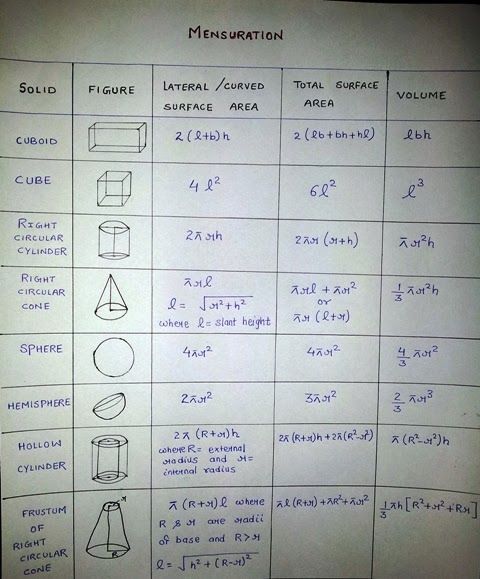
** Wichtige Formel: **
Wichtige Formel
Summe des Quadrats von n natürlicher Zahl = n (n+1) (2n+1)/2
Summe der n natürlichen Zahl = n (n+1)/2
Sum in ap = nx (a+l)/2
Avg der ersten n ungerade Zahl = n
Avg von First n gleichnummer = n+1
Avg von n naturat nummer = (n+1)/2
Avg von zahlung * Gesamtzahl = Summe
Bevölkerungsbasierte Frage
Verhältnis und Verhältnis
Code/Decodieren
Protokoll
Amcat Verbale Frage
Negativer Rest
Berechtigungstest
735/2
735/704
3/704
3/735
Lösung
 Option A

Find the LCM of the numerators.

LCM (147, 30) = 1470

Step 2: Find the HCF of denominators.

HCF (64, 44) = 4

So, the LCM of 147/64 and 30/44 is (LCM of Numerators) / (HCF of Denominators) = 1470 / 4 = 735/2
A) 5 Meilen pro Stunde
B) 10 Meilen pro Stunde
C) 12 Meilen pro Stunde
D) 20 Meilen pro Stunde
Lösung
 Option C

Let the speed of the river=x mph, then

Time taken row 30 miles upstream and 30 miles downstream = 30/(15-x) + 30/(15+x) = 9/2

= 10/(15-x) + 10/(15+x) = 3/2

= 2[10(15+x) + 10(15-x)] = 3(15-x)²

= 300 + 20x + 300 – 20x = 675 -3x²

x² = 25 or x=5
A) 3 Tage
B) 4 Tage
C) 4,5 Tage
D) 5,4 Tage
Lösung
 option A

Working 5 hours a day, A can complete the work in 8 days = 5*8 = 40 hours

Working 6 hours a day, B can complete the work in 10 days = 6*10 = 60 hours

(A+B)’s 1 hour’s work = (1/40+1/60)

=(3+2)/120

= 1/24

Hence, A and B can complete the work in 24 hours which is equal to 3 days.
A) 6,5 Liter
B) 5 Liter
C) 4 Liter
D) 7,5 Liter
Lösung
 Option B

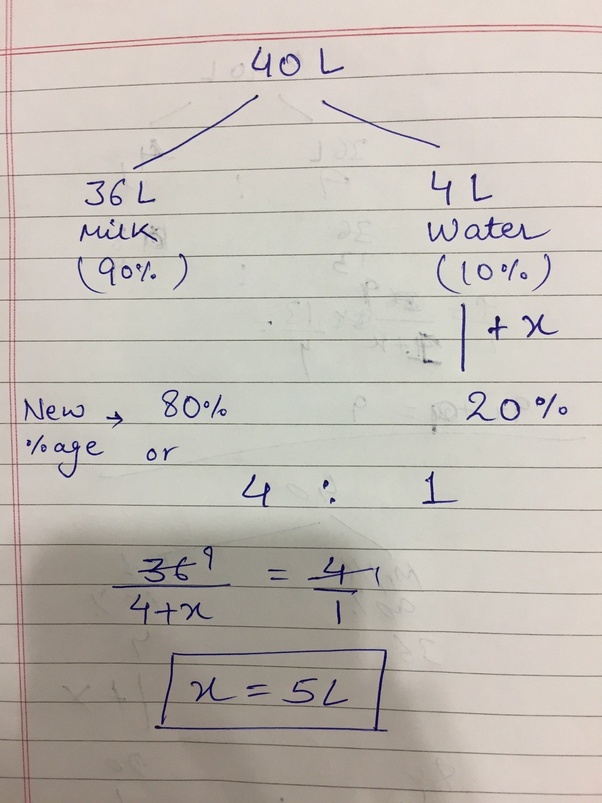
A mixture of 40 liters of milk = 36 liters of Milk and 4 liters of water = 90:10 ratio

Now the new mixture should be in the ratio of 80:20

Hence 80% is equivalent to 36 liters (no addition of milk is done)

100% is (36/80)*100 = 45 liters of milk is present in the new mixture

Thus water shall be added= (45 – 36 – 4) = 5 liters of water

**or**
A) 12 Mitternacht
B) 3 Uhr
C) 6 Uhr
D) 9 Uhr
Lösung
 Option D

Four different devices beep after every 30 mins, 60 mins, 90 mins and 105 mins.

LCM of 30,60,90 and 105 is 1260.

Which means the devices beep together after every 1260 mins = 1260/60 = 21 hours

Hence 12 noon + 21 hours = 9 a.m
A) 21 m
B) 26 m
C) 28 m
D) 29 m
Lösung
 Option C

When A travels 100 m, B travels 75 m. Hence A:B = 100:75

When B travels 100 m, C travels 96 m. Hence B:C = 100:96

When B Travels 75 m, C travels (96 x 75)/100 = 72 m

Hence B:C = 75:72.

Therefore, A:B:C = 100:75:72.

So, when A Travels 100 m, C travels 72 m.

Therefore, A beat C by 28 m
A) 62
B) 68
C) 66
D) 69
Lösung
 Option A

70% students passed in physics = 30% failed in Physics.

65% students passed in Chemistry = 35% failed in Chemistry

Percentage of students failed in both subject = 27%.

Percentage of students failed = 35 + 30 – 27

= 38%.

Percentage of students passed = 100 – 38% = 62%
A) 40
B) 60
C) 100
D) 160
Lösung
 Option D

15 oxen take 80 days so, 6 oxen take x days

x = 15*80/6 = 200 days

20 oxen also take 80 day. So, 2 cows take y days

y = 20*80/2 = 800 days

Together work will be done in 800*200/(800+200) = 160 days
A) 297/10377
B) 188/121
C) 21/34
D) 33/163
Lösung
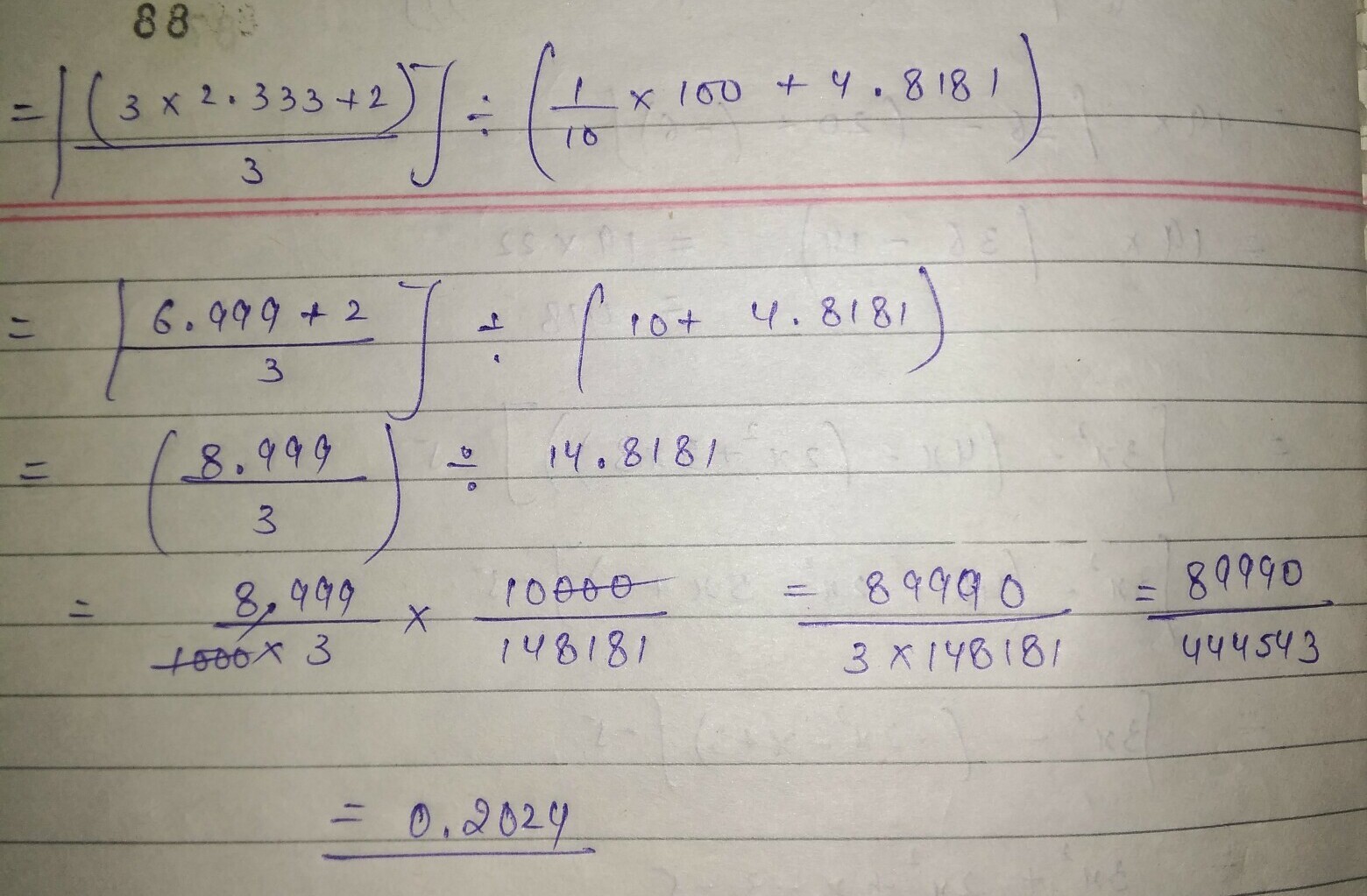
Solution: Option D
A) 6c4
B) 6p4
C) 4^6
D) 6^4
Lösung
C is correct because all 4 can get 4 ticket one by one
A) 550
B) 450
C) 350
D) 150
Lösung
 Option B

Going through the options,

Taking Cost Price as Rs 450.

Profit = 650 – 450 = 200

Loss = 350 – 450 = 100

Clearly profit is twice the loss incurred.

Hence, Rs 450 is the correct option.
A) 7 Stunden 30 Minuten
B) 8 Stunden
C) 8 Stunden 15 Minuten
D) 8 Stunden 25 Minuten
Lösung
 Option C

In 1hr, Ronald types = 32/6 pages and Elan types = 40/5 pages

If they work together they will type = 32/6 + 40/5 = 40/3 pages in 1 hr

Time needed  to complete the assignment is = (3 x 110)/40 = 33/4 = 8hrs 15mins

Hence, the time required is 8 hrs 15 mins.
A) verringerte sich um 20%
B) erhöhte sich um 20%
C) erhöhte sich um 10%
D) verringerte sich um 10%
Lösung
Option D

Let the initial Price = Rs.100 and initial sales = 100

So, the initial revenue = Rs. 10000

Now, the price is reduced to 25% which is equal to Rs.75 and Sales is increased by 20% which is equal to 120.

Now new revenue = 120 x 75 = Rs. 9000

Change in revenue = (10000 – 9000) = Rs.1000 decrease

% decrease = (1000/10000) x 100 = 10%

Hence, the correct option is decrease of 10%.
A) 19/21
B) 3/7
C) 2/21
D) 1/3
Lösung
 Option A

Probability of getting atleast one nestle chocolate = [(10C1 x 5C1) + 10C2] / 15C2

[(10 x 5) + (10 x 9)/2] / [(15 x 14)/2] = 19/21.

Hence, the required probability is 19/21.
A) Rs 7490
B) Rs 7350
C) Rs 8250
D) Rs 8530
E) Keine davon
Lösung
 Option B

Solution:
Share of Anil : Share of Ruhi : Share of Teena is
2000×8 + 2600×4 : 2800×8 + 3200×4 : 4200×4
33 : 44 : 21
so share of Teena = 21/(33+44+21) × 34300 = Rs 7350
A) Rs 3200
B) Rs 4500
C) Rs 3800
D) Rs 3500
E) Rs 2800
Lösung:
 Option C

Solution:
Rs 3800
Solution:
(7000-x)*8*4/100 = x [ (1 + 10/100)2 – 1] + 226
70*8*4 – 32x/100 = 21x/100 + 226
2240 – 226 = 53x/100
2014 = 53x/100
So, x = Rs 3800
A) 16
B) 18
C) 12
D) 10
E) 22
Lösung:
 Option A

Solution:
20 men in 8 days so 16 men in 20 × 8/16 = 10 days and
25 women in 12 days so 10 women in 25 × 12/10 = 30 days
So in 3 days, they complete (1/10 + 1/30) × 3 = 2/5
So remaining work = 1 – 2/5 = 3/5
20 m 1 work in 8 days and x men 3/5 work in 6 days
So 20 × 8 × 3/5 = x × 6 × 1
So, x = 16 men
A) 3/5
B) 2/9
C) 1/8
D) 3/7
E) Keine davon
Lösung:
 Option D

Solution
Number of multiples of 3 in 140 = 140/3 = 46
Number of multiples of 7 in 140 = 140/7 = 20
Number of multiples of 3×7= 21 in 140 = 140/21 = 6
So required probability = (46+20 – 6)/140 = 60/140 = 3/7
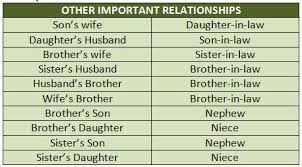
A. Mutter
B. Schwester
C. Nichte
D. Mütterliche Tante
Lösung c
A) a
B) b
C) c
D) e
Lösung:
 E
Solution:
D is father of A and grandfather of F. So, A is father of F.

Thus. D and A are the two fathers. C is the sister of F So. C is the daughter of A.

Since there is only one mother, it is evident that E is the wife of A and hence the mother of C and F.

So, B is brother of A There are three brothers. So. F is the brother of C.

 Clearly, A is E's Husband.
A) Mutter
B) Schwester
C) Tante
D) Großmutter
Lösung:
 C

Solution:
Only son of Amar's mother's father — Amar's maternal uncle.

So, the girl's maternal uncle is Arnar's maternal uncle. Thus, the girl's mother is Amar's aunt.
A) 12
B) 13
C) 14
D) 15
Lösung:
 A

Solution:
A+B=B+C+12
so
A=12
Lösung:
 P=(3*2*5)/1=30
Q=(4*2*5)/1=40
Lösung:
 (150+x)/15=16.

=)150+x=240

=x=90
Durchschnitt ihres Alters = Summe/Zahl =) 90/5 = 18
A. 154 °
B. 170 °
C. 160 °
D. 180 °
Lösung:
 We know that angle traced by hour hand in 12 hrs = 360°

From 8 to 2, there are 6 hours.

Angle traced by the hour hand in 6 hours =  6×360/12= 180°
A. 120 °
B. 125 °
C. 130 °
D. 135 °
Lösung:
 C
Solution:
Angle traced by hour hand in 12 hrs. = 360°.

Angle traced by it in	11/3	hrs =	(360/12	x	11/3)°	= 110°.
Angle traced by minute hand in 60 min. = 360°.

Angle traced by it in 40 min. =	(360/60x40)°= 240°.
 Required angle (240 - 110)° = 130°.
A. 3.6
B. 7.2
C. 8.4
D. 10
Lösung:
 B
Solution:

Speed =600/(5 x 60)= 2 m/sec.
Converting m/sec to km/hr (see important formulas section)
   =	(2 x18/5)km/hr= 7.2 km/hr.
A. 10
B. 8
C. 6
D. 4
Lösung:
 C

Opposite direction
speed=60+6=66km/h
time=distance/speed=110/66=5/3 km/h
in m/s 5/3x18/5=6
A. 14,4 Sekunden
B. 15,5 Sekunden
C. 18,8 Sekunden
D. 20,2 Sekunden
Lösung :
 A
Solution :
Let length of each train be x meter.

Then, speed of 1st train = x/18m/sec

Speed of 2nd train = x/12 m/sec

Now,

When both trains cross each other, time taken

=2x/(x/18+x/12)=2x/(2x+3x)/36=(2x X 36)/5x=725=14.4seconds
767 495 359 291 257?
A. 230 B. 240 C. 250 D. 280 E. 260
Soluton:
 B

Solution:

797-495=272
495-359=136
So which means it is half of previous diffrences
272/2=136
291-257=32
34/2=17
So subtract 17
257-17=240
50 67 33 84 16?
A. 101 B. 109 C. 107 D. 103 E. 201
Lösung:
 A

Solution:
17 is the gap once increase and than decrease follow this order you will get the answer
192
10
38
2
3
Lösung:
 3

Solution:
Logic is 2×1 + 1 = 3, 3 × 2 + 4 =10, 10 × 3 + 9 = 39, 39 × 4 + 16 = 172…. So in place of 38, it should be 39.
999980
999990
999984
Keine davon
Lösung:
Greatest six-digit number is 999999. Divide this number by 12 and get remainder as 3. Since the remainder is 3, if you subtract 3 from the number, the remaining number will be a multiple of 12. So the greatest such number will be 999999 – 3 =999996.
5000
4950
4980
4900
Keine davon
Lösung:
 Multiples of 3 between 100 and 200 are 102, 105, 108,… ,198.
Here, the first term = 102
last term = 198
Let the number of Multiples of 3 between 100 and 200 = n

W.K.T: Arithmetic Progression Formula:
an = a1 + (n - 1)d
Where, an = last term = 198
a1 = first term = 102
d = common difference = 105 - 102 = 3
---> 198 = 102 + (n - 1) * 3
---> 198 - 102 = (n - 1) * 3
---> 96 = (n - 1) * 3
---> (n - 1) = 96/3 = 32
---> n = 32 + 1
---> n = 33

Formula:
Sum of n terms = Sn = (n/2) * (a + l)
where n = number of elements = 33
a = first term = 102
l = last term = 198
Thus, using the above formula, Sum of all natural numbers between 100 and 200 which are multiples of 3 = (33/2) * (102 + 198)
= (33/2) * 300
= 33 * 150
= 4950
A. 5, 15, 25
B. 12, 15, 18
C. 10, 15, 20
D. -10, -15, -20
Lösung:
Assuming that the numbers are (a – d), a, (a + d) and their sum is 45, we get the middle number as 15. Now, the product (a – d) (a + d) = 200. Solving, we get d = 5. Therefore, the numbers are 10, 15 and 20.
Lösung:
 x/(y+1)=1/2

and

(x+1)/y=1

2x-y=1 ....eq (1)

x=y-1 ....eq (2)

by solving eq 1 and 2 we get

x=2 and y=3
A. 80
B. 75
C. 42
D. 53
Antwort:
 Option D

Solution:
As the Number gives a remainder of 4 when it is divided by 7, then the number must be in form of (7x + 4)

The same gives remainder 1 when it is divided 4, so the number must be in the form of {4 × (7x + 4) + 1}

Also, the number when divided by 3 gives remainder 2, thus number must be in form of [3 × {4 × (7x + 4) + 1} + 2]

Now, On simplifying,
[3 × {4 × (7x + 4) + 1} + 2]
= 84x + 53
We get the final number 53 more than a multiple of 84 Hence, if the number is divided by 84,
The remainder will be 53
A) 55/601
B) 601/55
C) 11/120
D) 120/11
Lösung:
 Then, a + b = 55 and ab = 5 x 120 = 600.
The required sum =1a+1b = a+bab= 55600=11120
Lösung:
5
2, 3, 5, 8, 13, 20, 34
Lösung:
 first+second=third
follow this order you get **20** as a answer
196, 169, 144, 121, 100, 80
Lösung:
 80
First - Second=2
A. Cmn
B. Uji
C. Vij
D. ijt
Lösung:
C
Olnnie
Onilen
Noilen
Lnoeni
Onnlie
Lösung:
1
A. 9 Jahre
B. 10 Jahre
C. 13 Jahre
D. 15 Jahre
Lösung:
 Correct Option: (c)

We have to find the population of cities A and B after x years.

Step 1: Population of city A = 68000, decreases at the rate of 1200/year
68000 – 1200x

Step 2: Population of city B = 42000, increases at the rate of 800/year
42000 + 800x

Step 3: Find after how many population of cities A and B are equal.

Population of city A = Population of city B
68000 – 1200x = 42000 + 800x
68000 – 42000 = 1200x + 800x
26000 = 2000x
x = 13
A. 28 Tage
B. 30 Tage
C. 34 Tage
D. 40 Tage
Lösung:
 Correct Option: (b)

Step 1: Number of days worked by the worker = 60 and he remained idle for x days. Therefore, number of days worked = (60 – x)

Step 2: Each day he was getting paid Rs. 20. Therefore, the payment received for working days = (60 – x) 20

Step 3: After subtracting the amount which he forfeited, he receives Rs. 300.

Therefore,
(60 – x) 20 – 10x = 300
1200 – 20x – 10x = 300
900 = 30x
x = 30 days
A. 11
B. 15
C. 16
D. 18
Lösung:
 Correct Option: (b)

Let’s the number of farmers be y.

Step 1: Find number of heads
= (50 hens + 45 goats + 8 horses + y farmers)
= (103 + y)

Step 2: Number of feet
= [(Hens 2 × 50) + (45 × 4) + (8 × 4) + (y × 2)]
= [100 + 180 + 32 + 2y]
= 312 + 2y

Step 3: Find number of farmers
(312 + 2y) – (103 + y) = 224
312 + 2y – 103 – y = 224
y = 15
A) 49500
B) 49950
C) 45000
D) 49940
Lösung:
 The Correct answer is (B)

Answer with explanation:

The digit 5 has two place values in the numeral, 5 * 105 = 50,000 and 5 * 101 = 50.

∴Required difference = 50000 - 50 = 49950
A) Rs. 180
B) Rs. 204
C) Rs. 210
D) Rs. 220
Lösung:
 Option B
CI=P(1+r/100)^t

CI=2500*(1+4/100)^2
CI=2704
So the diffrenece is 204
A) Rs. 5222.2
B) Rs. 5777.7
C) Rs. 6222.2
D) Rs. 6777.7
Lösung:
 Option B
80000*12/65000*6=32/13
113/32*20000=5777.7rs
A) Donnerstag
B) Mittwoch
C) Freitag
D) Sonntag
Lösung:
 The correct option is (B)

Explanation:

The year 1996 is divisible by 4, so it is a leap year with 2 odd days.

As per the question, the first day of the year 1996 was Monday, so the first day of the year 1997 must be two days after Monday. So, it was Wednesday.
A) 1,5 km/h
B) 2 km/h
C) 2,5 km/h
D) 1 km/h
Lösung:
 The correct answer is B

Answer with explanation:

Let the speed of stream = X km/hr

Speed of boat = 5 km/hr

Speed upstream = 3km/hr

Apply formula: Speed upstream = speed of boat - speed of stream

∴ 3 = 5 - X

X = 5 - 3 = 2 km/hr
A) 24
B) 22
C) 23
D) 21
Lösung:
 The Correct answer is (B)

Explanation:

The hands of a clock coincide only once between 11 O' clock and 1 O' clock, so in every 12 hours, the hands of a clock will coincide for 11 times.

∴ In a day or 24 hours, the hands of a clock will coincide for 22 (11+11) times.
A) 10 Stunden
B) 12 Stunden
C) 14 Stunden
D) 16 Stunden
Lösung:
 Option B
Water enter in 1 hr=1/6
Water empty in 1 hr=1/12
net=1/6-1/12=1/12
or 12hr
A) 8,5 km/s
B) 7,5 km/s
C) 9,5 km/s
D) 6,5 km/s
Lösung:
 Option B
sec=4*60=240s
speed=500/240=25/12m/s
in km/s speed is =25/12*18/5=7.5km/s.
Lösung:
 Surface area of cube=6a^2
600=6*a^2
a=10
diagonal of cube=sqrt(3)*a
ans=sqrt(3)*10
Der HCF von zwei Zahlen beträgt 23 und die beiden anderen Faktoren ihres LCM sind 13 und 14. Das größere der beiden Zahlen ist:
A. 276
B. 299
C. 322
D. 345
Lösung:
 Answer: Option C

Explanation:

Clearly, the numbers are (23 x 13) and (23 x 14).

 Larger number = (23 x 14) = 322.
Sechs Glocken beginnen zusammen und in Abständen von 2, 4, 6, 8 10 bzw. 12 Sekunden. In 30 Minuten, wie oft Tribut zusammen?
A. 4
B. 10
C. 15
D. 16
Lösung:
 Answer: Option D

Explanation:

L.C.M. of 2, 4, 6, 8, 10, 12 is 120.

So, the bells will toll together after every 120 seconds(2 minutes).

In 30 minutes, they will toll together	30	+ 1 = 16 times.
2
Sei n die größte Zahl, die 1305, 4665 und 6905 teilt und jeweils den gleichen Rest zurücklässt. Dann ist die Summe der Ziffern in n::
A. 4
B. 5
C. 6
D. 8
Lösung:
 Answer: Option A

Explanation:

N = H.C.F. of (4665 - 1305), (6905 - 4665) and (6905 - 1305)

  = H.C.F. of 3360, 2240 and 5600 = 1120.

Sum of digits in N = ( 1 + 1 + 2 + 0 ) = 4
A. 9000
B. 9400
C. 9600
D. 9800
Lösung
 Answer: Option C

Explanation:

Greatest number of 4-digits is 9999.

L.C.M. of 15, 25, 40 and 75 is 600.

On dividing 9999 by 600, the remainder is 399.

 Required number (9999 - 399) = 9600.
A) 50 Tage
B) 60 Tage
C) 84 Tage
D) 9,333 Tage
Lösung:
 Answer: C

Explanation:

Let 5 men can reap a field in x days
So, put the same quantities on the same side.
Men: Days
Now, Men and Days are inversely proportional to each other. If we increase the number of men fewer days will be required to complete the work.
Inversely proportional means Apti Chain Rule
Apti Chain Rule

i.e., 5: 15 = 28: x
Or, x = (28*15)/ 5
Or, x = 84 days
Hence, 5 men can reap a field in 84 days.
A) 16
B) 13/5
C) -16/3
D) 12
Lösung:
 Answer: C

Explanation:

Let log2√2 [1/256] = x

We know that loga y = x is similar to ax = y

So, we can write it as [1/256] = (2√2) x

Or, (2√2) x = [1/28]

Or, [21 * 21/2]x = 1/28

Or, 23x/2 = 2-8

Therefore, 3x/2 = -8

Hence, x = (-8 * 2)/ 3 = -16/3
Lösung:
(6!)/(2!)(2!)=180
Lösung:
 You can see number less than 3! are not divisible by 8 so it decide your output
(1!+2!+3!)=9
9%8=1
1 is the answer
A. 2400
B. 2000
C. 1904
D. 1906
E. Keine davon
Lösung:
 106 x 106 - 94 x 94	= (106)2 - (94)2
= (106 + 94)(106 - 94)    [Ref: (a2 - b2) = (a + b)(a - b)]
= (200 x 12)
= 2400.
Die Differenz von zwei Zahlen beträgt 1365. Bei der Teilen der größeren Zahl durch die kleineren erhalten wir 6 als Quotient und 15 als Rest. Was ist die kleinere Zahl?
A. 240
B. 270
C. 295
D. 360
Antwort: Option b
Erläuterung:
 Let the smaller number be x. Then larger number = (x + 1365).

 x + 1365 = 6x + 15

 5x = 1350

 x = 270

Smaller number = 270
A. 1035
B. 1280
C. 2070
D. 2140
Antwort: Option a
Erläuterung:
 Let Sn =(1 + 2 + 3 + ... + 45). This is an A.P. in which a =1, d =1, n = 45.

Sn =	n	[2a + (n - 1)d]	=	45	x [2 x 1 + (45 - 1) x 1]	=		45	x 46		= (45 x 23)
2	2	2
= 45 x (20 + 3)

= 45 x 20 + 45 x 3

= 900 + 135

= 1035.

Shorcut Method:

Sn =	n(n + 1)	=	45(45 + 1)	= 1035.
2	2
[A] 7 Stunden 30 Minuten
[B] 8 Stunden
[C] 8 Stunden 15 Minuten
[D] 8 Stunden 25 Minuten
Lösung)
 C)
Ronald 1 hr work = 32/6=16/3
Elan 1 hr work = 40/5=8
Show both work in an hr=8+16/3=40/3
Show for 110 pages it will take 110/(40/3) or (110 x 3)/40=33/4hr
Since: convert it into hr 4*8=32 1 left in 1 hr 60 min 60/4=15min

Show final answer is 8hr 15 mon
Lösung:
Link zur Lösung
 4^x/4^x + 6^x/4^x = 9^x/4^x
Now,
1 + (3/2)^x=(3/2)^(2x)
Consider (3/2)^x=u
Then,
1 + u = u^2
Simplifying this

0 = u^2 -u -1

By solving we get
u = (1 + sqrt(5))/2

and this equal to
(1 + sqrt(5))/2 = (3/2)^x
Take log both side

and you get 1.187 approx value.
 Solution:
circumference of an wheel=πd
=22/7×98
22×14
=308cm =1 revolution
distance covered
1540×100=154000
now,154000÷308
500 rotations
A. 2%
B. 2,02%
C. 4%
D. 4,04%
E. Keine davon
Antwort: Option d
 100 cm is read as 102 cm.
∴ A1 = (100 x 100) cm2 and A2 (102 x 102) cm2
(A2 - A1) = [(102)2 - (100)2]
              = (102 + 100) x (102 - 100)
              = 404 cm2
∴ Percentage error
=(404100×100×100)%=4.04%
 Area of the square=484cm
side-22cm
perimeter=22*4=88cm
circumfrence of cirlce is 2*pi*r=88
r=14cm
area=pi*r*r=616cm^2
Lösung
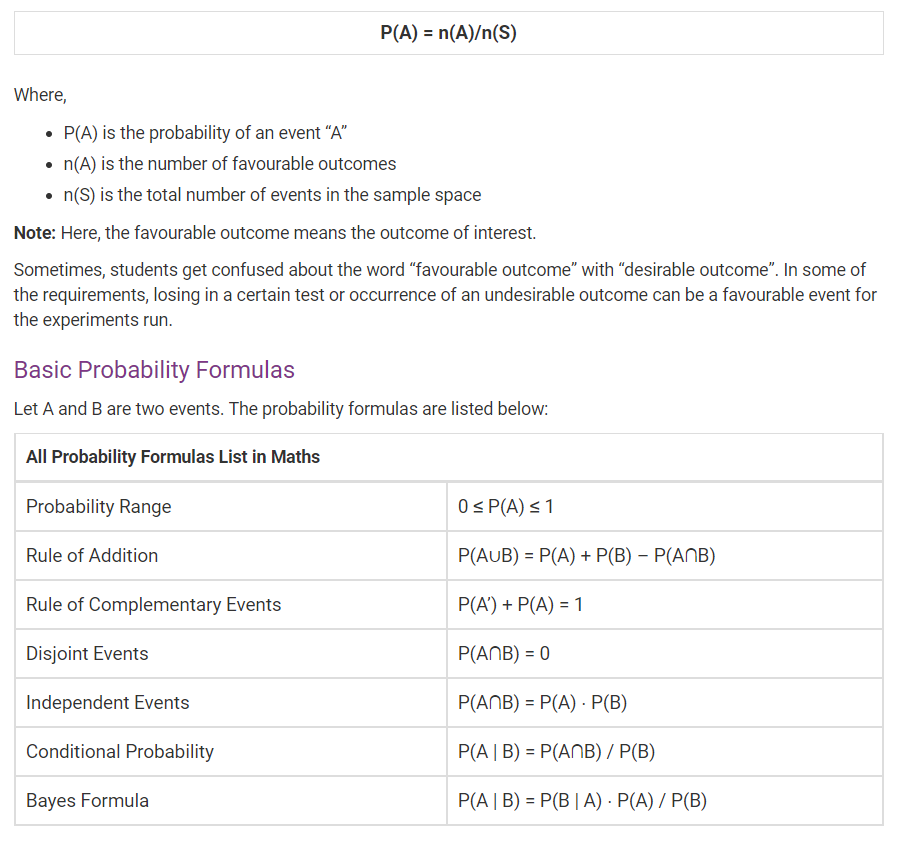
 P(A)=1/9
P(B)=1/6
P(C)=26/36=13/18
Apply GP
you get 2/5 ans





