sift
sift-0.15.0

SIFT是一种命令行工具,可从JVM字节码分析和反向模型软件系统设计。它通过使用称为系统模型模板的预定义模板来处理.class或.jar文件来运行。这些模板提供了有关技术堆栈或特定项目构造的知识,该模板使工具能够生成系统的全面模型。
最终的系统模型由描述系统的结构和行为的实体组成。
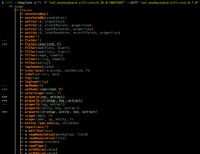
--diff选项分析新功能或更改的影响。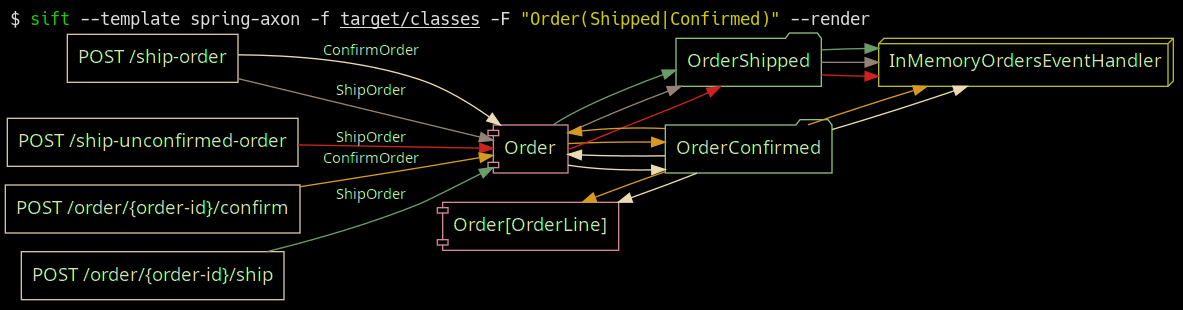
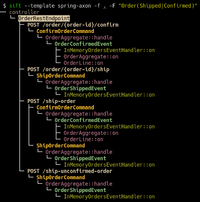
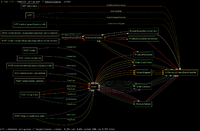
带有轴突框架模板的弹簧靴;在https://github.com/eugenp/tutorials/tree/master/axon中过滤和确认的订单。
 Usage: sift [OPTIONS]

  Sift is a command-line tool that analyzes and reverse models software system designs
  from JVM bytecode.

Template options:
  -t, --template TEMPLATE               The template producing the system model.
  -l, --list-templates                  Print all installed templates.
  -T, --list-entity-types               Lists entity types defined by template.
  -f, --class-dir, --classes PATH|URI|MAVEN_COORD
                                        Provide class input as a directory, JAR file, URI
                                        (pointing to a JAR), or Maven coordinate.
  -d, --diff FILE_JSON|URI|MAVEN_COORD  Compare the system model from '-f' with another,
                                        specified as a JSON file (previously saved System
                                        Model), class input as a directory, JAR file, URI
                                        (pointing to a JAR), or Maven coordinate.
  --profile                             Print execution times and input/output for the
                                        executed template.
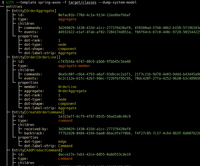
  -D, --dump-system-model               Print all entities along with their properties and
                                        metadata.

Entity tree/graph options:
  -L, --max-depth INT                   Max display depth of the tree.
  -F, --filter REGEX                    Filter nodes by label. (repeatable)
  -S, --filter-context REGEX            Filter nodes by label, while also including
                                        sibling nodes. (repeatable)
  -e, --exclude REGEX                   Exclude nodes when label matches REGEX.
                                        (repeatable)
  -c, --column [all|element-id|element-type|entity-type]
                                        Columns to display. (repeatable)
  -E, --exclude-type ENTITY_TYPE        Exclude entity types from tree. (repeatable)
  -r, --tree-root ENTITY_TYPE           Tree built around requested entity type.
                                        (repeatable)
  --no-emoji                            Disables printing emoji in entity labels.

Visualization options:
  -R, --render                          Render entities with graphviz's DOT language.
  --edge-layout [spline|polyline|ortho]
                                        Sets the layout for the lines between nodes.
                                        (default: spline)

Serialization options:
  -s, --save FILE_JSON  Save the resulting system model as json.
  --load FILE_JSON      Load a previously saved system model.

Debug options:
  --debug                               Print log/logCount statements from the executed
                                        template.
  -X, --debug-inverse-trace             Print the inverse element trace for the elements
                                        specified with --debug-element-traces
  -x, --debug-element-trace ELEMENT_ID  Print all element traces leading to the specified
                                        elements

Miscellaneous options:
  -a, --ansi [none|ansi16|ansi256|truecolor]
                                        Override automatically detected ANSI support.
  --stacktrace                          Print stacktrace to stderr if an error occurs
  --version                             Print version and release date.
  -m, --maven-repository VALUE          Additional maven repositories to use for
                                        downloading artifacts. Maven central
                                        (https://repo1.maven.org/maven2/) and local user
                                        repositories are always included.
  --statistics                          Print internal statistics about the system model
                                        template context.
  --generate-completion [bash|zsh|fish]
  -h, --help                            Show this message and exit

Examples:
  sift --template spring-axon -f my-spring-project
  Model the system using the "spring-axon" template on the classes in the
  "my-spring-project" directory.

  sift -t spring-axon -f . -F "Order(Created|Shipped)"
  Model the system using the "spring-axon" template on the current directory's
  classes, filter nodes containing the regular expression "Order(Created|Shipped)".

  sift -t spring-axon -f . --diff feature-01.json
  Compare the current design of the system using the "spring-axon" template on
  the classes in the current directory against a previously saved system model
  from "feature-01.json" and show the differences.

  sift -t sift -f "net.onedaybeard.sift:core:0.13.0" --diff "net.onedaybeard.sift:core:0.9.0"
  Compare two different versions of the DSL API using the 'sift' template, specified
  by their maven coordinates.
系统模型描述了系统内实体的结构和关系。实体是系统中的对象或组件,由类,方法,字段,参数或通用签名独特地识别。
实体由其Entity.Type分类。实体类型代表系统中任何值得注意的部分。例如,类型可以包括REST控制器,HTTP端点,入站/出站消息,RDS,存储库等。
$ sift --template spring-axon -f target/classes --list-entity-types
entity types of spring-axon
  1 aggregate
  2 aggregate-ctor
  1 aggregate-member
  6 command
  6 command-handler
  1 controller
 13 endpoint
  7 event
  7 event-handler
  7 event-sourcing-handler
  1 projection
  3 query
  4 query-handler
系统模型模板描述了如何在给定技术堆栈和/或特定于项目的构造中识别实体。这些模板以声明性的DSL编写,用于从输入类中产生系统模型。 DSL提供了高级抽象,用于识别和相互关联的实体与阶级结构或使用。
下面的代码显示了一个简单的系统模型模板,该模板可以标识系统内的REST控制器和HTTP端点,并将两个实体关联。
 val controller = Entity . Type ( " controller " )
val endpoint = Entity . Type ( " endpoint " )

template {
    // iterate over all input classes
    classes {
        annotatedBy< RestController >() // filter classes
        entity(controller)            // mark remaining as 'controller'
        methods {                     // iterate all controller methods
            annotatedBy< Endpoint >()   // filter @Endpoint methods
            entity(endpoint)

            // associate controllers with their endpoints
            controller[ " endpoints " ] = endpoint
        }
    }
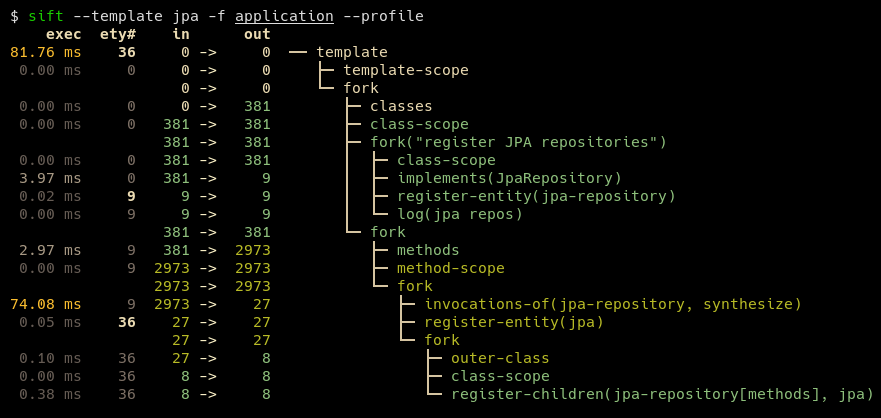
}输入元素(类,方法,参数,字段,通用签名)分批按线处理。系统模型模板的执行可以与--profile选项相比。
典型的模板可以用约100-200行的代码表示。一些模板,例如JPA和JDBI的模板,显着较短。用户定义的模板可以包含多个现有模板,以更好地描述基础系统,同时还可以保持最终的DSL简洁。
SIFT需要Java 17或更高版本的运行时间。
对于Window用户,建议在WSL下进行筛选,直到适当的Windows路径到位为止。
安装SIFT的最简单方法是克隆存储库并运行mvn install ,然后将SIFT.ZSH | SH复制到$PATH上的位置,例如:
mvn install 。这将SIFT安装到~/.local/share/sift/binsift.zsh或sift.sh复制到~/.local/bin/sift main分支总是指向最新的发布提交。
如果安装了GRAALVM和本机图像,则可以使用native-image Maven配置文件: mvn install -P native-image构建本机二进制。所得的二进制将位于~/.local/share/sift/bin/sift中。 sift.zsh和sift.sh首先检查本机二进制是否可用,否则尝试运行jar。
本机二进制文件比JAR快得多,但是如果需要对系统模型(VIA --load或--diff )或包含未知类型的系统模型(例如,来自withValue() )的系统模型模板,则可能会引起问题。