qdrant client
v1.12.1


QDRANT矢量搜索引擎的Python客户库。
客户库库和SDK,用于QDRANT矢量搜索引擎。
库包含所有QDRANT API的类型定义,并允许同步和异步请求。
客户端允许直接呼叫所有QDRANT API方法。它还为经常需要操作提供了一些其他帮助方法,例如初始收集上传。
有关更多详细信息,请参见Quickstart!
Python客户端API文档可在python-client.qdrant.tech上找到
pip install qdrant-client
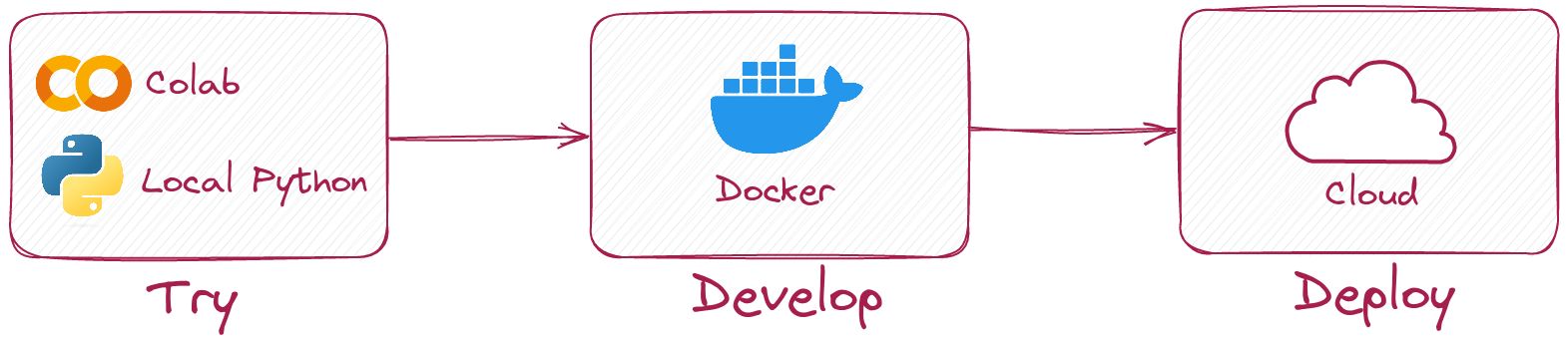
Python客户端允许您在无需运行QDRANT服务器的情况下在本地模式下运行相同的代码。
只需这样的初始化客户端:
 from qdrant_client import QdrantClient

client = QdrantClient ( ":memory:" )
# or
client = QdrantClient ( path = "path/to/db" )  # Persists changes to disk
本地模式可用于开发,原型制作和测试。
pip install qdrant-client[fastembed]
Fastembed是用于在CPU上创建快速向量嵌入的库。它基于ONNX运行时,并允许使用类似GPU的性能对CPU进行推断。
QDRANT客户端可以使用快速培训来创建嵌入并将其上传到QDRANT。这允许简化API并使其更直观。
 from qdrant_client import QdrantClient

# Initialize the client
client = QdrantClient ( ":memory:" )  # or QdrantClient(path="path/to/db")

# Prepare your documents, metadata, and IDs
docs = [ "Qdrant has Langchain integrations" , "Qdrant also has Llama Index integrations" ]
metadata = [
    { "source" : "Langchain-docs" },
    { "source" : "Linkedin-docs" },
]
ids = [ 42 , 2 ]

# Use the new add method
client . add (
    collection_name = "demo_collection" ,
    documents = docs ,
    metadata = metadata ,
    ids = ids
)

search_result = client . query (
    collection_name = "demo_collection" ,
    query_text = "This is a query document"
)
print ( search_result )
快速培训还可以利用GPU来更快地嵌入。要启用GPU支持,请安装
pip install ' qdrant-client[fastembed-gpu] ' from qdrant_client import QdrantClient
# Initialize the client
client = QdrantClient ( ":memory:" ) # or QdrantClient(path="path/to/db")
client . set_model ( client . DEFAULT_EMBEDDING_MODEL , providers = [ "CUDAExecutionProvider" , "CPUExecutionProvider" ])注意:
fastembed-gpu和fastembed是相互排斥的。您只能安装其中之一。如果您以前安装了
fastembed安装,则可能需要从新鲜的环境开始安装fastembed-gpu。
要连接到QDRANT服务器,只需指定主机和端口:
 from qdrant_client import QdrantClient

client = QdrantClient ( host = "localhost" , port = 6333 )
# or
client = QdrantClient ( url = "http://localhost:6333" )
您可以使用Docker本地运行QDrant Server:
docker run -p 6333:6333 qdrant/qdrant:latest查看QDRANT存储库中的更多启动选项。
您可以注册并使用Qdrant Cloud来获得1GB RAM的免费层帐户。
拥有群集和API键后,您可以这样连接到它:
 from qdrant_client import QdrantClient

qdrant_client = QdrantClient (
    url = "https://xxxxxx-xxxxx-xxxxx-xxxx-xxxxxxxxx.us-east.aws.cloud.qdrant.io:6333" ,
    api_key = "<your-api-key>" ,
)创建一个新集合
 from qdrant_client . models import Distance , VectorParams

client . create_collection (
    collection_name = "my_collection" ,
    vectors_config = VectorParams ( size = 100 , distance = Distance . COSINE ),
)
将向量插入集合
 import numpy as np
from qdrant_client . models import PointStruct

vectors = np . random . rand ( 100 , 100 )
# NOTE: consider splitting the data into chunks to avoid hitting the server's payload size limit
# or use `upload_collection` or `upload_points` methods which handle this for you
# WARNING: uploading points one-by-one is not recommended due to requests overhead
client . upsert (
    collection_name = "my_collection" ,
    points = [
        PointStruct (
            id = idx ,
            vector = vector . tolist (),
            payload = { "color" : "red" , "rand_number" : idx % 10 }
        )
        for idx , vector in enumerate ( vectors )
    ]
)
搜索类似的向量
 query_vector = np . random . rand ( 100 )
hits = client . search (
    collection_name = "my_collection" ,
    query_vector = query_vector ,
    limit = 5  # Return 5 closest points
)
搜索具有过滤条件的类似向量
 from qdrant_client . models import Filter , FieldCondition , Range

hits = client . search (
    collection_name = "my_collection" ,
    query_vector = query_vector ,
    query_filter = Filter (
        must = [  # These conditions are required for search results
            FieldCondition (
                key = 'rand_number' ,  # Condition based on values of `rand_number` field.
                range = Range (
                    gte = 3  # Select only those results where `rand_number` >= 3
                )
            )
        ]
    ),
    limit = 5  # Return 5 closest points
)
在我们的文档中查看更多示例!
要使用GRPC上传(通常更快)(通常更快)的集合,请使用以下初始化:
 from qdrant_client import QdrantClient

client = QdrantClient ( host = "localhost" , grpc_port = 6334 , prefer_grpc = True )从1.6.1版本开始,所有Python客户端方法均在异步版本中提供。
要使用它,只需导入AsyncQdrantClient而不是QdrantClient :
 from qdrant_client import AsyncQdrantClient , models
import numpy as np
import asyncio

async def main ():
    # Your async code using QdrantClient might be put here
    client = AsyncQdrantClient ( url = "http://localhost:6333" )

    await client . create_collection (
        collection_name = "my_collection" ,
        vectors_config = models . VectorParams ( size = 10 , distance = models . Distance . COSINE ),
    )

    await client . upsert (
        collection_name = "my_collection" ,
        points = [
            models . PointStruct (
                id = i ,
                vector = np . random . rand ( 10 ). tolist (),
            )
            for i in range ( 100 )
        ],
    )

    res = await client . search (
        collection_name = "my_collection" ,
        query_vector = np . random . rand ( 10 ). tolist (),  # type: ignore
        limit = 10 ,
    )

    print ( res )

asyncio . run ( main ())
在异步模式下支持GRPC和REST API。可以在此处找到更多示例。
该项目使用git挂钩运行代码格式。
安装使用PIP3安装pre-commit的预pip3 install pre-commit ,并设置带有pre-commit install的挂钩。
预先承诺需要python> = 3.8





