
The editor of Downcodes learned that the research team of the Swiss Federal Institute of Technology (ETH Zurich) has made an eye-catching breakthrough: they successfully cracked Google's reCAPTCHA v2 system with a 100% success rate! This research not only challenges the reliability of existing verification code technology, but also triggers in-depth thinking in the industry about the future development direction of verification codes. The research team used the advanced YOLO image recognition algorithm to cleverly bypass the heavy protection of reCAPTCHA v2, and its efficiency and accuracy far exceeded previous research results.
Recently, a research team from the Swiss Federal Institute of Technology (ETH Zurich) published a shocking research result. They successfully cracked Google's reCAPTCHAv2 system, and the success rate reached 100%! This research triggered a discussion about image verification codes. Extensive discussion ahead.
The research team used an advanced image recognition algorithm called YOLO to automatically solve all three tasks in reCAPTCHAv2 by segmenting and classifying pictures. This includes classifying images in a 3x3 grid, segmenting single images, and handling dynamic classification tasks that change.
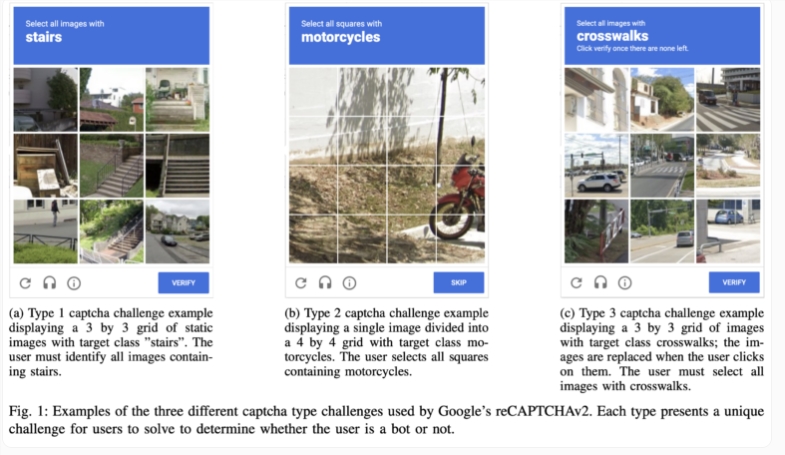
To this end, they also prepared a dataset containing approximately 14,000 annotated images for classification tasks, while utilizing a pre-trained YOLOv8 model for segmentation.
The study's success rate was significantly higher than previous research, which had a success rate of only 68% to 71%. Researchers found that reCAPTCHAv2 relies heavily on browser cookies and data when identifying users. In order to make their automated system undetectable, they used VPNs, simulated real mouse movements and browser data, and ultimately successfully bypassed reCAPTCHA protection.
It is worth mentioning that this research team has made their source code public to facilitate further exploration by other researchers. They propose extending the dataset for splitting tasks and investigating under what circumstances persistent CAPTCHA solving leads to blocking.
This breakthrough research not only demonstrates the powerful potential of AI technology, but also makes us think about how future verification codes should evolve to meet these technical challenges.
Highlight:
1. The Swiss ETH Zurich team successfully cracked Google reCAPTCHAv2 with a success rate of 100%.
2. ? Research on using YOLO algorithm to automatically solve all three reCAPTCHA tasks.
3. ? The research team has disclosed the source code to encourage further research and exploration.
This research result undoubtedly sounded the alarm in the field of verification code security, and also provided a new perspective for the application of artificial intelligence technology in the security field. In the future, verification code technology needs to be constantly innovated and improved to better cope with the challenges of artificial intelligence technology and ensure network security. The editor of Downcodes will continue to pay attention to the latest developments in this field.