Parrot Security Guide
1.0.0


Remarque: vous pouvez facilement convertir ce fichier de démarrage en un PDF dans VSCODE en utilisant ce PDF de marque de rallonge pratique.

Commencer
Obtenir un logiciel
Jeu
Développement de jeux
Configuration d'un espace de travail macOS
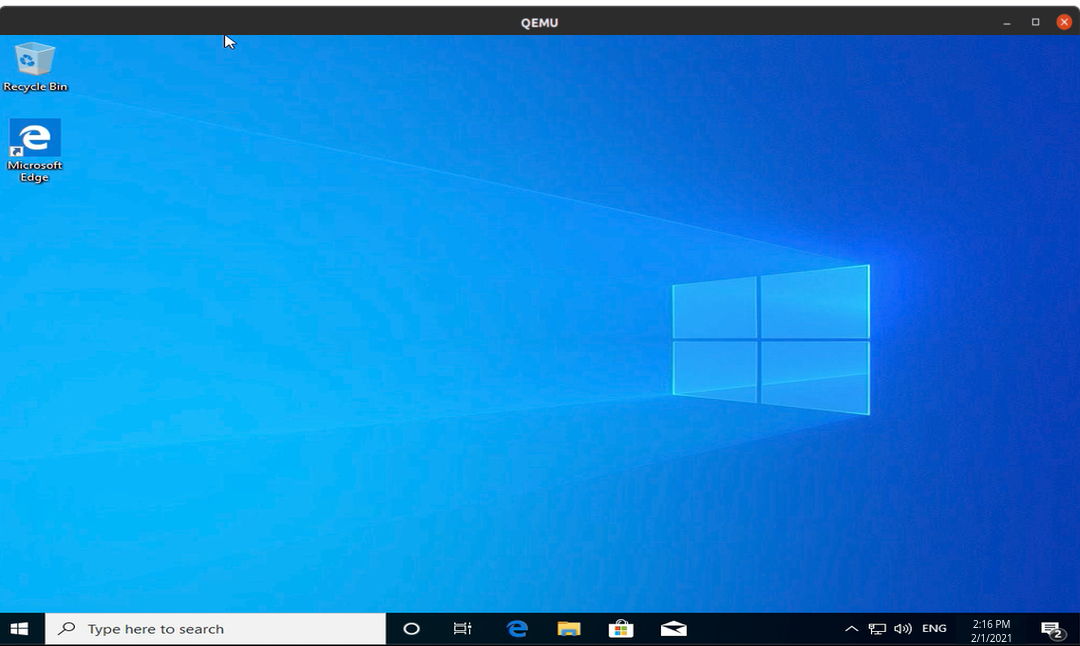
Configuration d'un espace de travail Windows 10
Utilisation des applications Android et Android sur Linux
Édition professionnelle audio / vidéo
Kubernetes
Apprentissage automatique
Robotique
Sécurité open source
Confidentialité différentielle
Développement natif du cloud
Développement DevOps
Réseautage
Bases de données
Parrot Security OS est une distribution Linux open-source et de Debian destinée à diverses tâches de sécurité de l'information, telles que les tests de pénétration, la recherche sur la sécurité, la criminalistique informatique, l'ingénierie inverse et la cryptographie. Il est livré avec Mate comme environnement de bureau par défaut et est développé par l'équipe FrozenBox.
Parrot Security Edition est un système d'exploitation à usage spécial conçu pour le test de pénétration et les opérations de l'équipe rouge. Il contient un arsenal complet d'outils prêts à l'emploi.
Parrot Home Edition est un système d'exploitation à usage général avec l'apparence et la sensation de perroquet typiques. Cette édition est conçue pour une utilisation quotidienne, la confidentialité et le développement de logiciels. Les outils de perroquet peuvent être installés manuellement pour assembler un environnement de pentexation personnalisé et léger.
Les appareils IoT et Cloud Appliances sont des éditions spéciales de la sécurité de Parrot conçues pour les appareils embarqués, les environnements cloud, les machines virtuelles et autres déploiements spéciaux.
Documentation de la sécurité du perroquet
Gitub de sécurité du perroquet
Forum communautaire
Équipe de sécurité du Parrot
Faire un don au projet de sécurité Parrot
Etchher est un logiciel open source et multiplateforme qui facilite le flash des images du système d'exploitation sur une carte microSD ou un périphérique USB.
Rufus est une petite application qui crée des lecteurs USB démarrés, qui peuvent ensuite être utilisés pour installer ou exécuter Microsoft Windows, Linux ou DOS.
Retour au sommet
Remarque 1: Tous ces logiciels sont également disponibles dans d'autres distributions populaires Linux telles que Debian, Linux Mint, Elementary OS, Pop! _OS, Fedora, Manjaro Linux, Endeavouros et Arch Linux.
Remarque 2: Pour que les nouveaux utilisateurs ne sont pas à l'aise avec l'utilisation de la ligne de commande de commande, la section des applications essentielles pour démarrer. De plus, si vous faites défiler plus loin, vous verrez d'autres moyens faciles d'obtenir des applications logicielles via Flathub, Snap Store et AppImages.
Navigateur Google Chrome
Navigateur Microsoft Edge
Code Visual Studio ou Vscodium
Microsoft Teams
Microsoft 365 avec des applications Office (anciennement Office Online)
Google Workspace (anciennement G Suite)
Zoom
Comment installer iCloud sur Ubuntu
Pcloud est le stockage cloud sécurisé (comme GoogledRive), où vous pouvez stocker, partager et travailler sur tous vos fichiers. Vous pouvez y accéder sur n'importe quel appareil, partout où vous allez.
Jitsi Meet est une solution de conférence vidéo 100% open source entièrement cryptée.
L'application Web Cisco WebEx est la version Web de la solution de vidéoconférence Cisco WebEx.
Mou
Application Web Trello
Skype
Discorde
Ventre de l'équipe
Spotify
Apple Music (Web) est la version de l'application Web d'Apple Music qui s'exécute dans Safari, Google Chrome et Mozilla Firefox.
MATLAB Online permet aux utilisateurs d'usiliter Matlab et Simulink via un navigateur Web tel que Google Chrome.
Adobe Lighroom en ligne Editor est une version Web en ligne d'Adobe Photoshop Lightroom. Compte Adobe requis pour se connecter à l'application.
Adobe Spark (Web) est une application vous permet de créer des graphiques sociaux sympas, des vidéos courtes et des pages Web. Compte Adobe requis pour se connecter à l'application.
Photopea est un éditeur d'image en ligne avancé prenant en charge les formats PSD, XCF, Sketch, XD et CDR. (Adobe Photoshop, Gimp, Sketch App, Adobe XD, CorelDraw).
L'éditeur PDF Master est simple et facile à utiliser pour travailler avec des documents PDF équipés d'une puissante fonctionnalité polyvalente. Avec Master PDF Editor, vous pouvez facilement afficher, créer et modifier les documents PDF.
Crossover Linux® est une couche de compatibilité Microsoft Windows (basée sur le vin (le vin n'est pas un émulateur)). La couche de compatibilité croisée permet à des milliers d'applications Windows à fonctionner sur Linux, MacOS ou Chrome OS.
WinApps for Linux est un programme qui exécute des applications Windows telles que Microsoft Office et Adobe dans Linux (Ubuntu / Fedora) et Gnome / KDE comme s'ils faisaient partie du système d'exploitation natif, y compris l'intégration de Nautilus pour un clic droit sur des fichiers de types de mime spécifiques pour les ouvrir.
DaVinci Resolve Video Editor est une solution d'édition vidéo complète qui combine l'édition 8K professionnelle, la correction des couleurs, les effets visuels et le post-production audio tout dans un seul outil logiciel.
Reaper Audio Editor est une application complète de production audio numérique pour les ordinateurs, offrant un ensemble complet audio et MIDI Multitrack, édition, traitement, mixage et mastering.
Flameshot est un logiciel de capture d'écran puissant mais simple à utiliser.
Timeshift pour Linux est une application qui fournit des fonctionnalités similaires à la fonction de restauration du système dans Windows et l'outil Time Machine dans Mac OS. Timeshift protège votre système en prenant des instantanés incrémentiels du système de fichiers à intervalles réguliers. Ces instantanés peuvent être restaurés à une date ultérieure pour annuler toutes les modifications du système.
Stacer est un optimiseur de système open source et un moniteur d'application qui aide les utilisateurs à gérer l'ensemble de leur système. Également disponible en applimage.
NativeFier est un outil de ligne de commande pour créer facilement une application de bureau pour tout site Web avec une configuration minimale. Les applications sont enveloppées par Electron (qui utilise le chrome sous le capot) dans un système d'exécution (.app, .exe, etc.) pour une utilisation sur Windows, MacOS et Linux.
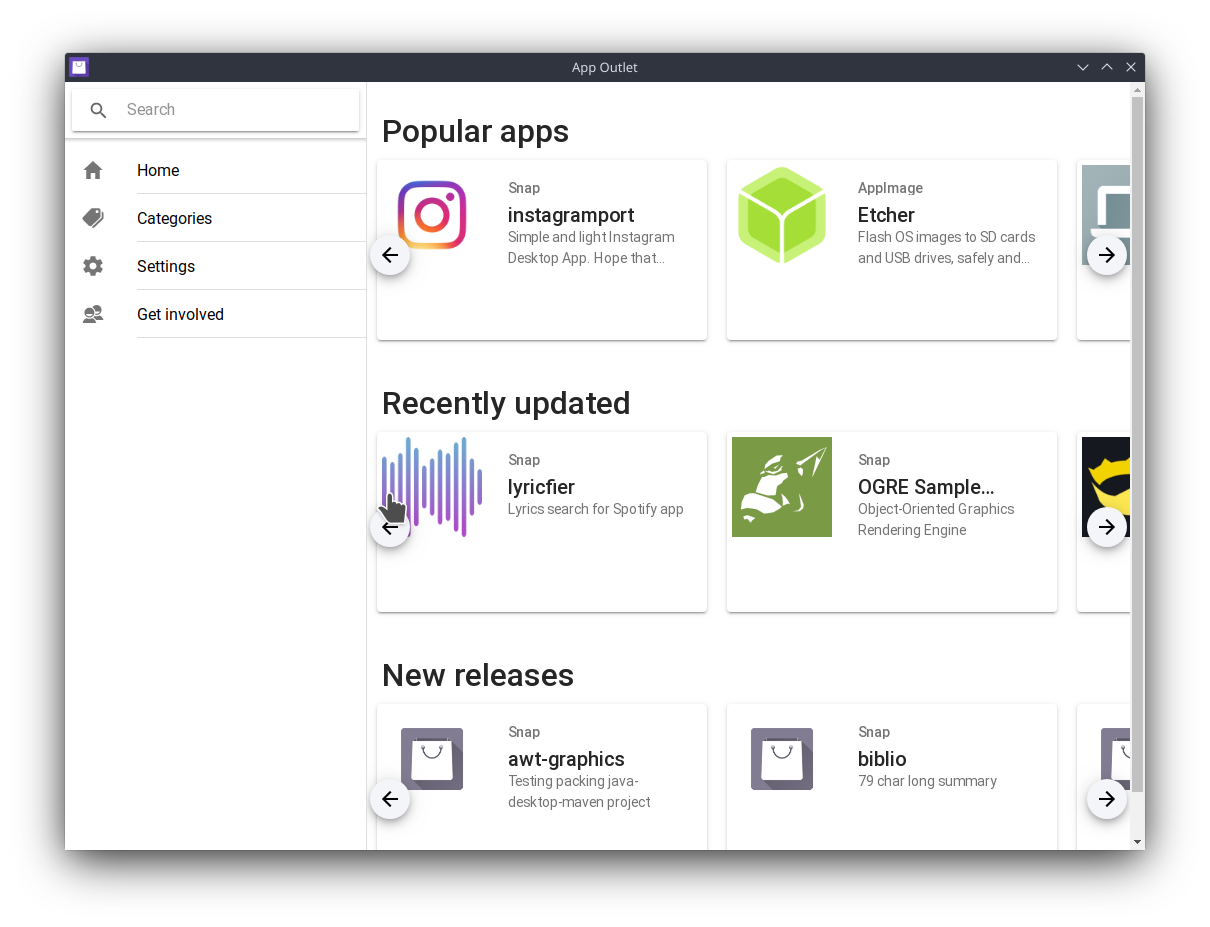
App Outlet est un magasin d'applications universels (FlatPaks, Snaps et AppImages) inspiré du service en ligne Linux App Store.
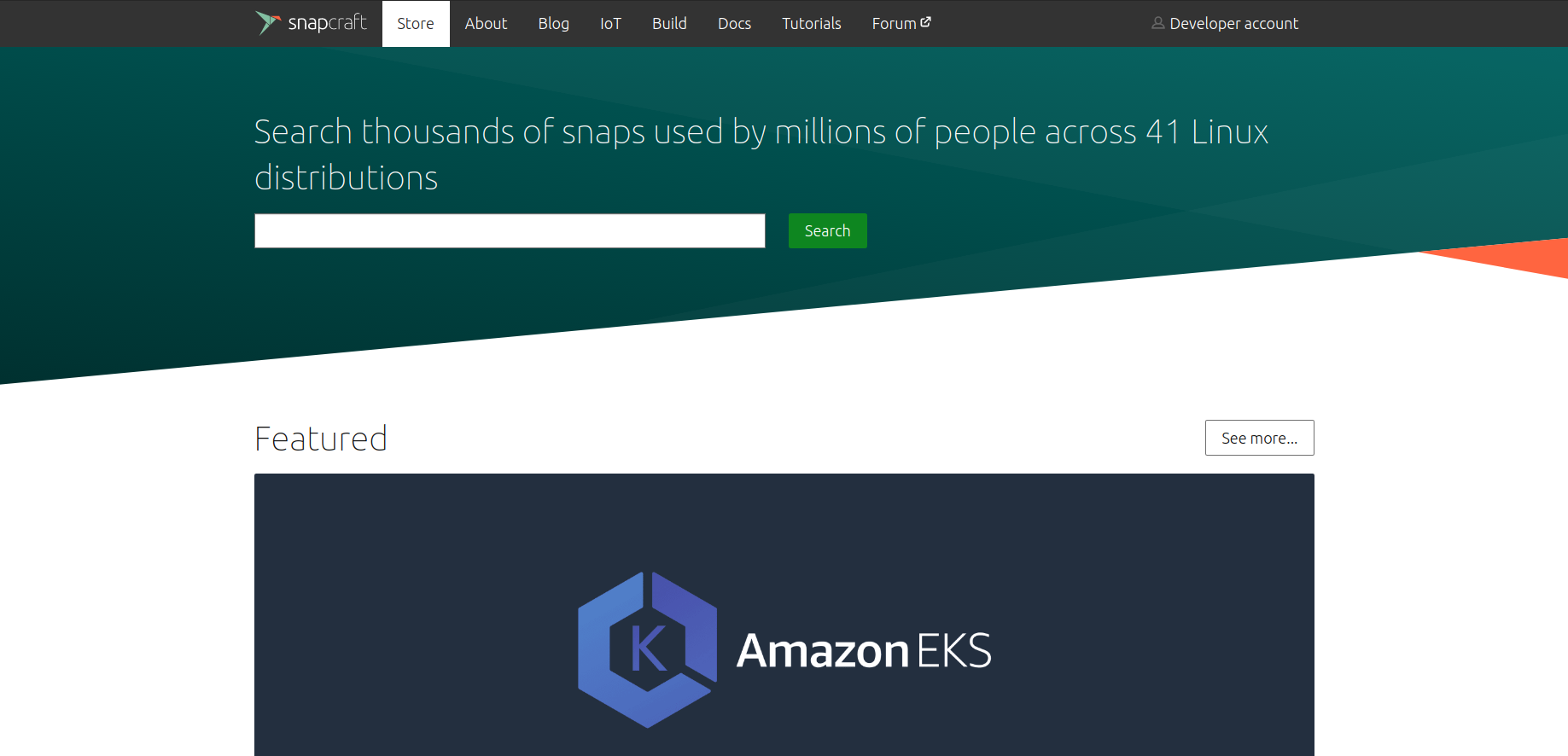
Snap Store est un service de construction et de distribution pour les applications SNAP.
Forum Snapcraft
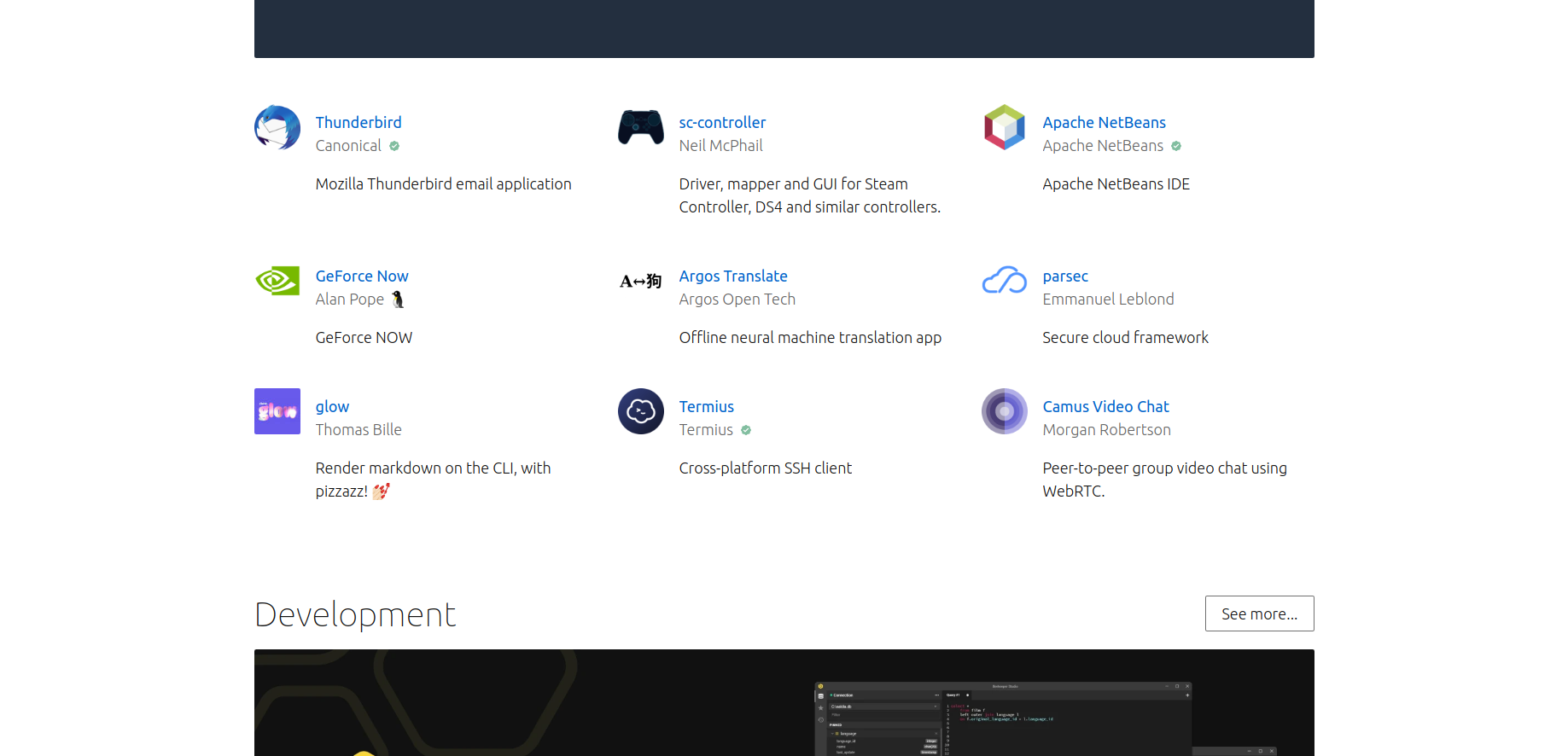
Flathub est un service de construction et de distribution pour les applications Flatpak.
Forum de Flathub
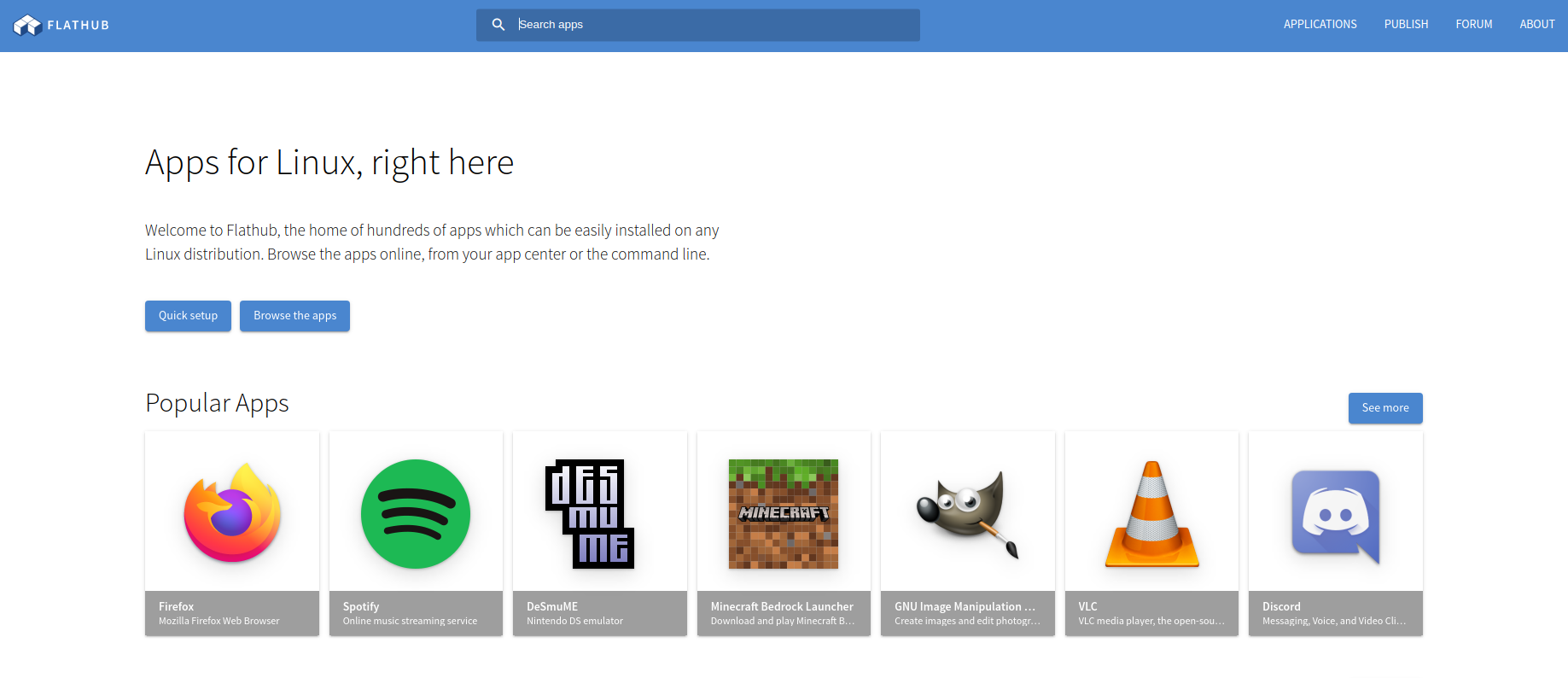
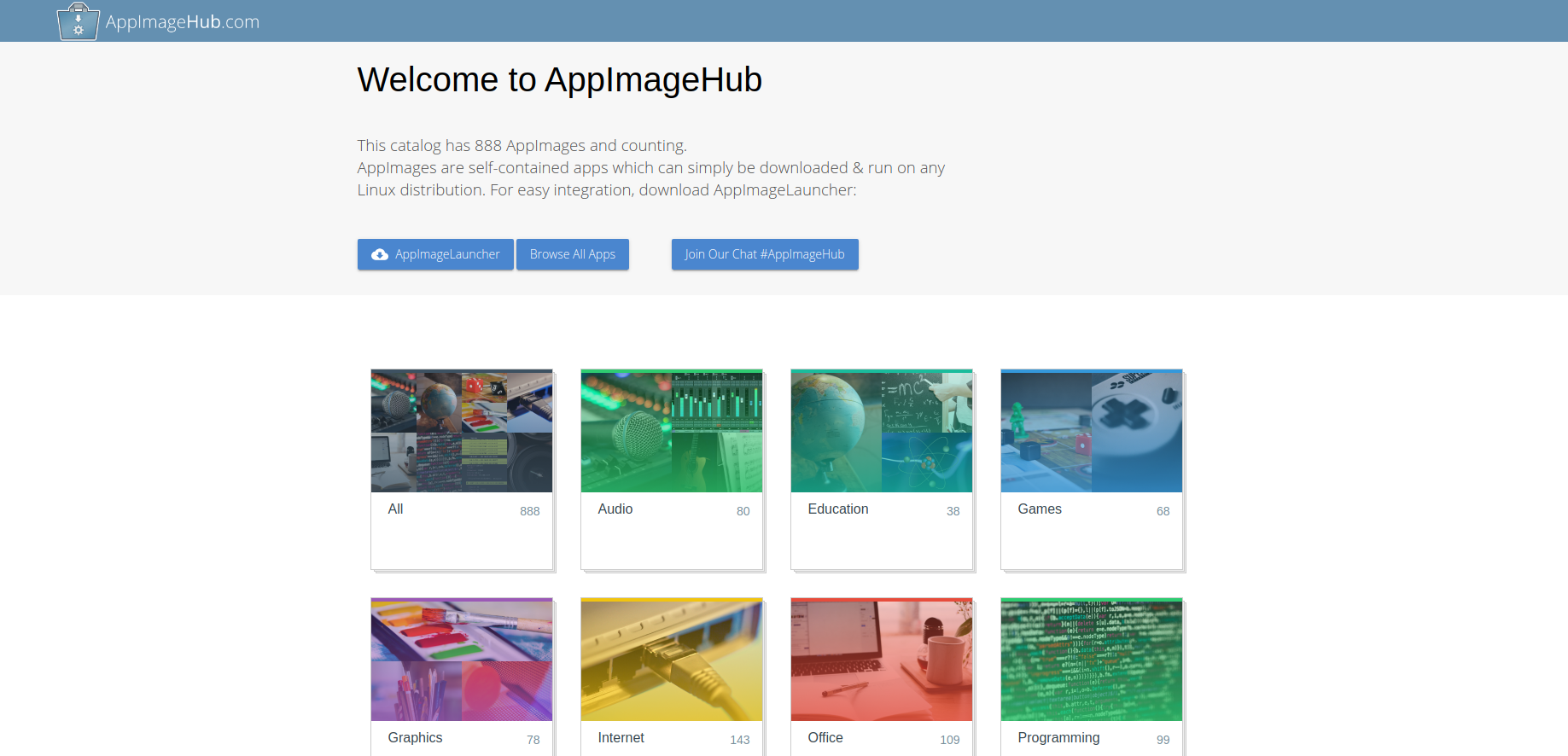
AppImageHub est un service de build et de distribution pour les applications AppImage.
AppImage Manager est un gestionnaire de packages pour AppImages.
Forum d'appliage
Retour au sommet
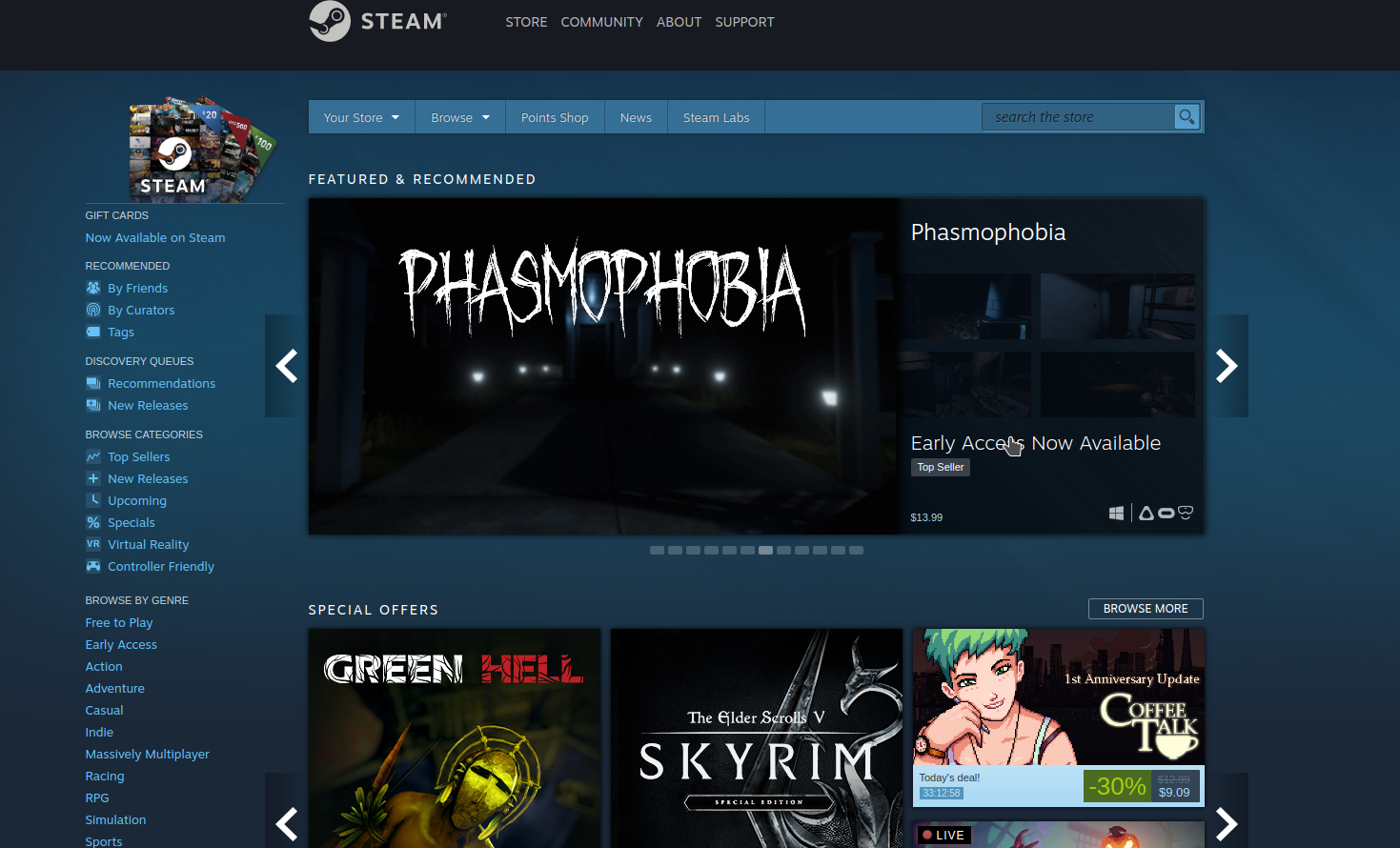
Faire vapeur
Ou
wget https://steamcdn-a.akamaihd.net/client/installer/steam.debProton est un outil à utiliser avec le client Steam qui permet aux jeux qui sont exclusifs à Windows à fonctionner sur le système d'exploitation Linux. Il utilise du vin pour faciliter cela.
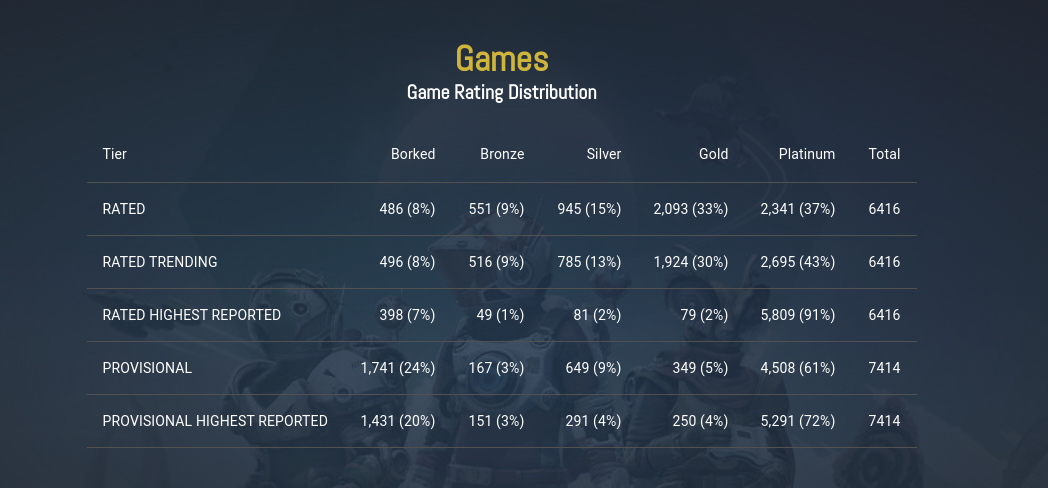
Protondb est une collection de plus de 100 000 rapports de jeux d'autres joueurs alors qu'ils testent les jeux avec Proton sur Linux et fournissent des scores agrégés de la performance des jeux. Un bassin croissant de suggestions fournit des ajustements que vous pouvez essayer de faire fonctionner les jeux pendant que Proton continue de se développer. En plus de cela, vous pouvez explorer le catalogue de jeux Steam sur ce site pour parcourir et découvrir un large éventail de titres qui n'étaient pas disponibles auparavant pour une utilisation sur Linux.
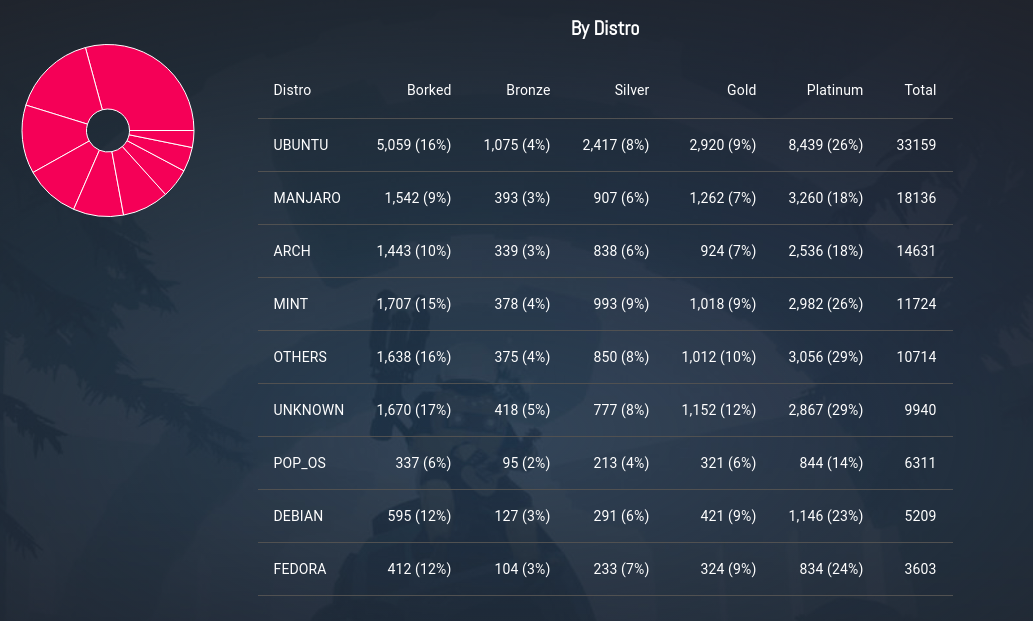
Lutris est un client de jeu pour Linux. Il vous donne accès à tous vos jeux vidéo à l'exception de la génération de console actuelle. En outre, s'intègre bien à d'autres magasins comme GOG, Steam, Battle.net, Origin, Uplay et de nombreuses autres sources qui vous permettent d'importer votre bibliothèque de jeux et votre communauté existantes, les scripts d'installation vous donnent une configuration entièrement automatisée.
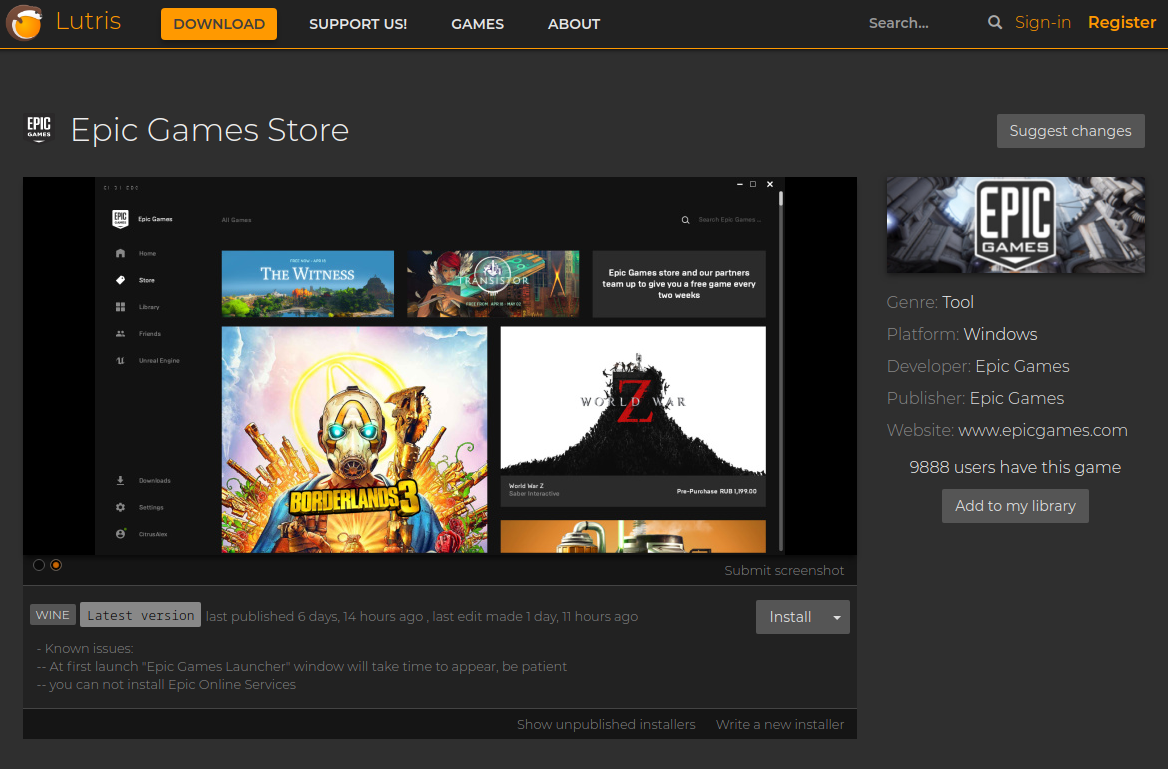
Ajouter un magasin de jeux épiques
GameHub est une bibliothèque unifiée pour tous vos jeux. Il vous permet de stocker vos jeux de différentes plateformes dans un seul programme pour vous permettre de gérer plus facilement vos jeux.
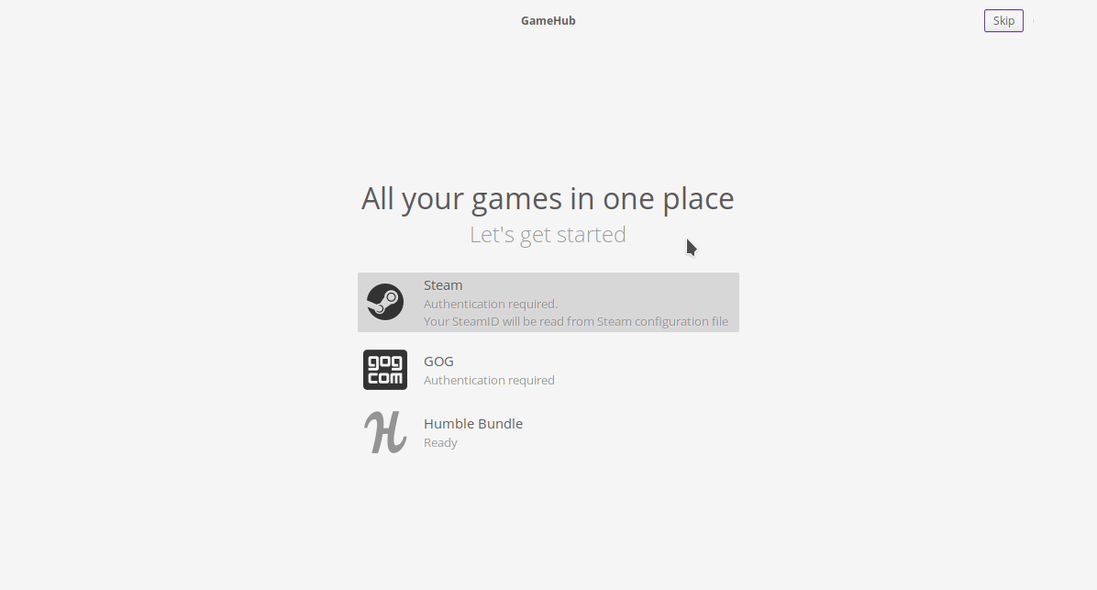
GameHub supporte:
Jeux natifs pour Linux
Plusieurs couches de compatibilité:
Plusieurs plates-formes de jeu:
GeForce utilise désormais la version Chromebook pour lire tous vos jeux dans Google Chrome ou tout navigateur Web basé sur Chromium tels que Brave, Vivaldi et Microsoft Edge. Aussi, disponible en tant qu'application de bureau électronique dans le magasin Snap GeForce maintenant.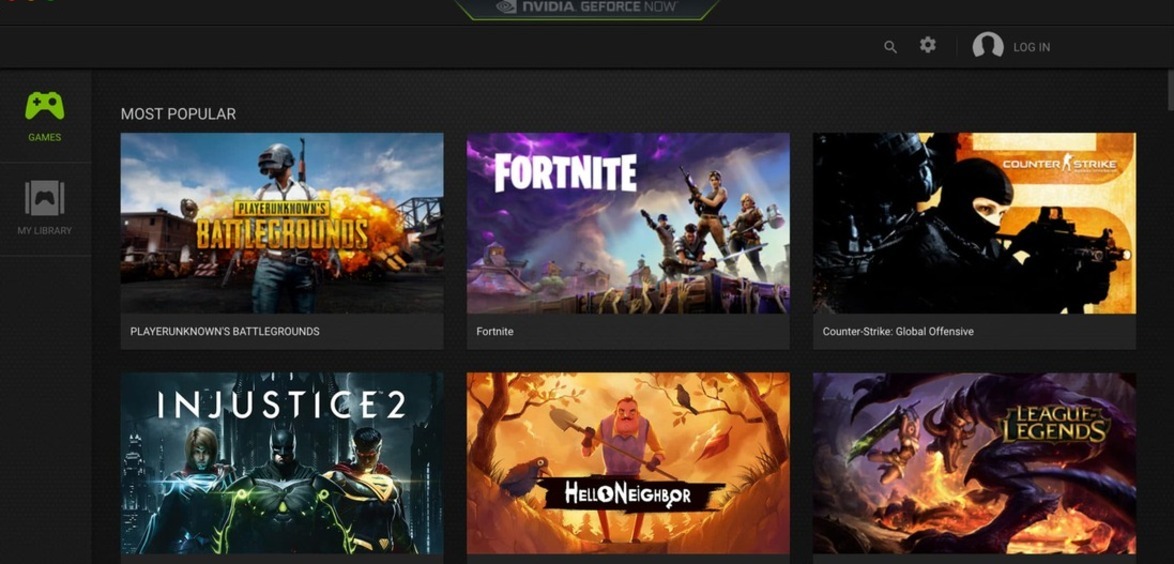
Moonlight Game Streaming est un programme qui vous permet de diffuser à partir de vos jeux PC sur Internet sans aucune configuration requise. Diffusez de presque tous les appareils, que vous soyez dans une autre pièce ou à des kilomètres de votre plate-forme de jeu.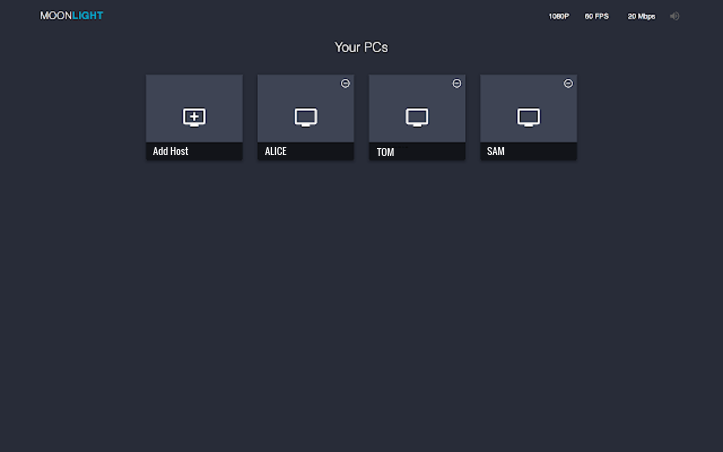
Chiaki est un client logiciel gratuit et open source pour PlayStation 4 et PlayStation 5 Remote Play pour Linux, FreeBSD, OpenBSD, Android, MacOS, Windows, Nintendo Switch et potentiellement encore plus de plates-formes.
Xbox Project XCloud est la technologie de diffusion de jeux Xbox basée sur le cloud de Microsoft (actuellement en version bêta) . Jouez à des jeux comme Forza Horizon 4, Halo 5: Guardians, Gears of War 4, Sea of Thieves, Cuphead, Red Dead Redemption 2 et 100+ autres jeux sur votre appareil mobile ou votre navigateur Web Chrome . Le projet Xbox de Microsoft Xcloud nécessite un abonnement ultime de jeu Xbox Game.

Retroarch est un frontage pour les émulateurs, les moteurs de jeu et les joueurs des médias. Il vous permet d'exécuter des jeux classiques sur une large gamme d'ordinateurs et de consoles via son interface graphique lisse. Les paramètres sont également unifiés afin que la configuration soit effectuée une fois pour toutes.
Dolphin est un émulateur pour deux consoles récentes de jeux vidéo Nintendo: le GameCube et la Wii. Il permet aux joueurs PC de profiter de jeux pour ces deux consoles en Full HD (1080p) avec plusieurs améliorations: compatibilité avec tous les contrôleurs PC, Turbo Speed, Multiplayer en réseau et encore plus.
Citra est un émulateur open source pour la Nintendo 3DS capable de jouer à plusieurs de vos jeux préférés.
Yuzu est un émulateur expérimental open-source pour le commutateur Nintendo des créateurs de Citra.
Dosbox est un émulateur DOS open source qui se concentre principalement sur l'exécution de jeux DOS.
Mame est un émulateur de machine d'arcade.
Xemu est un émulateur Xbox original.
Greenwithenvy (GWE) est un utilitaire système GTK conçu par Roberto Leinardi pour fournir des informations, contrôler les fans et overclocker votre carte vidéo Nvidia pour de meilleures performances. Disponible dans le magasin pop en tant que Flatpak.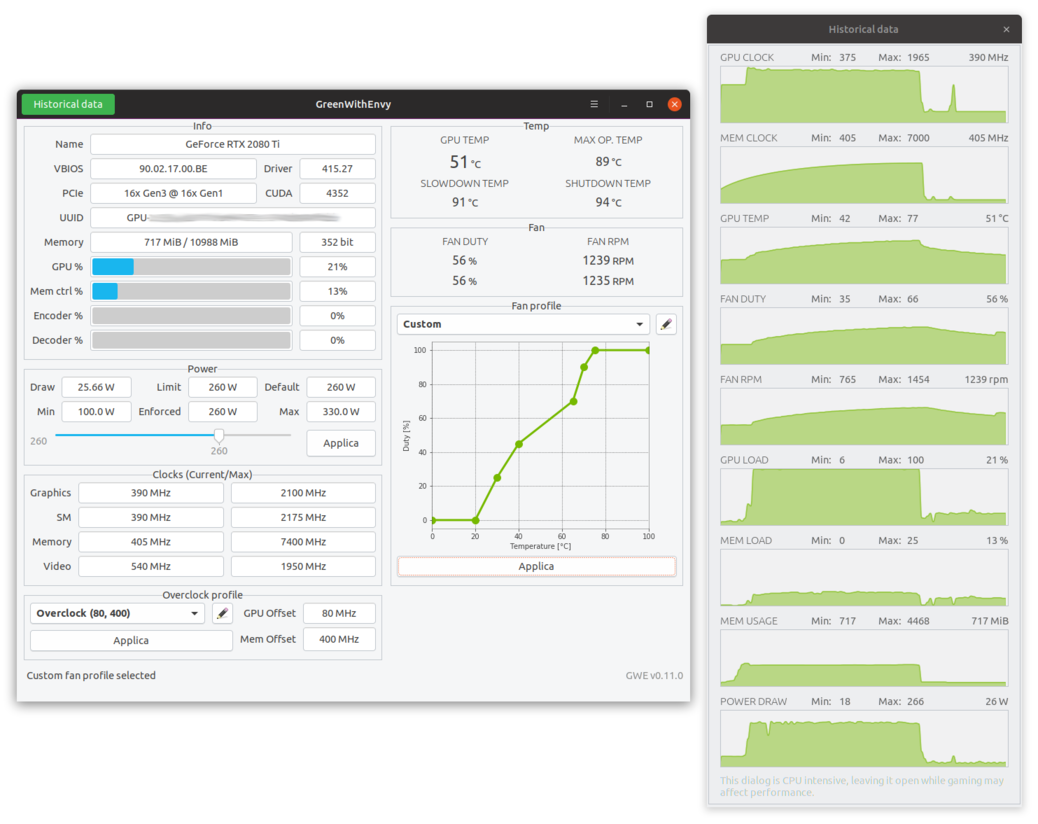
Corectl est une application Linux gratuite et open source qui vous permet de contrôler facilement le matériel de votre ordinateur en utilisant les profils d'application pour les applications natives et Windows, possède des commandes de CPU de base et des contrôles GPU AMD complets (pour les modèles anciens et nouveaux).
sudo add-apt-repository ppa:ernstp/mesarc
sudo apt install corectrl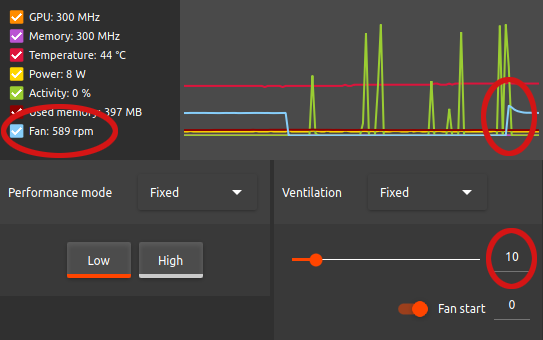
Geekbench 5 est une référence multiplateforme qui mesure les performances de votre système avec la presse sur un bouton.
Suite de test Phoronix
La superposition unigine est un test de performances et de stabilité extrême pour le matériel PC: carte vidéo, alimentation, système de refroidissement.

Le vin (le vin n'est pas un émulateur) est une couche de compatibilité capable d'exécuter des applications Windows sur plusieurs systèmes d'exploitation conformes à POSIX, tels que Linux, MacOS et BSD. Au lieu de simuler la logique Windows interne comme une machine virtuelle ou un émulateur, le vin traduit les appels de l'API Windows en appels POSIX à la volée, éliminant les pénalités de performances et de mémoire d'autres méthodes et de vous permettre d'intégrer proprement les applications Windows dans votre bureau.
Winetricks est un moyen facile de contourner les problèmes de vin.
Ceci est nécessaire pour éviter l'erreur Adobeaur
sudo sed -i ' s|echo "${arg%%=*}"=\""${arg### *=}"\"|echo ${arg%%=*}=\"${arg### *=}\"|g ' /usr/local/bin/winetricks
sudo apt install cabextract libncurses5:armhfRetour au sommet
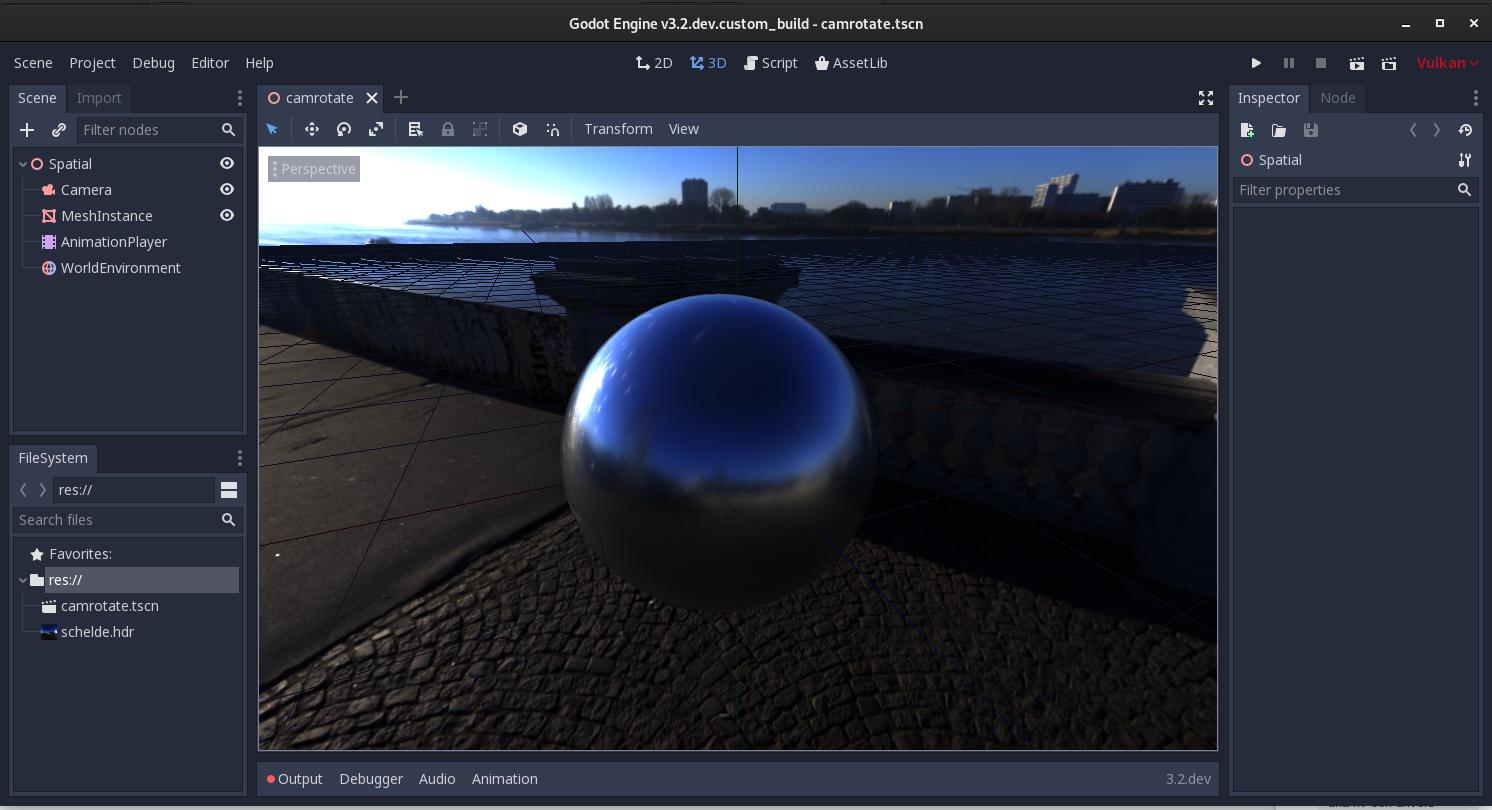
Unity est une plate-forme de développement de jeux multiplateforme. Utilisez Unity pour construire des jeux 3D et 2D de haute qualité, déployez-les sur le mobile, le bureau, la réalité virtuelle, les consoles ou le Web, et se connecter avec des joueurs et des clients fidèles et enthousiastes.
Hub d'unité

Unreal Engine 4 est un moteur de jeu développé par Epic Games avec l'outil de création 3D en temps réel le plus ouvert et le plus avancé au monde. Évoluant continuellement pour servir non seulement son objectif d'origine en tant que moteur de jeu de pointe, aujourd'hui, il donne aux créateurs des industries la liberté et le contrôle de fournir du contenu de pointe, des expériences interactives et des mondes virtuels immersifs.
Développement de jeux Linux sur un moteur Unreal 4
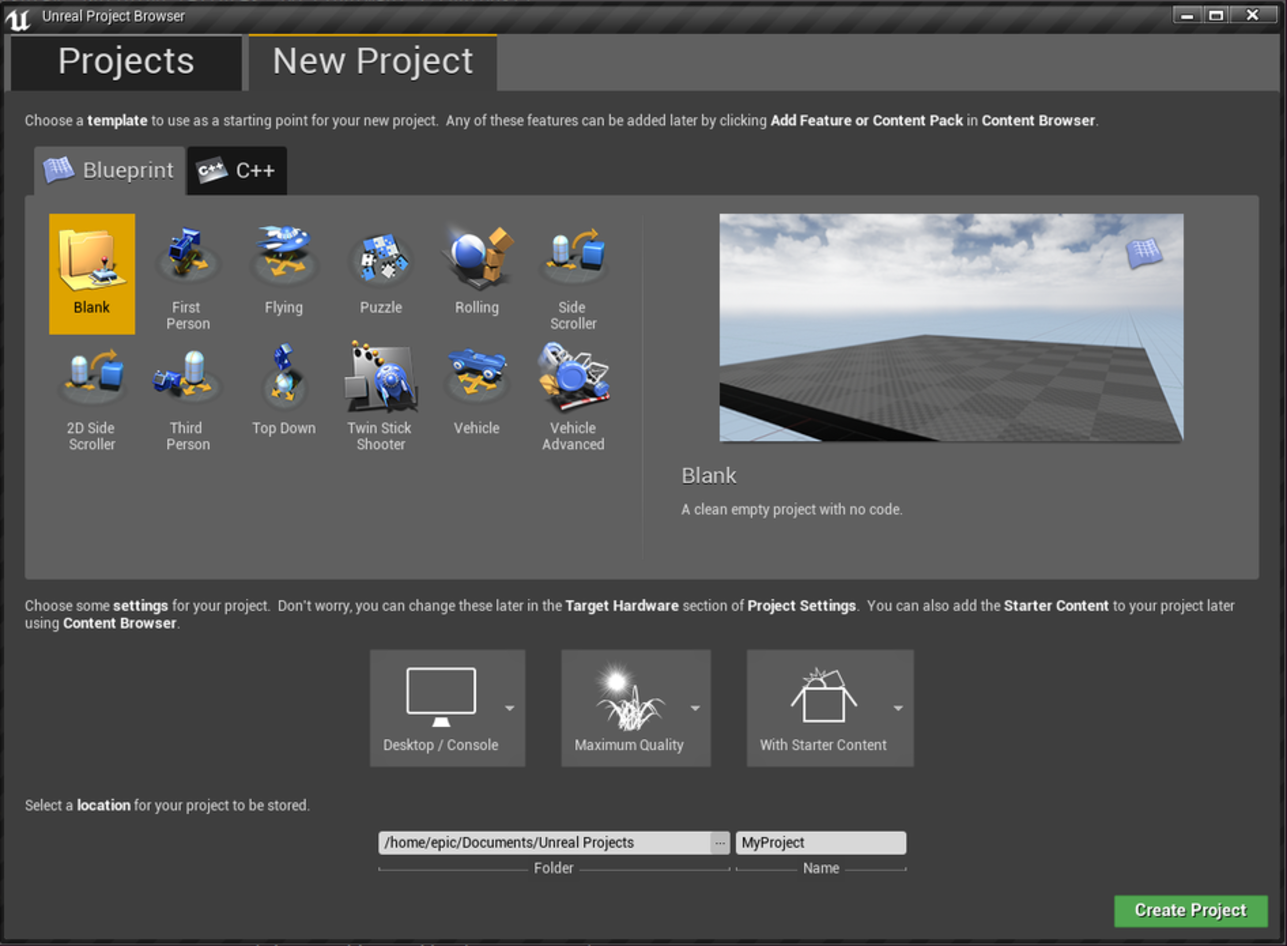
Godot Engine est un moteur de jeu multiplateforme riche en fonctionnalités pour créer des jeux 2D et 3D à partir d'une interface unifiée. Il fournit un ensemble complet d'outils communs, afin que les utilisateurs puissent se concentrer sur la fabrication de jeux sans avoir à réinventer la roue. Les jeux peuvent être exportés en un seul clic vers un certain nombre de plates-formes, y compris les principales plates-formes de bureau (Linux, Mac OSX, Windows) ainsi que sur les plates-formes mobiles (Android, iOS) et basées sur le Web (HTML5).
Si vous souhaitez faire un don au projet Godot
Blender est la suite de création 3D gratuite et open source. Il prend en charge l'intégralité du pipeline 3D: modélisation, gréement, animation, simulation, rendu, composition et suivi de mouvement, montage vidéo et pipeline d'animation 2D.
Si vous souhaitez faire un don au projet Blender

Unigine est un moteur de jeu multiplateforme conçu pour les équipes de développement (programmeurs C ++ / C #, artistes 3D) travaillant sur des applications 3D interactives.

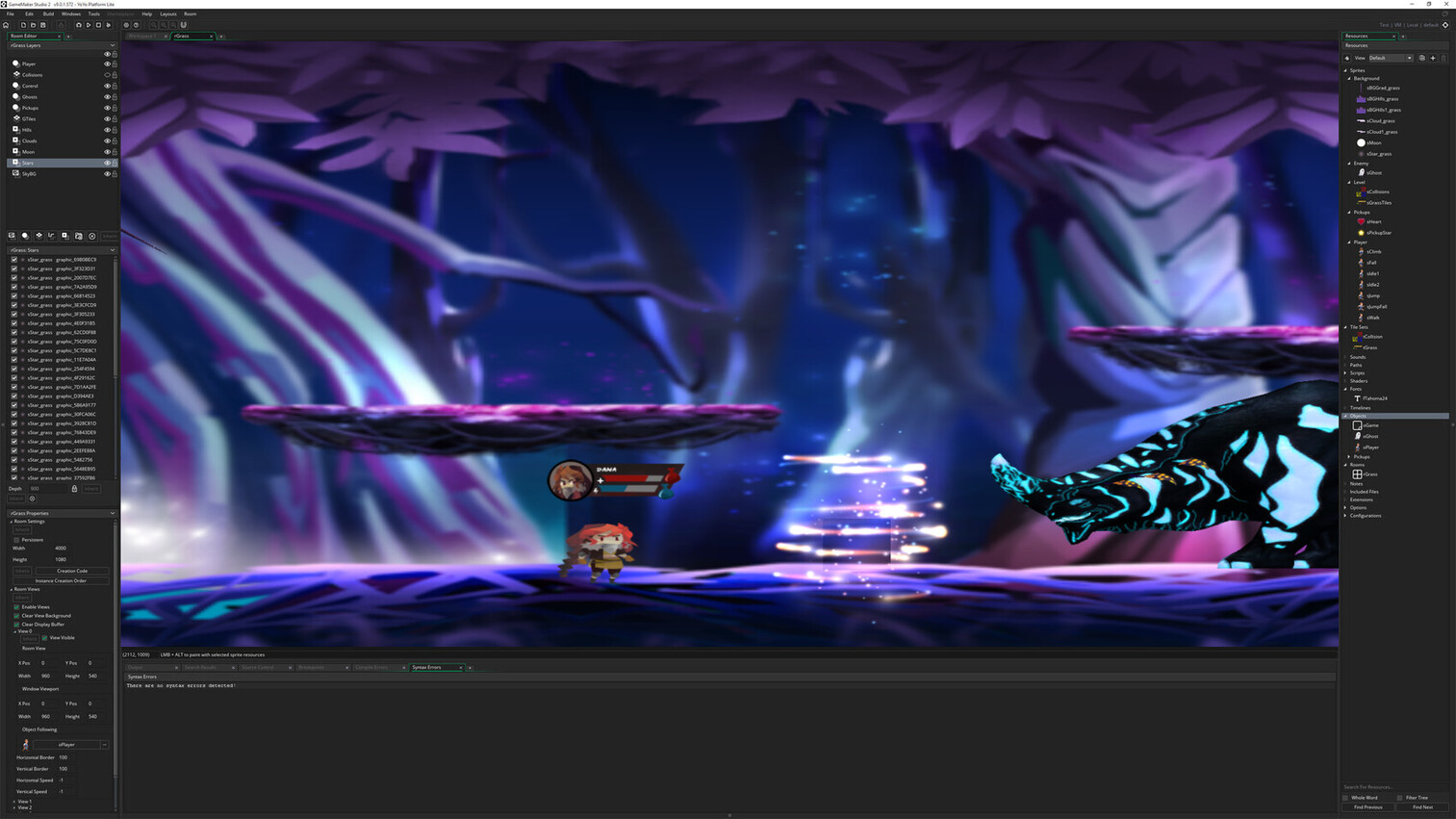
GameMaker Studio 2 est la dernière et la plus grande incarnation de GameMaker. Il a tout ce dont vous avez besoin pour passer votre idée du concept au jeu fini. Sans obstacle à l'entrée et aux fonctionnalités puissantes, GameMaker Studio 2 est l'environnement de développement 2D ultime.
Configuration du studio GameMaker pour Ubuntu
Panda3d est un moteur de jeu, un cadre pour le rendu 3D et le développement de jeux pour les programmes Python et C ++, développé par Disney et CMU. Panda3d est open-source et gratuit à quelque fin que ce soit, y compris les entreprises commerciales.
La source 2 est un moteur de jeux vidéo 3D en développement par Valve en tant que successeur de Source. Il est utilisé dans Dota 2, Artefact, Dota Underlords, certaines parties du laboratoire, la maison SteamVR et la demi-vie: alyx.
Open Graphics Library (OpenGL) est une API utilisée sur les langages de programmation MuLitple à travers Mulitple pour le rendu accéléré par le matériel des graphiques vectoriels 2D / 3D actuellement développés par le groupe Khronos.
Le langage informatique ouvert (OpenCL) est une norme ouverte pour la programmation parallèle des plates-formes hétérogènes composées de processeurs, de GPU et d'autres accélérateurs matériels trouvés dans les supercalculateurs, les serveurs cloud, les ordinateurs personnels, les appareils mobiles et les plates-formes intégrées.
Le langage d'ombrage OpenGL (GLSL) est un langage d'ombrage de haut niveau basé sur le langage de style C, il couvre donc la plupart des fonctionnalités qu'un utilisateur attendait avec une telle langue. Tels que les structures de contrôle (pour les boucles, les instructions IF-ELSE, etc.) existent dans GLSL, y compris l'instruction Switch.
Le langage d'ombrage de haut niveau (HLSL) est le langage d'ombrage de haut niveau pour DirectX. En utilisant HLSL, l'utilisateur peut créer des shaders programmables de type C pour le pipeline Direct3D. HLSL a d'abord été créé avec DirectX 9 pour configurer le pipeline 3D programmable.
Vulkan est une API graphique et calcul de calcul moderne qui fournit un accès multiplateforme à haute efficacité aux GPU modernes utilisés dans une grande variété d'appareils, des PC et consoles aux téléphones mobiles et aux plates-formes embarquées. Vulkan est actuellement en développement par le consortium Khronos.
MoltenVK est une implémentation de Vulkan fonctionnant sur iOS et MacOS en utilisant le cadre graphique métallique d'Apple.
Moltengl est une implémentation de l'API OpenGL ES 2.0 qui s'exécute sur le cadre graphique métallique d'Apple.
NVIDIA OMIVERSE est une plate-forme de simulation et de collaboration puissante puissante, multi-GPU, en temps réel pour les pipelines de production 3D basés sur la description universelle de Pixar et NVIDIA RTX.
HGIG est un groupe de bénévoles d'entreprises des industries d'affichage du jeu et de la télévision qui se réunissent pour spécifier et mettre à disposition les directives publiques pour améliorer les expériences de jeu des consommateurs en HDR.
Three.js est une interface de programmation JavaScript JavaScript et de navigation transversale utilisée pour créer et afficher des graphiques informatiques 3D animés dans un navigateur Web à l'aide de WebGL.
SuperPowers est une application HTML5 téléchargeable pour des projets collaboratifs en temps réel. Vous pouvez l'utiliser en solo comme un fabricant de jeux hors ligne régulier, ou configurer un mot de passe et laisser des amis participer à votre projet via leur navigateur Web.
SteamVR pour Linux est l'outil ultime pour vivre du contenu VR sur le matériel de votre choix. SteamVR prend en charge l'index de la valve, HTC Vive, Oculus Rift, Windows Mixed Reality Headsets et autres.

Steamvr à la maison
OpenVR est une API et l'exécution qui permet d'accéder au matériel VR (Steam Index, HTC Vive et Oculus Rift) à partir de plusieurs fournisseurs sans exiger que les applications aient une connaissance spécifique du matériel qu'ils ciblent.
OpenVR Benchmark sur Steam est le premier outil de référence pour tester de manière reproductible vos performances VR réelles, en rendant à l'intérieur de votre casque VR.
OpenHMD est une API et des pilotes open source qui prennent en charge une large gamme d'appareils HMD (affichage monté sur tête) tels que Oculus Rift, HTC Vive, Sony PSVR et autres.
OpenXR est une norme libre et ouverte qui fournit un accès haute performance à la réalité augmentée (AR) et à la réalité virtuelle (VR) connu sous le nom de XR - plate-forme et appareils.
Monado est le premier OpenXR ™ Runtime pour GNU / Linux. Monado vise à relancer le développement d'un écosystème XR open source et à fournir les éléments de construction fondamentaux aux fournisseurs d'appareils pour cibler la plate-forme GNU / Linux.
LibSurvive est un ensemble d'outils et de bibliothèques qui permettent un suivi 6 DOF sur les systèmes de phare et de vive qui est complètement open source et peut fonctionner sur n'importe quel appareil. Il prend actuellement en charge SteamVR 1.0 et SteamVR 2.0 génération de dispositifs et devraient prendre en charge tout objet suivi disponible dans le commerce.
Simula est un gestionnaire de fenêtres VR pour Linux qui fonctionne au-dessus de Godot. Il faut moins d'une minute pour installer. Simula est officiellement compatible avec les casques SteamVR équipés de pilotes Linux (par exemple HTC Vive, HTC Vive Pro, & Valve Index). Nous avons également ajouté un support expérimental aux casques OpenXR qui ont des pilotes Monado (par exemple North Star, OSVR HDK et PSVR). Certaines personnes ont obtenu l'Oculus Rift S pour exécuter Simula via OpenHMD (voir ici).
L'apprentissage en ligne Unreal est une plate-forme d'apprentissage gratuite qui propose des cours vidéo pratiques et des chemins d'apprentissage guidés.
Programme de formation autorisé en moteur Unreal
Moteur irréel pour l'éducation
Formation et simulation irréels du moteur
Certifications d'unité
Commencer avec Vulkan
Cours en ligne de conception de jeu d'Udemy
Design de jeu des cours en ligne de Skillshare
Apprenez la conception du jeu avec des cours en ligne et des cours d'EDX
Cours de conception de jeu de Coursera
Cours de spécialisation de conception et de développement de jeux de Coursera
Retour au sommet
EXIGENCES
Open the terminal and run:
sudo apt install qemu uml-utilities virt-manager dmg2img git wget libguestfs-tools p7zip
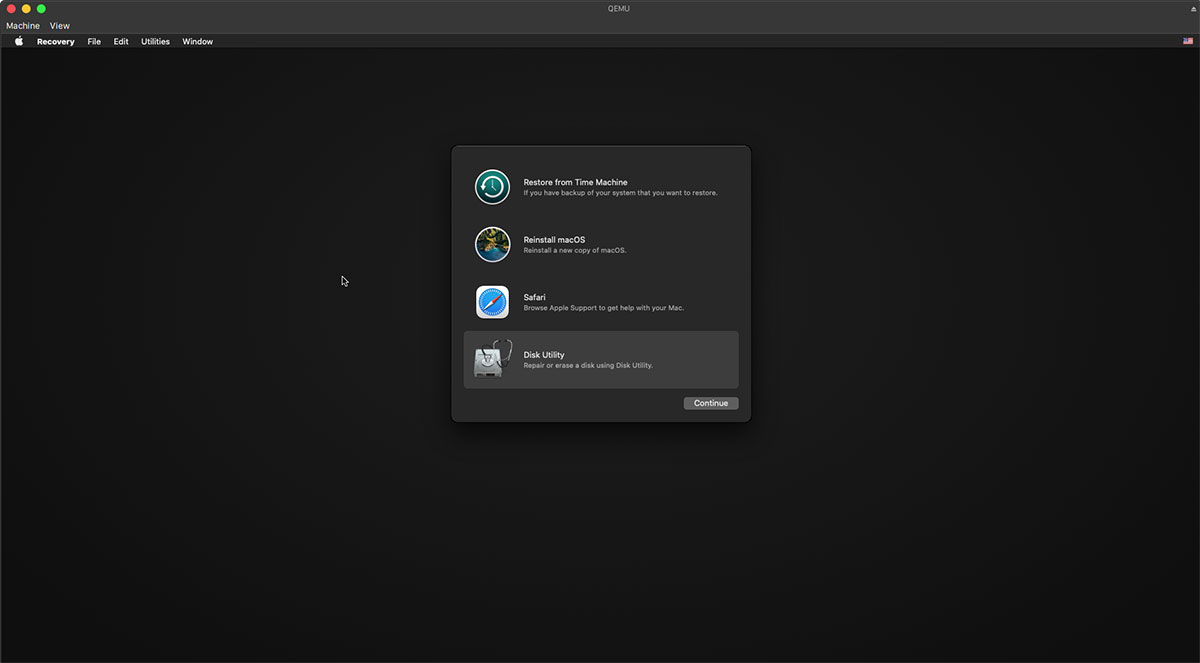
Sosumi est une application qui vous permet de télécharger et d'installer MacOS dans une machine virtuelle.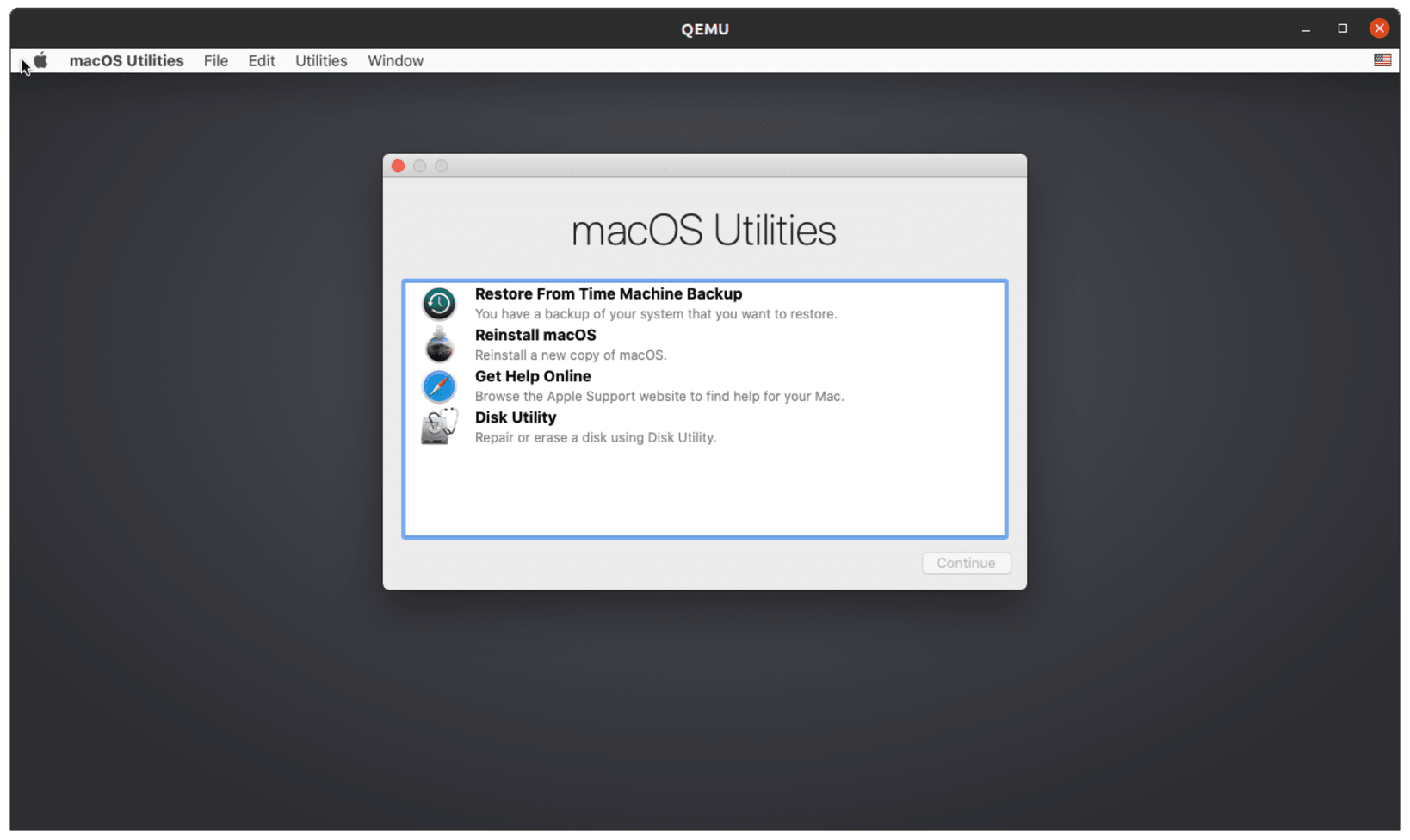
OpenCore pour macOS
Retour au sommet
EXIGENCES
Open the terminal and run:
sudo apt install qemu uml-utilities virt-manager gnome-boxes
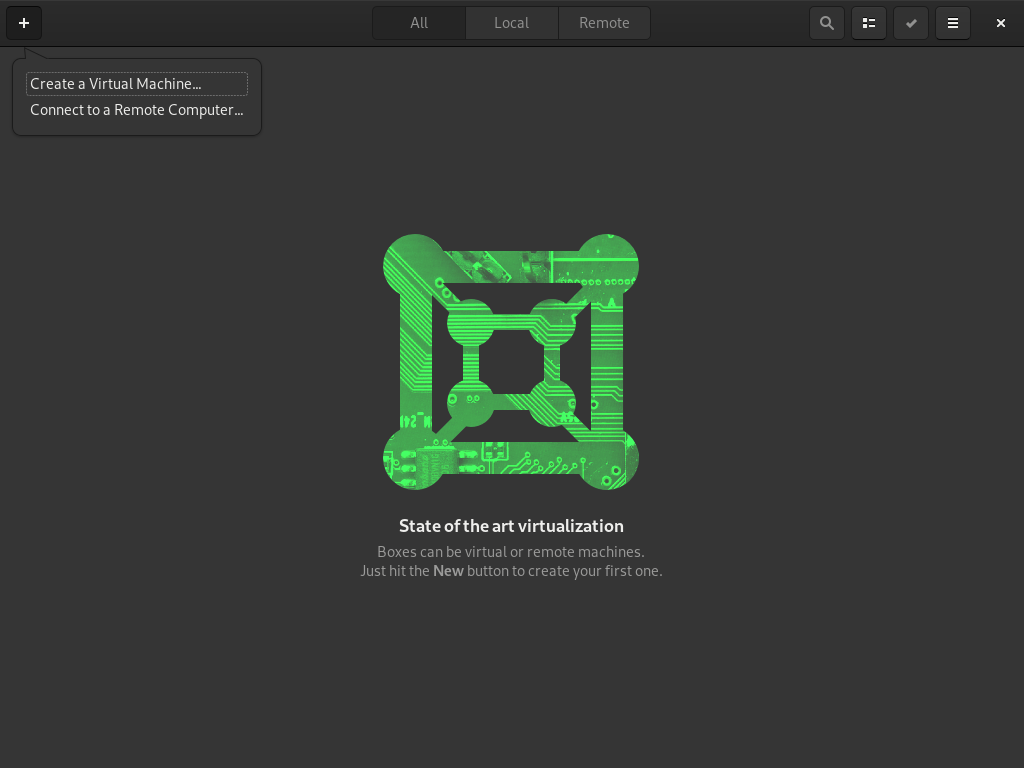
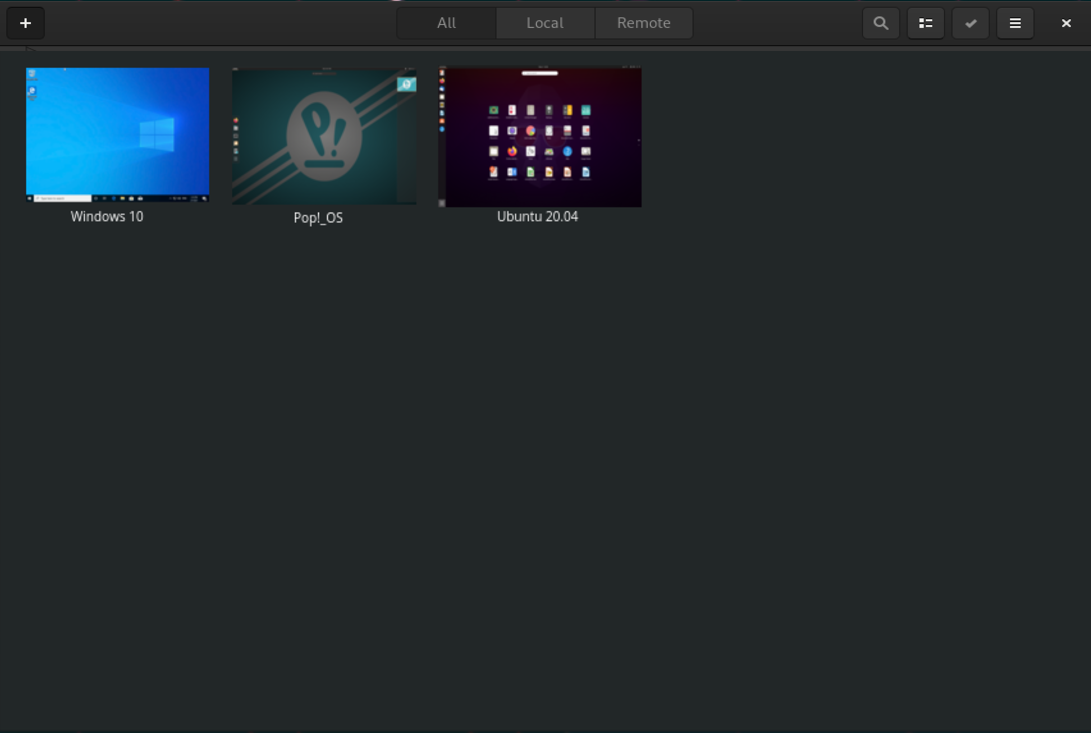
Gnome Boxes est une application qui vous donne accès à des machines virtuelles, en cours d'exécution localement ou à distance. Il vous permet également de vous connecter à l'affichage d'un ordinateur distant.
OpenCore pour Windows 10
Retour au sommet
Android Studio est la suite de développement du système d'exploitation Android (OS) de Google. Il est construit sur le logiciel JetBrains Intellij Idea et conçu spécifiquement pour le développement d'Android. Il est disponible en téléchargement sur Windows, MacOS et Linux.
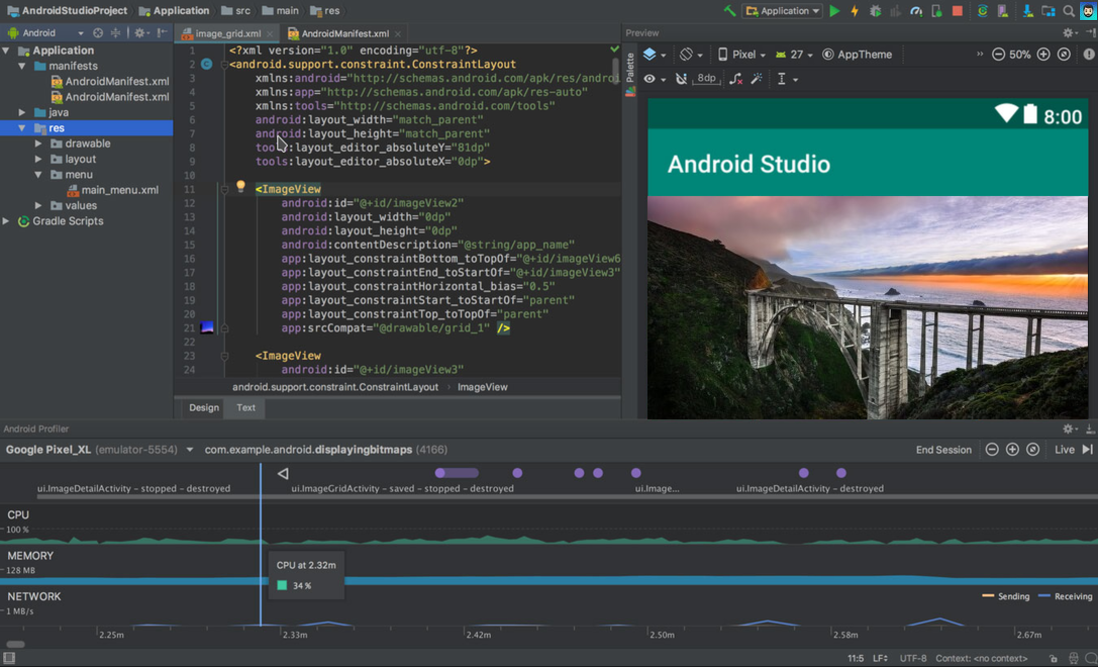
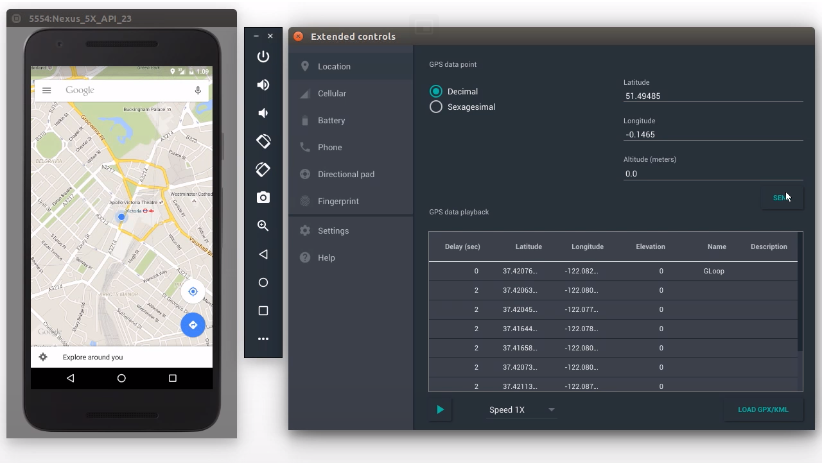
Android Virtual Device (AVD) est une configuration dans Android Studio qui définit les caractéristiques d'un téléphone Android, d'une tablette, d'un système d'exploitation Android ou d'un appareil OS automobile que vous souhaitez simuler dans l'émulateur Android. L'émulateur Android simule les appareils Android sur votre ordinateur afin que vous puissiez tester votre application sur une variété d'appareils et des niveaux d'API Android sans avoir besoin d'avoir chaque appareil physique.
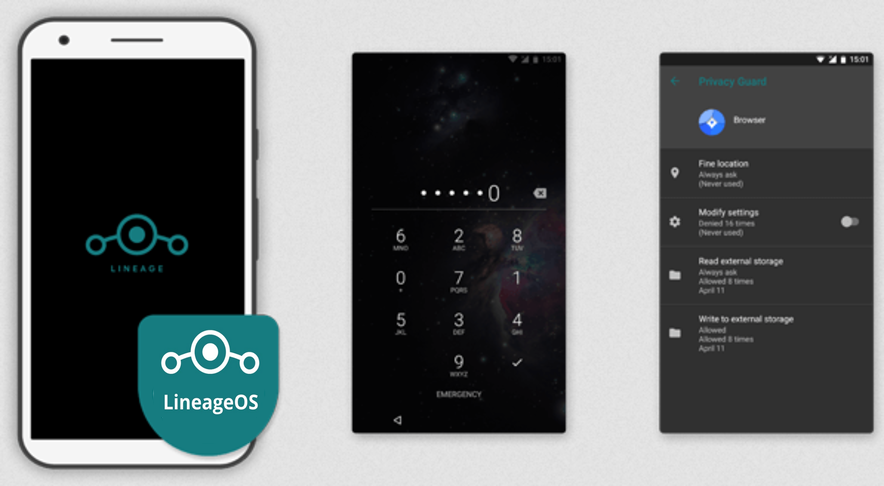
LineageOS est un système d'exploitation gratuit et open source pour divers appareils, basé sur la plate-forme mobile Android.
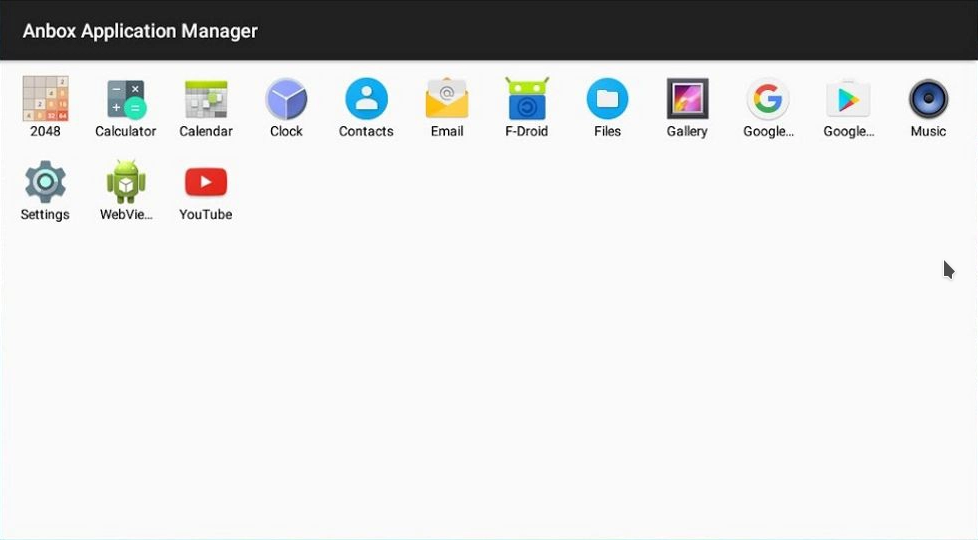
ANBOX est une application qui fournit une approche basée sur les conteneurs pour démarrer un système Android complet sur un système GNU / Linux ordinaire comme Ubuntu, Debian Fedora et OpenSUSE.
ANBOX Cloud est la plate-forme mobile de cloud computing livrée par canonical. Exécutez Android dans le cloud, à grande échelle et sur tout type de matériel.
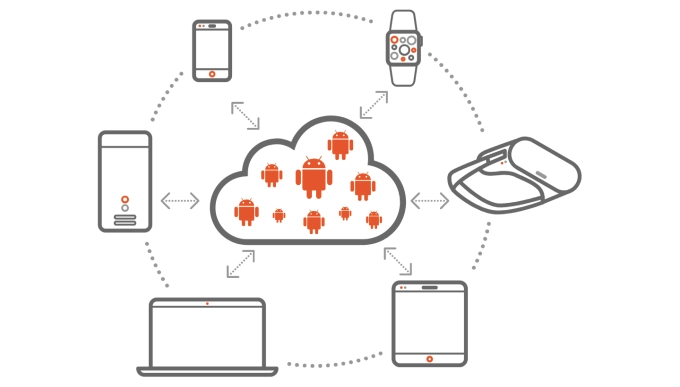
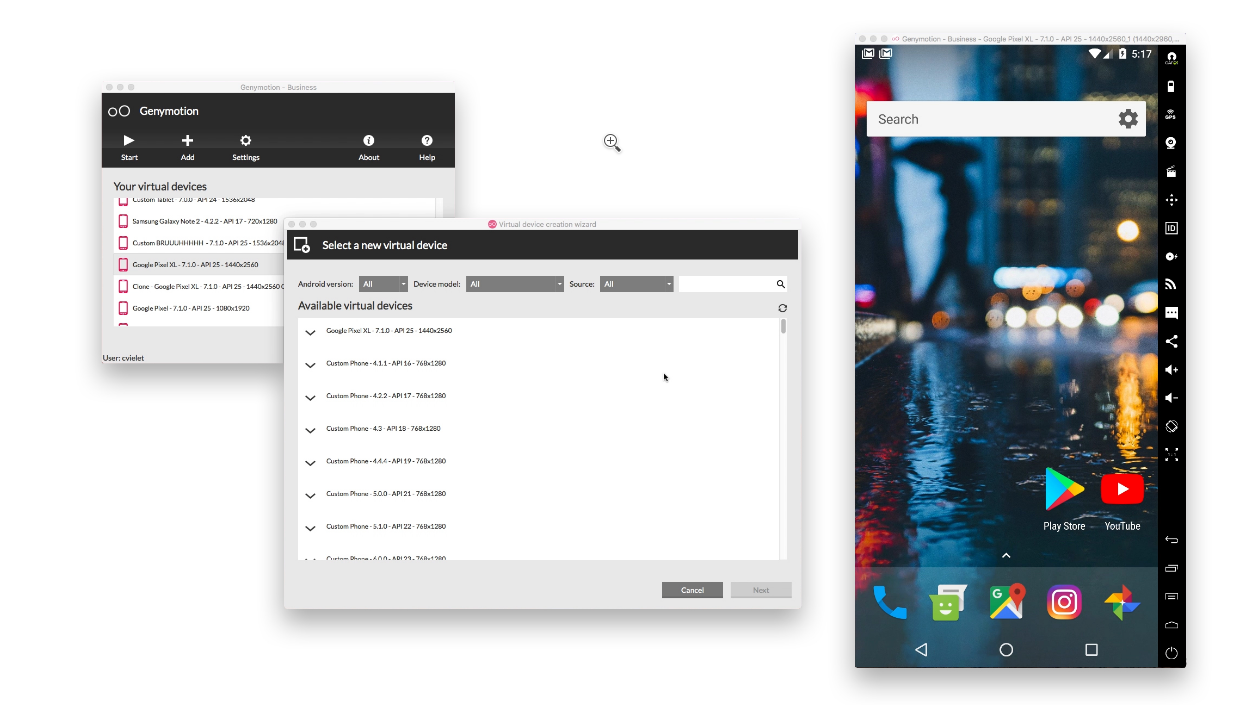
Genymotion est un émulateur Android très rapide. Le programme lui-même est basé sur VirtualBox et est connu pour sa vitesse efficace et est l'utilité pour exécuter des applications Android sur un bureau Windows, Mac et Linux.
Bureau
Appareils virtuels locaux avec des performances élevées.
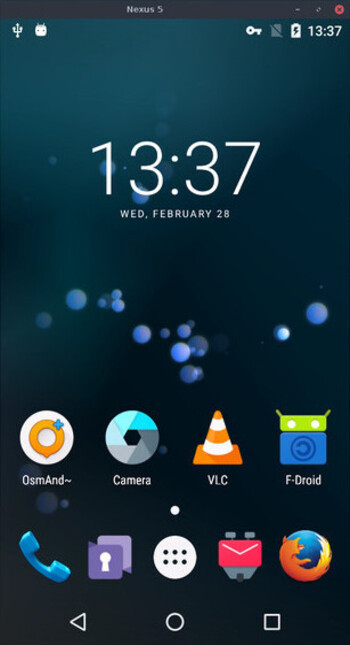
SCRCPY est une application de Genymotion qui fournit l'affichage et le contrôle des périphériques Android connectés sur USB (ou sur TCP / IP). Il ne nécessite aucun accès root et fonctionne sur GNU / Linux, Windows et MacOS. L'appareil Android nécessite au moins API 21 (Android 5.0).
Retour au sommet
H.264 (AVC) est une norme de compression vidéo basée sur le codage entier-DCT orienté vers le bloc et en composition du mouvement qui définit plusieurs profils (outils) et niveaux (taux de binages et résolutions maximaux) avec un support allant jusqu'à 8k.
H.265 (HEVC) est une norme de compression vidéo qui est le successeur de H.264 (AVC). Il offre une compression de 25% à 50% de meilleure compression de données au même niveau de qualité vidéo, ou une qualité vidéo améliorée au même taux bit.
FFMPEG est un cadre multimédia de premier plan qui peut décoder, coder, transcoder, mux, démon, diffuser, filtrer et jouer à peu près tout ce que les humains et les machines ont créé. Il prend en charge les formats anciens les plus obscurs jusqu'à les formats de pointe sur plusieurs plates-formes telles que Windows, MacOS et Linux.
Handbrake est un outil de transcodage de la vidéo de presque tous les formats avec une sélection de codecs largement pris en charge. Il est pris en charge sur la fenêtre, le macOS et Linux.
Le streaming adaptatif dynamique sur HTTP (DASH) est un protocole de streaming adaptatif qui permet à un flux vidéo de basculer entre les débits binaires sur la base des performances du réseau, afin de maintenir une lecture vidéo.
OpenMax ™ est une API multiplateforme qui fournit du codec de support de streaming complet et de la portabilité des applications en permettant à développer, intégré et programmé accéléré sur plusieurs systèmes d'exploitation et plates-formes de silicium.
DaVinci Resolve est la seule solution mondiale qui combine l'édition 8K professionnelle, la correction des couleurs, les effets visuels et le post-production audio tout en un seul outil de logiciel! Vous pouvez vous déplacer instantanément entre l'édition, la couleur, les effets et l'audio en un seul clic. DaVinci Resolve Studio est également la seule solution conçue pour la collaboration multi-utilisateurs afin que les éditeurs, les assistants, les coloristes, les artistes VFX et les concepteurs sonores puissent tous travailler en direct sur le même projet en même temps.
Blender est livré avec un éditeur de séquence vidéo intégré vous permet d'effectuer des actions de base comme les coupes vidéo et l'épissage, ainsi que des tâches plus complexes comme le masquage vidéo ou le classement des couleurs. L'éditeur vidéo comprend: Live Aperçu, Luma Wave Forme, Chroma Vectorscope et Histogram Displays. Mélange audio, synchronisation, nettoyage et visualisation des formes d'onde.
Kdenlive est un outil d'édition vidéo open source qui prend en charge les fichiers multimédias illimités. Il est basé sur le cadre MLT, KDE et QT. Les gens qui recherchent un outil d'édition vidéo très polyvalent qui est rempli de fonctionnalités. La dernière version 20.08 est sortie avec des fonctionnalités Nifty telles que les dispositions d'interface, la prise en charge multiple du flux audio, la gestion des données en cache et les zoombars dans le panneau Clip Monitor and Effects, mais on peut affirmer que les points forts de cette version sont des améliorations de stabilité et d'interface.
OpenShot est un outil d'édition vidéo open source conçu pour les utilisateurs nouveaux dans l'environnement d'édition. Il a des fonctionnalités simples telles qu'une fonction de glisser-déposer simple, il fournit une interface utilisateur facile à utiliser et rapide à apprendre. Le puissant éditeur vidéo offre des tonnes de façons efficaces de couper et de réduire vos vidéos. Vous pouvez utiliser librement les pistes illimitées, le moteur des effets vidéo, l'éditeur de titre, les animations 3D, le ralenti et les effets temporels. Il prend en charge les codecs vidéo couramment utilisés qui sont pris en charge par FFMPEG comme WebM (VP9), AVCHD (LIBX264), HEVC (LIBX265) et des codecs audio comme MP3 (LiBmp3lame) et AAC (libfaac). Le programme peut rendre la vidéo MPEG4, OGV, Blu-ray et DVD et des vidéos HD complètes pour télécharger sur les sites Web de vidéos Internet comme YouTube.
Lightworks est une appluence de montage vidéo non linéaire pour l'édition et la maîtrise de la vidéo numérique utilisée par l'industrie cinématographique. Son édition professionnelle a été utilisée pour les tubes au box-office, tels que l'île d'obturation, la pulp fiction et la mission impossible. Interface utilisateur intimidant. Comme les éditeurs vidéo professionnels, tels qu'Adobe Premiere Pro, Lightworks est assez compliqué à utiliser pour les nouveaux utilisateurs.
ShotCut est un éditeur vidéo multi-plate-forme open source. Vous pouvez effectuer diverses actions telles que l'édition vidéo (y compris la qualité vidéo 4K), ajouter des effets, créer de nouveaux films, importer la plupart des formats de fichiers d'image, exporter vers presque tous les formats de fichiers et bien plus encore.
Olive est un éditeur vidéo non linéaire gratuit visant à fournir une alternative complète au logiciel de montage vidéo professionnel haut de gamme.
Natron est un puissant compositeur numérique qui peut gérer tous vos besoins 2D / 2.5D. Ses formats de fichiers OIIO robustes et son architecture OpenFX sont ce qui fait de Natron le compositeur open source le plus flexible pour la communauté des effets visuels. Son interface et fonctionnellement sont les mêmes sur toutes les plates-formes telles que MacOS, Linux et Windows.
OBS (Open Broadcaster Software) est un logiciel gratuit et open source pour l'enregistrement vidéo et le streaming en direct. Stream to Twitch, YouTube et de nombreux autres fournisseurs ou enregistrez vos propres vidéos avec un codage H264 / AAC de haute qualité.
Reaper est une application complète de production audio numérique pour les ordinateurs, offrant un enregistrement audio et MIDI multiples complet, l'édition, le traitement, le mélange et la maîtrise de l'outil.
Jack Audio Connection Kit AKA Jack est un démon de serveur sonore professionnel qui fournit des connexions en temps réel à faible latence pour les données audio et MIDI entre les applications qui implémentent son API. Jack peut être configuré pour envoyer des données audio sur un réseau à une machine "Master", qui diffuse ensuite l'audio à un périphérique physique. Cela peut être utile pour mélanger l'audio à partir d'un certain nombre d'ordinateurs "esclaves" sans nécessiter de câbles ou de mélangeurs matériels supplémentaires, et de garder le chemin audio numérique le plus longtemps possible.
Bitwig Studio est une station de travail audio numérique qui a des workflows linéaires et non linéaires pour la conception sonore, l'enregistrement, les performances en direct, etc. Avec plus de 90 instruments, effets et autres outils créatifs. Il est pris en charge Windows, MacOS et Linux.
PipEwire est une API de serveur et d'espace utilisateur pour gérer les pipelines multimédias.Il fournit un moteur de traitement basé sur un graphique à faible latence en plus des appareils audio et vidéo qui peuvent être utilisés pour prendre en charge les cas d'utilisation actuellement gérés par Pulseaudio et Jack. PipEwire a été conçu avec un puissant modèle de sécurité qui facilite l'interaction avec les appareils audio et vidéo des applications conteneurisées. Les nœuds du graphique peuvent être implémentés en tant que processus distincts, communiquant avec les sockets et échangeant du contenu multimédia à l'aide de Passing FD.
Yabridge est un moyen moderne et transparent d'utiliser les plugins Windows VST2 et VST3 sur Linux. Yabridge prend en charge de manière transparente l'utilisation des plugins 32 bits et 64 bits Windows VST2 et VST3 dans un hôte Linux VST 64 bits comme s'ils étaient des plugins VST2 et VST3 natifs, avec une prise en charge facultative pour les groupes de plugins pour permettre la communication inter-plugin pour les plugins VST2 et les temps de démarrage rapide.
Sonobus est une application facile à utiliser pour le streaming audio de haute qualité et à faible latence entre les appareils sur Internet ou un réseau local.
Avid Pro Tools est un logiciel de production audio standard de l'industrie pour les auteurs-compositeurs, les musiciens, les producteurs et les ingénieurs.
LMMS est un programme d'application Open Source Digital Audio Workstation. Lorsque LMMS est apparié avec un matériel informatique approprié, il permet de produire de la musique en organisant des échantillons, en synthétisant des sons, en jouant sur un clavier MIDI et en combinant les fonctionnalités des trackers et des séquenceurs. Développé par Paul Giblock et Tobias Junghans, ce programme signifie "Linux Multimedia Studio" et prend en charge les plugins pratiques qui lui permet de travailler sur différents systèmes d'exploitation.
Ardor est un effort de collaboration open source d'une équipe mondiale, y compris des musiciens, des programmeurs et des ingénieurs d'enregistrement professionnels. Le développement est transparent - n'importe qui peut regarder notre travail au fur et à mesure. Comme un bon morceau de matériel vintage, vous pouvez ouvrir la boîte et regarder à l'intérieur.
Audacity est un éditeur audio et enregistreur audio facile à utiliser et facile pour Windows, Mac OS X, GNU / Linux et d'autres systèmes d'exploitation. Développé par un groupe de bénévoles en tant qu'open source et offert gratuitement. Communauté de soutien incroyable.
Glimpse est un éditeur graphique raster multiplateforme basé sur le programme de manipulation d'image GNU disponible pour Linux, MacOS et Windows. Un excellent outil pour faire des miniatures vidéo YouTube.
Retour au sommet

Kubernetes (K8S) est un système open source pour l'automatisation du déploiement, de la mise à l'échelle et de la gestion des applications conteneurisées.
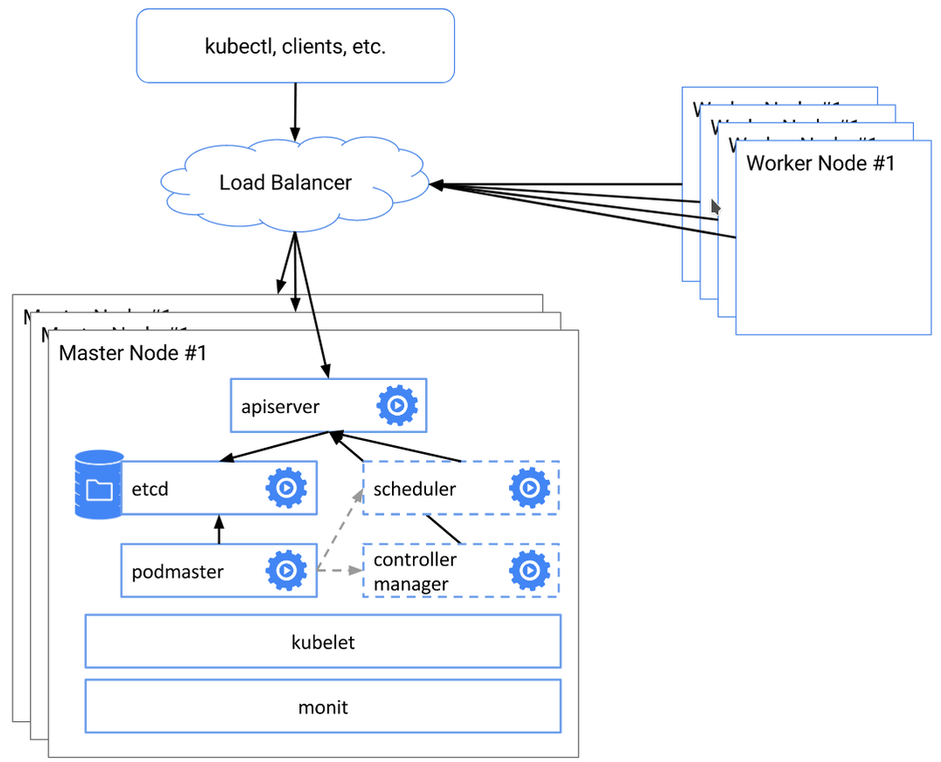
Construire des clusters hautement à disponibilité (HA) avec Kubeadm. Source: Kubernetes.io, 2020
Le moteur Google Kubernetes (GKE) est un environnement géré et prêt pour la production pour exécuter des applications conteneurisées.
Azure Kubernetes Service (AKS) est Kubernetes sans serveur, avec une expérience intégrée intégrée et de livraison continue (CI / CD), ainsi que la sécurité et la gouvernance de qualité d'entreprise. Uniter vos équipes de développement et d'exploitation sur une seule plate-forme pour créer, fournir rapidement et mettre à l'échelle les applications en toute confiance.
Amazon EKS est un outil qui exécute les instances de plan de contrôle de Kubernetes sur plusieurs zones de disponibilité pour garantir la haute disponibilité.
Les contrôleurs AWS pour Kubernetes (ACK) sont un nouvel outil qui vous permet de gérer directement les services AWS de Kubernetes. ACK facilite la création d'applications Kubernetes évolutives et hautement disponibles qui utilisent les services AWS.
Le moteur à conteneurs pour Kubernetes (OKE) est un service d'orchestration de conteneurs gérés par Oracle qui peut réduire le temps et le coût pour créer des applications natives cloud modernes. Contrairement à la plupart des autres fournisseurs, Oracle Cloud Infrastructure fournit un moteur à conteneurs pour Kubernetes en tant que service gratuit qui fonctionne sur un calcul plus performant et à moindre coût.
Anthos est une plate-forme de gestion des applications moderne qui offre une expérience cohérente de développement et d'opérations pour les environnements cloud et localisés.
Red Hat OpenShift est une plate-forme Kubernetes entièrement gérée qui fournit une base pour les déploiements sur site, hybrides et multicloud.
OKD est une distribution communautaire de Kubernetes optimisée pour le développement continu des applications et le déploiement multi-locataire. OKD adds developer and operations-centric tools on top of Kubernetes to enable rapid application development, easy deployment and scaling, and long-term lifecycle maintenance for small and large teams.
Odo is a fast, iterative, and straightforward CLI tool for developers who write, build, and deploy applications on Kubernetes and OpenShift.
Kata Operator is an operator to perform lifecycle management (install/upgrade/uninstall) of Kata Runtime on Openshift as well as Kubernetes cluster.
Thanos is a set of components that can be composed into a highly available metric system with unlimited storage capacity, which can be added seamlessly on top of existing Prometheus deployments.
OpenShift Hive is an operator which runs as a service on top of Kubernetes/OpenShift. The Hive service can be used to provision and perform initial configuration of OpenShift 4 clusters.
Rook is a tool that turns distributed storage systems into self-managing, self-scaling, self-healing storage services. It automates the tasks of a storage administrator: deployment, bootstrapping, configuration, provisioning, scaling, upgrading, migration, disaster recovery, monitoring, and resource management.
VMware Tanzu is a centralized management platform for consistently operating and securing your Kubernetes infrastructure and modern applications across multiple teams and private/public clouds.
Kubespray is a tool that combines Kubernetes and Ansible to easily install Kubernetes clusters that can be deployed on AWS, GCE, Azure, OpenStack, vSphere, Packet (bare metal), Oracle Cloud Infrastructure (Experimental), or Baremetal.
KubeInit provides Ansible playbooks and roles for the deployment and configuration of multiple Kubernetes distributions.
Rancher is a complete software stack for teams adopting containers. It addresses the operational and security challenges of managing multiple Kubernetes clusters, while providing DevOps teams with integrated tools for running containerized workloads.
K3s is a highly available, certified Kubernetes distribution designed for production workloads in unattended, resource-constrained, remote locations or inside IoT appliances.
Helm is a Kubernetes Package Manager tool that makes it easier to install and manage Kubernetes applications.
Knative is a Kubernetes-based platform to build, deploy, and manage modern serverless workloads. Knative takes care of the operational overhead details of networking, autoscaling (even to zero), and revision tracking.
KubeFlow is a tool dedicated to making deployments of machine learning (ML) workflows on Kubernetes simple, portable and scalable.
Etcd is a distributed key-value store that provides a reliable way to store data that needs to be accessed by a distributed system or cluster of machines. Etcd is used as the backend for service discovery and stores cluster state and configuration for Kubernetes.
OpenEBS is a Kubernetes-based tool to create stateful applications using Container Attached Storage.
Container Storage Interface (CSI) is an API that lets container orchestration platforms like Kubernetes seamlessly communicate with stored data via a plug-in.
MicroK8s is a tool that delivers the full Kubernetes experience. In a Fully containerized deployment with compressed over-the-air updates for ultra-reliable operations. It is supported on Linux, Windows, and MacOS.
Charmed Kubernetes is a well integrated, turn-key, conformant Kubernetes platform, optimized for your multi-cloud environments developed by Canonical.
Grafana Kubernetes App is a toll that allows you to monitor your Kubernetes cluster's performance. It includes 4 dashboards, Cluster, Node, Pod/Container and Deployment. It allows for the automatic deployment of the required Prometheus exporters and a default scrape config to use with your in cluster Prometheus deployment.
KubeEdge is an open source system for extending native containerized application orchestration capabilities to hosts at Edge.It is built upon kubernetes and provides fundamental infrastructure support for network, app. deployment and metadata synchronization between cloud and edge.
Lens is the most powerful IDE for people who need to deal with Kubernetes clusters on a daily basis. It has support for MacOS, Windows and Linux operating systems.
kind is a tool for running local Kubernetes clusters using Docker container “nodes”. It was primarily designed for testing Kubernetes itself, but may be used for local development or CI.
Flux CD is a tool that automatically ensures that the state of your Kubernetes cluster matches the configuration you've supplied in Git. It uses an operator in the cluster to trigger deployments inside Kubernetes, which means that you don't need a separate continuous delivery tool.
Getting Kubernetes Certifications
Getting started with Kubernetes on AWS
Kubernetes on Microsoft Azure
Intro to Azure Kubernetes Service
Getting started with Google Cloud
Getting started with Kubernetes on Red Hat
Getting started with Kubernetes on IBM
YAML basics in Kubernetes
Elastic Cloud on Kubernetes
Docker and Kubernetes
Deploy a model to an Azure Kubernetes Service cluster
Simplify Machine Learning Inference on Kubernetes with Amazon SageMaker Operators
Running Apache Spark on Kubernetes
Kubernetes Across VMware vRealize Automation
VMware Tanzu Kubernetes Grid
All the Ways VMware Tanzu Works with AWS
VMware Tanzu Education
Using Ansible in a Cloud-Native Kubernetes Environment
Managing Kubernetes (K8s) objects with Ansible
Setting up a Kubernetes cluster using Vagrant and Ansible
Running MongoDB with Kubernetes
Kubernetes Fluentd
Understanding the new GitLab Kubernetes Agent
Kubernetes Contributors
KubeAcademy from VMware
Retour au sommet
TensorFlow is an end-to-end open source platform for machine learning. It has a comprehensive, flexible ecosystem of tools, libraries and community resources that lets researchers push the state-of-the-art in ML and developers easily build and deploy ML powered applications.
Tensorman is a utility for easy management of Tensorflow containers by developed by System76.Tensorman allows Tensorflow to operate in an isolated environment that is contained from the rest of the system. This virtual environment can operate independent of the base system, allowing you to use any version of Tensorflow on any version of a Linux distribution that supports the Docker runtime.
Keras is a high-level neural networks API, written in Python and capable of running on top of TensorFlow, CNTK, or Theano.It was developed with a focus on enabling fast experimentation. It is capable of running on top of TensorFlow, Microsoft Cognitive Toolkit, R, Theano, or PlaidML.
PyTorch is a library for deep learning on irregular input data such as graphs, point clouds, and manifolds. Primarily developed by Facebook's AI Research lab.
Amazon SageMaker is a fully managed service that provides every developer and data scientist with the ability to build, train, and deploy machine learning (ML) models quickly. SageMaker removes the heavy lifting from each step of the machine learning process to make it easier to develop high quality models.
Azure Databricks is a fast and collaborative Apache Spark-based big data analytics service designed for data science and data engineering. Azure Databricks, sets up your Apache Spark environment in minutes, autoscale, and collaborate on shared projects in an interactive workspace. Azure Databricks supports Python, Scala, R, Java, and SQL, as well as data science frameworks and libraries including TensorFlow, PyTorch, and scikit-learn.
Microsoft Cognitive Toolkit (CNTK) is an open-source toolkit for commercial-grade distributed deep learning. It describes neural networks as a series of computational steps via a directed graph. CNTK allows the user to easily realize and combine popular model types such as feed-forward DNNs, convolutional neural networks (CNNs) and recurrent neural networks (RNNs/LSTMs). CNTK implements stochastic gradient descent (SGD, error backpropagation) learning with automatic differentiation and parallelization across multiple GPUs and servers.
Apache Airflow is an open-source workflow management platform created by the community to programmatically author, schedule and monitor workflows. Installer. Principles. Scalable. Airflow has a modular architecture and uses a message queue to orchestrate an arbitrary number of workers. Airflow is ready to scale to infinity.
Open Neural Network Exchange(ONNX) is an open ecosystem that empowers AI developers to choose the right tools as their project evolves. ONNX provides an open source format for AI models, both deep learning and traditional ML. It defines an extensible computation graph model, as well as definitions of built-in operators and standard data types.
Apache MXNet is a deep learning framework designed for both efficiency and flexibility. It allows you to mix symbolic and imperative programming to maximize efficiency and productivity. At its core, MXNet contains a dynamic dependency scheduler that automatically parallelizes both symbolic and imperative operations on the fly. A graph optimization layer on top of that makes symbolic execution fast and memory efficient. MXNet is portable and lightweight, scaling effectively to multiple GPUs and multiple machines. Support for Python, R, Julia, Scala, Go, Javascript and more.
AutoGluon is toolkit for Deep learning that automates machine learning tasks enabling you to easily achieve strong predictive performance in your applications. With just a few lines of code, you can train and deploy high-accuracy deep learning models on tabular, image, and text data.
Anaconda is a very popular Data Science platform for machine learning and deep learning that enables users to develop models, train them, and deploy them.
PlaidML is an advanced and portable tensor compiler for enabling deep learning on laptops, embedded devices, or other devices where the available computing hardware is not well supported or the available software stack contains unpalatable license restrictions.
OpenCV is a highly optimized library with focus on real-time computer vision applications. The C++, Python, and Java interfaces support Linux, MacOS, Windows, iOS, and Android.
Scikit-Learn is a Python module for machine learning built on top of SciPy, NumPy, and matplotlib, making it easier to apply robust and simple implementations of many popular machine learning algorithms.
Weka is an open source machine learning software that can be accessed through a graphical user interface, standard terminal applications, or a Java API. It is widely used for teaching, research, and industrial applications, contains a plethora of built-in tools for standard machine learning tasks, and additionally gives transparent access to well-known toolboxes such as scikit-learn, R, and Deeplearning4j.
Caffe is a deep learning framework made with expression, speed, and modularity in mind. It is developed by Berkeley AI Research (BAIR)/The Berkeley Vision and Learning Center (BVLC) and community contributors.
Theano is a Python library that allows you to define, optimize, and evaluate mathematical expressions involving multi-dimensional arrays efficiently including tight integration with NumPy.
nGraph is an open source C++ library, compiler and runtime for Deep Learning. The nGraph Compiler aims to accelerate developing AI workloads using any deep learning framework and deploying to a variety of hardware targets.It provides the freedom, performance, and ease-of-use to AI developers.
NVIDIA cuDNN is a GPU-accelerated library of primitives for deep neural networks. cuDNN provides highly tuned implementations for standard routines such as forward and backward convolution, pooling, normalization, and activation layers. cuDNN accelerates widely used deep learning frameworks, including Caffe2, Chainer, Keras, MATLAB, MxNet, PyTorch, and TensorFlow.
Jupyter Notebook is an open-source web application that allows you to create and share documents that contain live code, equations, visualizations and narrative text. Jupyter is used widely in industries that do data cleaning and transformation, numerical simulation, statistical modeling, data visualization, data science, and machine learning.
Apache Spark is a unified analytics engine for large-scale data processing. It provides high-level APIs in Scala, Java, Python, and R, and an optimized engine that supports general computation graphs for data analysis. It also supports a rich set of higher-level tools including Spark SQL for SQL and DataFrames, MLlib for machine learning, GraphX for graph processing, and Structured Streaming for stream processing.
Apache Spark Connector for SQL Server and Azure SQL is a high-performance connector that enables you to use transactional data in big data analytics and persists results for ad-hoc queries or reporting. The connector allows you to use any SQL database, on-premises or in the cloud, as an input data source or output data sink for Spark jobs.
Apache PredictionIO is an open source machine learning framework for developers, data scientists, and end users. It supports event collection, deployment of algorithms, evaluation, querying predictive results via REST APIs. It is based on scalable open source services like Hadoop, HBase (and other DBs), Elasticsearch, Spark and implements what is called a Lambda Architecture.
Cluster Manager for Apache Kafka(CMAK) is a tool for managing Apache Kafka clusters.
BigDL is a distributed deep learning library for Apache Spark. With BigDL, users can write their deep learning applications as standard Spark programs, which can directly run on top of existing Spark or Hadoop clusters.
Koalas is project makes data scientists more productive when interacting with big data, by implementing the pandas DataFrame API on top of Apache Spark.
Apache Spark™ MLflow is an open source platform to manage the ML lifecycle, including experimentation, reproducibility, deployment, and a central model registry. MLflow currently offers four components:
MLflow Tracking : Record and query experiments: code, data, config, and results.
MLflow Projects : Package data science code in a format to reproduce runs on any platform.
MLflow Models : Deploy machine learning models in diverse serving environments.
Model Registry : Store, annotate, discover, and manage models in a central repository.
Eclipse Deeplearning4J (DL4J) is a set of projects intended to support all the needs of a JVM-based(Scala, Kotlin, Clojure, and Groovy) deep learning application. This means starting with the raw data, loading and preprocessing it from wherever and whatever format it is in to building and tuning a wide variety of simple and complex deep learning networks.
Numba is an open source, NumPy-aware optimizing compiler for Python sponsored by Anaconda, Inc. It uses the LLVM compiler project to generate machine code from Python syntax. Numba can compile a large subset of numerically-focused Python, including many NumPy functions. Additionally, Numba has support for automatic parallelization of loops, generation of GPU-accelerated code, and creation of ufuncs and C callbacks.
Chainer is a Python-based deep learning framework aiming at flexibility. It provides automatic differentiation APIs based on the define-by-run approach (dynamic computational graphs) as well as object-oriented high-level APIs to build and train neural networks. It also supports CUDA/cuDNN using CuPy for high performance training and inference.
cuML is a suite of libraries that implement machine learning algorithms and mathematical primitives functions that share compatible APIs with other RAPIDS projects. cuML enables data scientists, researchers, and software engineers to run traditional tabular ML tasks on GPUs without going into the details of CUDA programming. In most cases, cuML's Python API matches the API from scikit-learn.
Machine Learning by Stanford University from Coursera
Machine Learning Courses Online from Coursera
Machine Learning Courses Online from Udemy
Learn Machine Learning with Online Courses and Classes from edX
Retour au sommet

ROS is robotics middleware. Although ROS is not an operating system, it provides services designed for a heterogeneous computer cluster such as hardware abstraction, low-level device control, implementation of commonly used functionality, message-passing between processes, and package management.
ROS2 is a set of software libraries and tools that help you build robot applications. From drivers to state-of-the-art algorithms, and with powerful developer tools, ROS has what you need for your next robotics project. And it's all open source.
Robot Framework is a generic open source automation framework. It can be used for test automation and robotic process automation. It has easy syntax, utilizing human-readable keywords. Its capabilities can be extended by libraries implemented with Python or Java.
The Robotics Library (RL) is a self-contained C++ library for robot kinematics, motion planning and control. It covers mathematics, kinematics and dynamics, hardware abstraction, motion planning, collision detection, and visualization.RL runs on many different systems, including Linux, macOS, and Windows. It uses CMake as a build system and can be compiled with Clang, GCC, and Visual Studio.
MoveIt is the most widely used software for manipulation and has been used on over 100 robots. It provides an easy-to-use robotics platform for developing advanced applications, evaluating new designs and building integrated products for industrial, commercial, R&D, and other domains.
AutoGluon is toolkit for Deep learning that automates machine learning tasks enabling you to easily achieve strong predictive performance in your applications. With just a few lines of code, you can train and deploy high-accuracy deep learning models on tabular, image, and text data.
Gazebo accurately and efficiently simulates indoor and outdoor robots. You get a robust physics engine, high-quality graphics, and programmatic and graphical interfaces.
Robotics System Toolbox provides tools and algorithms for designing, simulating, and testing manipulators, mobile robots, and humanoid robots. For manipulators and humanoid robots, the toolbox includes algorithms for collision checking, trajectory generation, forward and inverse kinematics, and dynamics using a rigid body tree representation. For mobile robots, it includes algorithms for mapping, localization, path planning, path following, and motion control. The toolbox provides reference examples of common industrial robot applications. It also includes a library of commercially available industrial robot models that you can import, visualize, and simulate.
Intel Robot DevKit is the tool to generate Robotics Software Development Kit (RDK) designed for autonomous devices, including the ROS2 core and capacibilities packages like perception, planning, control driver etc. It provides flexible build/runtime configurations to meet different autonomous requirement on top of diversity hardware choices, for example use different hareware engine CPU/GPU/VPU to accelerate AI related features.
Arduino is an open-source platform used for building electronics projects. Arduino consists of both a physical programmable circuit board (often referred to as a microcontroller) and a piece of software, or IDE (Integrated Development Environment) that runs on your computer, used to write and upload computer code to the physical board.
ArduPilot enables the creation and use of trusted, autonomous, unmanned vehicle systems for the peaceful benefit of all. ArduPilot provides a comprehensive suite of tools suitable for almost any vehicle and application.
AirSim is a simulator for drones, cars and more, built on Unreal Engine (we now also have an experimental Unity release). It is open-source, cross platform, and supports hardware-in-loop with popular flight controllers such as PX4 for physically and visually realistic simulations.
F´ (F Prime) is a component-driven framework that enables rapid development and deployment of spaceflight and other embedded software applications. Originally developed at the Jet Propulsion Laboratory, F´ has been successfully deployed on several space applications.
The JPL Open Source Rover is an open source, build it yourself, scaled down version of the 6 wheel rover design that JPL uses to explore the surface of Mars. The Open Source Rover is designed almost entirely out of consumer off the shelf (COTS) parts. This project is intended to be a teaching and learning experience for those who want to get involved in mechanical engineering, software, electronics, or robotics.
Light Detection and Ranging(LiDAR) is a remote sensing method that uses light in the form of a pulsed laser at an object, and uses the time and wavelength of the reflected beam of light to estimate the distance and in some applications (Laser Imaging), to create a 3D representation of the object and its surface characteristics. This technology is commonly used in aircraft and self-driving vehicles.
AliceVision is a Photogrammetric Computer Vision Framework which provides a 3D Reconstruction and Camera Tracking algorithms. AliceVision aims to provide strong software basis with state-of-the-art computer vision algorithms that can be tested, analyzed and reused. The project is a result of collaboration between academia and industry to provide cutting-edge algorithms with the robustness and the quality required for production usage.
CARLA is an open-source simulator for autonomous driving research. CARLA has been developed from the ground up to support development, training, and validation of autonomous driving systems. In addition to open-source code and protocols, CARLA provides open digital assets (urban layouts, buildings, vehicles) that were created for this purpose and can be used freely. The simulation platform supports flexible specification of sensor suites and environmental conditions.
ROS bridge is a package to bridge ROS for CARLA Simulator.
ROS-Industrial is an open source project that extends the advanced capabilities of ROS software to manufacturing.
AWS RoboMaker is the most complete cloud solution for robotic developers to simulate, test and securely deploy robotic applications at scale. RoboMaker provides a fully-managed, scalable infrastructure for simulation that customers use for multi-robot simulation and CI/CD integration with regression testing in simulation.
Microsoft Robotics Developer Studio is a free .NET-based programming environment for building robotics applications.
Visual Studio Code Extension for ROS is an extension provides support for Robot Operating System (ROS) development.
Azure Kinect ROS Driver is a node which publishes sensor data from the Azure Kinect Developer Kit to the Robot Operating System (ROS). Developers working with ROS can use this node to connect an Azure Kinect Developer Kit to an existing ROS installation.
Azure IoT Hub for ROS is a ROS package works with the Microsoft Azure IoT Hub service to relay telemetry messages from the Robot to Azure IoT Hub or reflect properties from the Digital Twin to the robot using dynamic reconfigure.
ROS 2 with ONNX Runtime is a program that uses ROS 2 to run on different hardware platforms using their respective AI acceleration libraries for optimized execution of the ONNX model.
Azure Cognitive Services LUIS ROS Node is a ROS node that bridges between ROS and the Azure Language Understanding Service. it can be configured to process audio directly from a microphone, or can subscribe to a ROS audio topic, then processes speech and generates "intent" ROS messages which can be processed by another ROS node to generate ROS commands.
Robotics courses from Coursera
Learn Robotics with Online Courses and Classes from edX
Top Robotics Courses Online from Udemy
Free Online AI & Robotics Courses
REC Foundation Robotics Industry Certification
Carnegie Mellon Robotics Academy
RIA Robotic Integrator Certification Program
AWS RoboMaker – Develop, Test, Deploy, and Manage Intelligent Robotics Apps
Microsoft AI School
Language Understanding (LUIS) for Azure Cognitive Services
Azure VM templates to bootstrap ROS and ROS 2 environments
Google Robotics Research
Retour au sommet

Open Source Security Foundation (OpenSSF) is a cross-industry collaboration that brings together leaders to improve the security of open source software by building a broader community, targeted initiatives, and best practices. The OpenSSF brings together open source security initiatives under one foundation to accelerate work through cross-industry support. Along with the Core Infrastructure Initiative and the Open Source Security Coalition, and will include new working groups that address vulnerability disclosures, security tooling and more.
STIGs Benchmarks - Security Technical Implementation Guides
CIS Benchmarks - CIS Center for Internet Security
NIST - Current FIPS
ISO Standards Catalogue
Common Criteria for Information Technology Security Evaluation (CC) is an international standard (ISO / IEC 15408) for computer security. It allows an objective evaluation to validate that a particular product satisfies a defined set of security requirements.
ISO 22301 is the international standard that provides a best-practice framework for implementing an optimised BCMS (business continuity management system).
ISO27001 is the international standard that describes the requirements for an ISMS (information security management system). The framework is designed to help organizations manage their security practices in one place, consistently and cost-effectively.
ISO 27701 specifies the requirements for a PIMS (privacy information management system) based on the requirements of ISO 27001. It is extended by a set of privacy-specific requirements, control objectives and controls. Companies that have implemented ISO 27001 will be able to use ISO 27701 to extend their security efforts to cover privacy management.
EU GDPR (General Data Protection Regulation) is a privacy and data protection law that supersedes existing national data protection laws across the EU, bringing uniformity by introducing just one main data protection law for companies/organizations to comply with.
CCPA (California Consumer Privacy Act) is a data privacy law that took effect on January 1, 2020 in the State of California. It applies to businesses that collect California residents' personal information, and its privacy requirements are similar to those of the EU's GDPR (General Data Protection Regulation).
Payment Card Industry (PCI) Data Security Standards (DSS) is a global information security standard designed to prevent fraud through increased control of credit card data.
SOC 2 is an auditing procedure that ensures your service providers securely manage your data to protect the interests of your comapny/organization and the privacy of their clients.
NIST CSF is a voluntary framework primarily intended for critical infrastructure organizations to manage and mitigate cybersecurity risk based on existing best practice.
AppArmor is an effective and easy-to-use Linux application security system. AppArmor proactively protects the operating system and applications from external or internal threats, even zero-day attacks, by enforcing good behavior and preventing both known and unknown application flaws from being exploited. AppArmor supplements the traditional Unix discretionary access control (DAC) model by providing mandatory access control (MAC). It has been included in the mainline Linux kernel since version 2.6.36 and its development has been supported by Canonical since 2009.
SELinux is a security enhancement to Linux which allows users and administrators more control over access control. Access can be constrained on such variables as which users and applications can access which resources. These resources may take the form of files. Standard Linux access controls, such as file modes (-rwxr-xr-x) are modifiable by the user and the applications which the user runs. Conversely, SELinux access controls are determined by a policy loaded on the system which may not be changed by careless users or misbehaving applications.
Control Groups(Cgroups) is a Linux kernel feature that allows you to allocate resources such as CPU time, system memory, network bandwidth, or any combination of these resources for user-defined groups of tasks (processes) running on a system.
EarlyOOM is a daemon for Linux that enables users to more quickly recover and regain control over their system in low-memory situations with heavy swap usage.
Libgcrypt is a general purpose cryptographic library originally based on code from GnuPG.
Kali Linux is an open source project that is maintained and funded by Offensive Security, a provider of world-class information security training and penetration testing services.
Pi-hole is a DNS sinkhole that protects your devices from unwanted content, without installing any client-side software, intended for use on a private network. It is designed for use on embedded devices with network capability, such as the Raspberry Pi, but it can be used on other machines running Linux and cloud implementations.
Aircrack-ng is a network software suite consisting of a detector, packet sniffer, WEP and WPA/WPA2-PSK cracker and analysis tool for 802.11 wireless LANs. It works with any wireless network interface controller whose driver supports raw monitoring mode and can sniff 802.11a, 802.11b and 802.11g traffic.
Burp Suite is a leading range of cybersecurity tools.
KernelCI is a community-based open source distributed test automation system focused on upstream kernel development. The primary goal of KernelCI is to use an open testing philosophy to ensure the quality, stability and long-term maintenance of the Linux kernel.
Continuous Kernel Integration project helps find bugs in kernel patches before they are commited to an upstram kernel tree. We are team of kernel developers, kernel testers, and automation engineers.
eBPF is a revolutionary technology that can run sandboxed programs in the Linux kernel without changing kernel source code or loading kernel modules. By making the Linux kernel programmable, infrastructure software can leverage existing layers, making them more intelligent and feature-rich without continuing to add additional layers of complexity to the system.
Cilium uses eBPF to accelerate getting data in and out of L7 proxies such as Envoy, enabling efficient visibility into API protocols like HTTP, gRPC, and Kafka.
Hubble is a Network, Service & Security Observability for Kubernetes using eBPF.
Istio is an open platform to connect, manage, and secure microservices. Istio's control plane provides an abstraction layer over the underlying cluster management platform, such as Kubernetes and Mesos.
Certgen is a convenience tool to generate and store certificates for Hubble Relay mTLS.
Scapy is a python-based interactive packet manipulation program & library.
syzkaller is an unsupervised, coverage-guided kernel fuzzer.
SchedViz is a tool for gathering and visualizing kernel scheduling traces on Linux machines.
oss-fuzz aims to make common open source software more secure and stable by combining modern fuzzing techniques with scalable, distributed execution.
OSSEC is a free, open-source host-based intrusion detection system. It performs log analysis, integrity checking, Windows registry monitoring, rootkit detection, time-based alerting, and active response.
Metasploit Project is a computer security project that provides information about security vulnerabilities and aids in penetration testing and IDS signature development.
Wfuzz was created to facilitate the task in web applications assessments and it is based on a simple concept: it replaces any reference to the FUZZ keyword by the value of a given payload.
Nmap is a security scanner used to discover hosts and services on a computer network, thus building a "map" of the network.
Patchwork is a web-based patch tracking system designed to facilitate the contribution and management of contributions to an open-source project.
pfSense is a free and open source firewall and router that also features unified threat management, load balancing, multi WAN, and more.
Snowpatch is a continuous integration tool for projects using a patch-based, mailing-list-centric git workflow. This workflow is used by a number of well-known open source projects such as the Linux kernel.
Snort is an open-source, free and lightweight network intrusion detection system (NIDS) software for Linux and Windows to detect emerging threats.
Wireshark is a free and open-source packet analyzer. It is used for network troubleshooting, analysis, software and communications protocol development, and education.
OpenSCAP is US standard maintained by National Institute of Standards and Technology (NIST). It provides multiple tools to assist administrators and auditors with assessment, measurement, and enforcement of security baselines. OpenSCAP maintains great flexibility and interoperability by reducing the costs of performing security audits. Whether you want to evaluate DISA STIGs, NIST's USGCB, or Red Hat's Security Response Team's content, all are supported by OpenSCAP.
Tink is a multi-language, cross-platform, open source library that provides cryptographic APIs that are secure, easy to use correctly, and harder to misuse.
OWASP is an online community, produces freely-available articles, methodologies, documentation, tools, and technologies in the field of web application security.
Open Vulnerability and Assessment Language is a community effort to standardize how to assess and report upon the machine state of computer systems. OVAL includes a language to encode system details, and community repositories of content. Tools and services that use OVAL provide enterprises with accurate, consistent, and actionable information to improve their security.
ClamAV is an open source antivirus engine for detecting trojans, viruses, malware & other malicious threats.
Microsoft Open Source Software Security
Cloudflare Open Source Security
The Seven Properties of Highly Secure Devices
How Layer 7 of the Internet Works
The 7 Kinds of Security
The Libgcrypt Reference Manual
The Open Web Application Security Project(OWASP) Foundation Top 10
Best Practices for Using Open Source Code from The Linux Foundation
AWS Certified Security - Specialty Certification
Microsoft Certified: Azure Security Engineer Associate
Google Cloud Certified Professional Cloud Security Engineer
Cisco Security Certifications
The Red Hat Certified Specialist in Security: Linux
Linux Professional Institute LPIC-3 Enterprise Security Certification
Cybersecurity Training and Courses from IBM Skills
Cybersecurity Courses and Certifications by Offensive Security
RSA Certification Program
Check Point Certified Security Expert(CCSE) Certification
Check Point Certified Security Administrator(CCSA) Certification
Check Point Certified Security Master (CCSM) Certification
Certified Cloud Security Professional(CCSP) Certification
Certified Information Systems Security Professional (CISSP) Certification
CCNP Routing and Switching
Certified Information Security Manager(CISM)
Wireshark Certified Network Analyst (WCNA)
Juniper Networks Certification Program Enterprise (JNCP)
Security Training Certifications and Courses from Udemy
Security Training Certifications and Courses from Coursera
Security Certifications Training from Pluarlsight
Retour au sommet

Differential Privacy is a system that simultaneously enables researchers and analysts to extract useful insights from datasets containing personal information and offers stronger privacy protections. This is achieved by introducing "statistical noise".
Statistical Noise is a process that small aletrations to masked datasets. The statistical noise hides identifiable characteristics of individuals, ensuring that the privacy of personal information is protected, but it's small enough to not materially impact the accuracy of the answers extracted by analysts and researchers.
Laplacian Noise is a mechanism that adds Laplacian-distributed noise to a function.
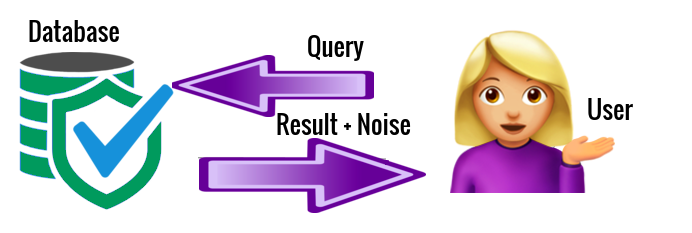
Above is a simple diagram of how Differential Privacy-Preserving Data Sharing and Data Mining protects a User's Data
PySyft is a Python library for secure and private Deep Learning. PySyft decouples private data from model training, using Federated Learning, Differential Privacy, and Encrypted Computation (like Multi-Party Computation (MPC) and Homomorphic Encryption (HE) within the main Deep Learning frameworks like PyTorch and TensorFlow.
TensorFlow Privacy is a Python library that includes implementations of TensorFlow optimizers for training machine learning models with differential privacy. The library comes with tutorials and analysis tools for computing the privacy guarantees provided.
TensorFlow Federated (TFF) is an open-source framework for machine learning and other computations on decentralized data. TFF has been developed to facilitate open research and experimentation with Federated Learning (FL), an approach to machine learning where a shared global model is trained across many participating clients that keep their training data locally.
Privacy on Beam is an end-to-end differential privacy solution built on Apache Beam. It is intended to be usable by all developers, regardless of their differential privacy expertise.
PyDP is a Python wrapper for Google's Differential Privacy project.
PennyLane is a cross-platform Python library for differentiable programming of quantum computers. By training a quantum computer the same way as a neural network.
BoTorch is a library for Bayesian Optimization built on PyTorch.
PyTorch Geometric (PyG) is a geometric deep learning extension library for PyTorch.
Skorch is a scikit-learn compatible neural network library that wraps PyTorch.
Diffprivlib is the IBM Differential Privacy Library for experimenting with, investigating and developing applications in, differential privacy.
Opacus is a library that enables training PyTorch models with differential privacy. It supports training with minimal code changes required on the client, has little impact on training performance and allows the client to online track the privacy budget expended at any given moment.
Smart Noise is a toolkit that uses state-of-the-art differential privacy (DP) techniques to inject noise into data, to prevent disclosure of sensitive information and manage exposure risk.
Differential Privacy Blog Series by the National Institute of Standards and Technology(NIST)
Apple's Differential Privacy Overview
Learning with Privacy at Scale with Apple Machine Learning
Microsoft Research Differential Privacy Overview
Responsible Machine Learning with Microsoft Azure
Responsible AI Resources with Microsoft AI
Preserve data privacy by using differential privacy and the SmartNoise package
Open Differential Privacy(OpenDP) Initiative by Microsoft and Harvard
Google's Differential Privacy Library
Computing Private Statistics with Privacy on Beam from Google Codelabs
Introducing TensorFlow Privacy: Learning with Differential Privacy for Training Data
TensorFlow Federated: Machine Learning on Decentralized Data
Federated Analytics: Collaborative Data Science without Data Collection
Differentially-Private Stochastic Gradient Descent(DP-SGD)
Learning Differential Privacy from Harvard University Privacy Tools Project
Harvard University Privacy Tools Project Courses & Educational Materials
The Weaknesses of Differential Privacy course on Coursera
The Differential Privacy of Bayesian Inference
Simultaneous private learning of multiple concepts
The Complexity of Computing the Optimal Composition of Differential Privacy
Order revealing encryption and the hardness of private learning
SAP HANA data anonymization using SAP Software Solutions
SAP HANA Security using their In-Memory Database
DEFCON Differential Privacy Training Launch
Secure and Private AI course on Udacity
Differential Privacy - Security and Privacy for Big Data - Part 1 course on Coursera
Differential Privacy - Security and Privacy for Big Data - Part 2 course on Coursera
Certified Ethical Emerging Technologist Professional Certificate course on Coursera
Retour au sommet
CNCF Cloud Native Interactive Landscape
Build Cloud-Native applications in Microsoft Azure
Cloud-Native application development for Google Cloud
Cloud-Native development for Amazon Web Services
Cloud Native Applications with VMware Tanzu
Cloud Native Computing Foundation Training and Certification Program
Cloud Foundry Developer Training and Certification Program
Cloud-Native Architecture Course on Pluralsight
AWS Fundamentals: Going Cloud-Native on Coursera
Developing Cloud-Native Apps w/ Microservices Architectures course on Udemy
How load balancing works for cloud native applications with Azure Application Gateway on Linkedin Learning
Developing Cloud Native Applications course on edX
Cloud Native courses from IBM
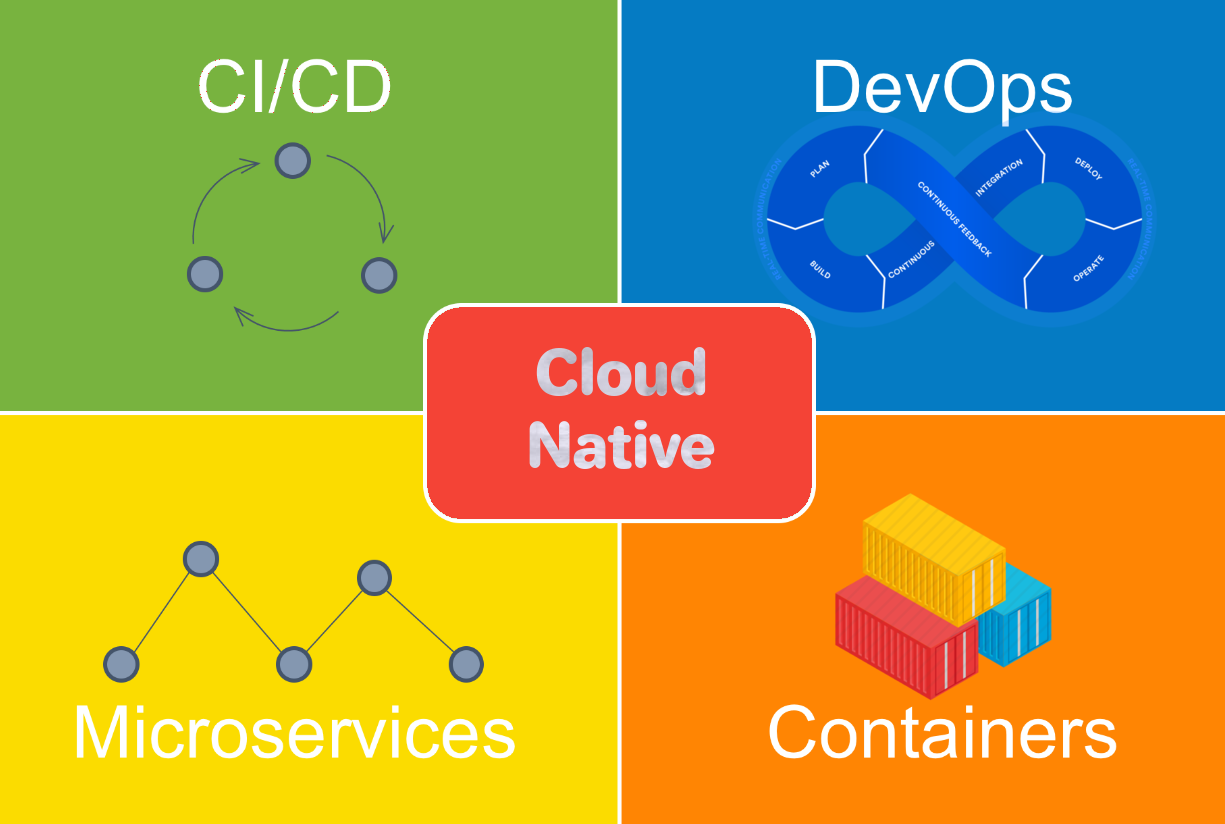
Application Framework
Spring Boot is an open-source micro framework maintained by Pivotal, which was acquired by VMware in 2019. It provides Java developers with a platform to get started with an auto configurable production-grade Spring application.
Apache Mesos is a cluster manager that provides efficient resource isolation and sharing across distributed applications, or frameworks. It can run Hadoop, Jenkins, Spark, Aurora, and other frameworks on a dynamically shared pool of nodes.
Apache Spark is a unified analytics engine for big data processing, with built-in modules for streaming, SQL, machine learning and graph processing.
Apache Hadoop is a framework that allows for the distributed processing of large data sets across clusters of computers using simple programming models. It is designed to scale up from single servers to thousands of machines, each offering local computation and storage. Rather than rely on hardware to deliver high-availability, the library itself is designed to detect and handle failures at the application layer, so delivering a highly-available service on top of a cluster of computers, each of which may be prone to failures.
Runtime Platform
BOSH is a tool that prepares your infrastructure for what needs to be managed. BOSH espouses software engineering best practices, such as continuous delivery, by making it easy to create software releases that automatically update complex distributed systems with simple commands.Due to the flexibility and power of BOSH, Google and VMware made it the heart of the Kubo project, now called the Cloud Foundry Container Runtime, based on Kubernetes.
Infrastructure Automatation
Maven is a build automation tool used primarily for Java projects. Maven can also be used to build and manage projects written in C#, Ruby, Scala, and other languages. The Maven project is hosted by the Apache Software Foundation.
Gradle is an open-source build-automation system that builds upon the concepts of Apache Ant and Apache Maven and introduces a Groovy-based domain-specific language instead of the XML form used by Apache Maven for declaring the project configuration.
Chef is an effortless Infrastructure Suite offers visibility into security and compliance status across all infrastructure and makes it easy to detect and correct issues long before they reach production.
Puppet is an open source tool that makes continuous integration and delivery of your software on traditional or containerized infrastructure easy by pulling together all your existing tools and giving you flexibility to deploy your way.
Ansible is an open-source software provisioning, configuration management, and application-deployment tool. It runs on many Unix-like systems, and can configure both Unix-like systems as well as Microsoft Windows.
Salt is Python-based, open-source software for event-driven IT automation, remote task execution, and configuration management. Supporting the "Infrastructure as Code" approach to data center system and network deployment and management, configuration automation, SecOps orchestration, vulnerability remediation, and hybrid cloud control.
Terraform is an open-source infrastructure as code software tool created by HashiCorp.It enables users to define and provision a datacenter infrastructure using a high-level configuration language known as Hashicorp Configuration Language (HCL), or optionally JSON.
Cloud Infrastructure
Amazon web service(AWS) is a platform that offers flexible, reliable, scalable, easy-to-use and cost-effective cloud computing solutions. The AWS platform is developed with a combination of infrastructure as a service (IaaS), platform as a service (PaaS) and packaged software as a service (SaaS) offerings.
Microsoft Azure is a cloud computing service created by Microsoft for building, testing, deploying, and managing applications and services through Microsoft-managed data centers.
Azure DevOps is a set of services for teams to share code, track work, and ship software; CLIs Build, deploy, diagnose, and manage multi-platform, scalable apps and services; Azure Pipelines Continuously build, test, and deploy to any platform and cloud; Azure Lab Services Set up labs for classrooms, trials, development and testing, and other scenarios.
Azure Draft is a tool for developers to create cloud-native applications on Kubernetes.
Google Cloud Platform integrates industry-leading tools(data management, hybrid & multi-cloud, and AI & ML) with Cloud Storage for enhanced support with everything from security and data transfer, to data backup and archive. Expand all . Backup, archival, and disaster recovery. Along with File systems and gateways.
OpenStack is a free and open-source software platform for cloud computing, mostly deployed as infrastructure-as-a-service that controls large pools of compute, storage, and networking resources throughout a datacenter, managed through a dashboard or via the OpenStack API. OpenStack works with popular enterprise and open source technologies making it ideal for heterogeneous infrastructure.
Cloud Foundry is an open source, multi cloud application platform as a service that makes it faster and easier to build, test, deploy and scale applications, providing a choice of clouds, developer frameworks, and application services. It is an open source project and is available through a variety of private cloud distributions and public cloud instances.
Bamboo is a continuous integration (CI) server that can be used to automate the release management for a software application, creating a continuous delivery pipeline.
Drone is a Continuous Delivery system built on container technology. Drone uses a simple YAML configuration file, a superset of docker-compose, to define and execute Pipelines inside Docker containers.
Travis CI is a hosted continuous integration service used to build and test software projects hosted at GitHub.
Circle CI is a continuous integration and continuous delivery platform that helps software teams work smarter, faster.
Team City is a build management and continuous integration server from JetBrains.
Shippable simplifies DevOps and makes it systematic with an Assembly Line platform that is heterogeneous, flexible, and provides complete visibility across your DevOps workflows.
Spinnaker is an open source, multi-cloud continuous delivery platform for releasing software changes with high velocity and confidence.
Prow is a Kubernetes based CI/CD system. Jobs can be triggered by various types of events and report their status to many different services. In addition to job execution, Prow provides GitHub automation in the form of policy enforcement, chat-ops via /foo style commands, and automatic PR merging. Prow has a microservice architecture implemented as a collection of container images that run as Kubernetes deployments.
AWS ECS is a highly scalable, high-performance container orchestration service that supports Docker containers and allows you to easily run and scale containerized applications on AWS. Amazon ECS eliminates the need for you to install and operate your own container orchestration software, manage and scale a cluster of virtual machines, or schedule containers on those virtual machines.
AWS CodeBuild is a fully managed continuous integration service that compiles source code, runs tests, and produces software packages that are ready to deploy. With CodeBuild, you don't need to provision, manage, and scale your own build servers.
CFEngine is an open-source configuration management system, written by Mark Burgess.Its primary function is to provide automated configuration and maintenance of large-scale computer systems, including the unified management of servers, desktops, consumer and industrial devices, embedded networked devices, mobile smartphones, and tablet computers.
Octpus Deploy is the deployment automation server for your entire team, designed to make it easy to orchestrate releases and deploy applications, whether on-premises or in the cloud.
AWS CodeDeploy is a fully managed deployment service that automates software deployments to a variety of compute services such as Amazon EC2, AWS Fargate, AWS Lambda, and your on-premises servers. AWS CodeDeploy makes it easier for you to rapidly release new features, helps you avoid downtime during application deployment, and handles the complexity of updating your applications.
AWS Lambda is an event-driven, serverless computing platform provided by Amazon as a part of the Amazon Web Services. It is a computing service that runs code in response to events and automatically manages the computing resources required by that code.
Traefik is an open-source Edge Router that makes publishing your services a fun and easy experience. It receives requests on behalf of your system and finds out which components are responsible for handling them. What sets Traefik apart, besides its many features, is that it automatically discovers the right configuration for your services.
Kubernetes is an open-source container-orchestration system for automating application deployment, scaling, and management. It was originally designed by Google, and is now maintained by the Cloud Native Computing Foundation.
Google Kubernetes Engine (GKE) is a managed, production-ready environment for deploying containerized applications.
OpenShift is focused on security at every level of the container stack and throughout the application lifecycle. It includes long-term, enterprise support from one of the leading Kubernetes contributors and open source software companies.
Rancher is a complete software stack for teams adopting containers. It addresses the operational and security challenges of managing multiple Kubernetes clusters, while providing DevOps teams with integrated tools for running containerized workloads.
Docker is a set of platform as a service products that use OS-level virtualization to deliver software in packages called containers. Containers are isolated from one another and bundle their own software, libraries and configuration files; they can communicate with each other through well-defined channels. All containers are run by a single operating-system kernel and are thus more lightweight than virtual machines.
Rook is an open source cloud-native storage orchestrator for Kubernetes that turns distributed storage systems into self-managing, self-scaling, self-healing storage services. It automates the tasks of a storage administrator: deployment, bootstrapping, configuration, provisioning, scaling, upgrading, migration, disaster recovery, monitoring, and resource management.
Podman(the POD MANager) is a tool for managing OCI containers and pods.
Rkt is a pod-native container engine for Linux. It is composable, secure, and built on standards.
Retour au sommet
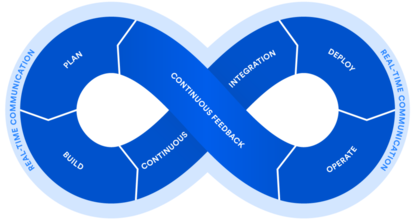
GitHub provides hosting for software development version control using Git. It offers all of the distributed version control and source code management functionality of Git as well as adding its own features. It provides access control and several collaboration features such as bug tracking, feature requests, task management, and wikis for every project.
GitHub Codespaces is an integrated development environment(IDE) on GitHub. That allows developers to develop entirely in the cloud using Visual Studio and Visual Studio Code.
GitHub Actions will automate, customize, and execute your software development workflows right in your repository with GitHub Actions. You can discover, create, and share actions to perform any job you'd like, including CI/CD, and combine actions in a completely customized workflow.GitHub Actions for Azure you can create workflows that you can set up in your repository to build, test, package, release and deploy to Azure.Learn more about all other integrations with Azure.
GitLab is a web-based DevOps lifecycle tool that provides a Git-repository manager providing wiki, issue-tracking and CI/CD pipeline features, using an open-source license, developed by GitLab Inc.
Jenkins is a free and open source automation server. Jenkins helps to automate the non-human part of the software development process, with continuous integration and facilitating technical aspects of continuous delivery.
Bitbucket is a web-based version control repository hosting service owned by Atlassian, for source code and development projects that use either Mercurial or Git revision control systems. Bitbucket offers both commercial plans and free accounts. It offers free accounts with an unlimited number of private repositories. Bitbucket integrates with other Atlassian software like Jira, HipChat, Confluence and Bamboo.
Bamboo is a continuous integration (CI) server that can be used to automate the release management for a software application, creating a continuous delivery pipeline.
Codecov is the leading, dedicated code coverage solution. It provides highly integrated tools to group, merge, archive and compare coverage reports. Whether your team is comparing changes in a pull request or reviewing a single commit, Codecov will improve the code review workflow and quality.
Drone is a Continuous Delivery system built on container technology. Drone uses a simple YAML configuration file, a superset of docker-compose, to define and execute Pipelines inside Docker containers.
Travis CI is a hosted continuous integration service used to build and test software projects hosted at GitHub.
Circle CI is a continuous integration and continuous delivery platform that helps software teams work smarter, faster.
Zuul-CI is a program that drives continuous integration, delivery, and deployment systems with a focus on project gating and interrelated projects. Using the same Ansible playbooks to deploy your system and run your tests.
Artifactory is a Universal Artifact Repository Manager developed by JFrog. It supports all major packages, enterprise ready security, clustered, HA, Docker registry, multi-site replication and scalable.
Azure DevOps is a set of services for teams to share code, track work, and ship software; CLIs Build, deploy, diagnose, and manage multi-platform, scalable apps and services; Azure Pipelines Continuously build, test, and deploy to any platform and cloud; Azure Lab Services Set up labs for classrooms, trials, development and testing, and other scenarios.
Team City is a build management and continuous integration server from JetBrains.
Shippable simplifies DevOps and makes it systematic with an Assembly Line platform that is heterogeneous, flexible, and provides complete visibility across your DevOps workflows.
Spinnaker is an open source, multi-cloud continuous delivery platform for releasing software changes with high velocity and confidence.
AWS CodeBuild is a fully managed continuous integration service that compiles source code, runs tests, and produces software packages that are ready to deploy. With CodeBuild, you don't need to provision, manage, and scale your own build servers.
Selenium is a free (open source) automated testing suite for web applications across different browsers and platforms.
Cucumber is a tool based on Behavior Driven Development (BDD) framework which is used to write acceptance tests for the web application. It allows automation of functional validation in easily readable and understandable format (like plain English) to Business Analysts, Developers, and Testers.
JUnit is a unit testing framework for the Java programming language.
Mocha is a JavaScript test framework for Node.js programs, featuring browser support, asynchronous testing, test coverage reports, and use of any assertion library.
Karma is a simple tool that allows you to execute JavaScript code in multiple real browsers.
Jasmine is an open source testing framework for JavaScript. It aims to run on any JavaScript-enabled platform, to not intrude on the application nor the IDE, and to have easy-to-read syntax.
Maven is a build automation tool used primarily for Java projects. Maven can also be used to build and manage projects written in C#, Ruby, Scala, and other languages. The Maven project is hosted by the Apache Software Foundation.
Gradle is an open-source build-automation system that builds upon the concepts of Apache Ant and Apache Maven and introduces a Groovy-based domain-specific language instead of the XML form used by Apache Maven for declaring the project configuration.
Chef is an effortless Infrastructure Suite offers visibility into security and compliance status across all infrastructure and makes it easy to detect and correct issues long before they reach production.
Puppet is an open source tool that makes continuous integration and delivery of your software on traditional or containerized infrastructure easy by pulling together all your existing tools and giving you flexibility to deploy your way.
Ansible is an open-source software provisioning, configuration management, and application-deployment tool. It runs on many Unix-like systems, and can configure both Unix-like systems as well as Microsoft Windows.
KubeInit provides Ansible playbooks and roles for the deployment and configuration of multiple Kubernetes distributions.
Salt is Python-based, open-source software for event-driven IT automation, remote task execution, and configuration management. Supporting the "Infrastructure as Code" approach to data center system and network deployment and management, configuration automation, SecOps orchestration, vulnerability remediation, and hybrid cloud control.
Terraform is an open-source infrastructure as code software tool created by HashiCorp.It enables users to define and provision a datacenter infrastructure using a high-level configuration language known as Hashicorp Configuration Language (HCL), or optionally JSON.
Consul is a service networking solution to connect and secure services across any runtime platform and public or private cloud.
Packer is lightweight, runs on every major operating system, and is highly performant, creating machine images for multiple platforms in parallel. Packer does not replace configuration management like Chef or Puppet. In fact, when building images, Packer is able to use tools like Chef or Puppet to install software onto the image.
Nomad is a highly available, distributed, data-center aware cluster and application scheduler designed to support the modern datacenter with support for long-running services, batch jobs, and much more.
Vagrant is a tool for building and managing virtual machine environments in a single workflow. With an easy-to-use workflow and focus on automation, Vagrant lowers development environment setup time and increases production parity.
Vault is a tool for securely accessing secrets. A secret is anything that you want to tightly control access to, such as API keys, passwords, certificates, and more. Vault provides a unified interface to any secret, while providing tight access control and recording a detailed audit log.
CFEngine is an open-source configuration management system, written by Mark Burgess.Its primary function is to provide automated configuration and maintenance of large-scale computer systems, including the unified management of servers, desktops, consumer and industrial devices, embedded networked devices, mobile smartphones, and tablet computers.
Octpus Deploy is the deployment automation server for your entire team, designed to make it easy to orchestrate releases and deploy applications, whether on-premises or in the cloud.
AWS CodeDeploy is a fully managed deployment service that automates software deployments to a variety of compute services such as Amazon EC2, AWS Fargate, AWS Lambda, and your on-premises servers. AWS CodeDeploy makes it easier for you to rapidly release new features, helps you avoid downtime during application deployment, and handles the complexity of updating your applications.
Kubernetes is an open-source container-orchestration system for automating application deployment, scaling, and management. It was originally designed by Google, and is now maintained by the Cloud Native Computing Foundation.
Docker is a set of platform as a service products that use OS-level virtualization to deliver software in packages called containers. Containers are isolated from one another and bundle their own software, libraries and configuration files; they can communicate with each other through well-defined channels. All containers are run by a single operating-system kernel and are thus more lightweight than virtual machines.
PowerShell/PowerShell Core is a cross-platform (Windows, Linux, and macOS) automation and configuration tool/framework that works well with your existing tools and is optimized for dealing with structured data (eg JSON, CSV, XML, etc.), REST APIs, and object models. It includes a command-line shell, an associated scripting language and a framework for processing cmdlets.
Hyper-V creates virtual machines on Windows 10. Hyper-V can be enabled in many ways including using the Windows 10 control panel, PowerShell or using the Deployment Imaging Servicing and Management tool (DISM).
Cloud Hypervisor is an open source Virtual Machine Monitor (VMM) that runs on top of KVM. The project focuses on exclusively running modern, cloud workloads, on top of a limited set of hardware architectures and platforms. Cloud workloads refers to those that are usually run by customers inside a cloud provider. Cloud Hypervisor is implemented in Rust and is based on the rust-vmm crates.
VMware vSphere Hypervisor is a bare-metal hypervisor that virtualizes servers; allowing you to consolidate your applications while saving time and money managing your IT infrastructure.
VMware vSphere is the industry-leading compute virtualization platform, and your first step to application modernization. It has been rearchitected with native Kubernetes to allow customers to modernize the 70 million+ workloads now running on vSphere.
VMware Tanzu is a centralized management platform for consistently operating and securing your Kubernetes infrastructure and modern applications across multiple teams and private/public clouds.
Rancher is a complete software stack for teams adopting containers. It addresses the operational and security challenges of managing multiple Kubernetes clusters, while providing DevOps teams with integrated tools for running containerized workloads.
K3s is a highly available, certified Kubernetes distribution designed for production workloads in unattended, resource-constrained, remote locations or inside IoT appliances.
Rook is an open source cloud-native storage orchestrator for Kubernetes that turns distributed storage systems into self-managing, self-scaling, self-healing storage services. It automates the tasks of a storage administrator: deployment, bootstrapping, configuration, provisioning, scaling, upgrading, migration, disaster recovery, monitoring, and resource management.
Google Kubernetes Engine (GKE) is a managed, production-ready environment for deploying containerized applications.
Anthos is a modern application management platform that provides a consistent development and operations experience for cloud and on-premises environments.
AWS ECS is a highly scalable, high-performance container orchestration service that supports Docker containers and allows you to easily run and scale containerized applications on AWS. Amazon ECS eliminates the need for you to install and operate your own container orchestration software, manage and scale a cluster of virtual machines, or schedule containers on those virtual machines.
Apache Mesos is a cluster manager that provides efficient resource isolation and sharing across distributed applications, or frameworks. It can run Hadoop, Jenkins, Spark, Aurora, and other frameworks on a dynamically shared pool of nodes.
Apache Spark is a unified analytics engine for big data processing, with built-in modules for streaming, SQL, machine learning and graph processing.
Apache Hadoop is a framework that allows for the distributed processing of large data sets across clusters of computers using simple programming models. It is designed to scale up from single servers to thousands of machines, each offering local computation and storage. Rather than rely on hardware to deliver high-availability, the library itself is designed to detect and handle failures at the application layer, so delivering a highly-available service on top of a cluster of computers, each of which may be prone to failures.
Microsoft Azure is a cloud computing service created by Microsoft for building, testing, deploying, and managing applications and services through Microsoft-managed data centers.
Azure Functions is a solution for easily running small pieces of code, or "functions," in the cloud. You can write just the code you need for the problem at hand, without worrying about a whole application or the infrastructure to run it.
Rkt is a pod-native container engine for Linux. It is composable, secure, and built on standards.
AWS Lambda is an event-driven, serverless computing platform provided by Amazon as a part of the Amazon Web Services. It is a computing service that runs code in response to events and automatically manages the computing resources required by that code.
Helm is the Kubernetes Package Manager.
Kubespray is a tool that combines Kubernetes and Ansible to easily install Kubernetes clusters that can be deployed on AWS, GCE, Azure, OpenStack, vSphere, Packet (bare metal), Oracle Cloud Infrastructure (Experimental), or Baremetal
Red Hat OpenShift is focused on security at every level of the container stack and throughout the application lifecycle. It includes long-term, enterprise support from one of the leading Kubernetes contributors and open source software companies.
OpenShift Hive is an operator which runs as a service on top of Kubernetes/OpenShift. The Hive service can be used to provision and perform initial configuration of OpenShift 4 clusters.
OKD is a community distribution of Kubernetes optimized for continuous application development and multi-tenant deployment. OKD adds developer and operations-centric tools on top of Kubernetes to enable rapid application development, easy deployment and scaling, and long-term lifecycle maintenance for small and large teams.
Odo is a fast, iterative, and straightforward CLI tool for developers who write, build, and deploy applications on Kubernetes and OpenShift.
Kata Operator is an operator to perform lifecycle management (install/upgrade/uninstall) of Kata Runtime on Openshift as well as Kubernetes cluster.
Knative is a Kubernetes-based platform to build, deploy, and manage modern serverless workloads. Knative takes care of the operational overhead details of networking, autoscaling (even to zero), and revision tracking.
Etcd is a distributed key-value store that provides a reliable way to store data that needs to be accessed by a distributed system or cluster of machines. Etcd is used as the backend for service discovery and stores cluster state and configuration for Kubernetes.
OpenStack is a free and open-source software platform for cloud computing, mostly deployed as infrastructure-as-a-service that controls large pools of compute, storage, and networking resources throughout a datacenter, managed through a dashboard or via the OpenStack API. OpenStack works with popular enterprise and open source technologies making it ideal for heterogeneous infrastructure.
Cloud Foundry is an open source, multi cloud application platform as a service that makes it faster and easier to build, test, deploy and scale applications, providing a choice of clouds, developer frameworks, and application services. It is an open source project and is available through a variety of private cloud distributions and public cloud instances.
Splunk software is used for searching, monitoring, and analyzing machine-generated big data, via a Web-style interface.
Prometheus is a free software application used for event monitoring and alerting. It records real-time metrics in a time series database (allowing for high dimensionality) built using a HTTP pull model, with flexible queries and real-time alerting.
Loki is a horizontally-scalable, highly-available, multi-tenant log aggregation system inspired by Prometheus. It is designed to be very cost effective and easy to operate. It does not index the contents of the logs, but rather a set of labels for each log stream.
Thanos is a set of components that can be composed into a highly available metric system with unlimited storage capacity, which can be added seamlessly on top of existing Prometheus deployments.
Container Storage Interface (CSI) is an API that lets container orchestration platforms like Kubernetes seamlessly communicate with stored data via a plug-in.
OpenEBS is a Kubernetes-based tool to create stateful applications using Container Attached Storage.
ElasticSearch is a search engine based on the Lucene library. It provides a distributed, multitenant-capable full-text search engine with an HTTP web interface and schema-free JSON documents. Elasticsearch is developed in Java.
Logstash is a tool for managing events and logs. When used generically, the term encompasses a larger system of log collection, processing, storage and searching activities.
Kibana is an open source data visualization plugin for Elasticsearch. It provides visualization capabilities on top of the content indexed on an Elasticsearch cluster. Users can create bar, line and scatter plots, or pie charts and maps on top of large volumes of data.
New Relic is a SaaS-based monitoring tool that fully supports the way DevOps teams work in the modern enterprise by streamlining your workflows with today's collaboration software and orchestration tools like Puppet, Chef, and Ansible.
Nagios is a free and open source computer-software application that monitors systems, networks and infrastructure. Nagios offers monitoring and alerting services for servers, switches, applications and services. It alerts users when things go wrong and alerts them a second time when the problem has been resolved.
SonarQube is an open-source platform developed by SonarSource for continuous inspection of code quality to perform automatic reviews with static analysis of code to detect bugs, code smells, and security vulnerabilities on 20+ programming languages.
Genie is a federated job orchestration engine developed by Netflix. Genie provides REST APIs to run a variety of big data jobs like Hadoop, Pig, Hive, Spark, Presto, Sqoop and more. It also provides APIs for managing the metadata of many distributed processing clusters and the commands and applications which run on them.
Inviso is a lightweight tool that provides the ability to search for Hadoop jobs, visualize the performance, and view cluster utilization.
Fenzo is a scheduler Java library for Apache Mesos frameworks that supports plugins for scheduling optimizations and facilitates cluster autoscaling.
Dynomite is a thin, distributed dynamo layer for different storage engines and protocols, which includes Redis and Memcached. Dynomite supports multi-datacenter replication and is designed for High Availability(HA).
Dyno is a tool that is used to scale a Java client application utilizing Dynomite.
Raigad is a process/tool that runs alongside Elasticsearch to automate backup/recovery, Deployments and Centralized Configuration management.
Priam is a process/tool that runs alongside Apache Cassandra to automate backup/recovery, Deployments and Centralized Configuration management.
Chaos Monkey is a resiliency tool used to randomly terminates virtual machine instances and containers that run inside of your production environment. Chaos Monkey should work with any backend that Spinnaker supports (AWS, Google Compute Engine, Microsoft Azure, Kubernetes, and Cloud Foundry).
Falcor is a JavaScript library for efficient data fetching. Falcor lets you represent all your remote data sources as a single domain model via a virtual JSON graph, whether in memory on the client or over the network on the server.
Restify is a framework, utilizing connect style middleware for building REST APIs.
Traefik is an open source Edge Router that makes publishing your services a fun and easy experience. It receives requests on behalf of your system and finds out which components are responsible for handling them. What sets Traefik apart, besides its many features, is that it automatically discovers the right configuration for your services.
Jira is a proprietary issue tracking product developed by Atlassian that allows bug tracking and agile project management.
Pivotal Tracker is the agile project management tool of choice for developers around the world for real-time collaboration around a shared, prioritized backlog.
Trello is a web-based Kanban-style list-making application that gives you perspective over all your projects, at work and at home.
Microsoft Teams is the hub for team collaboration in Office 365 that integrates the people, content, and tools your team needs to be more engaged and effective.
Slack is a cloud-based proprietary instant messaging platform developed by Slack Technologies.
OpsGenie is a cloud-based service for dev & ops teams, providing reliable alerts, on-call schedule management and escalations. OpsGenie integrates with monitoring tools & services, ensures the right people are notified.
Pagerduty automates processes built on best practices, allowing you to focus on higher value parts of incident response. Granular and scalable permissions enable teams to administer and operate independently while controlling visibility.
Veracode is a leading provider of enterprise-class application security, seamlessly integrating agile security solutions for organizations around the globe. In addition to application security services and secure devops services, Veracode provides a full security assessment to ensure your website and applications are secure, and ensures full enterprise data protection.
DevOps Engineering on AWS from AWS Training
AWS Certified DevOps Engineer - Professional from A Cloud Guru
Microsoft Certified: DevOps Engineer Expert Cert.
Introduction to Azure DevOps from A Cloud Guru
Architecting with Google Compute Engine
Architecting with Google Kubernetes Engine in Google Cloud
VMware Training and Certification Program
Cloudera Certification Program
Salesforce Certification Program
Salesforce Superbadges
Red Hat Training and Certification Program
Linux Foundation Training and Certification Program
Linux Professional Institute(LPI) Training and Certification
Learn DevOps with Online Courses and Lessons from edX
Top DevOps Courses Online from Udemy
Devops Courses from Coursera
Retour au sommet
AWS Certified Security - Specialty Certification
Microsoft Certified: Azure Security Engineer Associate
Google Cloud Certified Professional Cloud Security Engineer
Cisco Security Certifications
The Red Hat Certified Specialist in Security: Linux
Linux Professional Institute LPIC-3 Enterprise Security Certification
Cybersecurity Training and Courses from IBM Skills
Cybersecurity Courses and Certifications by Offensive Security
Citrix Certified Associate – Networking(CCA-N)
Citrix Certified Professional – Virtualization(CCP-V)
CCNP Routing and Switching
Certified Information Security Manager(CISM)
Wireshark Certified Network Analyst (WCNA)
Juniper Networks Certification Program Enterprise (JNCP)
Networking courses and specializations from Coursera
Network & Security Courses from Udemy
Network & Security Courses from edX
 • Connection: In networking, a connection refers to pieces of related information that are transferred through a network. This generally infers that a connection is built before the data transfer (by following the procedures laid out in a protocol) and then is deconstructed at the at the end of the data transfer.

• Packet: A packet is, generally speaking, the most basic unit that is transferred over a network. When communicating over a network, packets are the envelopes that carry your data (in pieces) from one end point to the other.
Packets have a header portion that contains information about the packet including the source and destination, timestamps, network hops. The main portion of a packet contains the actual data being transferred. It is sometimes called the body or the payload.
• Network Interface: A network interface can refer to any kind of software interface to networking hardware. For instance, if you have two network cards in your computer, you can control and configure each network interface associated with them individually.
A network interface may be associated with a physical device, or it may be a representation of a virtual interface. The "loop-back" device, which is a virtual interface to the local machine, is an example of this.
 • LAN: LAN stands for "local area network". It refers to a network or a portion of a network that is not publicly accessible to the greater internet. A home or office network is an example of a LAN.

• WAN: WAN stands for "wide area network". It means a network that is much more extensive than a LAN. While WAN is the relevant term to use to describe large, dispersed networks in general, it is usually meant to mean the internet, as a whole.
If an interface is connected to the WAN, it is generally assumed that it is reachable through the internet.
• Protocol: A protocol is a set of rules and standards that basically define a language that devices can use to communicate. There are a great number of protocols in use extensively in networking, and they are often implemented in different layers.
Some low level protocols are TCP, UDP, IP, and ICMP. Some familiar examples of application layer protocols, built on these lower protocols, are HTTP (for accessing web content), SSH, TLS/SSL, and FTP.
 • Port: A port is an address on a single machine that can be tied to a specific piece of software. It is not a physical interface or location, but it allows your server to be able to communicate using more than one application.

• Firewall: A firewall is a program that decides whether traffic coming into a server or going out should be allowed. A firewall usually works by creating rules for which type of traffic is acceptable on which ports. Generally, firewalls block ports that are not used by a specific application on a server.

• NAT: Network address translation is a way to translate requests that are incoming into a routing server to the relevant devices or servers that it knows about in the LAN. This is usually implemented in physical LANs as a way to route requests through one IP address to the necessary backend servers.

• VPN: Virtual private network is a means of connecting separate LANs through the internet, while maintaining privacy. This is used as a means of connecting remote systems as if they were on a local network, often for security reasons.
 While networking is often discussed in terms of topology in a horizontal way, between hosts, its implementation is layered in a vertical fashion throughout a computer or network. This means is that there are multiple technologies and protocols that are built on top of each other in order for communication to function more easily. Each successive, higher layer abstracts the raw data a little bit more, and makes it simpler to use for applications and users. It also allows you to leverage lower layers in new ways without having to invest the time and energy to develop the protocols and applications that handle those types of traffic.

As data is sent out of one machine, it begins at the top of the stack and filters downwards. At the lowest level, actual transmission to another machine takes place. At this point, the data travels back up through the layers of the other computer. Each layer has the ability to add its own "wrapper" around the data that it receives from the adjacent layer, which will help the layers that come after decide what to do with the data when it is passed off.

One method of talking about the different layers of network communication is the OSI model. OSI stands for Open Systems Interconnect.This model defines seven separate layers. The layers in this model are:

• Application: The application layer is the layer that the users and user-applications most often interact with. Network communication is discussed in terms of availability of resources, partners to communicate with, and data synchronization.

• Presentation: The presentation layer is responsible for mapping resources and creating context. It is used to translate lower level networking data into data that applications expect to see.

• Session: The session layer is a connection handler. It creates, maintains, and destroys connections between nodes in a persistent way.

• Transport: The transport layer is responsible for handing the layers above it a reliable connection. In this context, reliable refers to the ability to verify that a piece of data was received intact at the other end of the connection. This layer can resend information that has been dropped or corrupted and can acknowledge the receipt of data to remote computers.

• Network: The network layer is used to route data between different nodes on the network. It uses addresses to be able to tell which computer to send information to. This layer can also break apart larger messages into smaller chunks to be reassembled on the opposite end.

• Data Link: This layer is implemented as a method of establishing and maintaining reliable links between different nodes or devices on a network using existing physical connections.

• Physical: The physical layer is responsible for handling the actual physical devices that are used to make a connection. This layer involves the bare software that manages physical connections as well as the hardware itself (like Ethernet).
The TCP/IP model, more commonly known as the Internet protocol suite, is another layering model that is simpler and has been widely adopted.It defines the four separate layers, some of which overlap with the OSI model:
• Application: In this model, the application layer is responsible for creating and transmitting user data between applications. The applications can be on remote systems, and should appear to operate as if locally to the end user.
The communication takes place between peers network.
 • Transport: The transport layer is responsible for communication between processes. This level of networking utilizes ports to address different services. It can build up unreliable or reliable connections depending on the type of protocol used.

• Internet: The internet layer is used to transport data from node to node in a network. This layer is aware of the endpoints of the connections, but does not worry about the actual connection needed to get from one place to another. IP addresses are defined in this layer as a way of reaching remote systems in an addressable manner.

• Link: The link layer implements the actual topology of the local network that allows the internet layer to present an addressable interface. It establishes connections between neighboring nodes to send data.
Interfaces are networking communication points for your computer. Each interface is associated with a physical or virtual networking device. Typically, your server will have one configurable network interface for each Ethernet or wireless internet card you have. In addition, it will define a virtual network interface called the "loopback" or localhost interface. This is used as an interface to connect applications and processes on a single computer to other applications and processes. You can see this referenced as the "lo" interface in many tools.
Networking works by piggybacks on a number of different protocols on top of each other. In this way, one piece of data can be transmitted using multiple protocols encapsulated within one another.
Media access control is a communications protocol that is used to distinguish specific devices. Each device is supposed to get a unique MAC address during the manufacturing process that differentiates it from every other device on the internet. Addressing hardware by the MAC address allows you to reference a device by a unique value even when the software on top may change the name for that specific device during operation. Media access control is one of the only protocols from the link layer that you are likely to interact with on a regular basis.
The IP protocol is one of the fundamental protocols that allow the internet to work. IP addresses are unique on each network and they allow machines to address each other across a network. It is implemented on the internet layer in the IP/TCP model. Networks can be linked together, but traffic must be routed when crossing network boundaries. This protocol assumes an unreliable network and multiple paths to the same destination that it can dynamically change between. There are a number of different implementations of the protocol. The most common implementation today is IPv4, although IPv6 is growing in popularity as an alternative due to the scarcity of IPv4 addresses available and improvements in the protocols capabilities.
ICMP: internet control message protocol is used to send messages between devices to indicate the availability or error conditions. These packets are used in a variety of network diagnostic tools, such as ping and traceroute. Usually ICMP packets are transmitted when a packet of a different kind meets some kind of a problem. Basically, they are used as a feedback mechanism for network communications.
TCP: Transmission control protocol is implemented in the transport layer of the IP/TCP model and is used to establish reliable connections. TCP is one of the protocols that encapsulates data into packets. It then transfers these to the remote end of the connection using the methods available on the lower layers. On the other end, it can check for errors, request certain pieces to be resent, and reassemble the information into one logical piece to send to the application layer. The protocol builds up a connection prior to data transfer using a system called a three-way handshake. This is a way for the two ends of the communication to acknowledge the request and agree upon a method of ensuring data reliability. After the data has been sent, the connection is torn down using a similar four-way handshake. TCP is the protocol of choice for many of the most popular uses for the internet, including WWW, FTP, SSH, and email. It is safe to say that the internet we know today would not be here without TCP.
UDP: User datagram protocol is a popular companion protocol to TCP and is also implemented in the transport layer. The fundamental difference between UDP and TCP is that UDP offers unreliable data transfer. It does not verify that data has been received on the other end of the connection. This might sound like a bad thing, and for many purposes, it is. However, it is also extremely important for some functions. It's not required to wait for confirmation that the data was received and forced to resend data, UDP is much faster than TCP. It does not establish a connection with the remote host, it simply fires off the data to that host and doesn't care if it is accepted or not. Since UDP is a simple transaction, it is useful for simple communications like querying for network resources. It also doesn't maintain a state, which makes it great for transmitting data from one machine to many real-time clients. This makes it ideal for VOIP, games, and other applications that cannot afford delays.
HTTP: Hypertext transfer protocol is a protocol defined in the application layer that forms the basis for communication on the web. HTTP defines a number of functions that tell the remote system what you are requesting. For instance, GET, POST, and DELETE all interact with the requested data in a different way.
JSON Web Token (JWT) is a compact URL-safe means of representing claims to be transferred between two parties. The claims in a JWT are encoded as a JSON object that is digitally signed using JSON Web Signature (JWS).
OAuth 2.0 is an open source authorization framework that enables applications to obtain limited access to user accounts on an HTTP service, such as Amazon, Google, Facebook, Microsoft, Twitter GitHub, and DigitalOcean. It works by delegating user authentication to the service that hosts the user account, and authorizing third-party applications to access the user account.
FTP: File transfer protocol is in the application layer and provides a way of transferring complete files from one host to another. It is inherently insecure, so it is not recommended for any externally facing network unless it is implemented as a public, download-only resource.
DNS: Domain name system is an application layer protocol used to provide a human-friendly naming mechanism for internet resources. It is what ties a domain name to an IP address and allows you to access sites by name in your browser.
SSH: Secure shell is an encrypted protocol implemented in the application layer that can be used to communicate with a remote server in a secure way. Many additional technologies are built around this protocol because of its end-to-end encryption and ubiquity. There are many other protocols that we haven't covered that are equally important. However, this should give you a good overview of some of the fundamental technologies that make the internet and networking possible.
KVM (for Kernel-based Virtual Machine) is a full virtualization solution for Linux on x86 hardware containing virtualization extensions (Intel VT or AMD-V). It consists of a loadable kernel module, kvm.ko, that provides the core virtualization infrastructure and a processor specific module, kvm-intel.ko or kvm-amd.ko.
QEMU is a fast processor emulator using a portable dynamic translator. QEMU emulates a full system, including a processor and various peripherals. It can be used to launch a different Operating System without rebooting the PC or to debug system code.
Hyper-V enables running virtualized computer systems on top of a physical host. These virtualized systems can be used and managed just as if they were physical computer systems, however they exist in virtualized and isolated environment. Special software called a hypervisor manages access between the virtual systems and the physical hardware resources. Virtualization enables quick deployment of computer systems, a way to quickly restore systems to a previously known good state, and the ability to migrate systems between physical hosts.
VirtManager is a graphical tool for managing virtual machines via libvirt. Most usage is with QEMU/KVM virtual machines, but Xen and libvirt LXC containers are well supported. Common operations for any libvirt driver should work.
oVirt is an open-source distributed virtualization solution, designed to manage your entire enterprise infrastructure. oVirt uses the trusted KVM hypervisor and is built upon several other community projects, including libvirt, Gluster, PatternFly, and Ansible.Founded by Red Hat as a community project on which Red Hat Enterprise Virtualization is based allowing for centralized management of virtual machines, compute, storage and networking resources, from an easy-to-use web-based front-end with platform independent access.
Xen is focused on advancing virtualization in a number of different commercial and open source applications, including server virtualization, Infrastructure as a Services (IaaS), desktop virtualization, security applications, embedded and hardware appliances, and automotive/aviation.
Ganeti is a virtual machine cluster management tool built on top of existing virtualization technologies such as Xen or KVM and other open source software. Once installed, the tool assumes management of the virtual instances (Xen DomU).
Packer is an open source tool for creating identical machine images for multiple platforms from a single source configuration. Packer is lightweight, runs on every major operating system, and is highly performant, creating machine images for multiple platforms in parallel. Packer does not replace configuration management like Chef or Puppet. In fact, when building images, Packer is able to use tools like Chef or Puppet to install software onto the image.
Vagrant is a tool for building and managing virtual machine environments in a single workflow. With an easy-to-use workflow and focus on automation, Vagrant lowers development environment setup time, increases production parity, and makes the "works on my machine" excuse a relic of the past. It provides easy to configure, reproducible, and portable work environments built on top of industry-standard technology and controlled by a single consistent workflow to help maximize the productivity and flexibility of you and your team.
VMware Workstation is a hosted hypervisor that runs on x64 versions of Windows and Linux operating systems; it enables users to set up virtual machines on a single physical machine, and use them simultaneously along with the actual machine.
VirtualBox is a powerful x86 and AMD64/Intel64 virtualization product for enterprise as well as home use. Not only is VirtualBox an extremely feature rich, high performance product for enterprise customers.
Retour au sommet
SQL is a standard language for storing, manipulating and retrieving data in relational databases.
SQL Tutorial by W3Schools
Learn SQL Skills Online from Coursera
SQL Courses Online from Udemy
SQL Online Training Courses from LinkedIn Learning
Learn SQL For Free from Codecademy
GitLab's SQL Style Guide
OracleDB SQL Style Guide Basics
Tableau CRM: BI Software and Tools
Databases on AWS
Best Practices and Recommendations for SQL Server Clustering in AWS EC2.
Connecting from Google Kubernetes Engine to a Cloud SQL instance.
Educational Microsoft Azure SQL resources
MySQL Certifications
SQL vs. NoSQL Databases: What's the Difference?
What is NoSQL?
Azure Data Studio is an open source data management tool that enables working with SQL Server, Azure SQL DB and SQL DW from Windows, macOS and Linux.
Azure SQL Database is the intelligent, scalable, relational database service built for the cloud. It's evergreen and always up to date, with AI-powered and automated features that optimize performance and durability for you. Serverless compute and Hyperscale storage options automatically scale resources on demand, so you can focus on building new applications without worrying about storage size or resource management.
Azure SQL Managed Instance is a fully managed SQL Server Database engine instance that's hosted in Azure and placed in your network. This deployment model makes it easy to lift and shift your on-premises applications to the cloud with very few application and database changes. Managed instance has split compute and storage components.
Azure Synapse Analytics is a limitless analytics service that brings together enterprise data warehousing and Big Data analytics. It gives you the freedom to query data on your terms, using either serverless or provisioned resources at scale. It brings together the best of the SQL technologies used in enterprise data warehousing, Spark technologies used in big data analytics, and Pipelines for data integration and ETL/ELT.
MSSQL for Visual Studio Code is an extension for developing Microsoft SQL Server, Azure SQL Database and SQL Data Warehouse everywhere with a rich set of functionalities.
SQL Server Data Tools (SSDT) is a development tool for building SQL Server relational databases, Azure SQL Databases, Analysis Services (AS) data models, Integration Services (IS) packages, and Reporting Services (RS) reports. With SSDT, a developer can design and deploy any SQL Server content type with the same ease as they would develop an application in Visual Studio or Visual Studio Code.
Bulk Copy Program is a command-line tool that comes with Microsoft SQL Server. BCP, allows you to import and export large amounts of data in and out of SQL Server databases quickly snd efficeiently.
SQL Server Migration Assistant is a tool from Microsoft that simplifies database migration process from Oracle to SQL Server, Azure SQL Database, Azure SQL Database Managed Instance and Azure SQL Data Warehouse.
SQL Server Integration Services is a development platform for building enterprise-level data integration and data transformations solutions. Use Integration Services to solve complex business problems by copying or downloading files, loading data warehouses, cleansing and mining data, and managing SQL Server objects and data.
SQL Server Business Intelligence(BI) is a collection of tools in Microsoft's SQL Server for transforming raw data into information businesses can use to make decisions.
Tableau is a Data Visualization software used in relational databases, cloud databases, and spreadsheets. Tableau was acquired by Salesforce in August 2019.
DataGrip is a professional DataBase IDE developed by Jet Brains that provides context-sensitive code completion, helping you to write SQL code faster. Completion is aware of the tables structure, foreign keys, and even database objects created in code you're editing.
RStudio is an integrated development environment for R and Python, with a console, syntax-highlighting editor that supports direct code execution, and tools for plotting, history, debugging and workspace management.
MySQL is a fully managed database service to deploy cloud-native applications using the world's most popular open source database.
PostgreSQL is a powerful, open source object-relational database system with over 30 years of active development that has earned it a strong reputation for reliability, feature robustness, and performance.
Amazon DynamoDB is a key-value and document database that delivers single-digit millisecond performance at any scale. It is a fully managed, multiregion, multimaster, durable database with built-in security, backup and restore, and in-memory caching for internet-scale applications.
FoundationDB is an open source distributed database designed to handle large volumes of structured data across clusters of commodity servers. It organizes data as an ordered key-value store and employs ACID transactions for all operations. It is especially well-suited for read/write workloads but also has excellent performance for write-intensive workloads. FoundationDB was acquired by Apple in 2015.
CouchbaseDB is an open source distributed multi-model NoSQL document-oriented database. It creates a key-value store with managed cache for sub-millisecond data operations, with purpose-built indexers for efficient queries and a powerful query engine for executing SQL queries.
IBM DB2 is a collection of hybrid data management products offering a complete suite of AI-empowered capabilities designed to help you manage both structured and unstructured data on premises as well as in private and public cloud environments. Db2 is built on an intelligent common SQL engine designed for scalability and flexibility.
MongoDB is a document database meaning it stores data in JSON-like documents.
OracleDB is a powerful fully managed database helps developers manage business-critical data with the highest availability, reliability, and security.
MariaDB is an enterprise open source database solution for modern, mission-critical applications.
SQLite is a C-language library that implements a small, fast, self-contained, high-reliability, full-featured, SQL database engine.SQLite is the most used database engine in the world. SQLite is built into all mobile phones and most computers and comes bundled inside countless other applications that people use every day.
SQLite Database Browser is an open source SQL tool that allows users to create, design and edits SQLite database files. It lets users show a log of all the SQL commands that have been issued by them and by the application itself.
dbWatch is a complete database monitoring/management solution for SQL Server, Oracle, PostgreSQL, Sybase, MySQL and Azure. Designed for proactive management and automation of routine maintenance in large scale on-premise, hybrid/cloud database environments.
Cosmos DB Profiler is a real-time visual debugger allowing a development team to gain valuable insight and perspective into their usage of Cosmos DB database. It identifies over a dozen suspicious behaviors from your application's interaction with Cosmos DB.
Adminer is an SQL management client tool for managing databases, tables, relations, indexes, users. Adminer has support for all the popular database management systems such as MySQL, MariaDB, PostgreSQL, SQLite, MS SQL, Oracle, Firebird, SimpleDB, Elasticsearch and MongoDB.
DBeaver is an open source database tool for developers and database administrators. It offers supports for JDBC compliant databases such as MySQL, Oracle, IBM DB2, SQL Server, Firebird, SQLite, Sybase, Teradata, Firebird, Apache Hive, Phoenix, and Presto.
DbVisualizer is a SQL management tool that allows users to manage a wide range of databases such as Oracle, Sybase, SQL Server, MySQL, H3, and SQLite.
AppDynamics Database is a management product for Microsoft SQL Server. With AppDynamics you can monitor and trend key performance metrics such as resource consumption, database objects, schema statistics and more, allowing you to proactively tune and fix issues in a High-Volume Production Environment.
Toad is a SQL Server DBMS toolset developed by Quest. It increases productivity by using extensive automation, intuitive workflows, and built-in expertise. This SQL management tool resolve issues, manage change and promote the highest levels of code quality for both relational and non-relational databases.
Lepide SQL Server is an open source storage manager utility to analyse the performance of SQL Servers. It provides a complete overview of all configuration and permission changes being made to your SQL Server environment through an easy-to-use, graphical user interface.
Sequel Pro is a fast MacOS database management tool for working with MySQL. This SQL management tool helpful for interacting with your database by easily to adding new databases, new tables, and new rows.
Retour au sommet
Distribué sous la licence publique Creative Commons Attribution 4.0 International (CC by 4.0).





