
French artificial intelligence startup Mistral AI recently released its latest open source model Mistral Small 3.1, the news has attracted widespread attention in the field of AI. Although the model has only 24 billion parameters, its performance is comparable to similar products from American tech giants such as Google and OpenAI, and even surpass them in some ways. This breakthrough not only demonstrates the technological strength of Mistral AI, but also injects new competitive vitality into the currently dominated AI market by the United States.
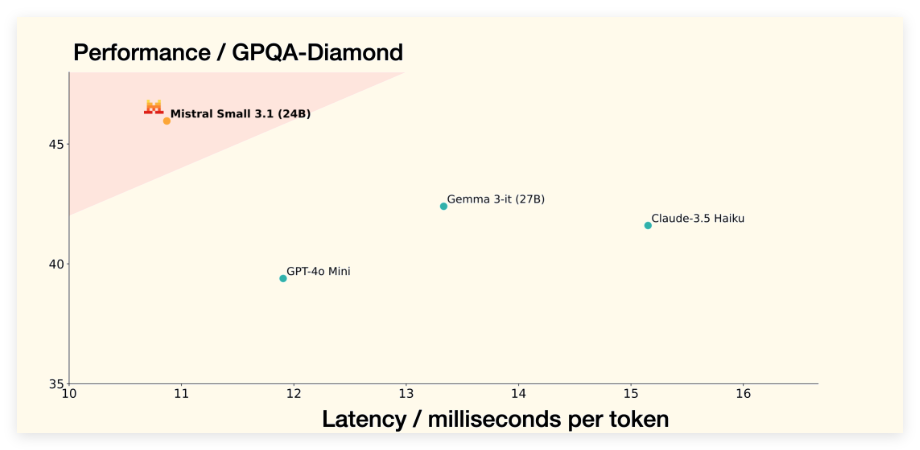
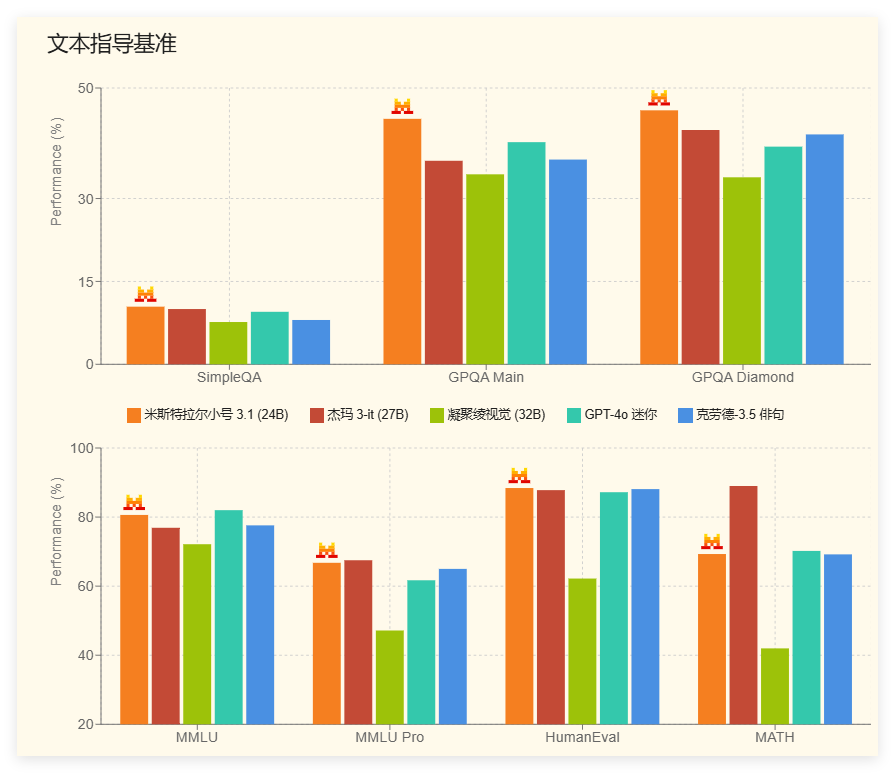
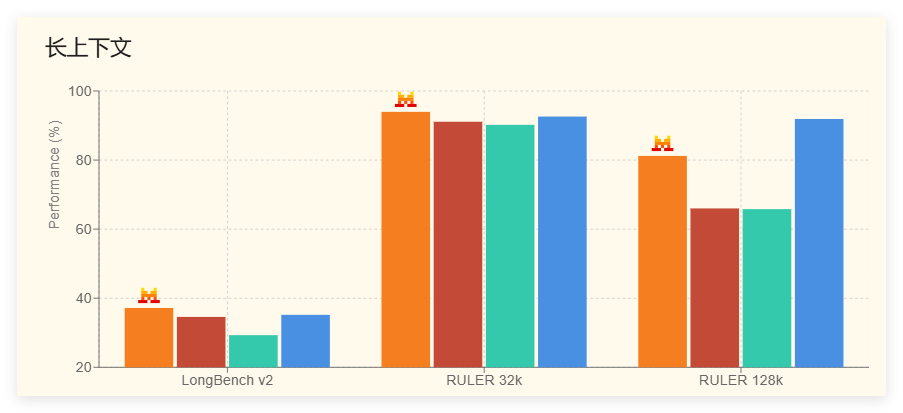
Mistral Small 3.1 has achieved a comprehensive upgrade in performance. According to the company's official blog, the new model has significantly improved text processing capabilities and has multimodal comprehension capabilities, which can process text and images at the same time. More remarkable is that its context window extends to 128k tokens, which means that the model can process longer information sequences at once, which is undoubtedly a huge improvement for application scenarios that require understanding long documents or dialogues.
In addition, the information processing speed of Mistral Small 3.1 is as high as 150 tokens per second, making it ideal for applications with high response speed requirements. Imagine that your AI assistant can understand and respond to your needs with lightning speed. This experience is simply amazing.
Unlike the large competitors that are increasingly tightening access to AI systems, Mistral AI has adopted a very different strategy. Their choice to release Mistral Small 3.1 under a loose Apache 2.0 license, a move that clearly demonstrates the increasingly obvious divisions within the AI industry: the game between closed proprietary systems and open, accessible alternatives.
Mistral's move is undoubtedly the hope of using the power of open source to attract global developers to innovate based on their models. As they pointed out, the previously released Mistral Small3 has spawned some excellent inference models. Through open collaboration, Mistral is able to effectively expand its R&D capabilities, which is undoubtedly a smart strategy for a European startup with relatively limited resources.
Mistral AI was founded in 2023 by former researchers from Google DeepMind and Meta. The company has risen rapidly and is currently valued at about US$6 billion, making it a leading AI startup in Europe. Its chat assistant Le Chat received 1 million downloads in just two weeks after the release of the mobile version. French President Macron even personally called on the public to use Le Chat instead of OpenAI's ChatGPT.
Mistral AI clearly positions itself as the "world's greenest and leading independent AI lab", emphasizing European digital sovereignty to distinguish itself from its U.S. competitors. As geopolitical tensions intensify, the Economist magazine analyzed that not belonging to the United States or China may become Mistral's advantage. Mistral CEO Arthur Mensch also actively advocates Europe's investment in data center infrastructure, believing that the AI revolution has also brought opportunities for cloud computing decentralization.
More importantly, with the entry into force of the EU's Artificial Intelligence Act, European companies like Mistral that have focused on compliance from the beginning have obviously had an advantage over U.S. and Chinese competitors that need to adjust their technology and business to adapt to the regulatory environment.
The highlight of Mistral Small 3.1 is its amazing efficiency. In the context of the general pursuit of larger models and massive computing resources in the AI industry, Mistral focuses on algorithm improvement and training optimization to tap the greatest potential in smaller architectures. This approach effectively addresses a key challenge facing AI deployment: huge computing and energy costs. Mistral's model can even run on an RTX4090 graphics card or a Mac with 32GB of memory, which allows advanced AI technology to be applied to a wider range of scenarios, including device-side applications.
This efficiency-oriented strategy may be more sustainable than competitors who rely on "violent miracle" expansion. With climate issues and energy costs increasing attention, lightweight AI solutions like Mistral are likely to move from "alternative" to industry standards.
Of course, Mistral also faces huge challenges, and its revenue is still far from its valuation of up to $6 billion. In the highly competitive AI field, whether open source strategies can support its ambitious business vision remains a $6 billion question.
But in any case, the release of Mistral Small 3.1 undoubtedly shows us a more efficient, open and more European-style AI development path. This rising European AI star may really shake the dominance of American technology giants in this field.
Model: https://top.aibase.com/tool/mistral-small-3-1
Official blog: https://mistral.ai/news/mistral-small-3-1