
In recent years, artificial intelligence technology has developed rapidly, and its application fields have become increasingly widespread. Today, AI is not only an auxiliary tool, but also begins to try to independently undertake scientific research work. This is the rise of "AI scientists". The editor of Downcodes will give you an in-depth understanding of this new type of artificial intelligence, its potential, challenges and future development directions. AI scientists can independently complete a series of scientific research processes from hypothesis formulation to paper writing, but does this mean the end of human scientists? Let’s explore together.
Recently, a new trend is emerging in the scientific community - AI scientists. Simply put, this kind of artificial intelligence can not only formulate hypotheses and conduct experiments, but also independently write research papers. Although I have always believed that the best role of AI is as a tool for humans rather than a substitute, this kind of AI scientists seem to show a lot of potential.
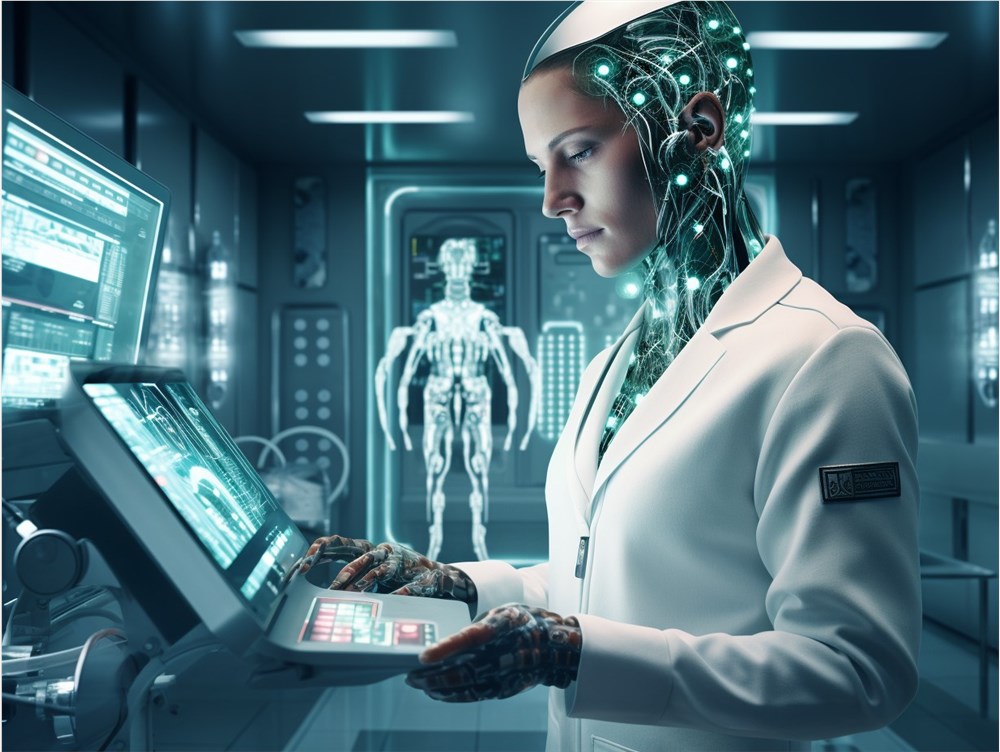
Picture source note: The picture is generated by AI, and the picture authorization service provider Midjourney
We often hear cases of scientists using AI, such as the 2019 MIT study. By training AI, the research team successfully discovered a new antibiotic called Halicin that can combat the drug-resistant bacteria MRSA. The success of this AI has made people full of expectations for the prospects of AI scientists.
Today, Japan's Sakana AI company is funding laboratories at the University of British Columbia and the University of Oxford to develop an AI scientist that can conduct scientific research completely independently. The AI will study existing scientific literature, formulate hypotheses, conduct experiments, and ultimately write a complete research paper.
To reduce errors, UBC's research team developed a step-by-step process. First, AI scientists generate several hypotheses from the existing literature and rate the ideas based on "interestingness, novelty, and feasibility." Next, the AI selects a hypothesis and runs it through a literature database to ensure the idea is new. The AI then uses the coding assistant program to conduct experiments, record research notes, determine whether follow-up experiments are needed, and finally write a research paper.
However, such AI scientists are not perfect, and there are still some problems. For example, AI may be biased toward selecting data that has been heavily studied. Although in some cases its "innovative thinking" can help solve complex problems, this lack of intuition and experience can also lead to some clumsy conclusions.
In addition, the development of AI scientists has also raised some ethical issues, such as who should be responsible for the results of AI scientists, or who should be held responsible for their mistakes, plagiarism and other behaviors.
In the world of science, the application of AI has led to breakthroughs in many fields. Whether it’s searching for new antibiotics or predicting weather patterns, AI is becoming an indispensable assistant to scientists. I believe that the greatest achievement of AI scientists will be working with human scientists to jointly lead the future of scientific research.
Highlight:
1. AI scientists can independently formulate hypotheses, conduct experiments, and write research papers.
2. Although AI scientists demonstrate innovative potential, there are still problems with bias and inaccurate conclusions.
3. Collaboration with human scientists is considered key to AI scientists’ greatest achievements.
All in all, AI scientists, as an emerging technology, have great potential, but they also face many challenges. In the future, collaboration between AI scientists and human scientists will be the key to promoting scientific progress. We need to develop and apply this technology carefully to ensure it is safe and ethical.