tinyobjloader
v1.0.6

Крошечный, но мощный однофайтный волновый фронт OBJ Загружен, записанный в C ++ 03. Нет зависимости, кроме C ++ STL. Он может проанализировать более 10 метров полигонов с умеренной памятью и временем.
tinyobjloader хорош для встраивания.
Если вы ищете версию C99, см. Https://github.com/syoyo/tinyobjloader-c.
Мы рекомендуем использовать master ( main ) филиал. Его кандидат в релиз v2.0. Большинство функций в настоящее время почти надежны и стабильны (оставшаяся задача для выпуска v2.0-это полировка C ++ и Python API, а также фиксирует встроенный код триангуляции).
Мы выпустили новую версию v1.0.0 20 августа 2016 года. Старая версия доступна как v0.9.x филиал https://github.com/syoyo/tinyobjloader/tree/v0.9.x
python . Также см. Https://pypi.org/project/tinyobjloader/) Предыдущая старая версия доступна в филиале v0.9.x
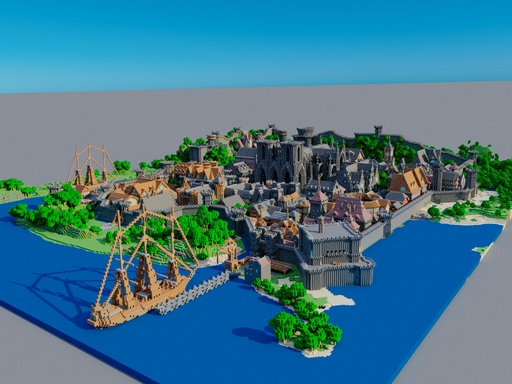
Tinyobjloader может успешно загрузить 6 -метровую треугольнику Rungholt сцены. http://casual-effects.com/data/index.html
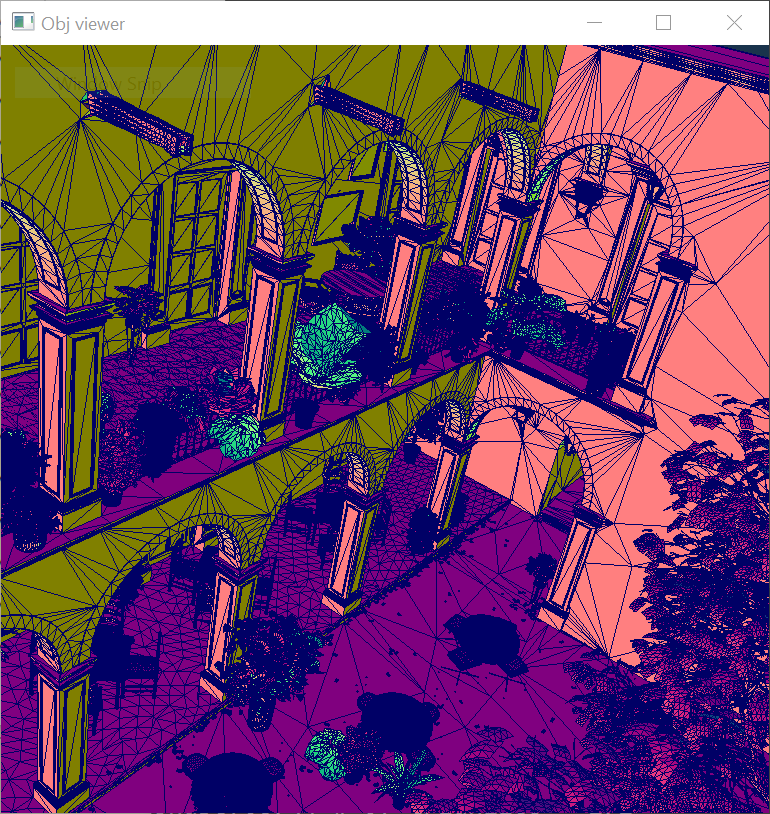
TinyObjloader успешно используется в ...
TINYOBJLOADER_USE_DOUBLE Спасибо Noma - 3D -двигатель с современной графикой
python .f ) l ) p ) TinyObjloader лицензирован по лицензии MIT.
Один из вариантов - просто скопировать файл заголовка в ваш проект и убедиться, что TINYOBJLOADER_IMPLEMENTATION определяется ровно один раз.
Хотя это не рекомендуемый способ, вы можете загрузить и установить TinyObjLoader, используя VCPKG Deginency Manager:
 git clone https://github.com/Microsoft/vcpkg.git
cd vcpkg
./bootstrap-vcpkg.sh
./vcpkg integrate install
./vcpkg install tinyobjloader
Порт Tinyobjloader в VCPKG обновляется членами команды Microsoft и участниками сообщества. Если версия установлена на устаре, пожалуйста, создайте проблему или запрос на вытягивание в репозитории VCPKG.
attrib_t содержит отдельный и линейный массив данных вершины (позиция, нормальная и Texcoord).
 attrib_t::vertices => 3 floats per vertex

       v[0]        v[1]        v[2]        v[3]               v[n-1]
  +-----------+-----------+-----------+-----------+      +-----------+
  | x | y | z | x | y | z | x | y | z | x | y | z | .... | x | y | z |
  +-----------+-----------+-----------+-----------+      +-----------+

attrib_t::normals => 3 floats per vertex

       n[0]        n[1]        n[2]        n[3]               n[n-1]
  +-----------+-----------+-----------+-----------+      +-----------+
  | x | y | z | x | y | z | x | y | z | x | y | z | .... | x | y | z |
  +-----------+-----------+-----------+-----------+      +-----------+

attrib_t::texcoords => 2 floats per vertex

       t[0]        t[1]        t[2]        t[3]               t[n-1]
  +-----------+-----------+-----------+-----------+      +-----------+
  |  u  |  v  |  u  |  v  |  u  |  v  |  u  |  v  | .... |  u  |  v  |
  +-----------+-----------+-----------+-----------+      +-----------+

attrib_t::colors => 3 floats per vertex(vertex color. optional)

       c[0]        c[1]        c[2]        c[3]               c[n-1]
  +-----------+-----------+-----------+-----------+      +-----------+
  | x | y | z | x | y | z | x | y | z | x | y | z | .... | x | y | z |
  +-----------+-----------+-----------+-----------+      +-----------+
Каждая shape_t::mesh_t не содержит данных вершины, но содержит индекс массива для attrib_t . См loader_example.cc для получения более подробной информации.
mesh_t::indices => array of vertex indices.

  +----+----+----+----+----+----+----+----+----+----+     +--------+
  | i0 | i1 | i2 | i3 | i4 | i5 | i6 | i7 | i8 | i9 | ... | i(n-1) |
  +----+----+----+----+----+----+----+----+----+----+     +--------+

Each index has an array index to attrib_t::vertices, attrib_t::normals and attrib_t::texcoords.

mesh_t::num_face_vertices => array of the number of vertices per face(e.g. 3 = triangle, 4 = quad , 5 or more = N-gons).


  +---+---+---+        +---+
  | 3 | 4 | 3 | ...... | 3 |
  +---+---+---+        +---+
    |   |   |            |
    |   |   |            +-----------------------------------------+
    |   |   |                                                      |
    |   |   +------------------------------+                       |
    |   |                                  |                       |
    |   +------------------+               |                       |
    |                      |               |                       |
    |/                     |/              |/                      |/

 mesh_t::indices

  |    face[0]   |       face[1]     |    face[2]   |     |      face[n-1]           |
  +----+----+----+----+----+----+----+----+----+----+     +--------+--------+--------+
  | i0 | i1 | i2 | i3 | i4 | i5 | i6 | i7 | i8 | i9 | ... | i(n-3) | i(n-2) | i(n-1) |
  +----+----+----+----+----+----+----+----+----+----+     +--------+--------+--------+
Обратите внимание, что когда triangulate Flag верно в аргументе tinyobj::LoadObj() , num_face_vertices заполнены 3 (треугольник).
TinyObjloader теперь используйте real_t для типа данных с плавающей запятой. По умолчанию float(32bit) . Вы можете включить double(64bit) точность, используя TINYOBJLOADER_USE_DOUBLE define.
Когда вы включаете triangulation (по умолчанию включено), Tinyobjloader Triangulate Polygons (лица с 4 или более вершинами).
Встроенный код триангуляции может не очень хорошо работать в некоторой форме многоугольника.
Вы можете определить TINYOBJLOADER_USE_MAPBOX_EARCUT для надежной триангуляции с помощью mapbox/earcut.hpp . Это требует компилятора C ++ 11, хотя. И вам нужно скопировать mapbox/earcut.hpp в ваш проект. Если у вас есть собственный файл mapbox/earcut.hpp введенный в ваш проект, вы можете определить TINYOBJLOADER_DONOT_INCLUDE_MAPBOX_EARCUT , чтобы mapbox/earcut.hpp не включен внутри tiny_obj_loader.h .
# define TINYOBJLOADER_IMPLEMENTATION // define this in only *one* .cc
// Optional. define TINYOBJLOADER_USE_MAPBOX_EARCUT gives robust triangulation. Requires C++11
// #define TINYOBJLOADER_USE_MAPBOX_EARCUT
# include " tiny_obj_loader.h "

std::string inputfile = " cornell_box.obj " ;
tinyobj:: attrib_t attrib;
std::vector<tinyobj:: shape_t > shapes;
std::vector<tinyobj:: material_t > materials;

std::string warn;
std::string err;

bool ret = tinyobj::LoadObj(&attrib, &shapes, &materials, &warn, &err, inputfile.c_str());

if (!warn.empty()) {
  std::cout << warn << std::endl;
}

if (!err.empty()) {
  std::cerr << err << std::endl;
}

if (!ret) {
  exit ( 1 );
}

// Loop over shapes
for ( size_t s = 0 ; s < shapes.size(); s++) {
  // Loop over faces(polygon)
  size_t index_offset = 0 ;
  for ( size_t f = 0 ; f < shapes[s]. mesh . num_face_vertices . size (); f++) {
    size_t fv = size_t (shapes[s]. mesh . num_face_vertices [f]);

    // Loop over vertices in the face.
    for ( size_t v = 0 ; v < fv; v++) {
      // access to vertex
      tinyobj:: index_t idx = shapes[s]. mesh . indices [index_offset + v];

      tinyobj:: real_t vx = attrib. vertices [ 3 * size_t (idx. vertex_index )+ 0 ];
      tinyobj:: real_t vy = attrib. vertices [ 3 * size_t (idx. vertex_index )+ 1 ];
      tinyobj:: real_t vz = attrib. vertices [ 3 * size_t (idx. vertex_index )+ 2 ];

      // Check if `normal_index` is zero or positive. negative = no normal data
      if (idx. normal_index >= 0 ) {
        tinyobj:: real_t nx = attrib. normals [ 3 * size_t (idx. normal_index )+ 0 ];
        tinyobj:: real_t ny = attrib. normals [ 3 * size_t (idx. normal_index )+ 1 ];
        tinyobj:: real_t nz = attrib. normals [ 3 * size_t (idx. normal_index )+ 2 ];
      }

      // Check if `texcoord_index` is zero or positive. negative = no texcoord data
      if (idx. texcoord_index >= 0 ) {
        tinyobj:: real_t tx = attrib. texcoords [ 2 * size_t (idx. texcoord_index )+ 0 ];
        tinyobj:: real_t ty = attrib. texcoords [ 2 * size_t (idx. texcoord_index )+ 1 ];
      }
      // Optional: vertex colors
      // tinyobj::real_t red   = attrib.colors[3*size_t(idx.vertex_index)+0];
      // tinyobj::real_t green = attrib.colors[3*size_t(idx.vertex_index)+1];
      // tinyobj::real_t blue  = attrib.colors[3*size_t(idx.vertex_index)+2];
    }
    index_offset += fv;

    // per-face material
    shapes[s]. mesh . material_ids [f];
  }
}
# define TINYOBJLOADER_IMPLEMENTATION // define this in only *one* .cc
// Optional. define TINYOBJLOADER_USE_MAPBOX_EARCUT gives robust triangulation. Requires C++11
// #define TINYOBJLOADER_USE_MAPBOX_EARCUT
# include " tiny_obj_loader.h "


std::string inputfile = " cornell_box.obj " ;
tinyobj::ObjReaderConfig reader_config;
reader_config.mtl_search_path = " ./ " ; // Path to material files

tinyobj::ObjReader reader;

if (!reader.ParseFromFile(inputfile, reader_config)) {
  if (!reader. Error (). empty ()) {
      std::cerr << " TinyObjReader: " << reader. Error ();
  }
  exit ( 1 );
}

if (!reader.Warning().empty()) {
  std::cout << " TinyObjReader: " << reader. Warning ();
}

auto & attrib = reader.GetAttrib();
auto & shapes = reader.GetShapes();
auto & materials = reader.GetMaterials();

// Loop over shapes
for ( size_t s = 0 ; s < shapes.size(); s++) {
  // Loop over faces(polygon)
  size_t index_offset = 0 ;
  for ( size_t f = 0 ; f < shapes[s]. mesh . num_face_vertices . size (); f++) {
    size_t fv = size_t (shapes[s]. mesh . num_face_vertices [f]);

    // Loop over vertices in the face.
    for ( size_t v = 0 ; v < fv; v++) {
      // access to vertex
      tinyobj:: index_t idx = shapes[s]. mesh . indices [index_offset + v];
      tinyobj:: real_t vx = attrib. vertices [ 3 * size_t (idx. vertex_index )+ 0 ];
      tinyobj:: real_t vy = attrib. vertices [ 3 * size_t (idx. vertex_index )+ 1 ];
      tinyobj:: real_t vz = attrib. vertices [ 3 * size_t (idx. vertex_index )+ 2 ];

      // Check if `normal_index` is zero or positive. negative = no normal data
      if (idx. normal_index >= 0 ) {
        tinyobj:: real_t nx = attrib. normals [ 3 * size_t (idx. normal_index )+ 0 ];
        tinyobj:: real_t ny = attrib. normals [ 3 * size_t (idx. normal_index )+ 1 ];
        tinyobj:: real_t nz = attrib. normals [ 3 * size_t (idx. normal_index )+ 2 ];
      }

      // Check if `texcoord_index` is zero or positive. negative = no texcoord data
      if (idx. texcoord_index >= 0 ) {
        tinyobj:: real_t tx = attrib. texcoords [ 2 * size_t (idx. texcoord_index )+ 0 ];
        tinyobj:: real_t ty = attrib. texcoords [ 2 * size_t (idx. texcoord_index )+ 1 ];
      }

      // Optional: vertex colors
      // tinyobj::real_t red   = attrib.colors[3*size_t(idx.vertex_index)+0];
      // tinyobj::real_t green = attrib.colors[3*size_t(idx.vertex_index)+1];
      // tinyobj::real_t blue  = attrib.colors[3*size_t(idx.vertex_index)+2];
    }
    index_offset += fv;

    // per-face material
    shapes[s]. mesh . material_ids [f];
  }
}
Оптимизированный многопоточный погрузчик .OBJ доступен в experimental/ каталоге. Если вы хотите, чтобы абсолютная производительность загружала данные .OBJ, этот оптимизированный загрузчик будет соответствовать вашей цели. Обратите внимание, что оптимизированный загрузчик использует поток C ++ 11, и он выполняет меньшие проверки ошибок, но может работать большинство данных .OBJ.
Вот какой -то контрольный результат. Время измеряется на MacBook 12 (в начале 2016 года, Core M5 1,2 ГГц).
$ python -m pip install tinyobjloader
См. Python/sample.py, например, использование привязки Python tinyobjloader.
Cibuildwheels + Загрузка шпагата для каждого события метки GIT обрабатывается в действиях GitHub и Cirrus CI (Arm Builds).
black к файлам python ( python/sample.py )release . Подтвердите сборку CI - это нормально.v (например, v2.1.0 )git push --tags Модульные тесты представлены в каталоге tests . См. tests/README.md для деталей.