genai
v2.1.0

インストール|ライセンス|行動規範|貢献
? iPythonで、コード、SQLクエリ、データフレーム、例外などのGPTヘルプを取得します。
? IPython、Jupyterlab、Jupyterノートブック、注目すべきすべてのJupyter環境をサポートしています。
TL; DRは今すぐ始めます
 %pip install genai
%load_ext genai
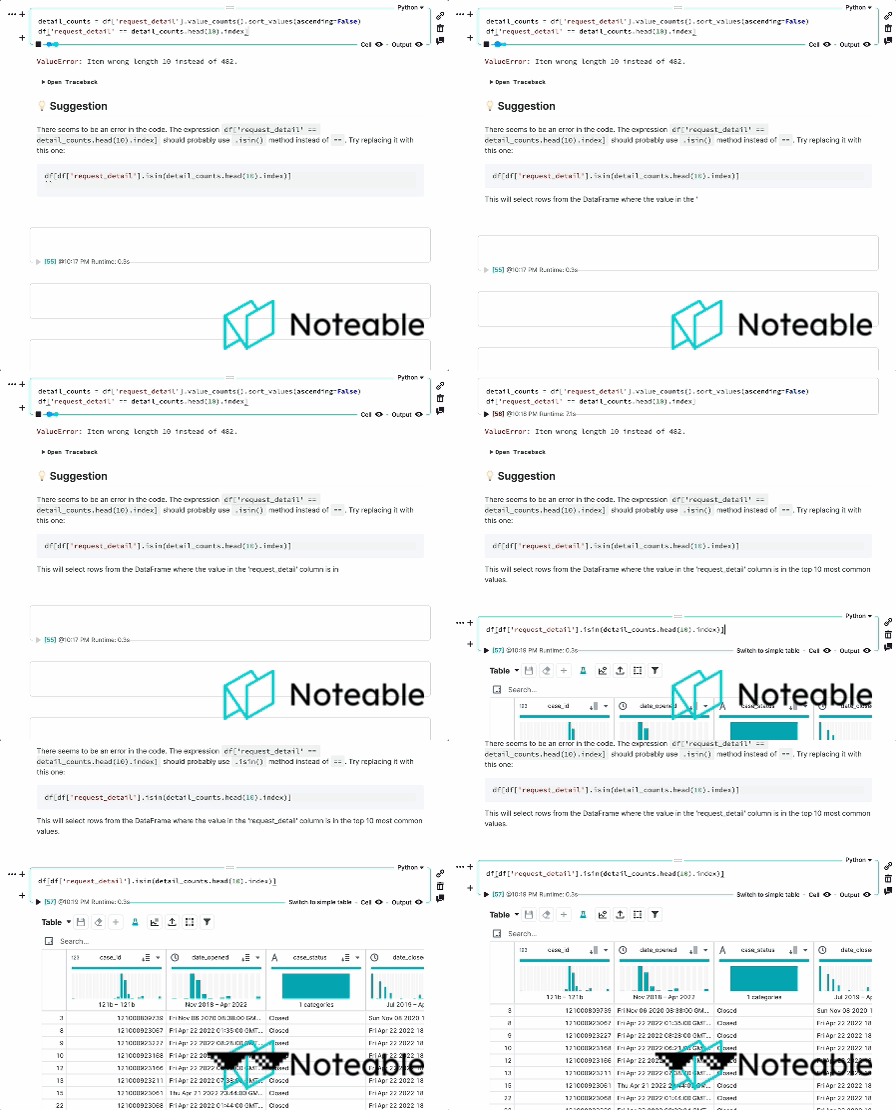
私たちはIPythonからコンテキストを取り、Openaiの大規模な言語モデルと混合し、IPython、Jupyterlab、Jupyter NotebookなどのすべてのJupyter環境で機能するより情報に基づいたノートブックエクスペリエンスを提供しています。 ??
Python 3.8+
poetry add genaipip install genaiIPythonまたはお好みのノートブックプラットフォームで使用する前に、最初にOPENAI_API_KEY環境変数を設定してください。
%load_ext genai
%%assist In [ 1 ]: % load_ext genai
In [ 2 ]: import pandas as pd
In [ 3 ]: df = pd . DataFrame ( dict ( col1 = [ 'a' , 'b' , 'c' ]), index = [ 'first' , 'second' , 'third' ])
In [ 4 ]: df . sort_values ()
- - - - - - - - - - - - - - - - - - - - - - - - - - - - - - - - - - - - - - - - - - - - - - - - - - - - - - - - - - - - - - - - - - - - - - - - - - -
TypeError Traceback ( most recent call last )
Cell In [ 4 ], line 1
- - - - > 1 df . sort_values ()
File ~ / . pyenv / versions / 3.9 . 9 / lib / python3 . 9 / site - packages / pandas / util / _decorators . py : 331 , in deprecate_nonkeyword_arguments . < locals > . decorate . < locals > . wrapper ( * args , ** kwargs )
325 if len ( args ) > num_allow_args :
326 warnings . warn (
327 msg . format ( arguments = _format_argument_list ( allow_args )),
328 FutureWarning ,
329 stacklevel = find_stack_level (),
330 )
- - > 331 return func ( * args , ** kwargs )
TypeError : sort_values () missing 1 required positional argument : 'by' エラーメッセージは、PANDASデータフレームのsort_values()メソッドに必要な位置引数が欠落していることを示しています。
sort_values()メソッドでは、列名または列名のリストbyとして渡す必要があります。これは、ソートの実行方法を決定するために使用されます。
これが例です:
 import pandas as pd

df = pd . DataFrame ({
    'Name' : [ 'Alice' , 'Bob' , 'Carol' , 'David' , 'Eva' ],
    'Age' : [ 32 , 24 , 28 , 35 , 29 ],
    'Salary' : [ 60000 , 40000 , 35000 , 80000 , 45000 ]
})

# sort by Age column:
df_sorted = df . sort_values ( by = 'Age' )
print ( df_sorted )
この例では、 by引数は'Age'に設定されており、昇順で年齢別にデータフレームをソートします。複数の列でソートする場合は、列名のリストを渡すこともできることに注意してください。
 In [ 1 ]: % load_ext genai

In [ 2 ]: % % assist
   ...:
   ...: Can you explain this query to me so I can be sure we ' re doing the right things ?
   ...:
   ...: `` ` sql
   ...: SELECT
   ...:   COUNT ( * ) AS num_downloads ,
   ...:   DATE_TRUNC ( DATE ( timestamp ), DAY ) AS day
   ...: FROM `bigquery-public-data.pypi.file_downloads`
   ...: WHERE
   ...:   file . project = 'genai'
   ...:   - - Only query the last 6 months of history
   ...:   AND DATE ( timestamp )
   ...:     BETWEEN DATE_TRUNC ( DATE_SUB ( CURRENT_DATE (), INTERVAL 6 MONTH ), MONTH )
   ...:     AND CURRENT_DATE ()
   ...: GROUP BY day
   ...: ORDER BY day DESC
"This is a SQL query that counts the number of downloads for the 'genai' project on the Python Package Index (PyPI) over the last 6 months, grouped by day. The query selects the count and the date, truncating the date to the day level so that it's easier to read.
Here is a breakdown of each part of the query:
- ` SELECT COUNT(*) AS num_downloads, DATE_TRUNC(DATE(timestamp), DAY) AS day ` : This selects the count of the number of rows matched by the query as ` num_downloads ` , and the date truncated to the day level as ` day ` .
- ` FROM ` bigquery-public-data.pypi.file_downloads``: This specifies the table to query from.
- ` WHERE file.project = 'genai' ` : This filters the rows by only including downloads for the 'genai' project.
- ` AND DATE(timestamp) BETWEEN DATE_TRUNC(DATE_SUB(CURRENT_DATE(), INTERVAL 6 MONTH), MONTH) AND CURRENT_DATE() ` : This filters the rows by only including downloads from the last 6 months. The ` DATE_SUB ` function subtracts 6 months from the current date ( ` CURRENT_DATE() ` ), ` DATE_TRUNC ` truncates the result to be the start of the month and ` DATE ` converts the timestamp column to a date so the ` BETWEEN ` condition can filter rows between the start of 6 months ago and "today."
- ` GROUP BY day ` : This groups the rows by day so that the counts are aggregated by date.
- ` ORDER BY day DESC ` : This orders the rows so that the most recent date appears first in the result."




