genai
v2.1.0

Instal | Lisensi | Kode Etik | Berkontribusi
? Dapatkan bantuan GPT dengan kode, kueri SQL, DataFrames, pengecualian dan lainnya di Ipython.
? Mendukung semua lingkungan Jupyter, termasuk Ipython, Jupyterlab, Jupyter Notebook, dan terkenal.
Tl; dr Mulailah sekarang
 %pip install genai
%load_ext genai
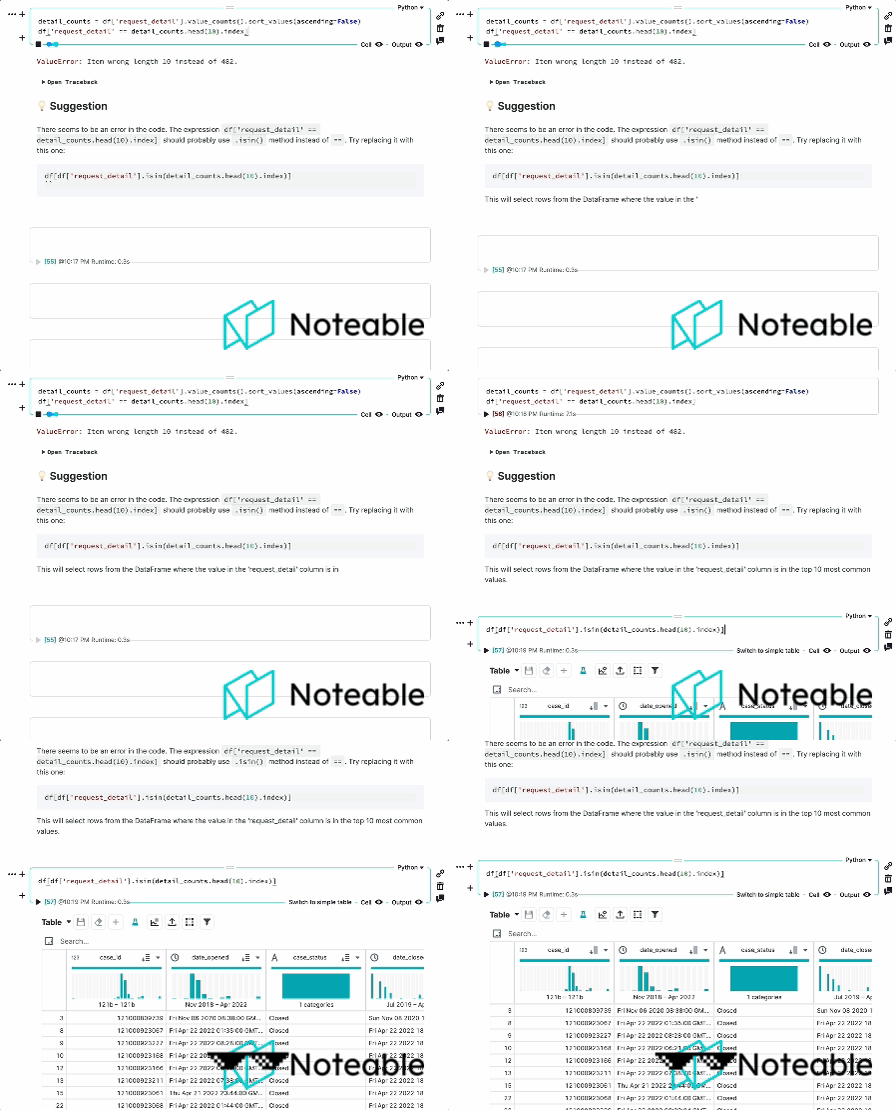
Kami telah mengambil konteks dari Ipython, mencampurnya dengan model bahasa besar Openai, dan membawa Anda pengalaman notebook yang lebih terinformasi yang berfungsi di semua lingkungan Jupyter, termasuk Ipython, Jupyterlab, Jupyter Notebook, dan dicatat. ??
Python 3.8+
poetry add genaipip install genai Pastikan untuk mengatur variabel lingkungan OPENAI_API_KEY terlebih dahulu sebelum menggunakannya di Ipython atau platform pilihan notebook pilihan Anda.
%load_ext genai
%%assist Magic untuk menghasilkan kode dari bahasa alami In [ 1 ]: % load_ext genai
In [ 2 ]: import pandas as pd
In [ 3 ]: df = pd . DataFrame ( dict ( col1 = [ 'a' , 'b' , 'c' ]), index = [ 'first' , 'second' , 'third' ])
In [ 4 ]: df . sort_values ()
- - - - - - - - - - - - - - - - - - - - - - - - - - - - - - - - - - - - - - - - - - - - - - - - - - - - - - - - - - - - - - - - - - - - - - - - - - -
TypeError Traceback ( most recent call last )
Cell In [ 4 ], line 1
- - - - > 1 df . sort_values ()
File ~ / . pyenv / versions / 3.9 . 9 / lib / python3 . 9 / site - packages / pandas / util / _decorators . py : 331 , in deprecate_nonkeyword_arguments . < locals > . decorate . < locals > . wrapper ( * args , ** kwargs )
325 if len ( args ) > num_allow_args :
326 warnings . warn (
327 msg . format ( arguments = _format_argument_list ( allow_args )),
328 FutureWarning ,
329 stacklevel = find_stack_level (),
330 )
- - > 331 return func ( * args , ** kwargs )
TypeError : sort_values () missing 1 required positional argument : 'by' Pesan kesalahan menunjukkan bahwa metode sort_values() dari pandaframe tidak ada argumen posisi yang diperlukan.
Metode sort_values() mengharuskan Anda untuk memberikan nama kolom atau daftar nama kolom sebagai argumen by . Ini digunakan untuk menentukan bagaimana penyortiran akan dilakukan.
Inilah contohnya:
 import pandas as pd

df = pd . DataFrame ({
    'Name' : [ 'Alice' , 'Bob' , 'Carol' , 'David' , 'Eva' ],
    'Age' : [ 32 , 24 , 28 , 35 , 29 ],
    'Salary' : [ 60000 , 40000 , 35000 , 80000 , 45000 ]
})

# sort by Age column:
df_sorted = df . sort_values ( by = 'Age' )
print ( df_sorted )
Dalam contoh ini, argumen by diatur ke 'Age' , yang mengurutkan DataFrame berdasarkan usia dalam urutan naik. Perhatikan bahwa Anda juga dapat melewati daftar nama kolom jika Anda ingin mengurutkan berdasarkan beberapa kolom.
 In [ 1 ]: % load_ext genai

In [ 2 ]: % % assist
   ...:
   ...: Can you explain this query to me so I can be sure we ' re doing the right things ?
   ...:
   ...: `` ` sql
   ...: SELECT
   ...:   COUNT ( * ) AS num_downloads ,
   ...:   DATE_TRUNC ( DATE ( timestamp ), DAY ) AS day
   ...: FROM `bigquery-public-data.pypi.file_downloads`
   ...: WHERE
   ...:   file . project = 'genai'
   ...:   - - Only query the last 6 months of history
   ...:   AND DATE ( timestamp )
   ...:     BETWEEN DATE_TRUNC ( DATE_SUB ( CURRENT_DATE (), INTERVAL 6 MONTH ), MONTH )
   ...:     AND CURRENT_DATE ()
   ...: GROUP BY day
   ...: ORDER BY day DESC
"This is a SQL query that counts the number of downloads for the 'genai' project on the Python Package Index (PyPI) over the last 6 months, grouped by day. The query selects the count and the date, truncating the date to the day level so that it's easier to read.
Here is a breakdown of each part of the query:
- ` SELECT COUNT(*) AS num_downloads, DATE_TRUNC(DATE(timestamp), DAY) AS day ` : This selects the count of the number of rows matched by the query as ` num_downloads ` , and the date truncated to the day level as ` day ` .
- ` FROM ` bigquery-public-data.pypi.file_downloads``: This specifies the table to query from.
- ` WHERE file.project = 'genai' ` : This filters the rows by only including downloads for the 'genai' project.
- ` AND DATE(timestamp) BETWEEN DATE_TRUNC(DATE_SUB(CURRENT_DATE(), INTERVAL 6 MONTH), MONTH) AND CURRENT_DATE() ` : This filters the rows by only including downloads from the last 6 months. The ` DATE_SUB ` function subtracts 6 months from the current date ( ` CURRENT_DATE() ` ), ` DATE_TRUNC ` truncates the result to be the start of the month and ` DATE ` converts the timestamp column to a date so the ` BETWEEN ` condition can filter rows between the start of 6 months ago and "today."
- ` GROUP BY day ` : This groups the rows by day so that the counts are aggregated by date.
- ` ORDER BY day DESC ` : This orders the rows so that the most recent date appears first in the result."




