
In the field of artificial intelligence, the flow of talents often indicates changes in the industry structure. Recently, Tim Brooks' job-changing incident has become a hot topic in the technology industry. After only three months at Sora, he announced his joining rival Google DeepMind. This move not only attracted widespread attention, but also speculated that Sora faces technical challenges, especially in terms of generation speed and performance, seems hard to match other leaders in the industry.
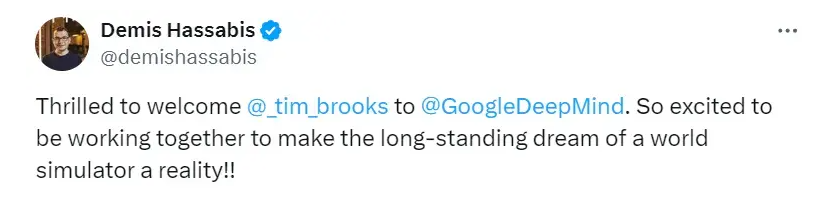
According to relevant reports, Sora has many bottlenecks in technology implementation, and it is difficult to compete with companies such as Luma, Stability, and Runway on the same track. At the same time, the rapid development of these competitors has made Sora's market position seem precarious. Tim Brooks' departure has sparked widespread speculation in the industry, and many believe he will join Google, participate in its video generation project Veo and show greater potential in this field.
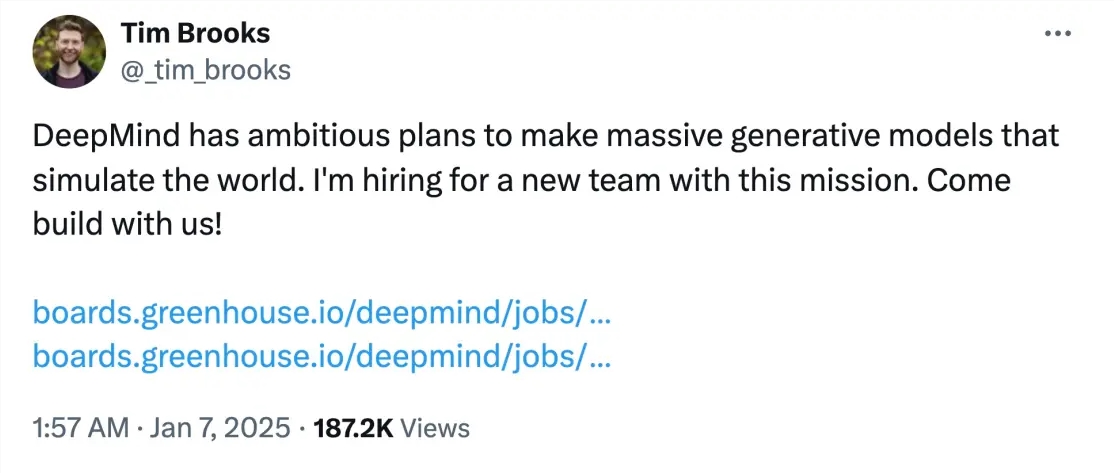
The addition of Tim Brooks has undoubtedly injected new vitality into Google DeepMind's layout in video generation and world model areas. Demis Hassabis, co-founder of DeepMind, has repeatedly mentioned that their goal is to achieve the "dream of creating a world simulator." Tim Brooks will be responsible for forming a brand new team, focusing on developing large-scale generative models that can simulate the real world. He said on social media that DeepMind is moving towards ambitious goals and will work closely with the Gemini, Veo and Genie teams to solve "critical new problems."
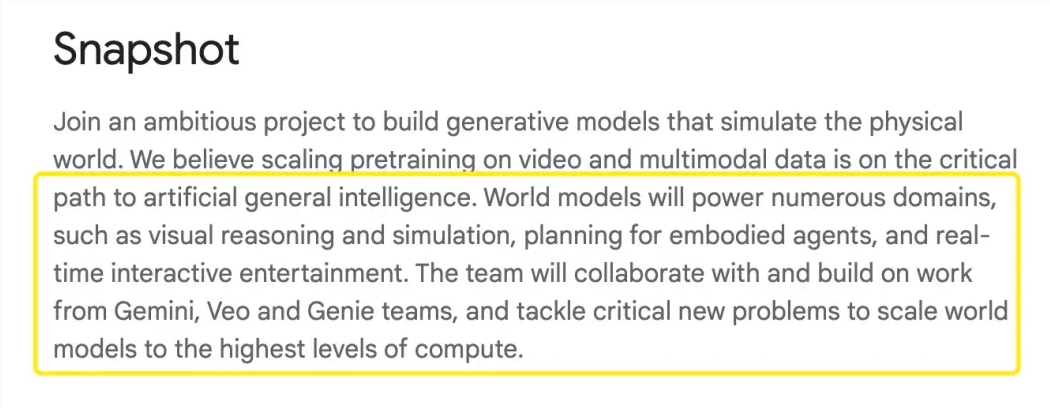
Tim Brooks is actively seeking research scientists and research engineers with annual salary ranging from $136,000 to $245,000, according to the recruitment information of the new team. The research on the world model has attracted the attention of many technology giants because this model has the potential to create media content that can interact with users in real time and is regarded as an important direction for future technological development.
However, with the rapid development of AI technology, practitioners in traditional creative industries are cautious about this trend. A Wired magazine survey shows that many gaming companies have begun layoffs and rely on AI to improve productivity, which has raised concerns among creative workers. Still, some startups like Odyssey say they want to work with creatives rather than replace them, trying to find a balance between technology and creativity.
In the future, whether Google can achieve the symbiosis between AI and human creativity through world models is still a question worth looking forward to. With the continuous advancement of technology, how the application of AI in the creative field will evolve may determine the direction of the creative industry in the future.