
With the rapid development of artificial intelligence technology, the copyright issue of AI-generated content has become increasingly prominent. Taking the "Global AI Movie Marathon Competition" as an example, the copyright dispute caused by the similarity between the AI short film "Ocean War" and "Dune" triggered extensive discussions in the industry on the originality and copyright ownership of AI-generated content. This article will delve into the copyright issues that exist in AI creation, analyze the reasons behind them, and look forward to the possibility of AI and human artists coexisting in the future.
When AIGC technology demonstrated its capabilities in the "Global AI Movie Marathon Competition", the AI short film "Ocean War" caused a copyright dispute due to its similarity to "Dune". This discussion not only raised questions about the originality of AI-generated content, but also revealed copyright issues that may be involved in the AI creation process.
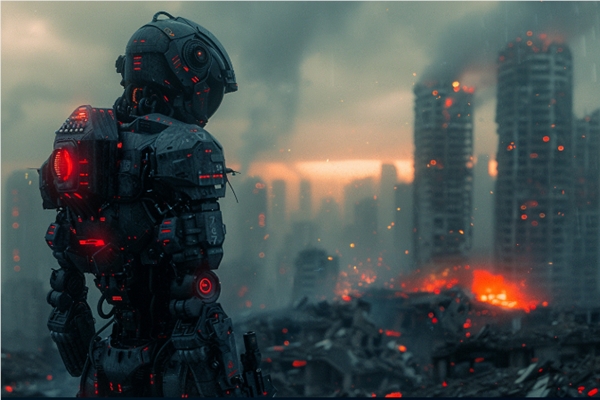
The controversy surrounding "Wang Yang War" is not unique. In the field of AI videos, some creators use AI technology to convert existing movies or real-life videos into different styles. This "copying" technique not only maintains the accuracy of video expression, but also triggers discussions about originality. Some voices pointed out that this approach may infringe the copyright of the original work, especially in the context of commercialization, this kind of controversy is more sensitive.
360 Company's "costume girl incident" further highlights the copyright issue in the field of AI-generated images. The pictures generated by 360 using the LoRA model have caused disputes, and the legal community has different views on this. Some cases emphasize the "recognizability" of portrait rights, while in the United States, copyright protection for AI works is more stringent.
In the initial stages of AI video generation, creators used a variety of methods, including splitting frames from real-shot videos and redrawing them, and using AI to generate images with a consistent style after 3D modeling. These approaches circumvent the problem of character consistency to a certain extent, but also lead to discussions about creativity and setting borrowing.
Copyright disputes in AI creation are actually a re-evaluation of the value of human labor. Creators are not only concerned about the originality of their works, but also whether they can get reasonable returns for their labor. From the Hollywood strike to musician Billy Joel’s AI video, we have seen different applications of AI technology in artistic creation, as well as artists’ complex attitudes towards AI.
With the development of AI technology, how to define and protect human labor in AI creation has become an urgent problem to be solved. From the Beijing International Film Festival to Pixar animation production, we have seen the industry’s cautious attitude towards AI applications and the call to maintain the subjectivity of human artists.
In this new era where AI and human artists coexist, we need to continue to explore and discuss to find a path that can not only protect originality but also fully realize the potential of AI. This is not only a legal and technical issue, but also a profound reflection on human wisdom and creativity.
Ultimately, we need to establish a complete set of legal frameworks and industry norms to balance the development of AI technology and the protection of intellectual property rights, promote the healthy development of AI artistic creation, ensure the rights and interests of human artists, and promote the benign application of AI technology. This requires the joint efforts of artists, legal experts, technology developers and policymakers to build a vibrant and innovative AI art ecosystem in the future.