Hot discussion at the Financial Street Forum: In the AI era, we must rely on the rule of law to ensure technological innovation
Author:Eve Cole
Update Time:2025-03-13 21:48:01
China Youth Daily Client News (China Youth Daily·China Youth Daily Trainee Reporter Liu Yinheng, Reporter Chen Xiao) “On the road to building a scientific and technological power and a financial power, the rule of law must play an important role in consolidating the foundation, stabilizing expectations, and benefiting the long-term. "On October 22, at the 2024 Fintech Conference and Chengfang Fintech Forum "Legal Guarantee for the High-Quality Development of Data Assets and Technological Finance" parallel forum, Zhang Wen, President of the Beijing Financial Court, emphasized the role of legal guarantee in technological innovation. meaning. Zhang Wen said that it is necessary to guide more financial institutions to increase their support for scientific and technological innovation, provide full-chain and full-life-cycle financial judicial services for scientific and technological enterprises, realize a virtuous cycle of "technology-industry-finance", and ensure that financial innovation is governed by market-oriented laws and regulations. advance steadily and orderly on the track of globalization.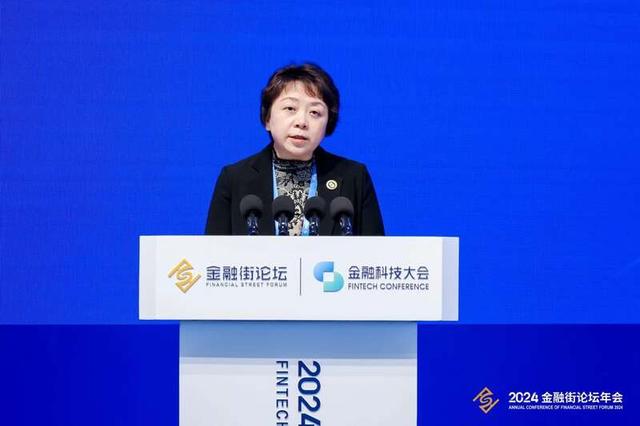
Photo courtesy of the organizer Zhang Wen, President of the Beijing Financial Court, "Technological innovation and data assets represent new productivity." At the meeting, Zhang Ying, deputy director of the Beijing Local Financial Administration Bureau, introduced that Beijing is in-depth implementation of the "Beijing Digital Economy Promotion Regulations" " and "Twenty Data", innovatively launched a series of policies such as "Several Measures to Accelerate the Development of General Artificial Intelligence Industry", continuously consolidated the construction of new infrastructure, and coordinated the promotion of smart cities that integrate and coordinate the development of civil society, government, and enterprises. 2.0 construction and promote the open development of the entire digital economy industry chain. In this process, a high level of legal rule is needed to protect the development of new productive forces and the digital economy, and to promote the orderly participation of financial resources in technological innovation.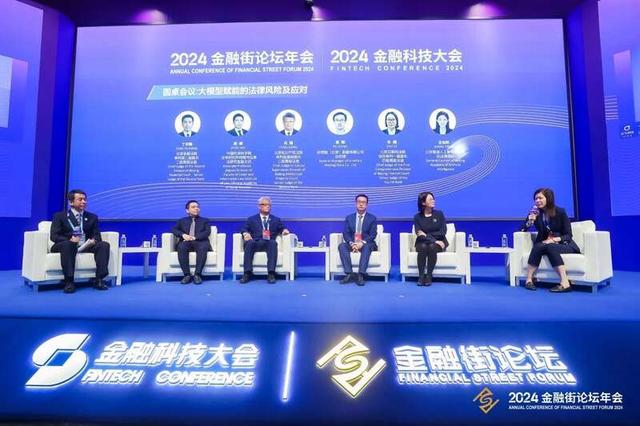
"Legal Risks and Responses Empowered by Large Models" Roundtable. Photo provided by the organizer . With the support of massive data, AI (artificial intelligence) large-scale model empowerment has given wings to the further development of digital finance and technological finance. During the roundtable session, the guests offered their opinions and suggestions on the theme of "Legal Risks and Responses Empowered by Large Models". Ding Yuxiang, president of the Second Trial Division of the Beijing Financial Court and a second-level senior judge, said that in the financial field, almost the entire chain, including the investment end, the financing end, the intermediary end, and the product end, is actively embracing the big artificial intelligence model, but “the big artificial intelligence model Models empower thousands of industries and can easily lead to related legal risks." As the presiding judge in the country's first AI Wensheng picture copyright infringement case, Zhu Ge, the president of the first comprehensive trial division of the Beijing Internet Court and a fourth-level senior judge, introduced the judicial thinking of the case. She pointed out that if content generated by humans using artificial intelligence meets the definition of a work, it should be recognized as a work and protected by copyright law. Artificial intelligence users can enjoy the copyright of the generated content. If the content generated by artificial intelligence reflects the user's original intellectual investment, the relevant copyright should generally belong to the artificial intelligence user. She emphasized a holistic view and equal protection: human-machine collaboration should be viewed as a whole, not in isolation, thinking that people's work is just to input prompt words. In fact, people's prompt words determine the generated content; traditional creation and AI Generated creations should be treated equally, and reverse encouragement should be avoided not to disclose whether the content is generated by AI or to conceal the creation method. Feng Gang, President of the Trial Supervision Tribunal of the Beijing Intellectual Property Court and Senior Judge II, said that works with content generated by artificial intelligence are useful and scarce. Both artificial intelligence itself and its generated content embody human labor and wisdom and are human creations. Rather than being the result of natural creation, the legal protection of content generated by artificial intelligence should evolve with the times. Therefore, "the copyright law system is the best destination for protecting content generated by artificial intelligence." Zhou Hui, deputy director of the Network and Information Law Research Office of the Institute of Law, Chinese Academy of Social Sciences, introduced the relevant provisions related to artificial intelligence in my country's existing laws, as well as the progress of my country's legislative work in the field of artificial intelligence. He said that the Chinese legal community has actively explored artificial intelligence legislation, drafted an artificial intelligence model law, and proposed some innovative contents. It is hoped that through continuous discussions, the practice of the rule of law will adapt to the security situation of artificial intelligence development and better promote the consensus on the development and governance of artificial intelligence in accordance with the law. Wang Yiran, general counsel of Beijing Zhiyuan Artificial Intelligence Research Institute, said that with the development of the industry, my country's regulatory legal system has continued to deepen and expand into areas closely related to large models such as algorithm services and deep synthesis services, and relevant regulations have been introduced one after another. Pu Xiang, general manager of New Prime (Beijing) Data Co., Ltd., suggested that regulators can strengthen international cooperation and supervision, promote multi-stakeholder participation, and flexibly respond to emerging technology challenges by drawing on governance experience in fields such as nuclear technology, the Internet, and cryptocurrency. , establish a governance model suitable for AI development.
