elisp def
1.0.0

ポイントのシンボルの定義に移動します。グローバルな定義、ローカル定義、さらにはマクロが多いコードをサポートしています!
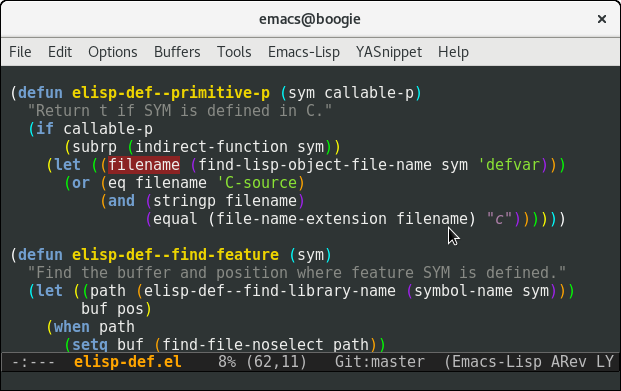
elisp-defコードを静的に分析し、それが不可能なヒューリスティックに戻ります。 99%の時間で動作するはずなので、コードの定義が見つからない場合はバグを提出してください。
メルパからインストールしてから、EMACS構成に以下を追加します。
( dolist (hook '(emacs-lisp-mode-hook ielm-mode-hook))
( add-hook hook # 'elisp-def-mode ))elisp-def Pointでグローバル機能とグローバル変数の定義を見つけます。
( defun demo/foo ()
  1 )

( defun demo/bar ()
  ; ; M-x eval-buffer, then elisp-def on this:
  (demo/foo))
また、Edebug情報を使用して関数の定義を見つけるため、Xrefよりも頻繁に定義を見つけます。
elisp-def 、シンボルと関数の違いを理解し、正しい定義にジャンプします。
( require 'cc-mode )

; ; `c-version' is both a variable and a function.

( defun demo/foo ()
  ; ; `elisp-def` will find the function here.
  ( c-version ))

( defun demo/foo ()
  ; ; `elisp-def` will find the variable here.
( setq c-version t ))elisp-defマクロを理解しているため、関数参照を正確に検出できます。
( require 'dash )

( defvar demo/foo nil )

( defun demo/foo ( x )
  x)

( defun demo/bar ()
  (-> > 123
       ; ; `elisp-def' knows that this is a function, even though there are
       ; ; no parens.
       demo/foo))
また、関数または変数を定義するマクロを理解することもできます。
( define-derived-mode demo/foo-mode fundamental-mode " demo " )

; ; `elisp-def' will expand macros to discover where major mode hooks
; ; are defined.
demo/foo-mode-hook

( cl-defstruct demo/point x y)

; ; `elisp-def' can find this function even though the defstruct
; ; call doesn't contain this symbol name.
(make-demo/point 1 2 )elisp-defライブラリを見つけ、可能であればprovide宣言を表示します。
 ; ; `elisp-def' will open python.el here.
( require 'python )

; ; Unlike `xref-find-definition' , `elisp-def' will not confuse this
; ; library name with the macro named `use-package' .
( require 'use-package )

; ; `elisp-def' will even find python.el here, because the macro
; ; expands to a call to `require' .
( use-package python
  :config
( setq python-indent-guess-indent-offset-verbose nil ))elisp-defローカルバインディングとパラメーターを理解しています。
( defun demo/foo ( bar )
  ( let ((foo 1 ))
    ; ; `elisp-def' on the FOO below will move point to the let
    ; ; binding.
    ( setq foo 2 )
    ; ; `elisp-def' on the BAR below will move point to the function
    ; ; parameters line.
    ( setq bar 3 )))

( defun demo/bar ()
  ( let* ((foo 1 )
         (bar 2 )
         (foo 3 )
         ; ; `elisp-def' on the second FOO on the following line will
         ; ; move point to the relevant binding, which is the line
         ; ; immediately above.
         (foo ( + foo 1 ))
         (foo 5 ))
    nil ))
これは、バインディングを導入するマクロでも機能します。
( require 'dash )
( eval-when-compile
  ( require 'cl-lib ))

( defun demo/foo ( items )
  ( cl-destructuring-bind ( first second) items
    ; ; `elisp-def' knowns that FIRST is bound on line above.
    ( message " first is %s " first))
  (-let [( first . rest) items]
    ; ; `elisp-def' knowns that FIRST is bound on line above.
( message " first is %s " first)))elisp-def使用すると、引用された記号、ドキュストリングシンボル、または背面シンボルにポイントを配置できます。
( defun demo/foo ( x )
  ; ; `elisp-def' on X in the docstring will find the parameter.
  " Adds one to X and returns it. "
  ( 1+ x))

( defun demo/bar ()
  ; ; `elisp-def' can find demo/foo even when point is on the #.
  ( funcall # 'demo/foo 1 )
  ; ; `elisp-def' on demo/foo below will find the function.
  ; ;
  ; ; See `demo/foo' for more information.
  nil )

( defun demo/baz ( foo )
  ; ; `elisp-def' understands that @ is not part of foo here.
  `(blah ,@foo ))
シンボルが見つかると、Elisp-Defは視界のために一時的に強調表示されます。
elisp-def 、引用された記号を分析する能力が制限されています。
 ; ; `elisp-def' is able to find these quoted symbols because they're
; ; only globally bound in one namespace.
( mapcar 'symbol-name '(foo bar baz))
( add-to-list 'auto-mode-alist '( " \ .java \ ' " . java-mode))

( require 'cc-mode )
( defun demo/calls-fn ( sym )
  ( funcall sym))

; ; Since `c-version' is both a function and a variable, and we're not
; ; using a sharp-quote #'c-version, we have to prompt the user.
(demo/calls-fn 'c-version )

( defun demo/foo ( c-version )
  ; ; Here we have no idea whether we're using `c-version' as a
  ; ; function (e.g. funcall), as a variable (e.g. set) or as a
  ; ; parameter (e.g. eval).
  (bar 'c-version nil ))
elisp-def let* semanticsと複製された変数を備えたマクロの定義を見つけることができません。
( require 'dash )

( defun demo/foo ()
  (-let ((x 1 )
         (x 2 ))
    ; ; `elisp-def' on X below will move to the first X binding, rather
    ; ; than the second.
    x))
elisp-def 、シンボルが完全に消えるようにフォームを書き直すマクロを処理することもできません。
( eval-when-compile ( require 'cl-lib ))

( cl-labels ((foo (x y) ( + x y)))
  ; ; `cl-labels' completely rewrites this body to (--cl-foo-- 1 2), so
  ; ; `elisp-def' can't find the definition of FOO.
(foo 1 2 ))elisp-slime-nav-find-elisp-thing-at-point elisp-slime-navからemacs-lisp-modeのxref-find-definitions (emacs coreの一部)semantic-ia-fast-jump from semantic/ia.el (emacsに含まれる) Elisp Esoterica、特にWasamasaに関する私の質問に答えてくれた#emacsの素晴らしい人々。
Clojureの完了のための賛辞ライブラリには、Elisp-DEFがどのように抽出および分析が形成されるかと非常に似たコンテキストの概念があります。
Hacklangには、コードのポイントで完了を分析するためのプレースホルダーの同様の概念があります。
gplv3+。
オープンソースライセンスの下で、リポジトリのコードをリポジトリに提供しています。これは私の個人的なリポジトリであるため、私のコードに受け取るライセンスは私からであり、雇用主ではありません。