elisp def
1.0.0

انتقل إلى تعريف الرمز عند النقطة. يدعم التعريفات العالمية ، والتعاريف المحلية ، وحتى الكود الثقيل الكلي!
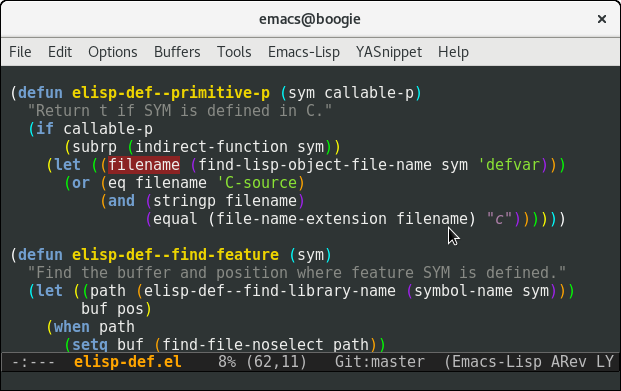
يحلل elisp-def بشكل ثابت رمزك ، ويعود إلى الاستدلال حيث لا يكون ذلك ممكنًا. يجب أن تعمل 99 ٪ من الوقت ، لذا يرجى تقديم الأخطاء إذا لم تتمكن من العثور على تعريفات للرمز الخاص بك.
قم بتثبيت من Melpa ، ثم أضف ما يلي إلى تكوين Emacs الخاص بك:
( dolist (hook '(emacs-lisp-mode-hook ielm-mode-hook))
( add-hook hook # 'elisp-def-mode )) ستجد elisp-def تعريف الوظائف العالمية والمتغيرات العالمية عند النقطة.
( defun demo/foo ()
  1 )

( defun demo/bar ()
  ; ; M-x eval-buffer, then elisp-def on this:
  (demo/foo))
سوف يستخدم أيضًا معلومات Edebug للعثور على تعريفات الوظائف ، بحيث يجد تعريفات في كثير من الأحيان من XREF.
يدرك elisp-def الفرق بين الرموز والوظائف ويقفز إلى التعريف الصحيح.
( require 'cc-mode )

; ; `c-version' is both a variable and a function.

( defun demo/foo ()
  ; ; `elisp-def` will find the function here.
  ( c-version ))

( defun demo/foo ()
  ; ; `elisp-def` will find the variable here.
( setq c-version t )) يفهم elisp-def وحدات الماكرو ، بحيث يمكنه اكتشاف مراجع الوظائف بدقة.
( require 'dash )

( defvar demo/foo nil )

( defun demo/foo ( x )
  x)

( defun demo/bar ()
  (-> > 123
       ; ; `elisp-def' knows that this is a function, even though there are
       ; ; no parens.
       demo/foo))
يمكن أن يفهم أيضًا وحدات الماكرو التي تحدد الوظائف أو المتغيرات.
( define-derived-mode demo/foo-mode fundamental-mode " demo " )

; ; `elisp-def' will expand macros to discover where major mode hooks
; ; are defined.
demo/foo-mode-hook

( cl-defstruct demo/point x y)

; ; `elisp-def' can find this function even though the defstruct
; ; call doesn't contain this symbol name.
(make-demo/point 1 2 ) ستجد elisp-def المكتبات ، وتعرض إعلانات provide إن أمكن.
 ; ; `elisp-def' will open python.el here.
( require 'python )

; ; Unlike `xref-find-definition' , `elisp-def' will not confuse this
; ; library name with the macro named `use-package' .
( require 'use-package )

; ; `elisp-def' will even find python.el here, because the macro
; ; expands to a call to `require' .
( use-package python
  :config
( setq python-indent-guess-indent-offset-verbose nil )) elisp-def يفهم الروابط والمعلمات المحلية.
( defun demo/foo ( bar )
  ( let ((foo 1 ))
    ; ; `elisp-def' on the FOO below will move point to the let
    ; ; binding.
    ( setq foo 2 )
    ; ; `elisp-def' on the BAR below will move point to the function
    ; ; parameters line.
    ( setq bar 3 )))

( defun demo/bar ()
  ( let* ((foo 1 )
         (bar 2 )
         (foo 3 )
         ; ; `elisp-def' on the second FOO on the following line will
         ; ; move point to the relevant binding, which is the line
         ; ; immediately above.
         (foo ( + foo 1 ))
         (foo 5 ))
    nil ))
هذا يعمل حتى مع وحدات الماكرو التي تقدم الروابط.
( require 'dash )
( eval-when-compile
  ( require 'cl-lib ))

( defun demo/foo ( items )
  ( cl-destructuring-bind ( first second) items
    ; ; `elisp-def' knowns that FIRST is bound on line above.
    ( message " first is %s " first))
  (-let [( first . rest) items]
    ; ; `elisp-def' knowns that FIRST is bound on line above.
( message " first is %s " first))) يتيح لك elisp-def وضع نقطة على الرموز المقتبسة أو رموز DOCSTRING أو الرموز المربعة.
( defun demo/foo ( x )
  ; ; `elisp-def' on X in the docstring will find the parameter.
  " Adds one to X and returns it. "
  ( 1+ x))

( defun demo/bar ()
  ; ; `elisp-def' can find demo/foo even when point is on the #.
  ( funcall # 'demo/foo 1 )
  ; ; `elisp-def' on demo/foo below will find the function.
  ; ;
  ; ; See `demo/foo' for more information.
  nil )

( defun demo/baz ( foo )
  ; ; `elisp-def' understands that @ is not part of foo here.
  `(blah ,@foo ))
عندما يجد الرمز ، ستقوم ELISP-DEF أيضًا بتمييزه مؤقتًا للرؤية.
يقتصر elisp-def في قدرته على تحليل الرموز المقتبسة.
 ; ; `elisp-def' is able to find these quoted symbols because they're
; ; only globally bound in one namespace.
( mapcar 'symbol-name '(foo bar baz))
( add-to-list 'auto-mode-alist '( " \ .java \ ' " . java-mode))

( require 'cc-mode )
( defun demo/calls-fn ( sym )
  ( funcall sym))

; ; Since `c-version' is both a function and a variable, and we're not
; ; using a sharp-quote #'c-version, we have to prompt the user.
(demo/calls-fn 'c-version )

( defun demo/foo ( c-version )
  ; ; Here we have no idea whether we're using `c-version' as a
  ; ; function (e.g. funcall), as a variable (e.g. set) or as a
  ; ; parameter (e.g. eval).
  (bar 'c-version nil ))
لا يمكن elisp-def العثور على تعريفات في وحدات الماكرو مع الدلالات let* ومتغيرات مكررة.
( require 'dash )

( defun demo/foo ()
  (-let ((x 1 )
         (x 2 ))
    ; ; `elisp-def' on X below will move to the first X binding, rather
    ; ; than the second.
    x))
لا يمكن لـ elisp-def أيضًا التعامل مع وحدات الماكرو التي تعيد كتابة الأشكال بحيث يختفي الرمز تمامًا.
( eval-when-compile ( require 'cl-lib ))

( cl-labels ((foo (x y) ( + x y)))
  ; ; `cl-labels' completely rewrites this body to (--cl-foo-- 1 2), so
  ; ; `elisp-def' can't find the definition of FOO.
(foo 1 2 ))elisp-slime-nav-find-elisp-thing-at-point من elisp-slime-navxref-find-definitions in emacs-lisp-mode (جزء من Emacs Core)semantic-ia-fast-jump من semantic/ia.el (المدرجة في emacs) الأشخاص الغربيون على #emacs للإجابة على أسئلتي على Elisp Esoterica ، وخاصة Wasamasa.
تحتوي مكتبة الإثبات على إكمال Clojure على فكرة عن السياق الذي يشبه إلى حد كبير كيفية استخراج نماذج ELISP-DEF وتحليلها.
لدى Hacklang فكرة مماثلة عن عنصر نائب لتحليل الإكمال عند نقطة في الرمز.
GPLV3+.
أقوم بتقديم رمز في المستودع لك بموجب ترخيص مفتوح المصدر. لأن هذا هو مستودعك الشخصي ، فإن الترخيص الذي تتلقاه إلى الكود الخاص بي هو مني وليس صاحب العمل.