SDFT
1.0.0

SDFT is a self-educational project, aimed to overview main Stable Diffusion fine-tuning techniques. Stable Diffusion implementation is taken from HuggingFace diffusers library.
Techniques to overview:
All fine-tuning techniques were performed on a hand-built toy dataset named "Dark Fantasy". The dataset was collected using fine-grained prompts with the Stable Diffusion XL Base-1.0 model from StabilityAI to generate dark-fantasy-like images in a style reminiscent of the 1970s and 1980s. The goal is to demonstrate how all the techniques outlined work on this dataset.
The dataset could be found under the datasets/ directory.
To fine-tune SDXL with LoRA:
accelerate launch train_lora_sdxl.py
    --pretrained_model_name_or_path=stabilityai/stable-diffusion-xl-base-1.0
    --pretrained_vae_model_name_or_path=madebyollin/sdxl-vae-fp16-fix
    --allow_tf32
    --mixed_precision="fp16"
    --rank=32
    --train_data_dir=datasets/dark_fantasy/
    --caption_column="text"
    --dataloader_num_workers=16
    --resolution=512
    --use_center_crop
    --use_random_flip
    --train_batch_size=2
    --gradient_accumulation_steps=4 --gradient_checkpointing
    --max_train_steps=1500
    --learning_rate=1e-04
    --max_grad_norm=5
    --lr_scheduler="cosine_with_restarts"
    --lr_warmup_steps=100
    --output_dir=runs/lora_run/
    --checkpointing_steps=100
    --validation_epochs=10
    --num_validation_images=4
    --save_images_on_disk
    --validation_prompt="A picture of a misterious figure in cape, back view."
    --logging_dir="logs"
    --seed=1337
To run inference with LoRA checkpoint:
accelerate launch run_lora_inference.py
    --pretrained_model_name_or_path=stabilityai/stable-diffusion-xl-base-1.0
    --pretrained_vae_model_name_or_path=madebyollin/sdxl-vae-fp16-fix
    --output_dir=runs/lora_v1/
    --lora_checkpoint_path=runs/lora_run/checkpoint-100/
    --resolution=1024
    --num_images_to_generate=5
    --guidance_scale=5.0
    --num_inference_steps=40
    --prompt="A picture of a misterious figure in cape, back view."
    --negative_prompt="logo, watermark, text, blurry"
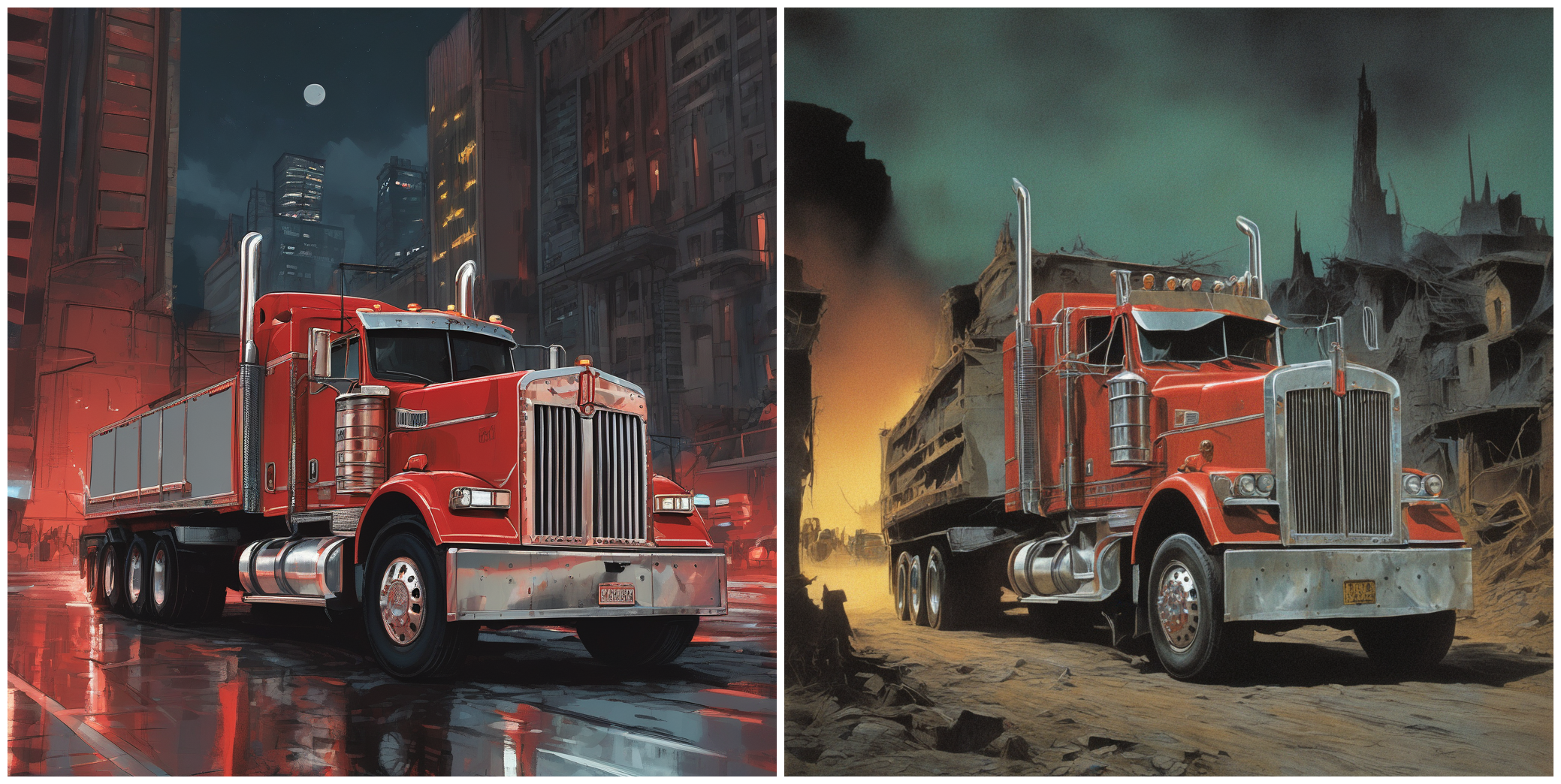
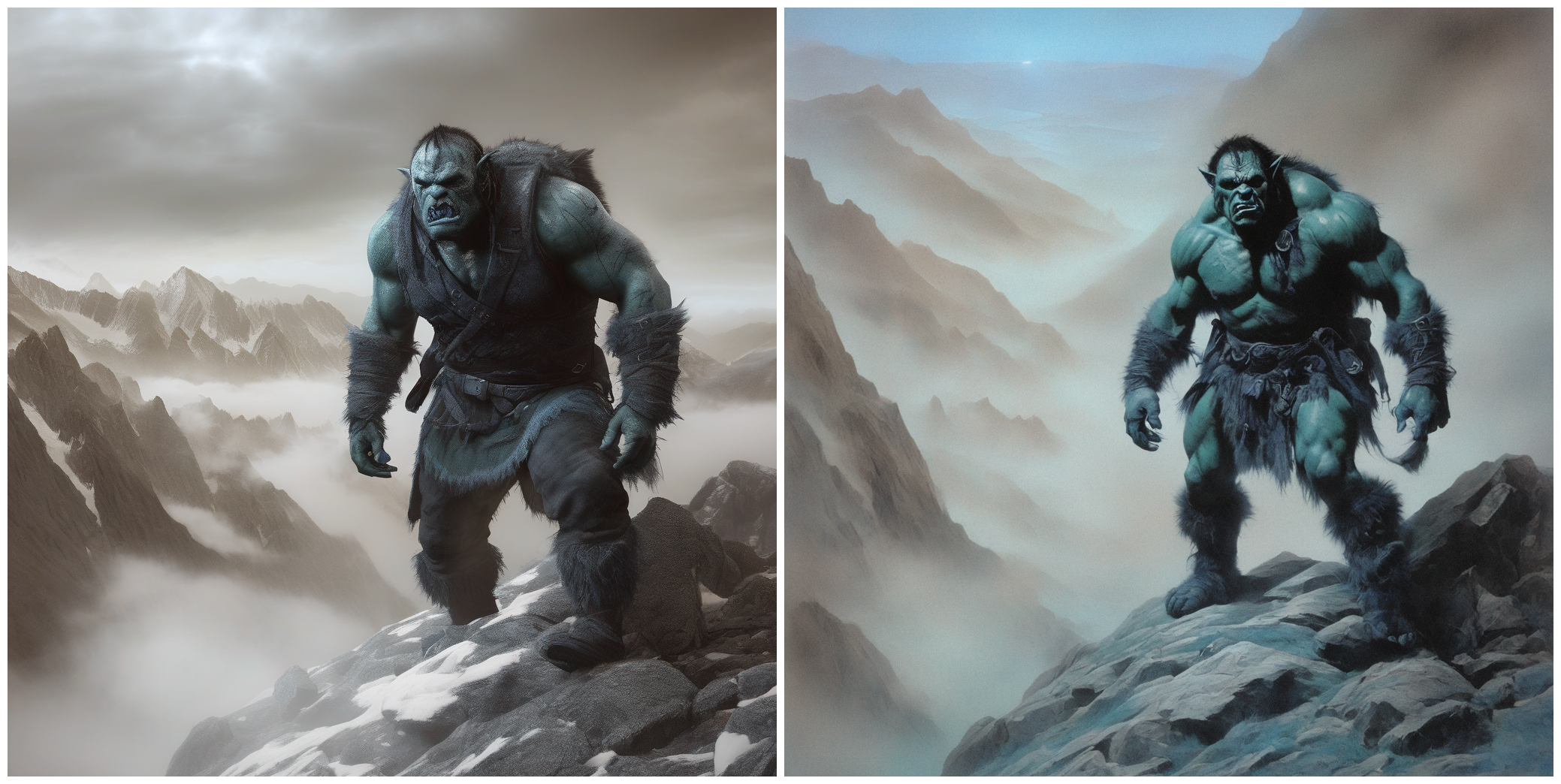
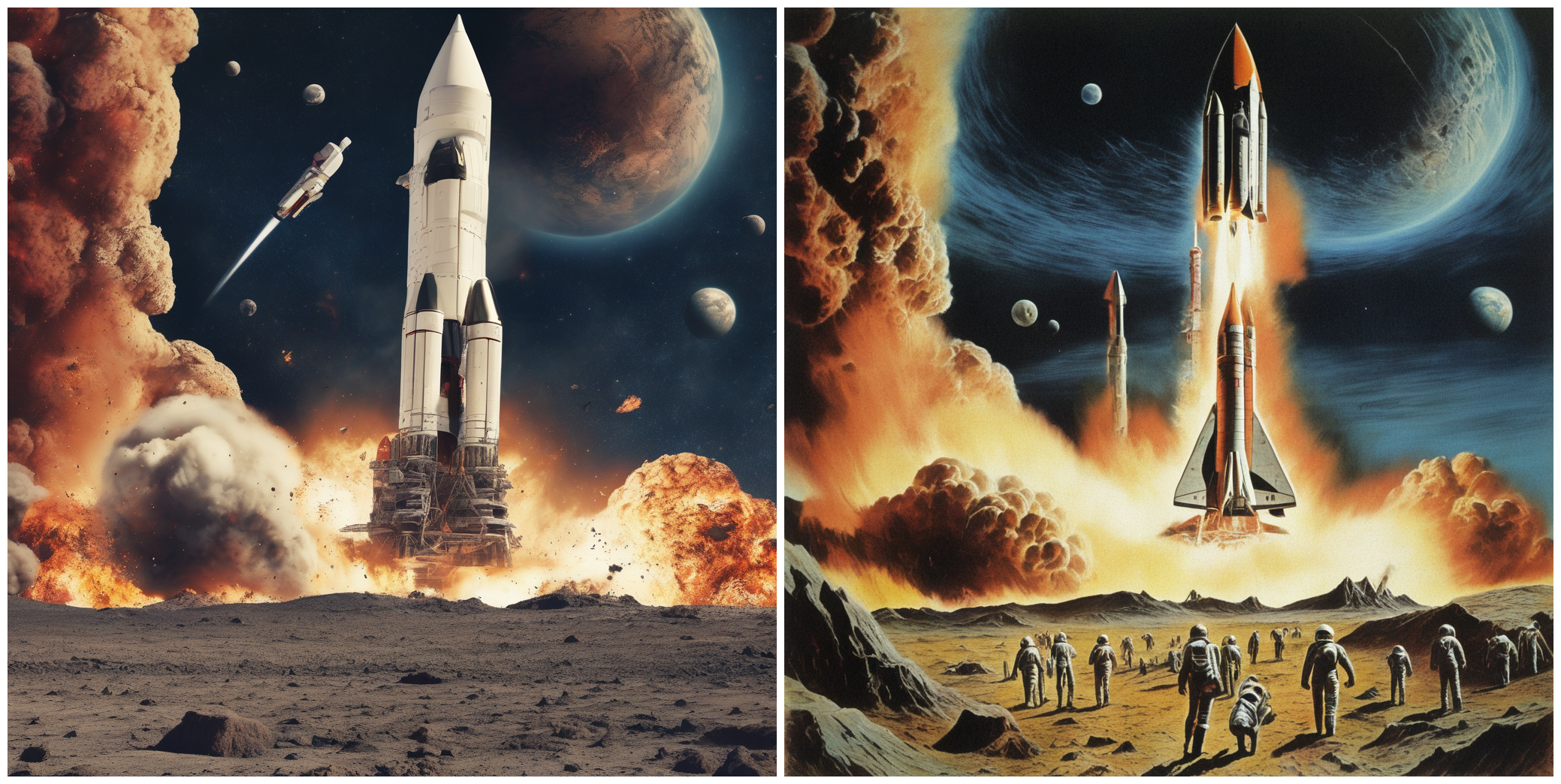
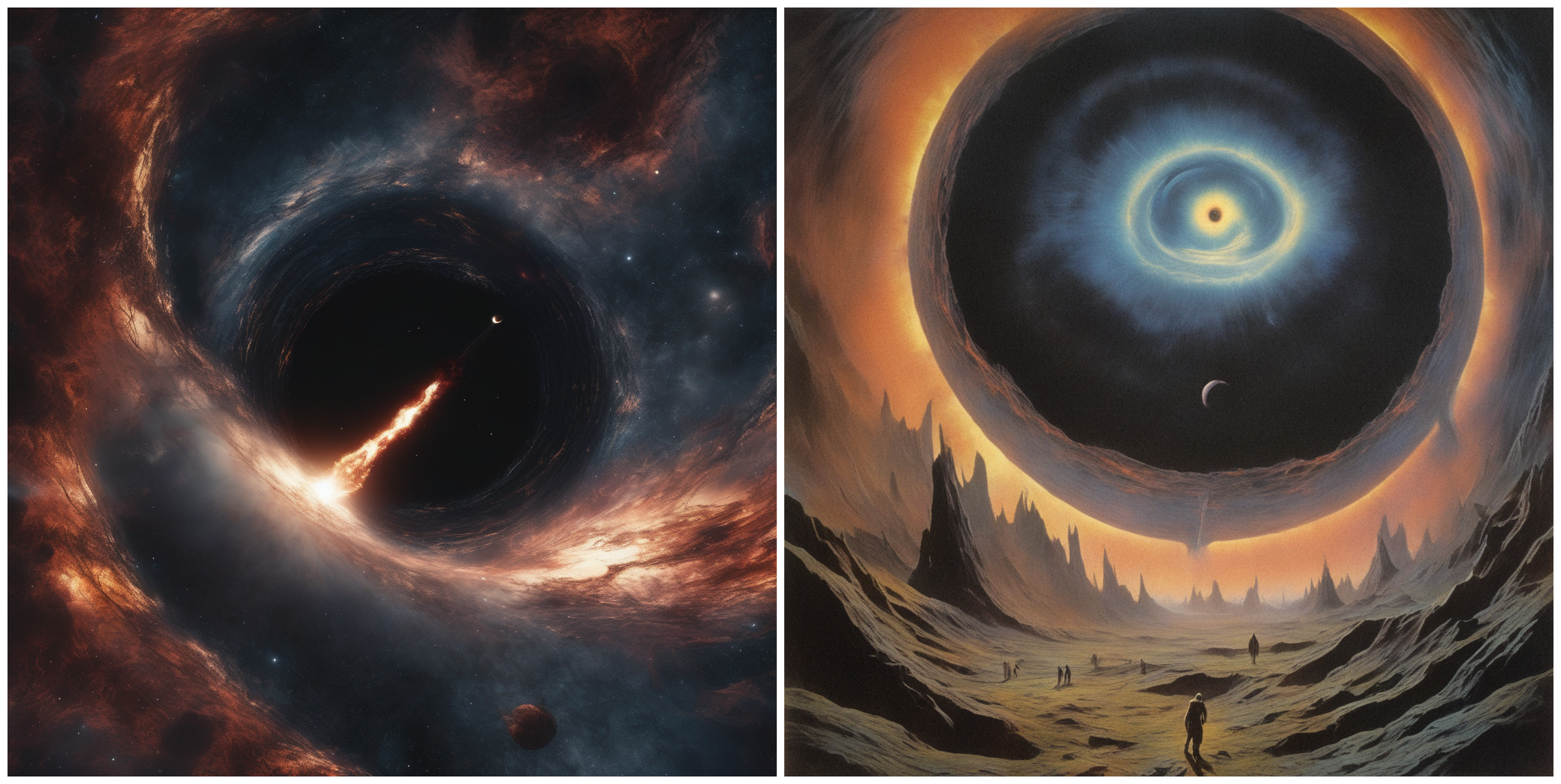
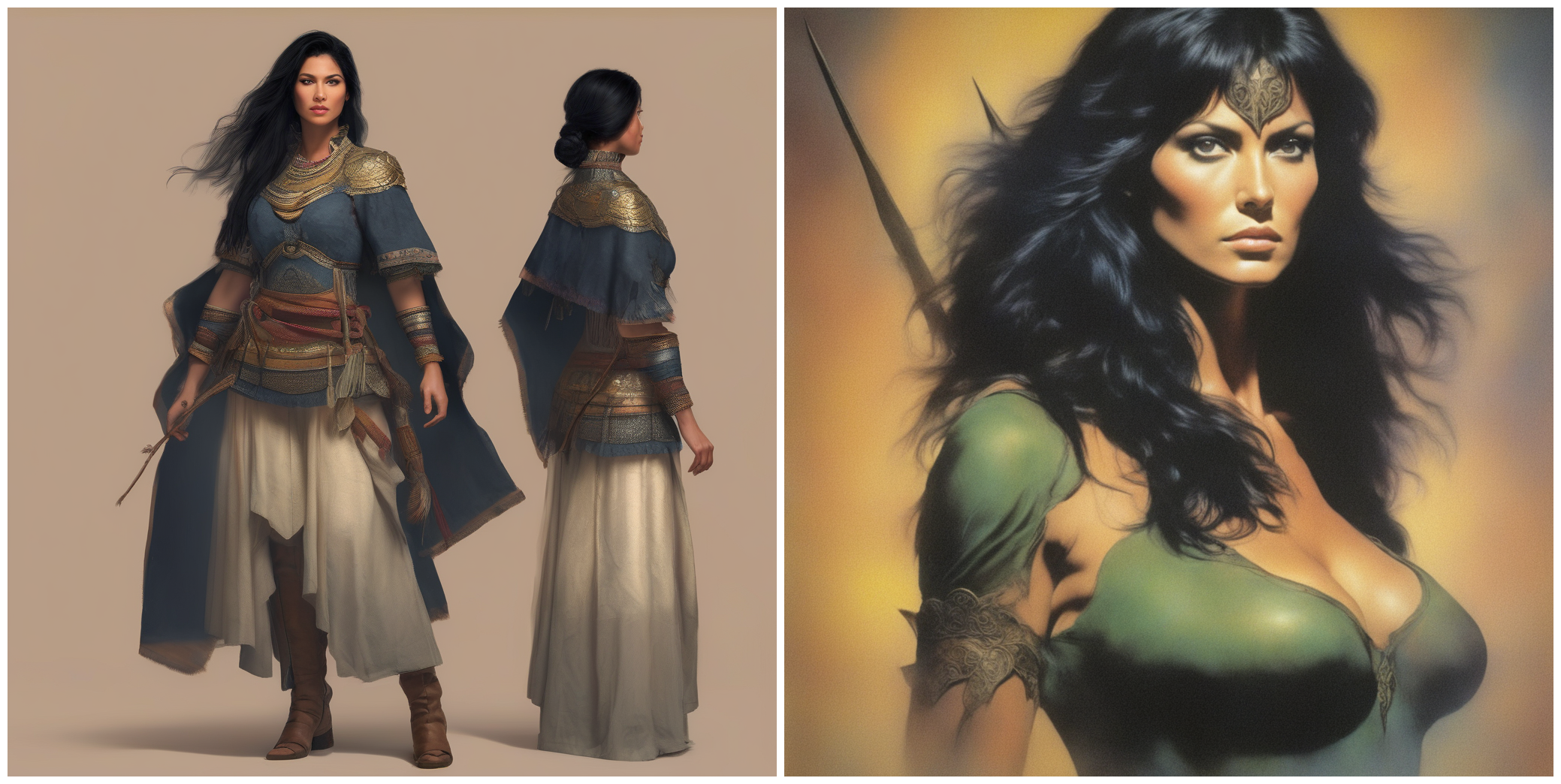
--seed=1337No LoRA - LoRA images comparison. Pairs of images were generated using the same latents.
"A picture of a heavy red Kenworth truck riding in the night across the abanoned city streets."
"A picture of a wounded orc warrior, climbing in misty mountains, front view, exhausted face, looking at the camera."
"A picture of space rocket launching, Earth on the background, candid photo."
"A picture of a supermassive black hole, devouring the galaxy, cinematic picture"
"A picture of a human woman warrior, black hair, looking at the camera, front view."
To fine-tune SDXL with Textual Inversion (TI):
accelerate launch train_ti_sdxl.py
    --pretrained_model_name_or_path=stabilityai/stable-diffusion-xl-base-1.0
    --pretrained_vae_model_name_or_path=madebyollin/sdxl-vae-fp16-fix
    --allow_tf32
    --mixed_precision="fp16"
    --train_data_dir=datasets/skull
    --learnable_property="style"
    --placeholder_token="<skull_lamp>"
    --initializer_token="skull"
    --num_vectors=8
    --resolution=1024
    --repeats=1
    --train_batch_size=2
    --gradient_accumulation_steps=4 --gradient_checkpointing
    --max_train_steps=5000
    --learning_rate=3e-3
    --lr_scheduler="piecewise_constant"
    --lr_warmup_steps=30
    --output_dir="runs/ti_run"
    --validation_prompt="A painting of Eiffel tower in the style of <skull_lamp>"
    --num_validation_images=4
    --validation_steps=100
    --embeddings_save_steps=500
    --save_images_on_disk
    --use_random_flip
    --use_center_crop
    --seed=1337
To run inference with trained TI embeddings:
accelerate launch run_ti_inference.py
    --pretrained_model_name_or_path=stabilityai/stable-diffusion-xl-base-1.0
    --pretrained_vae_model_name_or_path=madebyollin/sdxl-vae-fp16-fix
    --output_dir=runs/ti_run
    --path_to_embeddings=runs/ti_run/ti-embeddings-final.safetensors
    --resolution=1024
    --num_images_to_generate=1
    --guidance_scale=5.0
    --num_inference_steps=50
    --placeholder_token="<skull_lamp>"
    --prompt="A <skull_lamp>, made of lego"
    --negative_prompt="logo, watermark, text, blurry, bad quality"
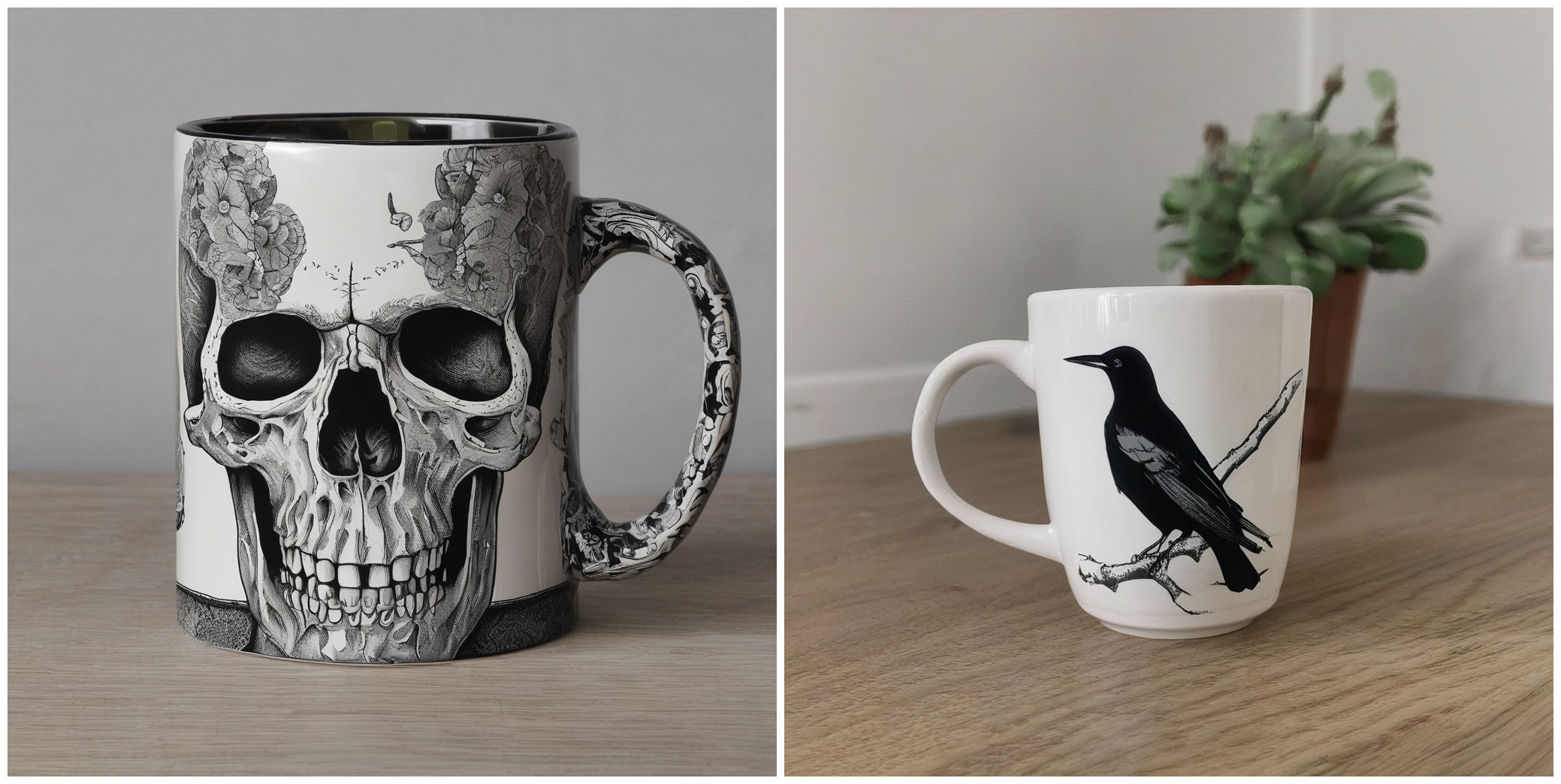
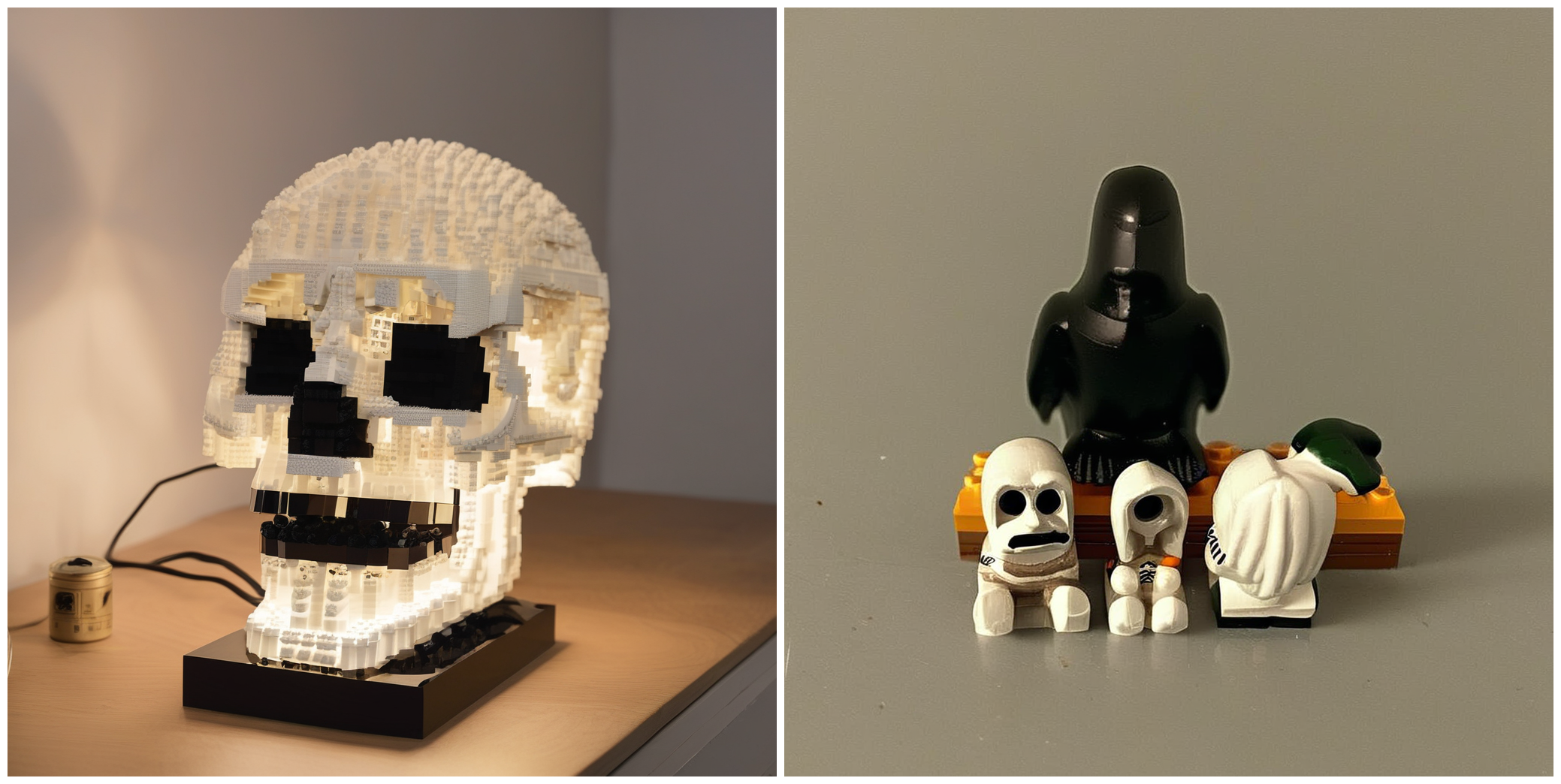
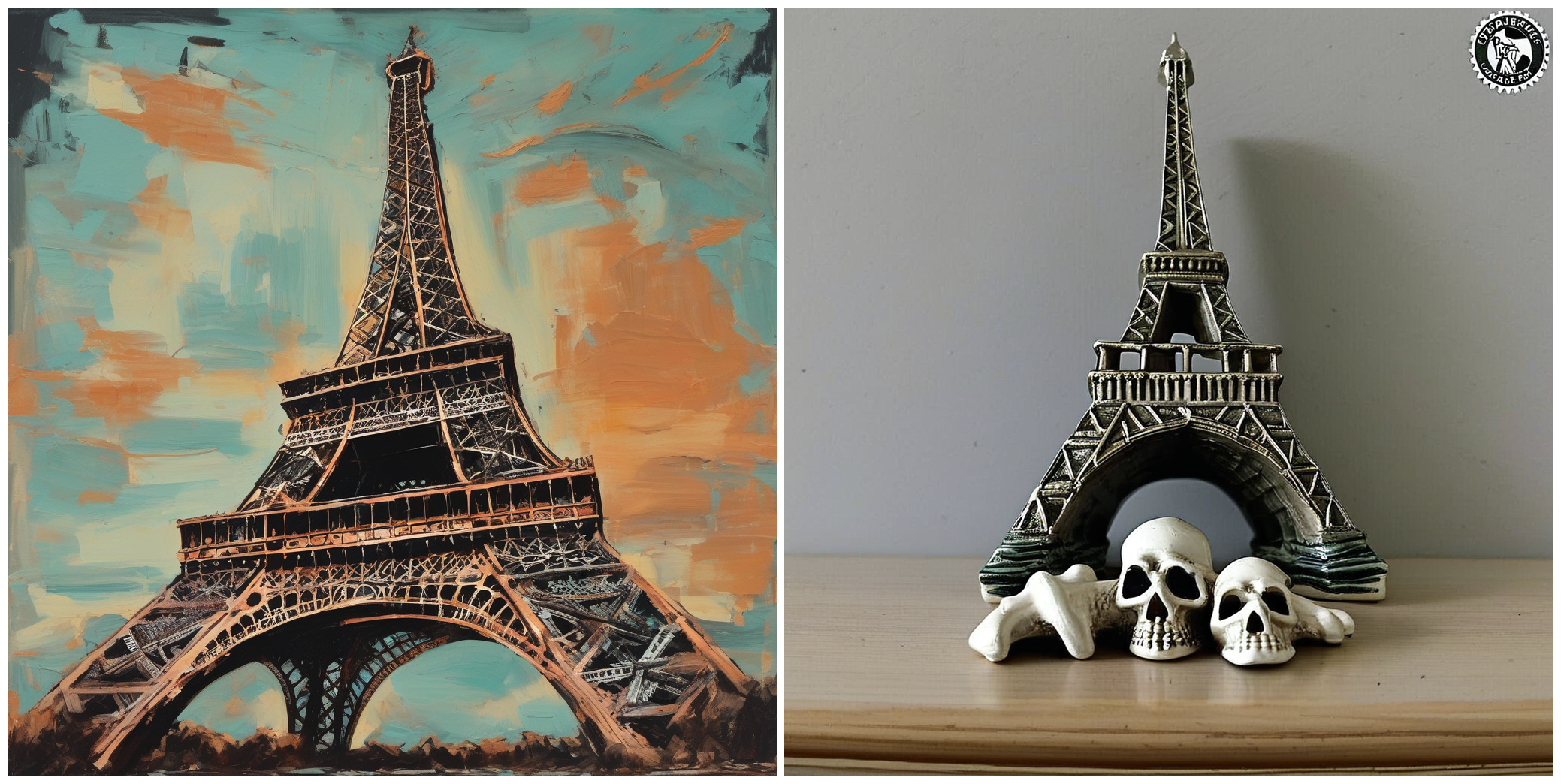
--seed=1337No TI - TI images comparison. Pairs of images were generated using the same latents.
NOTE: since training dataset consists of 5 images only with default captions, results are not that inspiring, but introducing more fine-graided captions would make it much better.
"A <skull_lamp>, made of lego."
"A painting of Eiffel tower in the style of <skull_lamp>."
"A painting of the great pyramids in the style of <skull_lamp>."
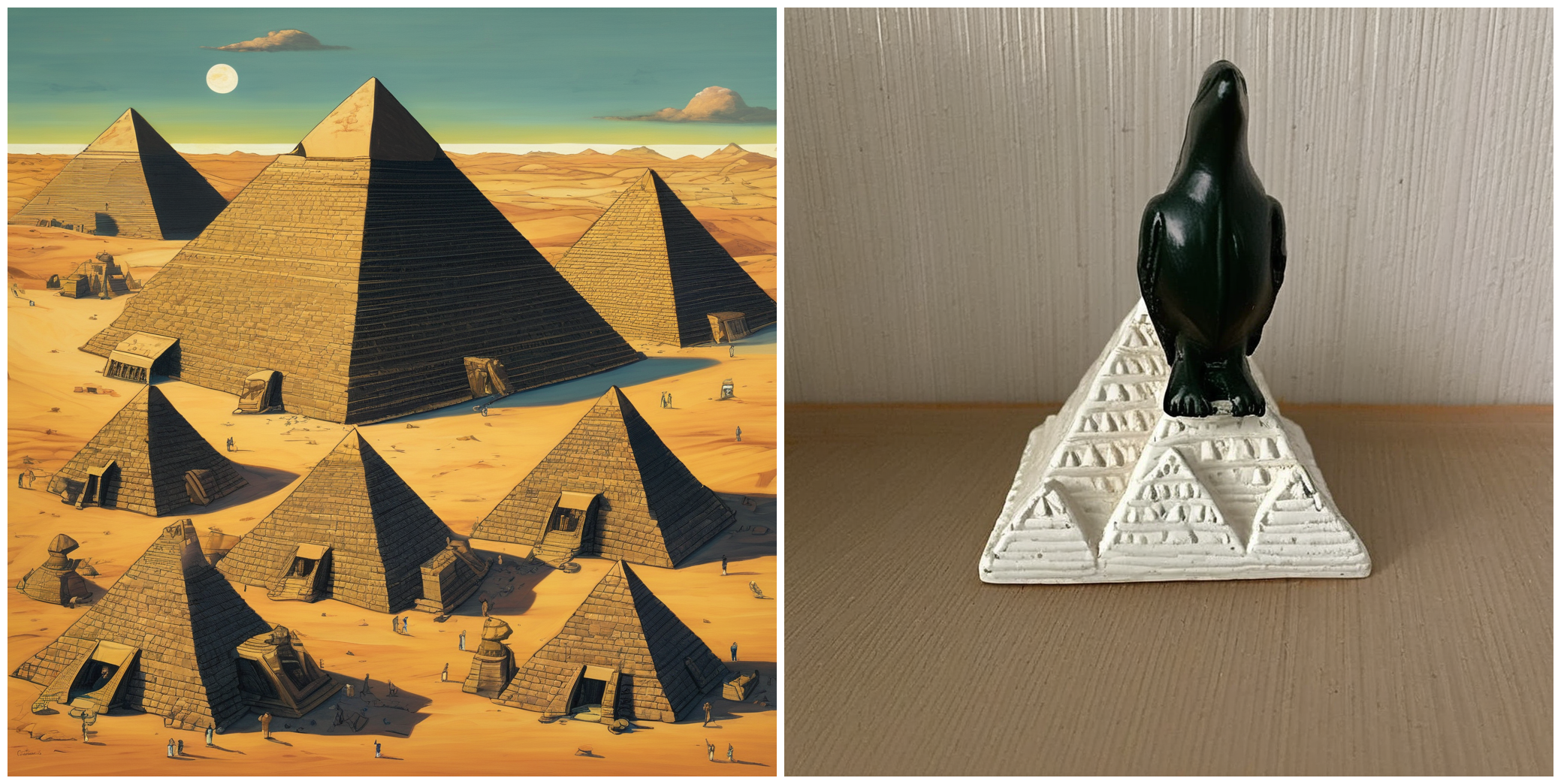
"An oil painting of a skyscraper in the style of <skull_lamp>."
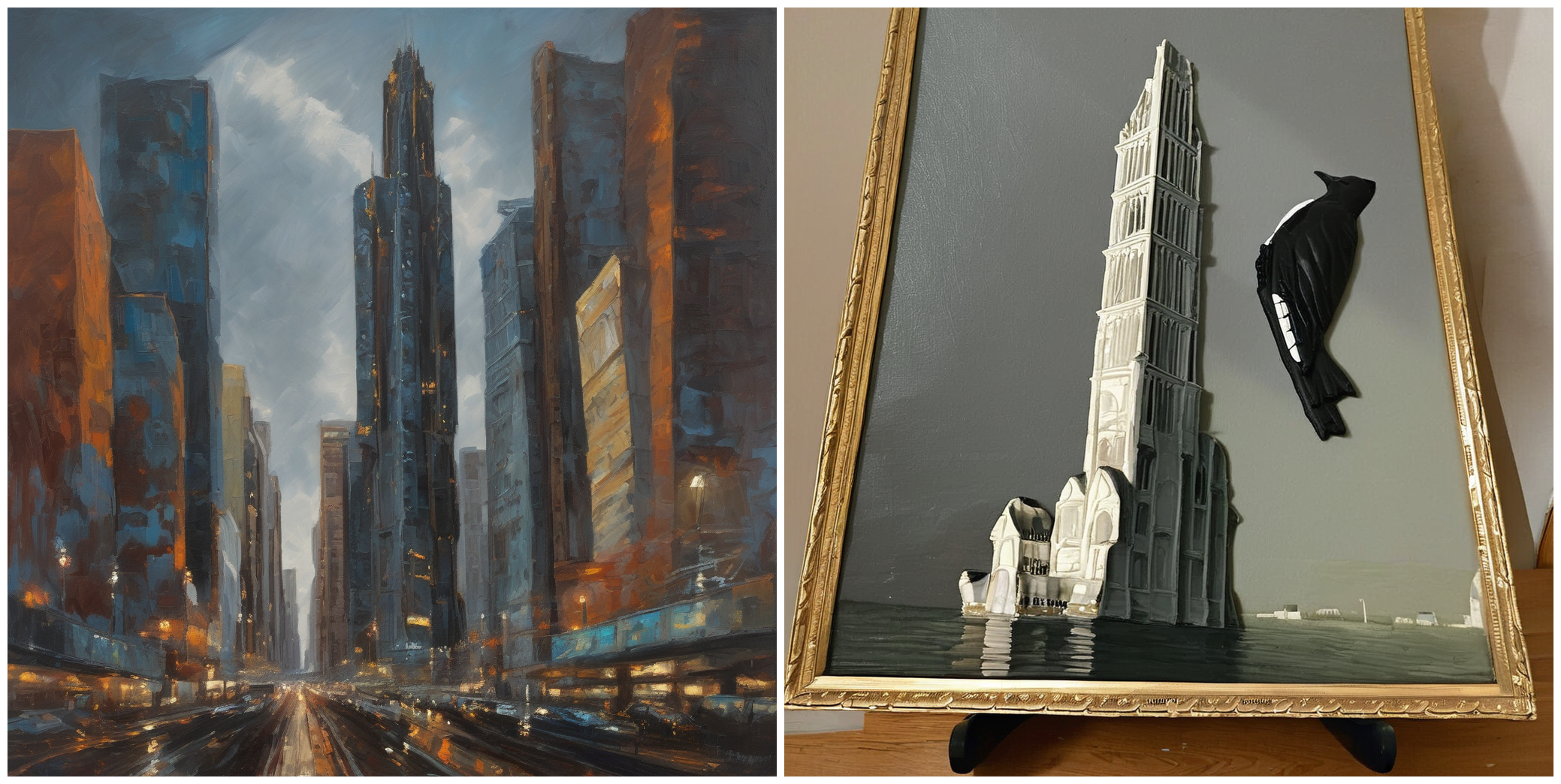
"The painting of a mug in the style of <skull_lamp>."