
At the grand opening ceremony of the 2025 Consumer Electronics Show (CES), Nvidia CEO Jensen Huang grandly launched an innovative platform called "Blueprint for AI Agents". Based on Nvidia's Metropolis system, this platform aims to help organizations and individuals improve productivity and safety through advanced AI technology, and even provide athletes with recommendations for performance improvements.
According to statistics, more than 1.5 billion enterprise-grade cameras have been deployed worldwide, and the video data generated each year is as high as about 7 trillion hours. However, less than 1% of these massive data are viewed in real time by humans, resulting in many key events being ignored and causing huge economic losses to enterprises. Especially in the manufacturing industry, the loss caused by failure to detect product defects in time is as high as trillions of dollars each year.
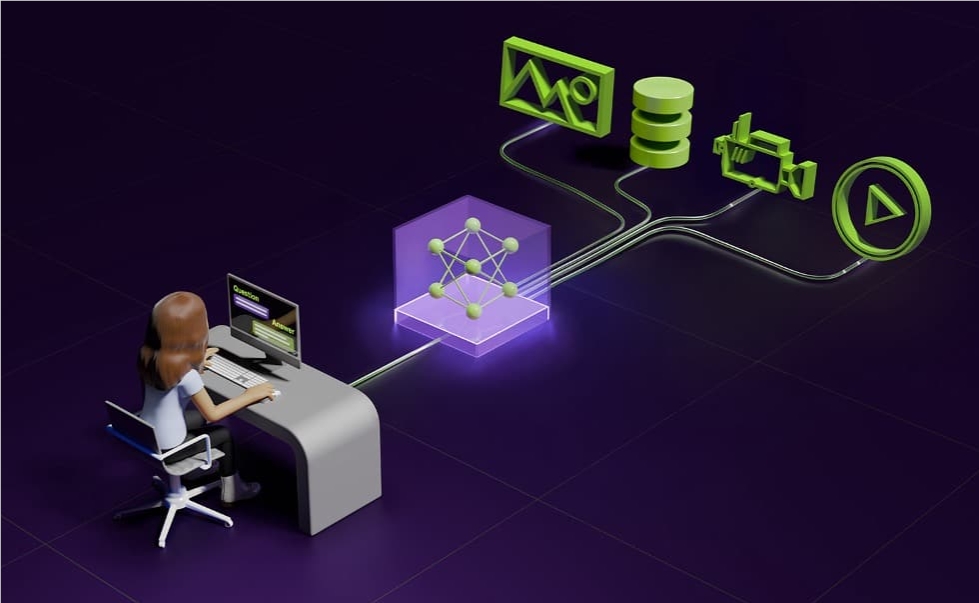
The new AI blueprint provides developers with powerful visual perception capabilities, enabling them to create AI agents that can analyze large amounts of video and image content. These AI agents can work around the clock, helping factories improve productivity, enhance workers' safety, and assist athletes in improving their skills.
The Blueprint integrates Nvidia's AI enterprise software platform and supports fast video batch processing at a speed of 30 times faster than real-time viewing. Its built-in inference, task planning and tool calling functions enable developers to simplify the creation of multiple visual agents and solve complex problems. Enterprises can flexibly deploy these AI agents from the edge to the cloud as needed.
In the industrial sector, the application of these video analytics AI agents can significantly improve productivity, reduce waste, and ensure standard operations of complex processes. In addition, they can optimize warehouse space utilization through 3D volume estimation, generate accident reports to improve safety, and quickly identify abnormal activities to prevent accidents.
The field of sports can also benefit from this technology. Coaches and sports teams rely on video analytics to evaluate and improve player performance, enhance safety, and enhance audience experience through data visualization. During his speech, Huang Renxun showed off an AI video analytics agent that analyzes the pitching skills of amateur baseball players and provides suggestions for improvement.
Nvidia's media and entertainment industry is also actively exploring the potential of this technology, aiming to create smarter and more personalized content and enhance the viewing experience for the audience. Currently, global partners including Accenture, EF Education, and Links Technology are integrating this blueprint into their development workflow.
Official blog: https://blogs.nvidia.com/blog/metropolis-ai-blueprint-video/
Key points:
More than 1.5 billion cameras worldwide generate about 7 trillion hours of video every year, but only 1% are viewed in real time.
The newly launched AI blueprint can improve industrial efficiency and reduce waste and accident risks.
The sports and entertainment industry will also use video analytics AI agents to improve player performance and audience experience.