
Google Gboard keyboard has launched a new feature called "Proofreading", which uses large language models (LLM) to repair sentence and paragraph errors with one click. This innovative feature significantly improves the efficiency of mobile text input, changes the traditional method of word-by-word error correction, and provides users with a smoother typing experience. This feature is currently available on Pixel 8 devices and serves thousands of users every day. Behind it is the in-depth research and technical breakthroughs of the Google research team in data generation, model training, and service optimization.
Gboard is a smart keyboard built by Google for mobile devices that provides a smooth typing experience through statistical decoding. Now, the Google research team has added an innovative feature "proofreading" to it, leveraging the powerful capabilities of large language models (LLM) to achieve a breakthrough in repairing errors in entire sentences and paragraphs with one click.
According to Google's newly released paper "Proofreading: Fix all errors with one click", this new Gboard feature called "Proofreading" relies on the support of server-side LLM, allowing users to seamlessly correct entire sentences with just one click. or various errors in a paragraph, completely changing the traditional word-by-word correction experience. The feature is currently rolling out on Pixel 8 devices, benefiting thousands of users every day.
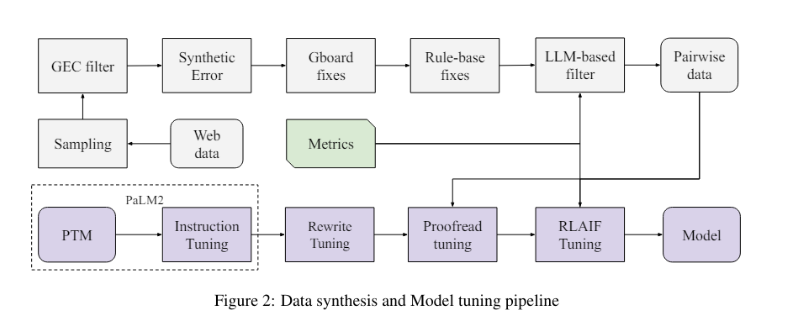
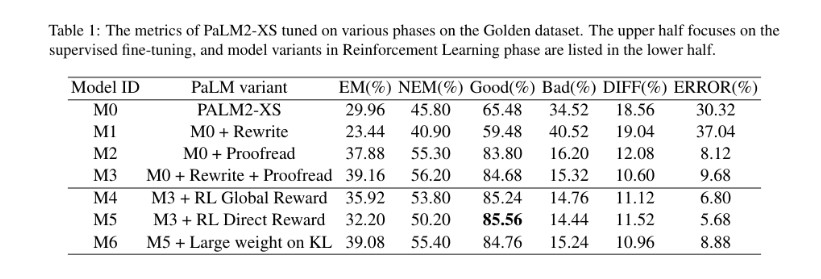
This system includes four key parts: data generation, indicator design, model adjustment and service. The research team generated simulated data sets through a complex error synthesis framework, designed multiple indicators to evaluate the model from different angles, and borrowed ideas from InstructGPT to first fine-tune through supervised learning and then use reinforcement learning technology to adjust, significantly improving the model performance. .
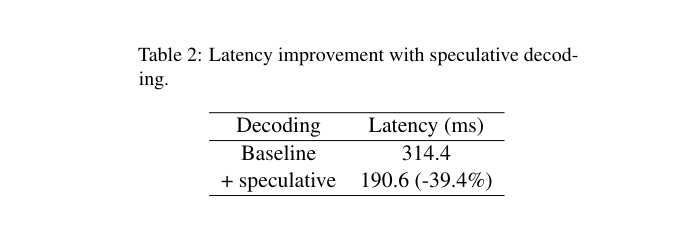
In addition, the model is deployed on the cloud TPU V5 and optimizes latency through quantization, bucketing, segmented input and speculative decoding, ultimately reducing the median response time by 39.4%.
Analysts believe that this exploratory research fully demonstrates the huge potential of large models to improve the input interaction experience on mobile terminals, and is a disruptive innovation to traditional human-computer interaction methods. It marks the transformative power of large models in improving user input efficiency, and brings inspiration to the future use of artificial intelligence to optimize daily interactive experiences.
Paper address: https://arxiv.org/abs/2406.04523
All in all, Google Gboard’s “proofreading” function is a successful case of the application of artificial intelligence technology on the mobile terminal, indicating a more intelligent and convenient input experience in the future.