
Recently, artificial intelligence startup Luma released its video generation tool Dream Machine and showed a series of videos generated by the tool. However, one of the "Monster Camp" trailers' character designs sparked controversy, with accusations of plagiarism from Pixar's "Monsters, Inc." This not only raises questions about the transparency and data sources of the Dream Machine, but also highlights the copyright and ethical issues that currently exist in the field of AI video generation. This article will provide an in-depth analysis of this incident and explore the technical and social impacts behind it.
Last week, artificial intelligence startup Luma released a series of videos created using its new video generation tool, Dream Machine. The tool is described as a "highly scalable and efficient converter model trained directly on video."
However, in the "Monster Camp" trailer that appeared in the video, some characters were accused of apparently plagiarizing Mike Wazowski, a character from Disney Pixar's "Monsters, Inc." This raises questions about the transparency and data provenance of such models, including whether they are created in the style of Pixar and whether their training data includes the work of Disney Studios. This lack of transparency is one of the biggest concerns about this type of model.
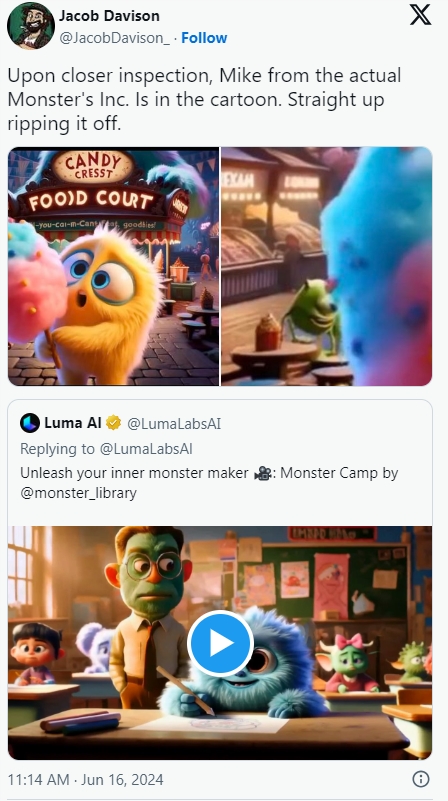
In recent months, text-to-video artificial intelligence tools similar to Dream Machine have been unveiled, including OpenAI's Sora, Google's VideoPoet and Veo.
Luma touts its Dream Machine model as the future of filmmaking, allowing you to create "high-quality, photorealistic footage" simply by typing prompts into a box. Watch videos of cars speeding down a dissolving highway or a stilted sci-fi short and you'll see why the technology's fervent supporters are quick to embrace it as an innovation.
Currently, Luma encourages people to sign up and use Dream Machine for free, but the company has also launched a "Pro" and other paid tiers that provide users with more features for a fee. Disney has yet to comment publicly on what Luma appears to be doing, and it's possible the company isn't even aware of it yet.
The Luma Dream Machine incident exposed the copyright and ethical dilemmas of AI-generated content. In the future, the transparency of AI models and the standardization of data sources will be crucial to avoid similar incidents from happening again and promote the healthy development of AI technology. How to balance innovation and supervision will be an important issue facing the industry.