
The generative artificial intelligence (AI) chip market is experiencing explosive growth, driven by surging demand for computing power, the boom in deep learning, and continued investment in AI research. The editor of Downcodes interprets the latest report of "Business Research Company" for you, predicting that by 2028, the market size will reach 86.24 billion US dollars, with an average annual compound growth rate of as high as 27.9%. The report provides a detailed analysis of market growth drivers, key trends, and key players, providing an important perspective for understanding this rapidly evolving field.
According to the latest report from Business Research Corporation, the generative artificial intelligence (AI) chip market is experiencing unprecedented growth. It is expected that the market size will reach US$86.24 billion by 2028, with an average annual growth rate of 27.9%. This growing trend reflects surging demand for computing power, the boom in deep learning, rising investments in AI research, and growing consumer interest in AI-powered devices.
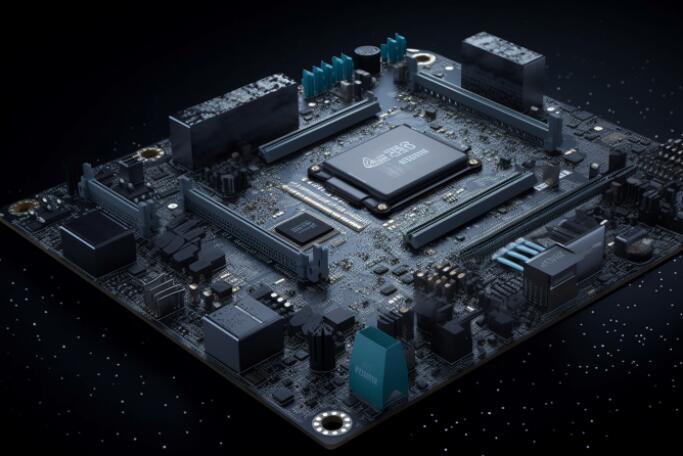
Picture source note: The picture is generated by AI, and the picture authorization service provider Midjourney
The report pointed out that the size of the generative artificial intelligence chip market was US$25.19 billion in 2023 and is expected to increase to US$32.3 billion in 2024, with an annual growth rate of 27.8%. This growth is mainly due to the explosive growth of big data, the development of graphics processing units (GPUs), the rapid development of cloud computing, and support for mixed-precision computing.
The rapid growth of the market is also inseparable from a number of key trends. These trends include the integration of edge computing, integration with field-programmable gate array (FPGA) and application-specific integrated circuit (ASIC) technologies, advanced cooling solutions, cross-platform compatibility, and advanced interconnect technologies.
The growing popularity of cloud computing solutions is further driving the growth of the generative artificial intelligence chips market. By providing scalable resources, cost-efficiency, and flexible data access, these solutions are helping enterprises reduce infrastructure costs and increase operational agility. Generative AI chips improve data processing efficiency by accelerating complex AI model processing, thereby supporting more advanced and flexible cloud services and applications.
In terms of market participants, the well-known semiconductor company Qualcomm launched its latest flagship chip-Snapdragon 8 Gen3 in October 2023. The chip is designed to boost the generative AI capabilities of top smartphones, enabling real-time speech translation, automatic content creation, and improved photo editing to reduce reliance on cloud services.
The global generative AI chips market is segmented on the basis of type, application, and end-user. By type, it mainly includes central processing unit (CPU), graphics processing unit (GPU), field programmable gate array (FPGA), application specific integrated circuit (ASIC), etc.; by application, it covers information cognition, traffic prediction and classification , resource management and network adoption, etc.; divided by end users, involving automotive, banking, financial services and insurance (BFSI), consumer electronics, medical, manufacturing, retail, communications and other fields.
All in all, the generative artificial intelligence chip market has broad prospects, and its continued growth will profoundly affect various industries. In the future, technological innovation and market competition will further promote the development of this field and bring us more intelligent applications and services based on AI. The editor of Downcodes will continue to pay attention to the dynamics of this field and bring you more exciting reports.