
Google Cloud launched a new AI agent ecosystem project - AI Agent Space, aiming to help enterprises use AI technology more effectively. This move comes at a time when competition in the cloud computing market is becoming increasingly fierce. Google hopes to compete with competitors such as Microsoft and Amazon through AI Agent Space and provide enterprises with solutions such as task automation, customer experience improvement, and operational efficiency optimization. The editor of Downcodes will give you an in-depth understanding of the characteristics, advantages and shortcomings of AI Agent Space.
In today's highly competitive cloud computing market, Google Cloud recently announced the launch of a new AI agent ecosystem project - AI Agent Space. As competitors such as Microsoft and Amazon continue to launch innovative tools, Google's move aims to help enterprises better discover, deploy and co-create AI agents to automate tasks, improve customer experience and optimize operational efficiency.
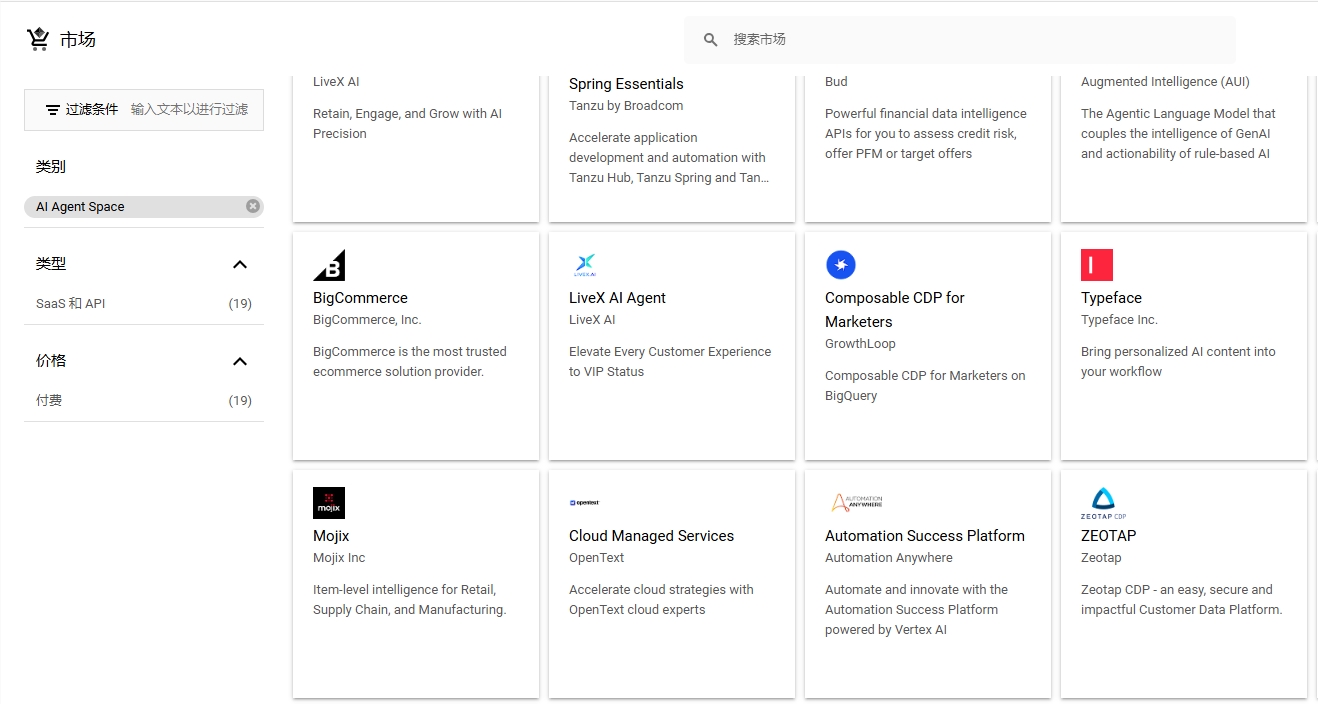
The launch of AI Agent Space marks Google Cloud's further layout in the field of enterprise services. Through this new ecosystem, Google provides partners with a wealth of tools and resources, including early previews of its AI technology, direct support from its engineering teams, and development best practices to help them develop highly customizable AI agents. In addition, Google plans to promote new agents on its Google Cloud Marketplace to help partners promote the agents they develop to a wider audience.
At the launch, Google also highlighted multiple AI agents developed internally by its cloud customers and partners, although these solutions are not yet fully available in the AI agent space. Google hopes to demonstrate the potential of its tool and encourage enterprises to port their in-house agents to the AI agent space, selling it as a software-as-a-service (SaaS) solution.
At present, some known enterprise application cases include: XenMobil improves customer support through virtual assistants; Deloitte’s “Care Finder” agent helps users find medical services faster; PwC uses AI technology to optimize the administrative work of oncology clinics . The above cases demonstrate the diversity of AI technology applied by different companies in their respective fields.
However, Google's AI agent space still lags behind competitors in terms of volume. There are currently only 19 different agent models in the AI Agent Space, while companies such as Microsoft, SAP and Salesforce have launched hundreds or even thousands of AI agent solutions. Although Google continues to promise to add more agents in the future, the current number is still relatively sparse.
Compared with Microsoft's Copilot Studio, SAP's Joule AI Assistant and Salesforce's Agentforce, Google Cloud's AI Agent Space stands out for its partner-driven flexibility and open ecosystem. By empowering partners to co-develop industry-specific agents, Google aims to drive innovation and provide diverse solutions to customers.
Platform entrance: https://console.cloud.google.com/marketplace/browse?filter=category:ai-agent&pli=1
All in all, although Google Cloud’s AI Agent Space started late and has a limited number of agents, its open ecosystem and partner-driven model give it long-term development potential. In the future, whether AI Agent Space can occupy a place in the fiercely competitive market deserves continued attention. The editor of Downcodes will continue to bring you more technology information.