
Figure, a robot startup in the Bay Area in California, recently announced that its latest humanoid robot, Figure02, will enter the "alpha testing" stage of the home environment in 2025. The news has attracted widespread attention, especially because the launch of the company's self-developed "universal" vision-language-action (VLA) model Helix has advanced this timeline. Figure CEO Brett Adcock said the core advantage of the Helix model is its ability to process complex visual data and natural language inputs, significantly improving the efficiency of robots’ learning new tasks.
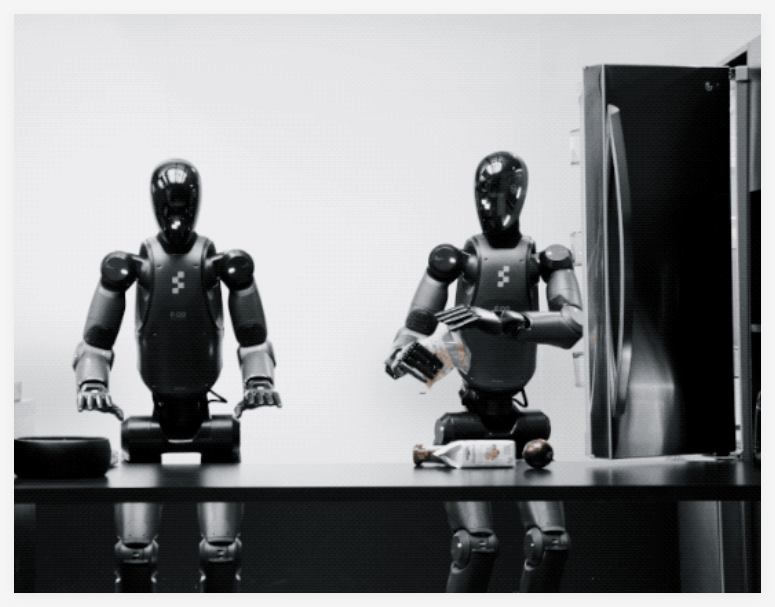
Shortly after the launch of the Helix platform, Adcock detailed the features of the platform in a public event. Not only is Helix able to process visual and linguistic data, it can also coordinate multiple robots to complete a single task, which is particularly important in a home environment. Figure previously worked with OpenAI, but has now decided to turn its focus to independently developed AI models to better meet its technology needs.
Although Figure has long included the home environment as part of its development plan, it wasn't until recently that the company revealed more details in a display at its South Bay office. Adcock showed TechCrunch footage of early home tests, including short videos of robots performing housework tasks such as food preparation. These tests show that the Helix model has great potential for application in home environments, especially when dealing with complex tasks.
Similar to other robotics companies, Figure did not prioritize housework, but chose industrial applications with more profitable prospects. In early 2024, the company conducted pilot tests of humanoid robots at its BMW factory in South Carolina. Compared to home environments, factories and warehouses have clearer and safer structures, and automakers such as BMW are willing to invest a lot of money in testing, which provides Figure with more business opportunities.
However, the household market remains a highly-attractive area. Many companies, such as Apptronik and Tesla, are also exploring the possibility of introducing humanoid robots into their homes. As the global aging population intensifies, robots are believed to help older people, allowing them to live independently without relying on nursing facilities. This trend is particularly evident in countries such as Japan and the United States.
Norwegian startup 1X is one of the few companies that will focus on the home market. However, the complexity and diversity of the home environment presents great challenges for the application of robots. There may be messy environments in the home, uneven lighting, diverse floor materials, and even activities of pets and children in the home. These factors increase the difficulty of using robots in the home.
Although Figure plans to start home testing in 2025, "alpha testing" means that this phase is still in a very early stage of development. Companies need to overcome many technical difficulties to ensure that the robot can operate stably in complex home environments. In the future, with the continuous advancement of technology, the application prospects of humanoid robots in the home will be broader.