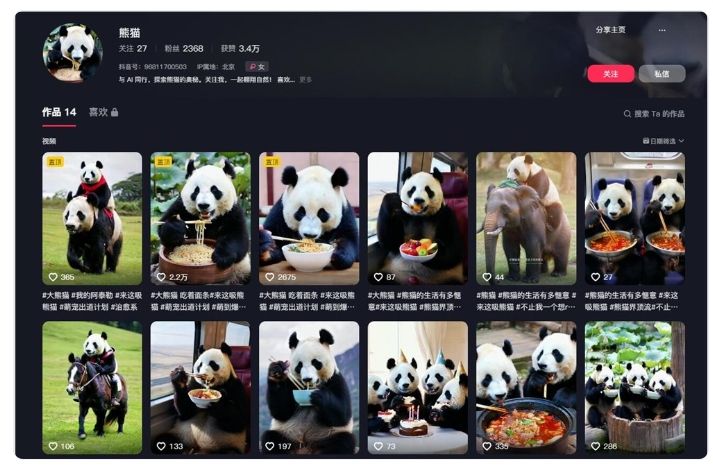
In today's social media era, using AI technology to generate realistic animal videos that simulate human behavior has become an emerging way of making money. This creative content not only attracts the attention of a large number of users, but also rapidly increases traffic and exposure through high likes and sharing rates. Ultimately, such high-traffic content can be monetized through advertising implants, brand collaborations, or social media influence. For example, the AI-generated video of Panda eating instant noodles with chopsticks quickly became popular on the Douyin platform and became a classic case that was popular.
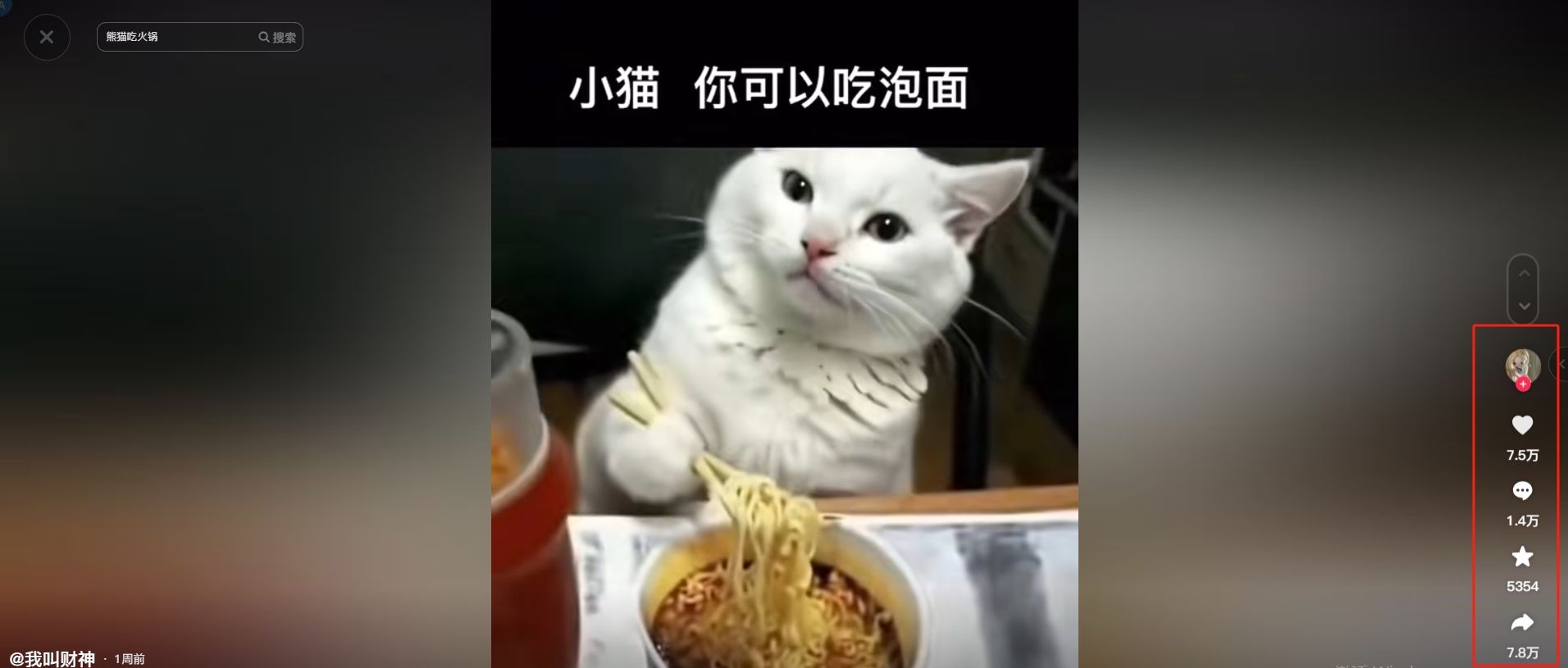
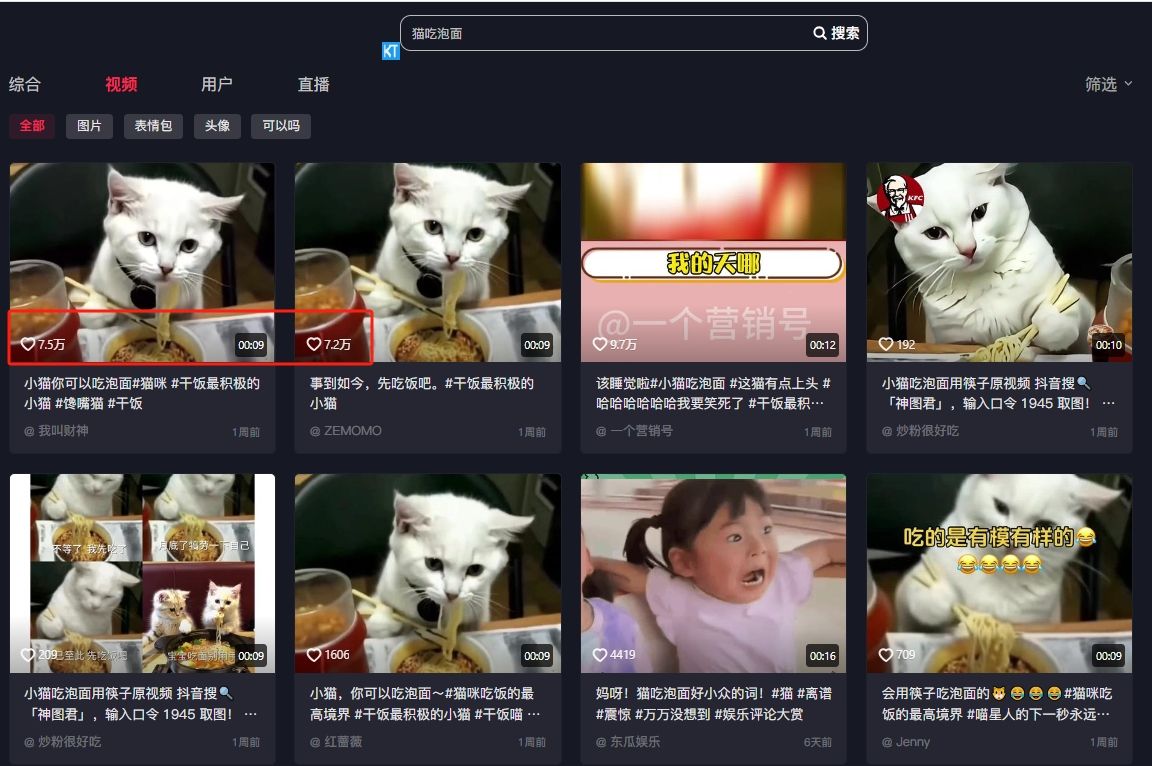
Taking the account called "Panda" on TikTok as an example, the account only released 14 videos of pandas eating noodles with chopsticks and eating hot pot, which received 34,000 likes and attracted more than 2,000 new fans in a week. This success story not only demonstrates the strong potential of AI technology, but also provides new inspiration for other content creators. At present, this creativity has derived more animal play methods, such as the video of cats eating instant noodles, which also received 75,000 likes in a short period of time. These successful cases show that AI-generated videos incorporated into personal creativity have great market potential.
This money-making idea is particularly suitable for content creators who are interested in AI video creation and social media marketing. Whether it is an individual or a team, you can try this model as long as you want to quickly gain attention in the short video field and explore monetization methods. It is relatively difficult to get started, you only need to have a basic understanding of the use of AI video generation tools and simple video editing skills. This is undoubtedly a direction worth trying for creators who want to stand out on social media.
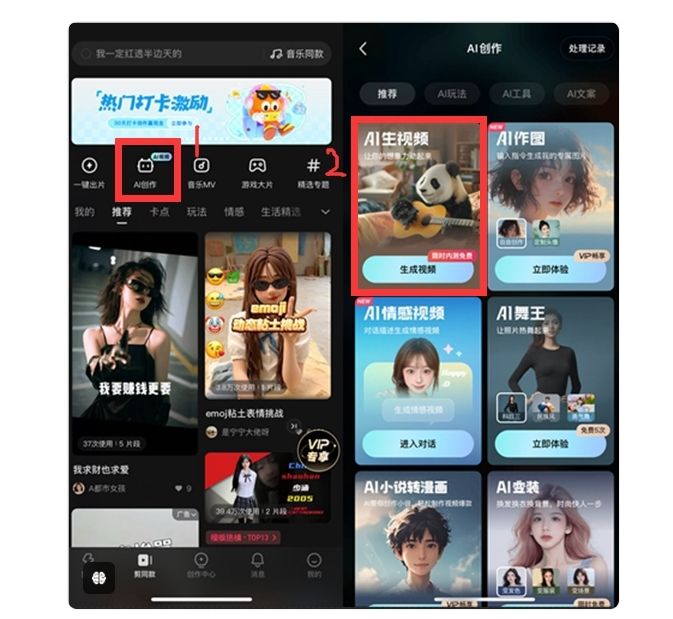
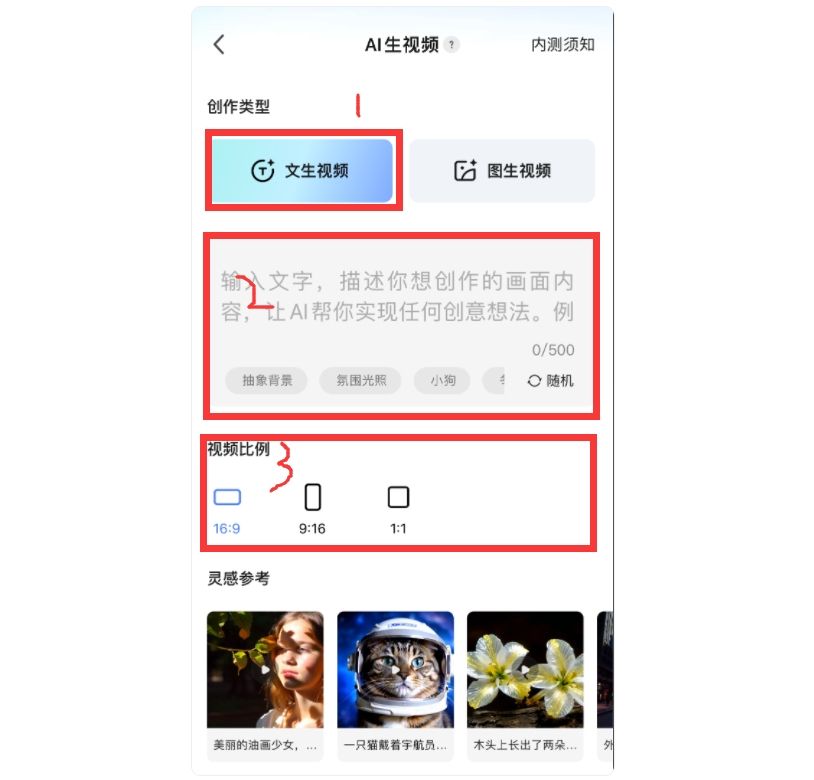
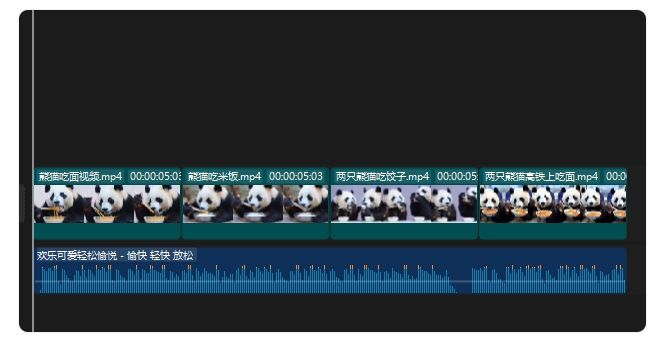
The operation process is also very simple. First, creators need to make creative ideas and determine the theme of the video, such as letting cats, pandas and other animals eat instant noodles, eat hot pot, drive or show off their talents. Next, select and be familiar with AI video generation tools such as Keling, and use these tools to generate videos based on the description. For example, use Keling's Wensheng Video function, enter "A panda is eating instant noodles with chopsticks", and then click Generate. After the video is generated, use video editing software to edit, add music and transition effects, and finally publish the video on social media platforms such as TikTok and Xiaohongshu, and use appropriate tags and descriptions to increase exposure.
Through this model, creators can not only obtain high traffic, but also explore multiple monetization channels, such as advertising implantation, brand cooperation, virtual gifts, etc. AI-generated Panda videos have quickly gained attention on social media due to their creativity and fidelity, demonstrating the huge potential of AI technology in content creation. However, creators also need to pay attention to maintaining the originality and fun of the content, while constantly learning and adapting to changes in social media platforms to achieve long-term and stable commercial monetization.
In general, using AI technology to generate videos that simulate human behavior in animals is not only an innovative way of creating content, but also an effective social media marketing strategy. Through this model, content creators can quickly gain attention and monetize through various channels. For those looking to succeed in the short video field, this is undoubtedly a new direction worth trying.