
German artificial intelligence company Black Forest Labs has launched the FLUX Pro fine-tuning API, which allows you to customize its AI image model to match a specific brand visual style with just five images. This solves the problem of brand style consistency for AI image generators, allowing users to more accurately control the final effect of image generation. The API supports multiple image formats and provides a variety of parameter adjustment options to meet the needs of different users. Whether it is brand promotion or artistic creation, FLUX Pro fine-tuning API will provide users with a more convenient and flexible image generation experience.
German artificial intelligence startup Black Forest Labs recently released a FLUX Pro fine-tuning API through which users can customize the FLUX Pro AI image model using just five sample images to match the vision of a specific brand. style.
According to Black Forest Labs, after fine-tuning, the model remains flexible and can incorporate user-provided content into new image creations. The system is capable of generating high-resolution images of up to four million pixels.
With the FLUX Pro fine-tuning API, creators can customize FLUX.1[pro] with their own images and concepts, giving them greater control over the final result. User-supplied images can be used to train FLUX Pro models, making each tweak a user-customized FLUX Pro model.

The fine-tuning API designed by Black Forest Labs is applicable to its entire product range. Customized models can be integrated with flagship products FLUX.1Pro and FLUX1.1Pro Ultra, and also support functions such as FLUX.1Fill (for image repair) and FLUX.1Depth (for image repair). Structural control) and other professional tools.
German media company Burda Verlag is using the FLUX fine-tuning API to create customized versions of image mockups for several of its brands. For example, the company's creative team is now able to generate images for children's brand Lissy PONY in minutes that match the brand's unique visual elements.
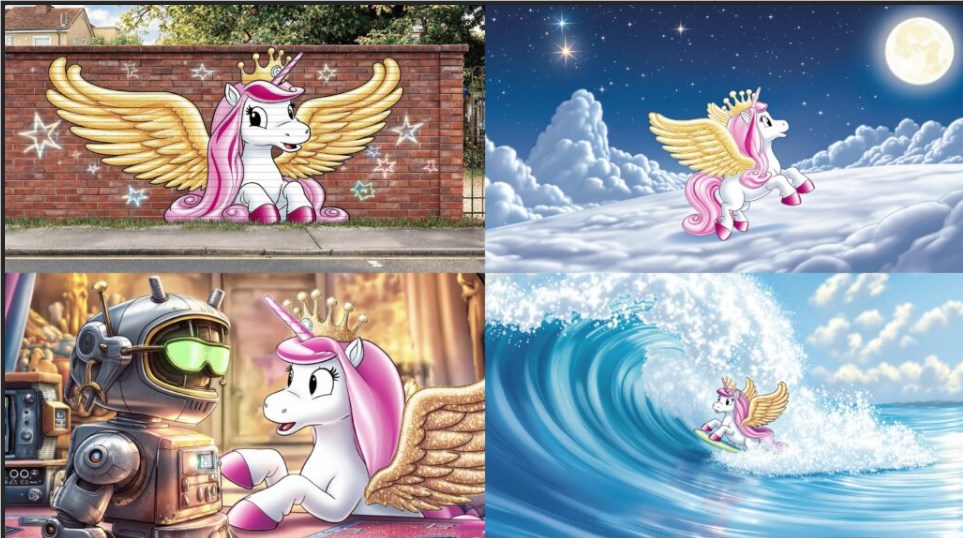
Looking at the technical details, the API supports common image formats including JPG, PNG and WebP files. Users can upload between 1 and 20 training images, with a maximum resolution of one million pixels per image. Black Forest Labs says that for best results you need at least five high-quality images that clearly define your subject.
Developers can adjust multiple training parameters, including training mode (role, product, style, or universal), number of training iterations (minimum 100, default 300), and learning rate. On the output side, developers can choose fast training for faster inference speeds, or longer processing times to produce higher quality results.
In a user study, 68.9% of respondents preferred FLUX Pro fine-tuning results over other existing fine-tuning services.
Black Forest Labs has issued specific recommendations for different usage scenarios. For example, when training a character model, it is recommended to use images showing only one character at a time; while in style transfer work, testing higher fine-tuning intensity often leads to better results.
Currently, the FLUX Pro fine-tuning API is still in beta and requires an API key to access. Black Forest Labs has yet to reveal pricing details or announce when the service will be generally available.
Official blog: https://blackforestlabs.ai/announcing-the-flux-pro-finetuning-api/
API entrance: https://docs.bfl.ml/
Highlight:
Black Forest Labs has launched a new API that allows users to customize the FLUX Pro AI model with five sample images.
The API addresses the limitations of AI image generators in matching a brand's visual style.
German media company Burda Verlag has used the API to quickly generate images that match a specific style for its brand.
All in all, the FLUX Pro fine-tuning API provides a simple and efficient way to customize the AI image generation model so that it can better meet the specific needs of users, and shows strong potential in maintaining and innovating brand visual style. It is currently in the testing phase and we look forward to its application and development after its official release.