
The field of 3D generative modeling has made remarkable progress. As a breakthrough innovation, GaussianCube technology has brought revolutionary changes to 3D modeling with its high efficiency and high accuracy. It overcomes the limitations of the traditional NeRF method and achieves high-precision fitting of 3D assets through innovative density-constrained Gaussian fitting algorithms and optimal transmission algorithms, significantly reducing parameter requirements and simplifying the modeling process. GaussianCube has a wide range of applications, covering unconditional and conditional 3D object generation, digital avatar creation, and text-to-3D content synthesis, and has demonstrated performance improvements of up to 74% in experiments.
The field of 3D generative modeling has ushered in a breakthrough. A new technology called GaussianCube has surpassed the traditional NeRF (Neural Radiance Fields) and brought revolutionary changes to 3D modeling.
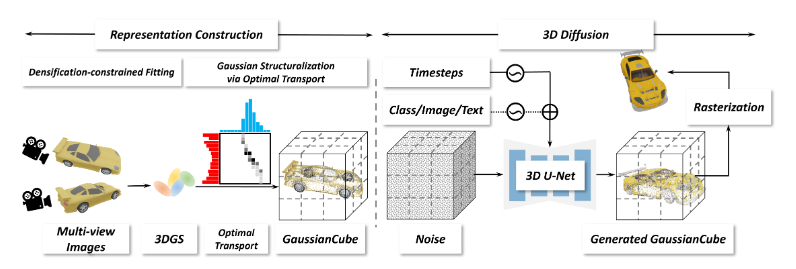
GaussianCube is an explicitly structured 3D representation method that enables high-precision fitting of 3D assets through a novel density-constrained Gaussian fitting algorithm while ensuring a fixed number of free Gaussians used in the fitting process. .
Product entrance: https://top.aibase.com/tool/gaussiancube
This technology uses an optimal transmission algorithm to rearrange Gaussians into a predefined voxel grid, maintaining the spatial structure relationship of Gaussians. This allows researchers to directly adopt the standard 3D U-Net network as the backbone network for diffusion modeling without complex network design. The compactness of GaussianCube greatly reduces the parameter requirements for 3D generative modeling. Compared with traditional methods, the number of parameters is greatly reduced, thus simplifying the modeling process.
The researchers conducted extensive experiments in multiple aspects, including unconditional and conditional 3D object generation, digital avatar creation, and text-to-3D content synthesis. The experimental results are impressive. GaussianCube has achieved performance improvements of up to 74% on multiple data sets, achieving industry-leading results in both numerical indicators and visual quality.
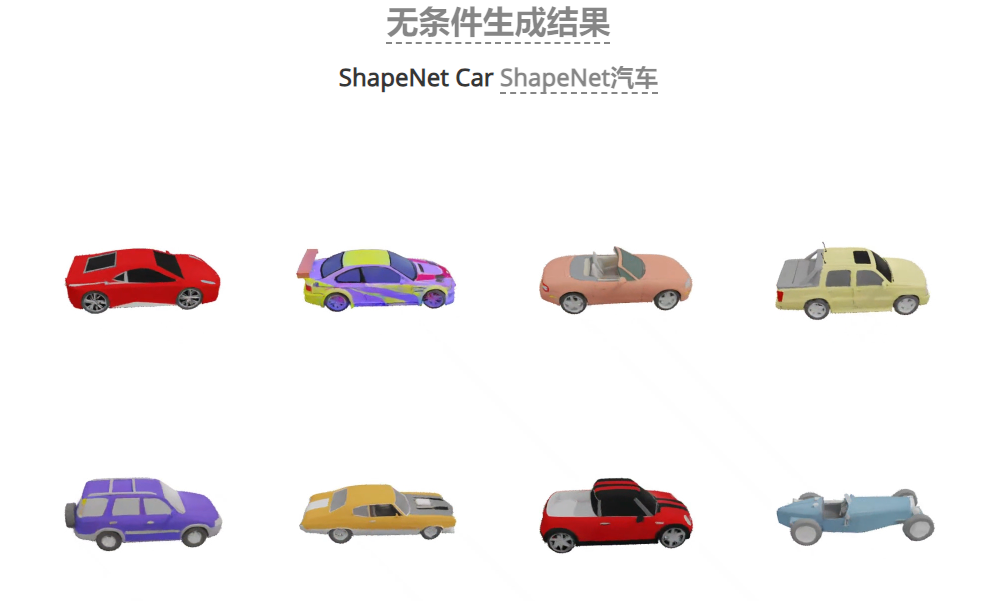
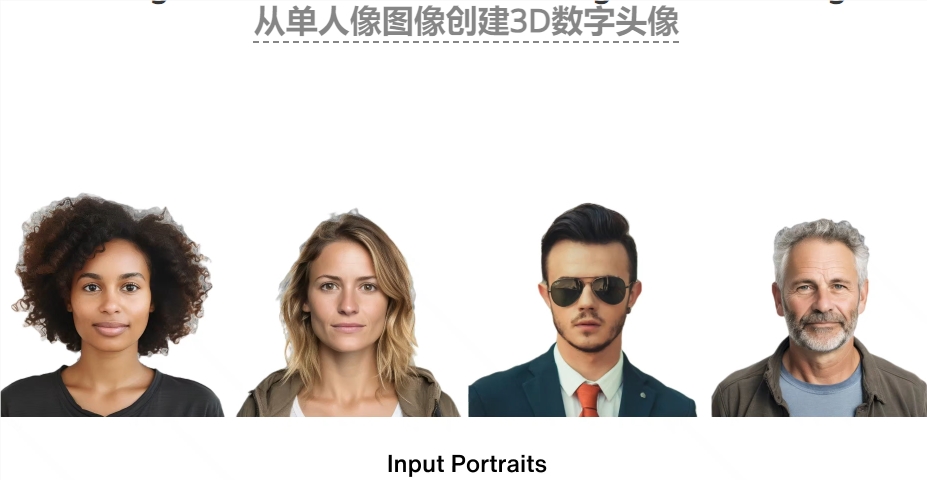
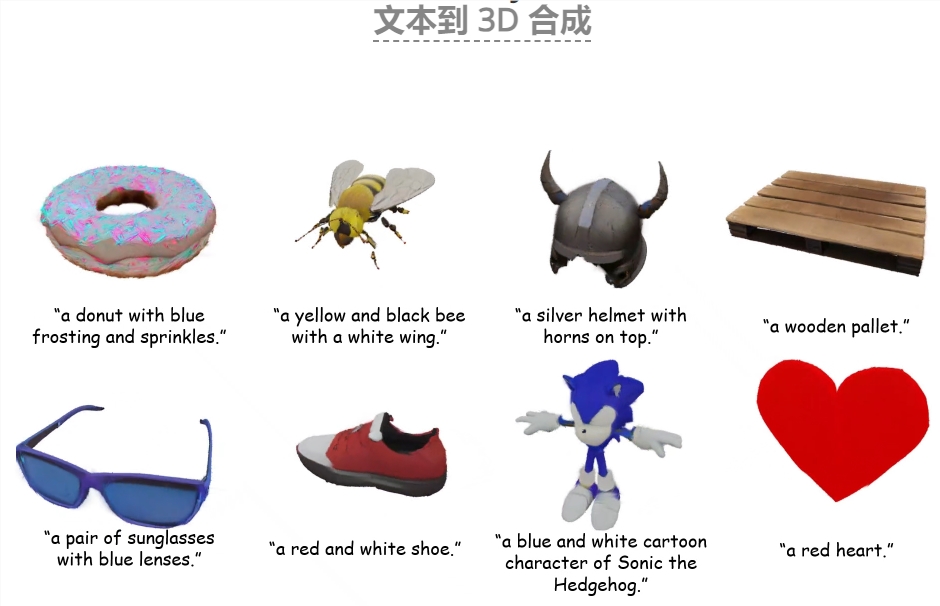
The framework of GaussianCube includes two main stages: representation construction and three-dimensional diffusion. In the representation construction stage, a fixed number of three-dimensional Gaussians are obtained through a density-constrained Gaussian fitting algorithm and structured into a GaussianCube through an optimal transmission algorithm. In the three-dimensional diffusion stage, a three-dimensional diffusion model is used to generate GaussianCube from Gaussian noise, supporting multiple condition signals to control the generation process.
Not only is this technology able to produce high-quality 3D assets, it also provides highly attractive visual effects, demonstrating its great potential as a universal representation for 3D generation. The introduction of GaussianCube marks a major leap in 3D generative modeling technology and provides a powerful tool for future 3D content creation.
Core points:
- GaussianCube: a new explicit structured 3D representation method.
- Innovative algorithm: Density-constrained Gaussian fitting combined with optimal transmission algorithm.
- Simplified modeling: No need for complicated network design, just apply the standard 3D U-Net network directly.
- High performance: Experimental results show up to 74% performance improvement.
- Diverse applications: unconditional and conditional 3D object generation, digital avatar creation, text to 3D synthesis.
All in all, the emergence of GaussianCube technology has brought new possibilities to the field of 3D generative modeling. Its high efficiency, accuracy and wide application prospects will undoubtedly promote 3D content creation to new heights. This technology is not only of great significance in academia, but will also have a profound impact in industry.