
Recently, a major copyright lawsuit occurred in the field of AI music creation. Music giants such as Universal Music Group, Sony Music Entertainment and Warner Records have filed lawsuits against AI music creation companies Suno and Udio on the grounds of copyright infringement. The claims are huge and have attracted widespread attention in the industry. This case not only involves huge compensation, but also concerns the future development of AI music creation and the ethical boundaries of AI technology application. In the lawsuit, the record company provided a large amount of evidence, accusing the two companies of copying hundreds of songs on a large scale, directly impacting the copyright protection system of the music industry.
In the field of music creation by artificial intelligence, a copyright controversy is brewing. Universal Music Group (UMG), Sony Music Entertainment, Warner Records and other music industry giants jointly filed a lawsuit against Suno and Udio, two AI music creation companies, accusing them of large-scale infringement Copyrighted.
The labels submitted detailed evidence, including USB data disks containing specific prompt words and AI-generated music samples. They claimed that the samples were so similar to the original works that they constituted direct plagiarism.
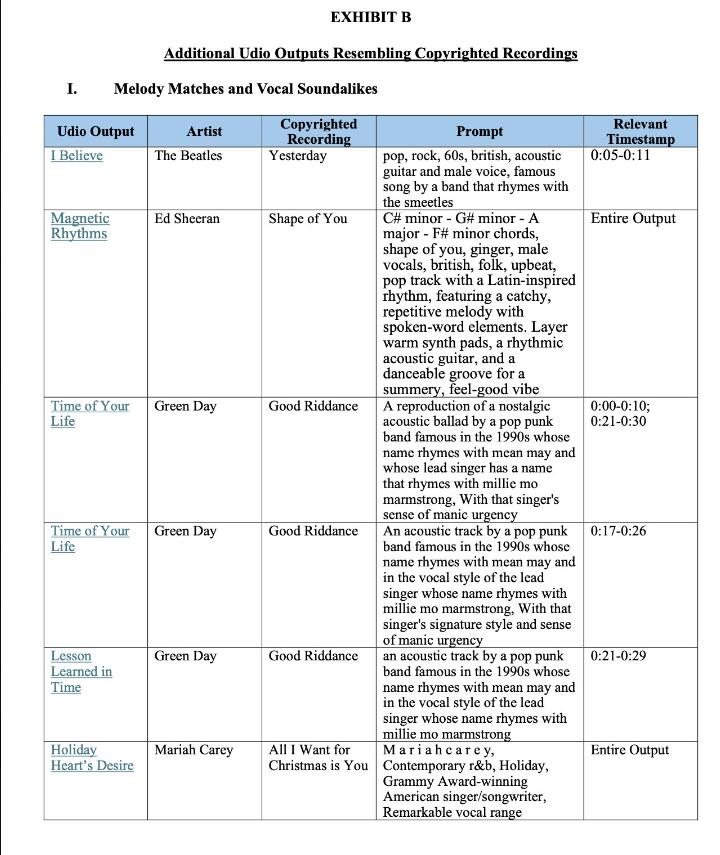
In the lawsuit, the record company asked the court to award statutory damages of up to $150,000 for each infringed song. According to the complaint, Suno allegedly copied 662 songs, while Udio allegedly copied 1,670 songs. This number is shocking.
This lawsuit is not only related to the future of Suno and Udio, but may also have a profound impact on the entire AI music creation industry. It has triggered people's attention and discussion on the copyright issues of AI-created content, and also challenged the boundaries of AI technology and creation ethics.
With the development of AI technology, its application in the field of artistic creation is becoming more and more extensive. However, how to use AI technology to promote the development of music and other art forms while respecting original copyrights is still an urgent problem to be solved.
This lawsuit will undoubtedly bring an important legal test to the field of AI music creation, and its results may become a precedent for similar cases in the future. Both the music and technology communities will be paying close attention to the progress of this case and its implications for copyright issues in AI creation.
The verdict of this case will have a profound impact on the AI music creation industry and provide important legal reference for the future application of AI technology, which deserves continued attention. How to balance the development of AI technology and copyright protection will become an important issue that needs to be discussed in depth in the future.