
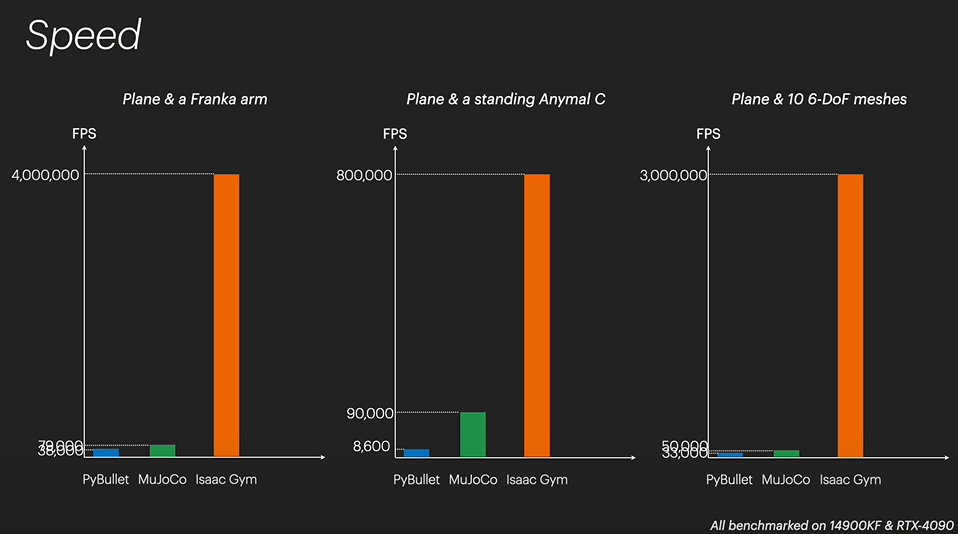
Genesis Project, a revolutionary generative physics engine, is officially released! It simulates real-world physical phenomena with amazing speed and efficiency, bringing an unprecedented immersive experience to the virtual world. The engine is developed in pure Python and is 10-80 times faster than existing GPU acceleration engines, and even about 430,000 times faster than real-time, which will greatly shorten the development cycle and improve efficiency. Its powerful training capabilities are also impressive. On a single RTX4090 graphics card, it only takes 26 seconds to complete robot motion strategy training, which is of great significance to the fields of robotics and physical AI. The project was completed by more than 20 research laboratories over two years, reflecting its strong technical strength and academic background.
Core Highlights: Amazing speed and excellent efficiency
The biggest highlight of Genesis Project is its excellent performance. This engine is developed in pure Python, and its simulation speed is 10-80 times faster than existing GPU acceleration engines (such as Isaac Gym, MJX), and even about 430,000 times faster than real-time. This means developers can perform physics simulations more quickly, greatly shortening the development cycle.
In addition, Genesis Project has also demonstrated strong training capabilities. On a single RTX4090 graphics card, the engine only takes 26 seconds to complete robot motion strategy training that can be transferred to the real world, which will undoubtedly greatly improve the development efficiency in the field of robotics and physics AI.
Large-scale cooperation, which took two years to build
The Genesis Project was developed through 24 months of large-scale collaboration between more than 20 research laboratories, which fully reflects its strong technical strength and academic background. The project aims to build a unified generative physical world simulation framework that can automatically generate various environments, robot tasks, reward functions and interactive 3D scenes, thereby promoting the comprehensive development of the field of robotics and physical AI.
Powerful functions and wide application
Genesis Project supports the simulation of various types of physical phenomena, including rigid bodies, joint bodies, cloth, liquids, smoke, deformable bodies, thin-shell materials, elastic/plastic bodies, and robot muscles. It also integrates various advanced physics solvers (such as MPM, SPH, FEM, rigid body, PBD, etc.) to ensure the accuracy and authenticity of simulation results.
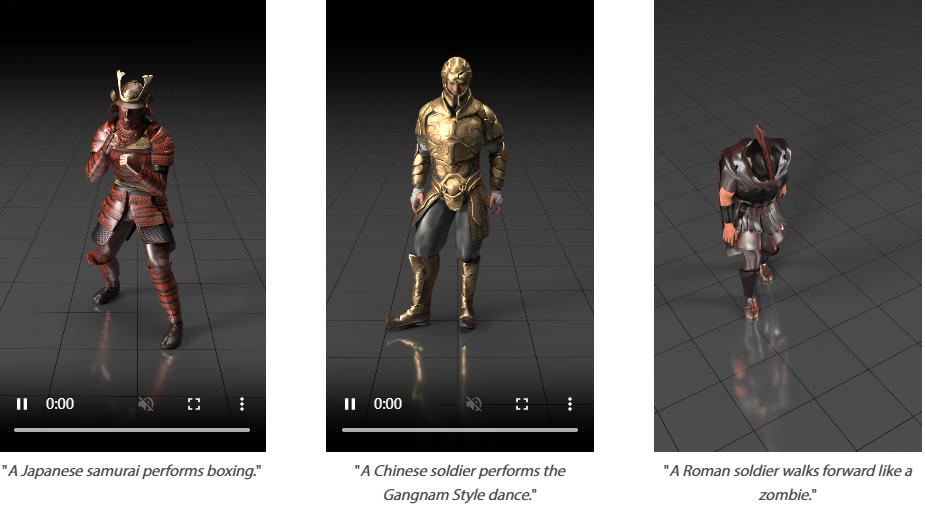
In addition, Genesis Project also provides 3D interactive scene generation capabilities to support training robot skills and can be applied to data generation beyond robotics, such as character movement.
The release of Genesis Project marks an important step in the field of generative physics engines. This engine not only has amazing speed and efficiency, but also supports the simulation of various complex physical phenomena and scenarios, which will bring new opportunities for the development of robotics, physical AI and other fields. In the future, Genesis Project is expected to play an important role in game development, virtual reality, industrial automation and other fields.
Project address: https://genesis-embodied-ai.github.io/
All in all, with its excellent performance, powerful functions and wide application prospects, Genesis Project will surely become a bright star in the field of generative physics engines and bring revolutionary changes to the research and development of related fields. Expect it to play a bigger role in the future.