
Analyze patient checklists to assist doctors in finding the cause of disease faster and more accurately;
Become a memory assistant to remind patients to take medicine at the right time;
Analyze large amounts of medical data to help discover new treatments;
…
Imagine that when AI technology can be "seamlessly connected" with daily medical and health management, we will gain considerate "health stewards" and have a smarter and more convenient life.
But at the same time, "AI + medical care" also faces many challenges when it comes to commercialization. Issues such as patients' and doctors' trust in AI, regulatory issues, and ethical issues emerge one after another.
How to better apply AI technology to the medical and health field? How to stimulate more new demands through AI technology? In this issue of Vision, Xiaoguan invited Li Wenwen, assistant professor of the Department of Information Management and Business Intelligence at Fudan School of Management, to discuss how AI can empower the development of the health industry.

Li Wenwen
Assistant Professor, Department of Information Management and Business Intelligence
Research directions: machine learning, medical and health management, human-machine collaboration, e-commerce
01
Empowered by AI, the era of "digital intelligence and health" is coming
When looking at the medical and health industry from a management perspective, the core lies in demand analysis. Traditional medical services center on disease treatment, with doctors providing medical products and services to individual patients. However, the current "Healthy China 2030" planning outline proposed by the country requires a shift from disease treatment as the center to people's health as the center, which means that traditional, individual-oriented medical services must be shifted to group-oriented and Think further about how to provide full life cycle medical and health services to a wider range of people.
In addition to medical products and services, we should also pay attention to health products and services. The current medical and health industry should not only be limited to hospitals or medical institutions, but should also pay attention to the entire life cycle of residents, from disease prevention, disease diagnosis and treatment, to later disease recovery and follow-up.
It is worth noting that these changes bring new needs and new challenges. At the individual level, people's demand for medical health is growing day by day, and they are beginning to pursue better quality, efficient, and personalized medical services. This has put forward higher requirements for medical practitioners and related enterprises, that is, how to provide better medical services.
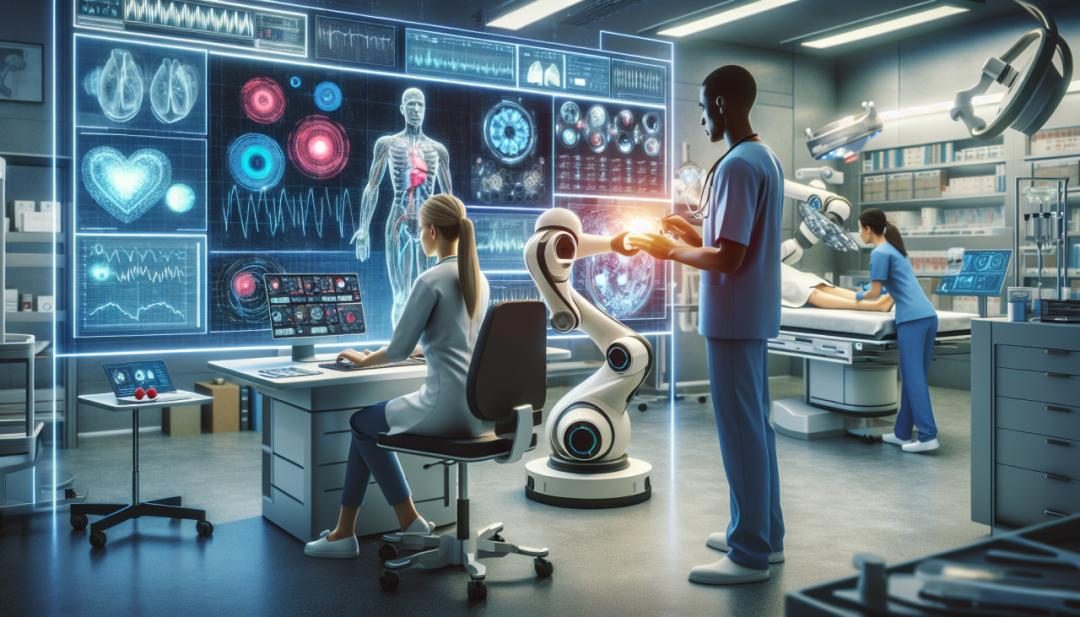
At the organizational level, medical institutions and enterprises can now collect rich medical data, including electronic medical records, medical images, and various user health behavior data collected in real time by smart wearable devices. Faced with this data, we need to think about how to efficiently process and analyze rich and diverse medical data and transform it into valuable products or services.
Fortunately, the rapid development of technology, especially the rise of artificial intelligence technology, provides us with possible solutions. Among them, "digital smart health" is an emerging concept that emphasizes the collaborative promotion of comprehensive health through digitalization and intelligence. Based on a large amount of medical and health data, such as clinical data, health file data, intelligent hardware data, etc., combined with AI technology, big data, cloud computing and digital platforms, we can realize the digitization and intelligence of medical and health care.
Against this background, these emerging technologies will gradually be applied to the needs of the general health field in the future, resulting in more applications, such as intelligent auxiliary diagnosis, genetic diagnosis, pharmaceutical research and development, or related research and development of organoids.
However, "AI + medical care" also faces many challenges when it is commercialized. In clinical applications, issues such as patients' and doctors' trust in AI, regulatory issues, and ethical issues arise one after another. These challenges are not purely technical or medical health issues, but are closely related to the "human" factor. Therefore, how to effectively match technology and health management needs has become an urgent problem to be solved.
02
"AI+Medical" is implemented to help upgrade community health management
If you know the health management needs, how to match the appropriate AI technology? Here is a case from the perspective of community health management. Community health management is a very important part under the hierarchical diagnosis and treatment system. Community residents do not need to go to big hospitals, and small hospitals in the community can also play a big role. In hierarchical diagnosis and treatment, community health management can take on a series of important tasks such as the prevention and treatment of chronic diseases.
From a management perspective, community health management has constructed a theoretical framework, which is a cycle from resident profile creation, community disease screening, risk assessment and intervention, to final follow-up. However, various emergencies may occur in practice.

▲ Hongqiao Road Campus (Photo source: Xinmin Weekly)
Take the Shanghai Eye Disease Prevention and Treatment Center as an example. Its main task is to provide eye disease screening services in all communities in Shanghai. Specifically, the center will first mobilize all community health service centers to conduct on-site disease screening and go into the community to take fundus pictures of residents. Due to the limited quality of medical services in community hospitals, many community hospitals do not have specialized ophthalmologists who can diagnose eye diseases.
Relying on digital technology, the Shanghai Eye Disease Prevention and Treatment Center will upload patients' fundus photos to the cloud, invite remote experts from tertiary hospitals to read the photos, and then provide feedback to community hospitals. However, since experts and doctors have their own outpatient tasks and can only find time or perform film readings at specific times, it often takes 1-2 weeks to feedback the diagnosis results, and then the community doctors will feedback the results to the residents. Such a long time interval can easily lead to a low willingness of residents to make referrals, which is not conducive to the health management of the entire community.
This problem has troubled the Shanghai Eye Disease Prevention and Treatment Center for a long time until the emergence of AI technology. The development of AI in the field of image recognition has been very mature, and fundus photos are actually a kind of medical image. AI can be used to identify diseases in fundus photos. After the introduction of AI eye disease screening equipment, the previous diagnosis time of 1-2 weeks has been greatly shortened. Patients only need to wait on site for 1-2 minutes, and the results can be reported on the spot. Residents' willingness to make referrals has also greatly increased.
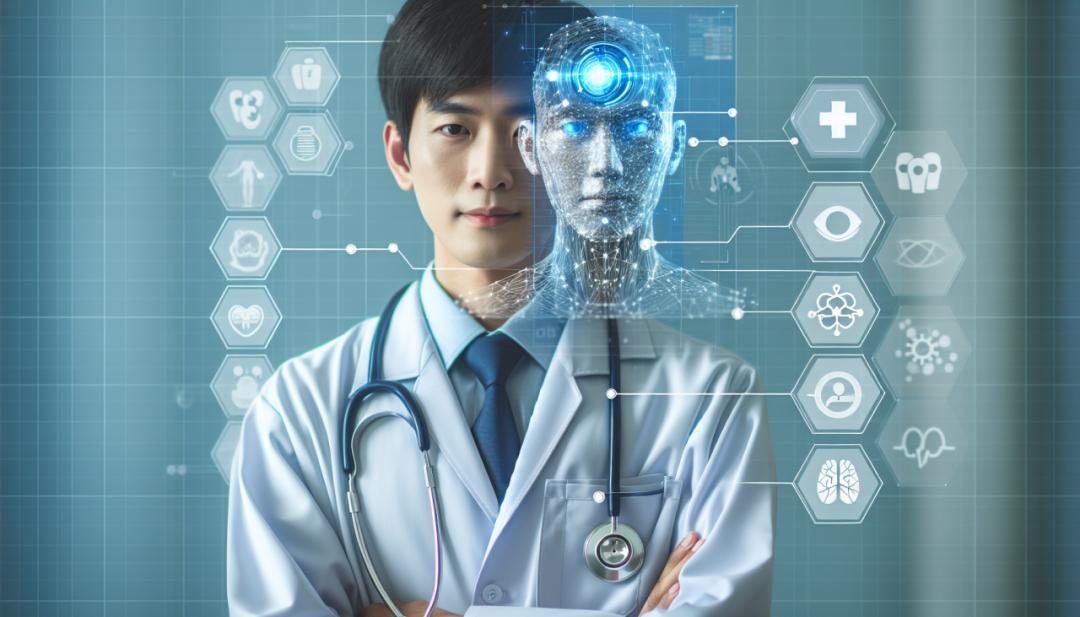
But at the same time, the implementation of AI technology also faces many challenges. For example, for the Shanghai Eye Disease Prevention and Treatment Center, since there are many similar AI equipment manufacturers on the market, how to select the appropriate AI equipment is one of the challenges; another example is that after the equipment collects patient-related data, it is directly transmitted to the AI. Whether the equipment supplier or the eye disease prevention and treatment center establishes the database itself, how to ensure data security in this process is a thorny issue.
In addition, AI technology is gradually penetrating into all levels of the medical industry. How to break data barriers and achieve data interconnection is also an urgent problem that needs to be solved. In fact, compared with fields such as consumption or the Internet, the amount of data available in the medical and health field is extremely limited. In particular, the training and application of generative AI requires a huge amount of data. This reality forms a sharp contradiction with the scarcity of medical data. More importantly, the collection of medical data mainly relies on medical institutions, and currently the data systems of most hospitals are still isolated and fail to achieve interconnection.
The particularity of the medical and health field has also placed numerous restrictions on the practical application of AI technology, among which ethics, security and privacy protection are particularly prominent considerations. Compared with traditional consumer fields, the promotion of medical and health products must first undergo strict review by regulatory authorities to ensure compliance. Therefore, when promoting technology applications in the medical and health field, priority must be given to data security, privacy protection, and the protection of patient rights.
03
Optimize large models to achieve "alignment" of technical features and user needs
When discussing how to use appropriate AI technology to meet or stimulate new needs in the medical and health industry, generative AI has undoubtedly become a hot topic.
Although generative AI such as Chat GPT, Wen Xinyiyan, and Tongyi Qianwen are currently widely used, looking back at the development of generative AI will reveal that most of the important large models that appeared before 2023 have not been used for As everyone knows, it was not until the emergence of Chat GPT that people truly felt that artificial intelligence had entered a new stage of intelligence.
This shows that we need to know more about the technical characteristics of AI in order to more fully explore the potential applications of AI technology in the medical and health field.
Secondly, the entire generative AI is closely integrated with industry, academia and research. The research of generative AI cannot be separated from the R&D investment of large technology companies, but it also cannot be separated from the help of universities. In the process of implementation, it is also inseparable from the entire industry. of support.
At the same time, AI has a strong open source atmosphere, and its technology deployment and implementation are very fast. From initially being able to process only single text information to now being able to easily handle multi-modal information and even complex video content, AI is making rapid progress. This also poses considerable challenges to the implementation of enterprise applications.
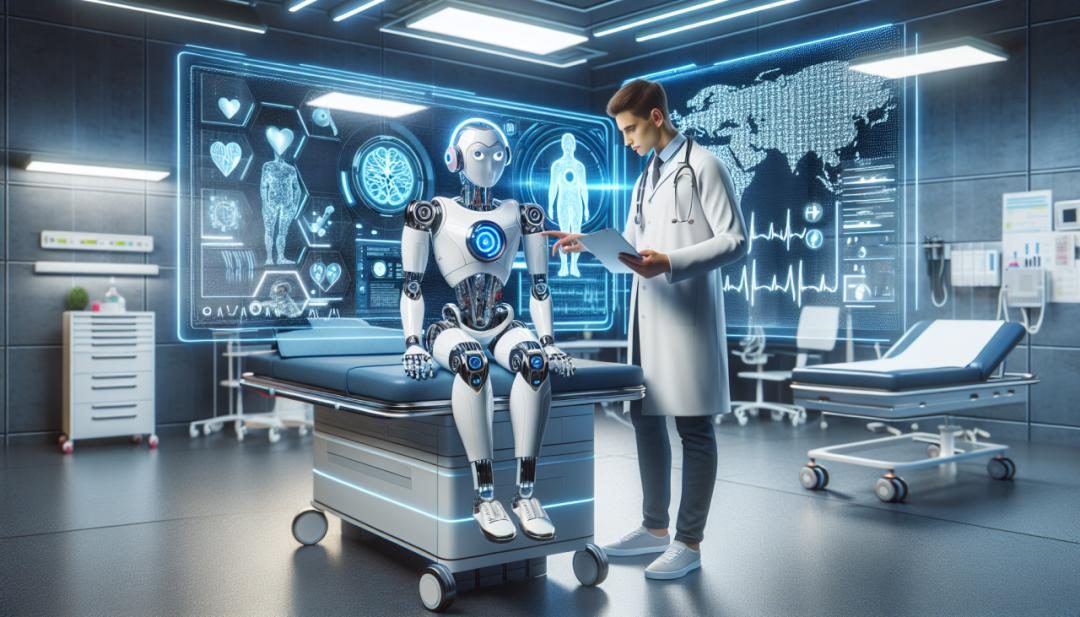
In the field of medical and health care, the application of generative AI is increasingly attracting widespread attention, and related applications developed around its ability to generate natural language are more widely discussed. Many companies are actively exploring the use of generative AI technology to build medical consultation systems. However, it is worth noting that although AI technology itself continues to become more complex and its capabilities continue to increase, thanks to intelligent platforms and tools, the application threshold of AI technology has shown a trend of lowering.
Take Baidu Wenxin Intelligent Platform as an example. Anyone does not need to have a deep AI technology background or programming ability. They can build an AI in just ten minutes through simple interface operations, such as checking options and inputting requirements. Personalized eye disease consultation assistant.
But what needs to be thought about is, does AI consultation really meet user needs? Practice has shown that when a medical consultation assistant is built and doctors and AI are invited to answer user questions together, the doctor's answers are often more accurate, concise and to the point. Therefore, how to further optimize large models so that they can more accurately capture and respond to users' real needs is an important direction of current research.
Overall, my country's health industry is in the early stages of rapid development. With the boom of the industry, many challenges and problems have emerged. In this process, we should not only pay attention to technological innovation and breakthroughs, but also think deeply about how to better apply these technologies in practice to meet the actual needs of users.