Arch Linux Guide
1.0.0


หมายเหตุ: คุณสามารถแปลงไฟล์ Markdown นี้เป็น PDF ใน VSCODE ได้อย่างง่ายดายโดยใช้ PDF ส่วนขยายที่มีประโยชน์นี้

เริ่มต้น
รับซอฟต์แวร์
การเล่นเกม
การตั้งค่าเวิร์กสเปซ MacOS
การตั้งค่าพื้นที่ทำงานของ Windows 10
ใช้แอพ Android และ Android บน Linux
การแก้ไขเสียง/วิดีโอระดับมืออาชีพ
Kubernetes
การเรียนรู้ของเครื่องจักร
หุ่นยนต์
ความปลอดภัยของโอเพ่นซอร์ส
Devops
การพัฒนากระพือ
การสร้างเครือข่าย
ฐานข้อมูล
ส่วนขยาย Gnome
หัวข้อขั้นสูง
Arch Linux เป็นการพัฒนาอย่างอิสระ X86-64 วัตถุประสงค์ทั่วไปการกระจาย GNU/Linux ที่หลากหลายพอที่จะเหมาะกับบทบาทใด ๆ การพัฒนามุ่งเน้นไปที่ความเรียบง่ายความเรียบง่ายและความสง่างามของรหัส ARCH ได้รับการติดตั้งเป็นระบบฐานขั้นต่ำที่กำหนดโดยผู้ใช้ซึ่งสภาพแวดล้อมในอุดมคติของพวกเขานั้นประกอบขึ้นโดยการติดตั้งเฉพาะสิ่งที่ต้องการหรือต้องการเพื่อวัตถุประสงค์ที่เป็นเอกลักษณ์
Archwiki เป็นแหล่งข้อมูลที่ดีที่สุดสำหรับเอกสารประกอบ Arch Linux บนเว็บ
Arch Linux บน WSL (ระบบย่อย Windows สำหรับ Linux)
Etcher เป็นซอฟต์แวร์โอเพ่นซอร์สข้ามแพลตฟอร์มที่ทำให้ง่ายต่อการแฟลชภาพระบบปฏิบัติการไปยังการ์ด microSD หรืออุปกรณ์ USB
Manjaro Linux

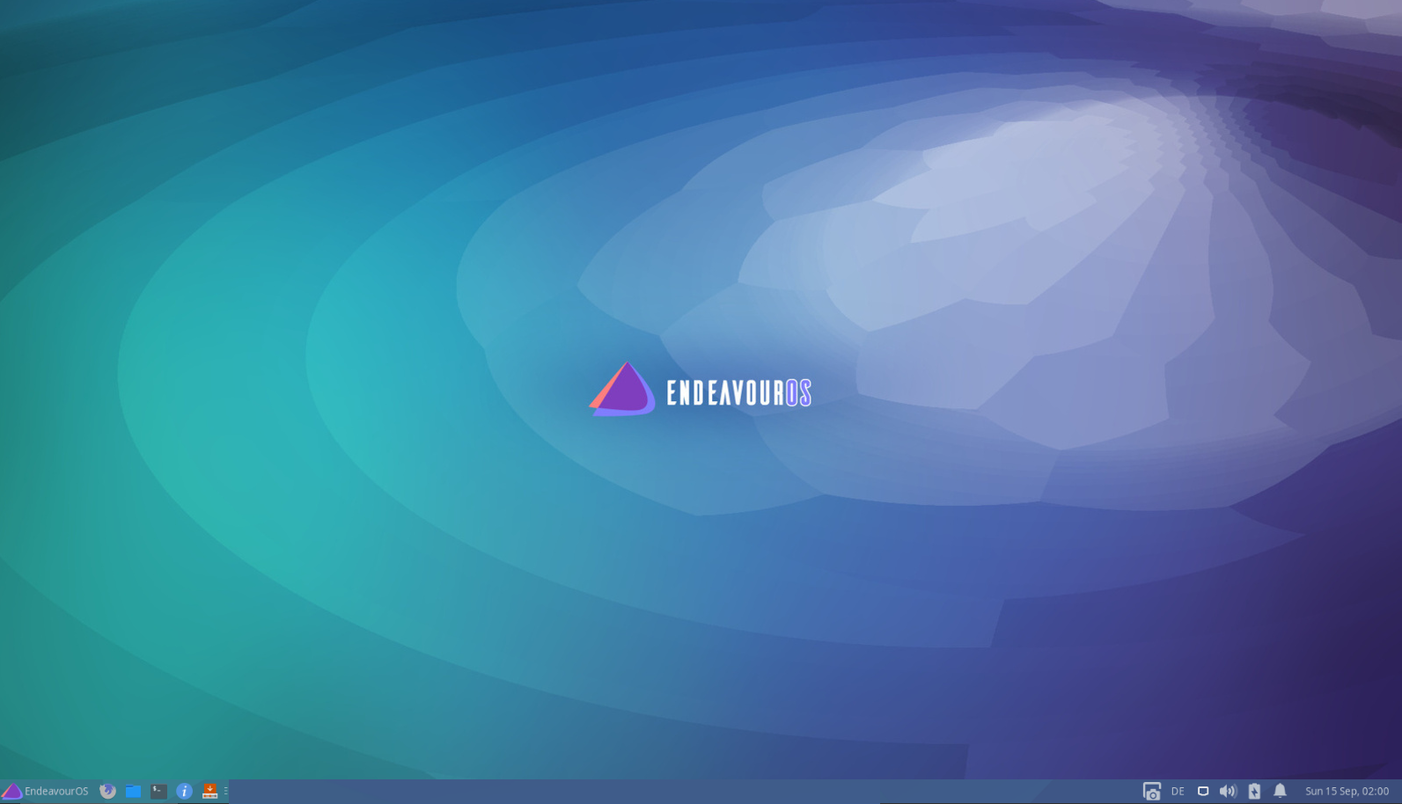
ความพยายาม
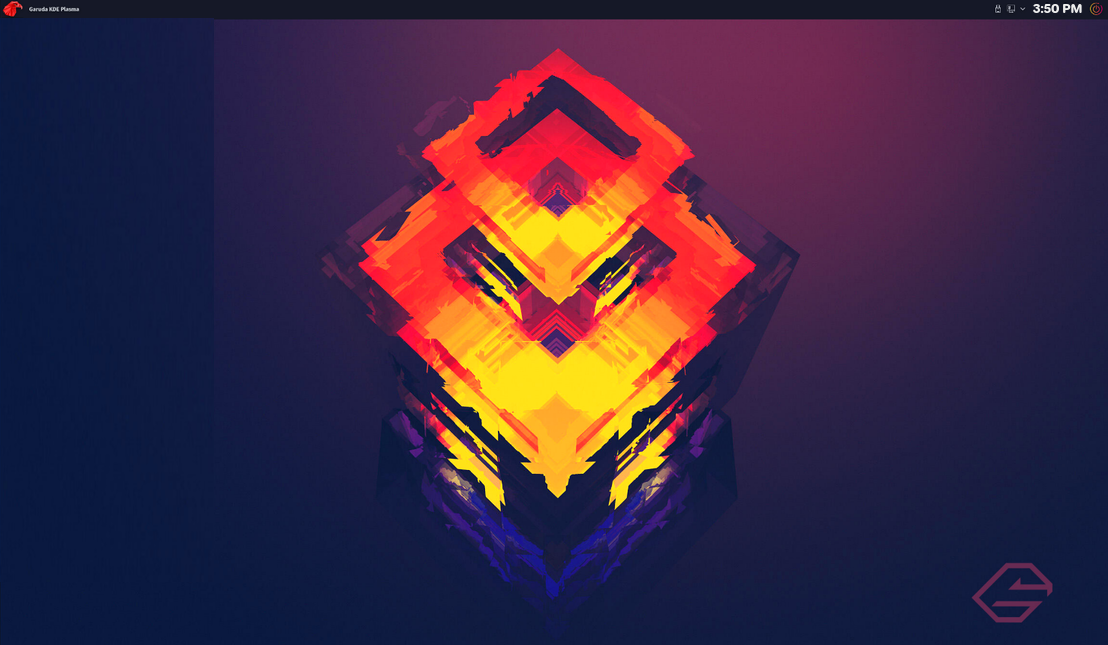
Gauruda Linux
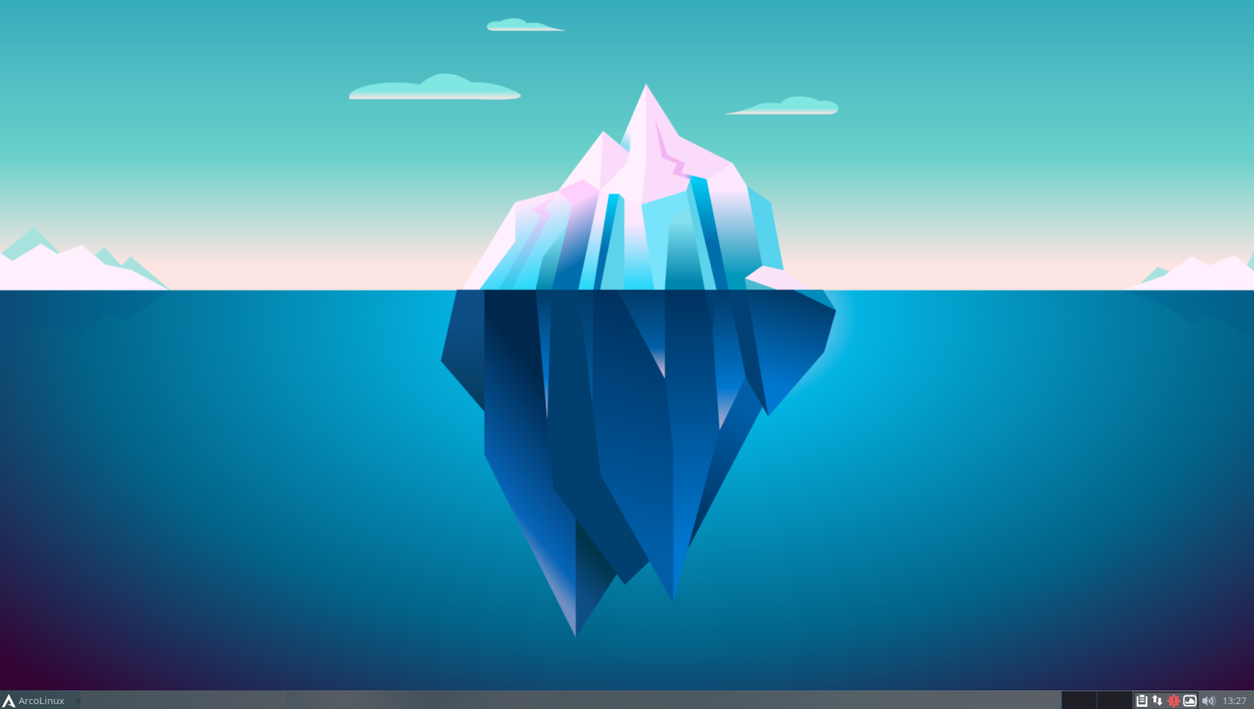
Arcolinux
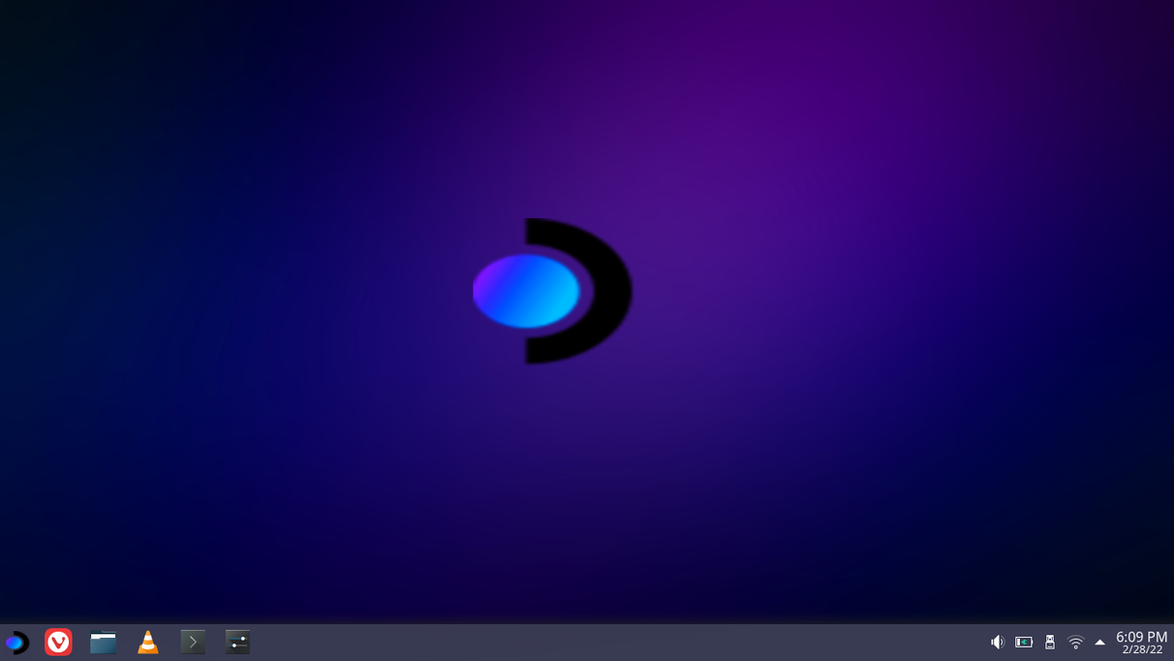
Steam OS 3.0 เป็นระบบปฏิบัติการที่ไม่เปลี่ยนรูป (OS) โดยใช้เดสก์ท็อป KDE พลาสมา สิ่งนี้ช่วยให้คุณติดตั้งแอปพลิเคชันในคอนเทนเนอร์โดยใช้ Flatpak แทนที่จะไปยังระบบไฟล์รูท ซึ่งหมายความว่าไม่เพียง แต่การติดตั้งแอปพลิเคชันนั้นแยกได้จากระบบไฟล์หลัก แต่ยังรวมถึงความสามารถในการใช้งานที่เป็นอันตรายในการประนีประนอม/ทำลายระบบของคุณลดลงอย่างมาก
https://aur.archlinux.org/gnome-tweaks-git.git
เปิดเทอร์มินัลแล้วเรียกใช้:
sudo pacman -S gnome-tweak-tool //let ' s you customize your desktop layout. Pop Shell เป็นเลเยอร์ที่ขับเคลื่อนด้วยคีย์บอร์ดสำหรับ Gnome Shell ซึ่งช่วยให้สามารถนำทางและการจัดการ Windows ได้อย่างรวดเร็วและสมเหตุสมผล คุณลักษณะหลักของ Pop Shell คือการเพิ่มการจัดการหน้าต่างปูกระเบื้องขั้นสูงคล้ายกับ I3WM
https://aur.archlinux.org/packages/gnome-shell-extension-pop-shell-git.gitใช้ไฟร์วอลล์
เปิดเทอร์มินัลแล้วเรียกใช้:
sudo firewall-cmd --state
sudo systemctl status firewalldกลับไปด้านบน
Arch Linux ผู้ใช้ที่เก็บข้อมูล (AUR) มีสคริปต์สร้างหลายพันสคริปต์สำหรับการรวบรวมแพ็คเกจที่ติดตั้งได้เกือบ 68,000 รายการจากแหล่งที่มาโดยใช้แอปพลิเคชัน Arch Linux Makepkg
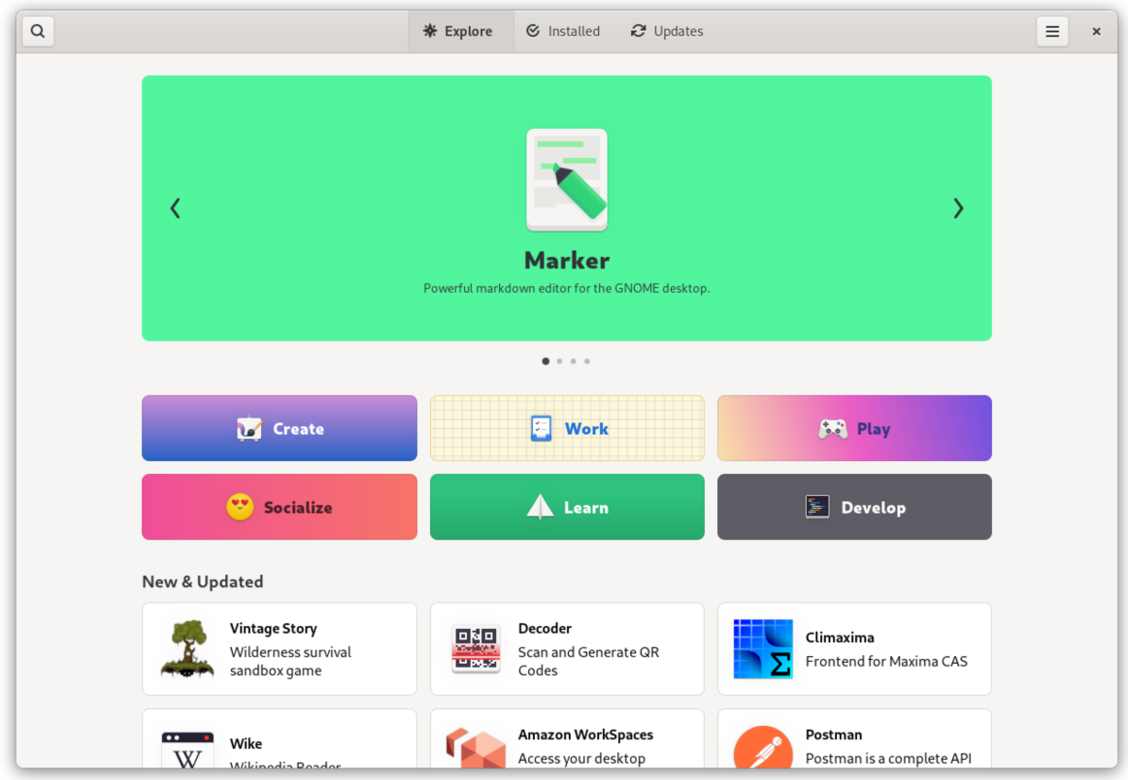
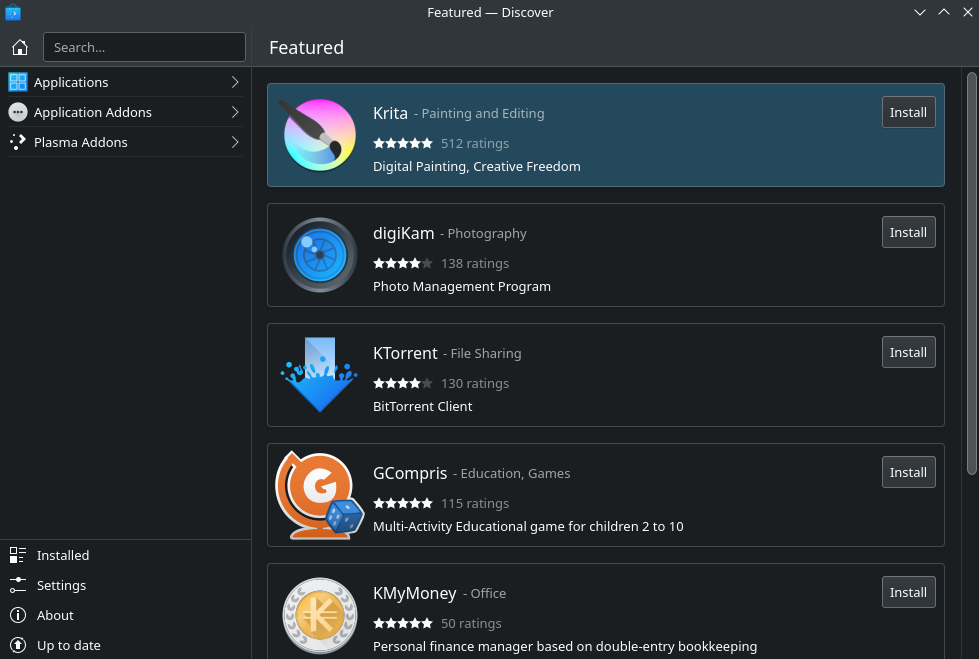
หมายเหตุ 1: ซอฟต์แวร์ทั้งหมดนี้มีอยู่ในการแจกแจง Linux ยอดนิยมอื่น ๆ เช่น Debian, Linux Mint, ระบบปฏิบัติการระดับประถมศึกษา, Fedora, Manjaro Linux, Endeavouros และ Arch Linux
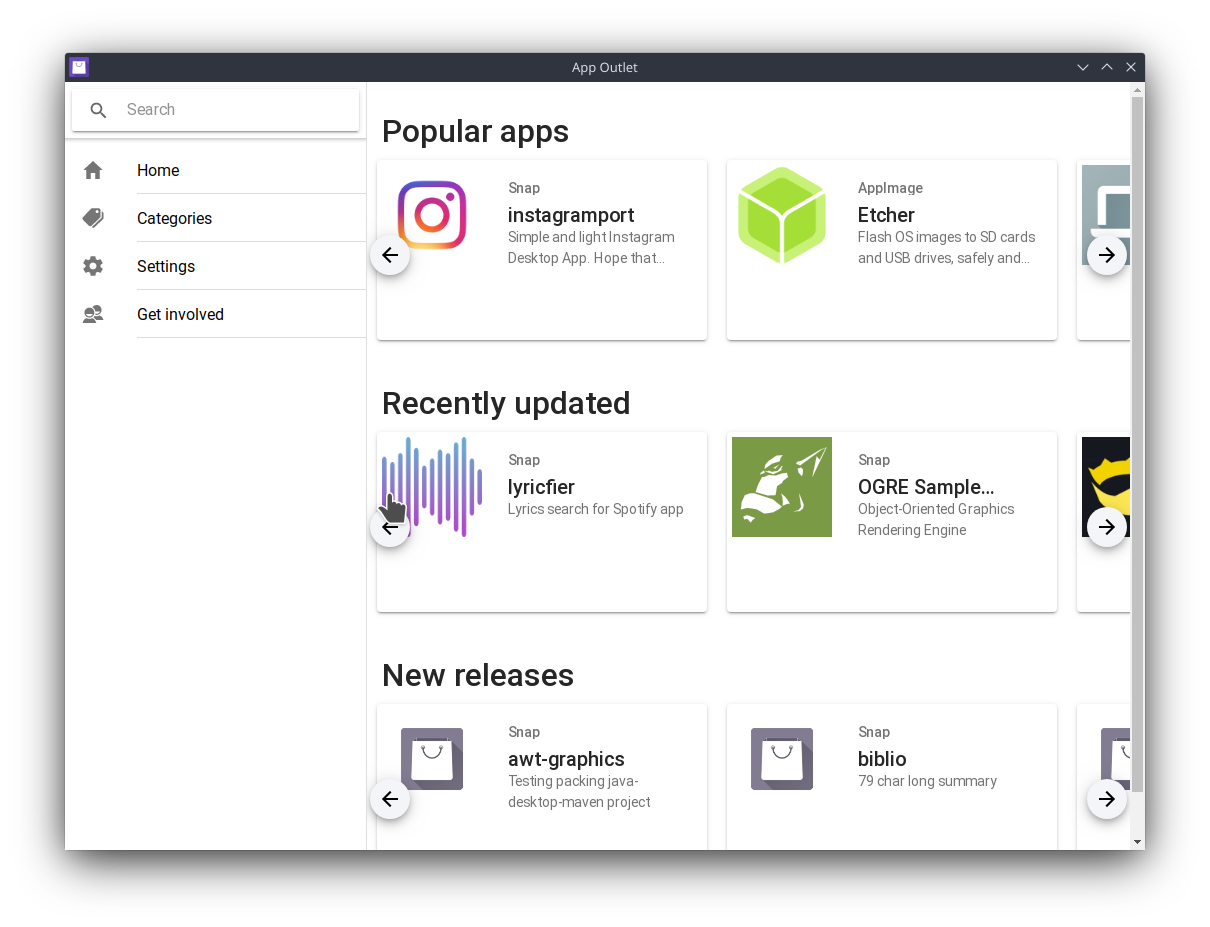
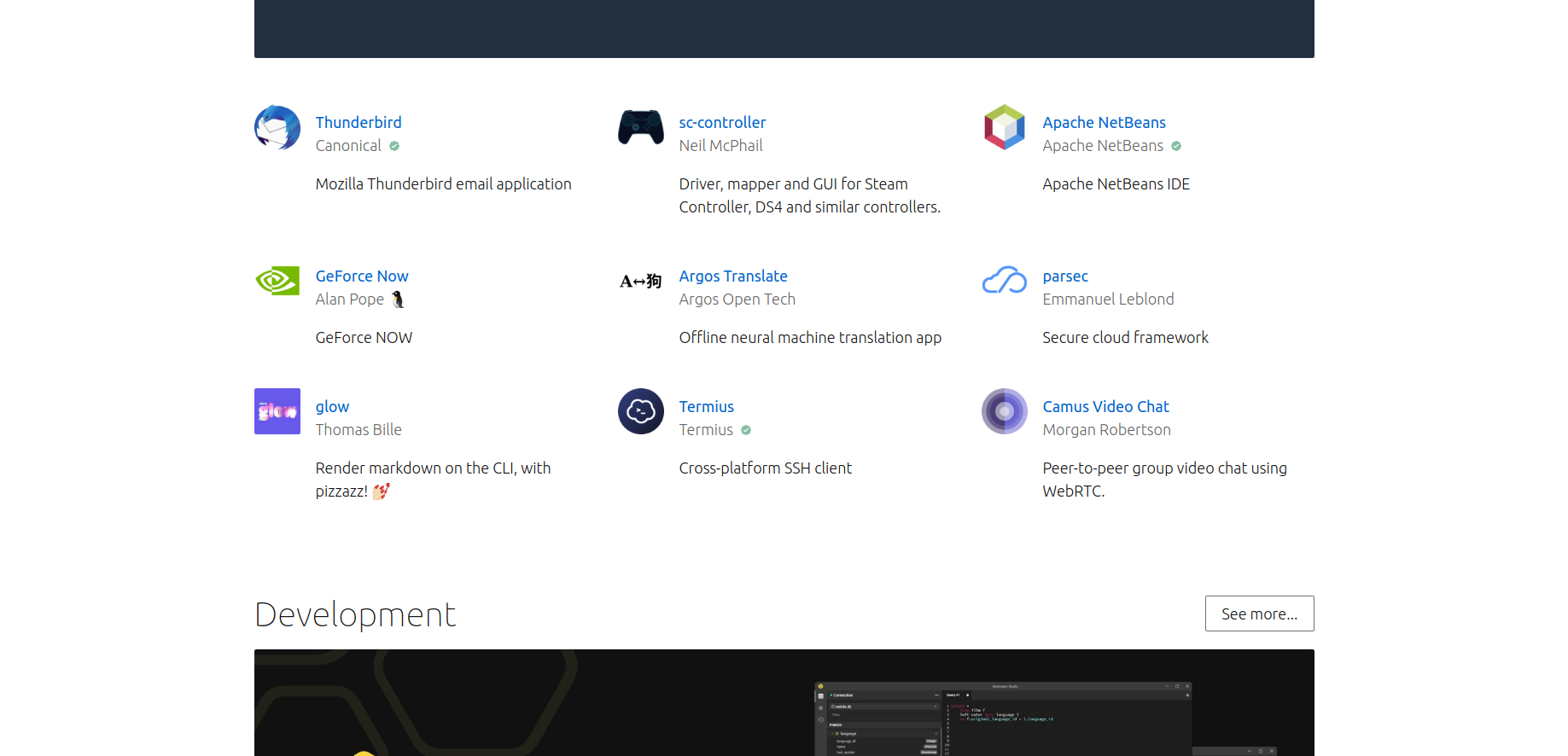
App Outlet เป็นแอปพลิเคชันสากล (flatpaks, snaps และ appimages) ที่ได้รับแรงบันดาลใจจากบริการออนไลน์ Linux App Store
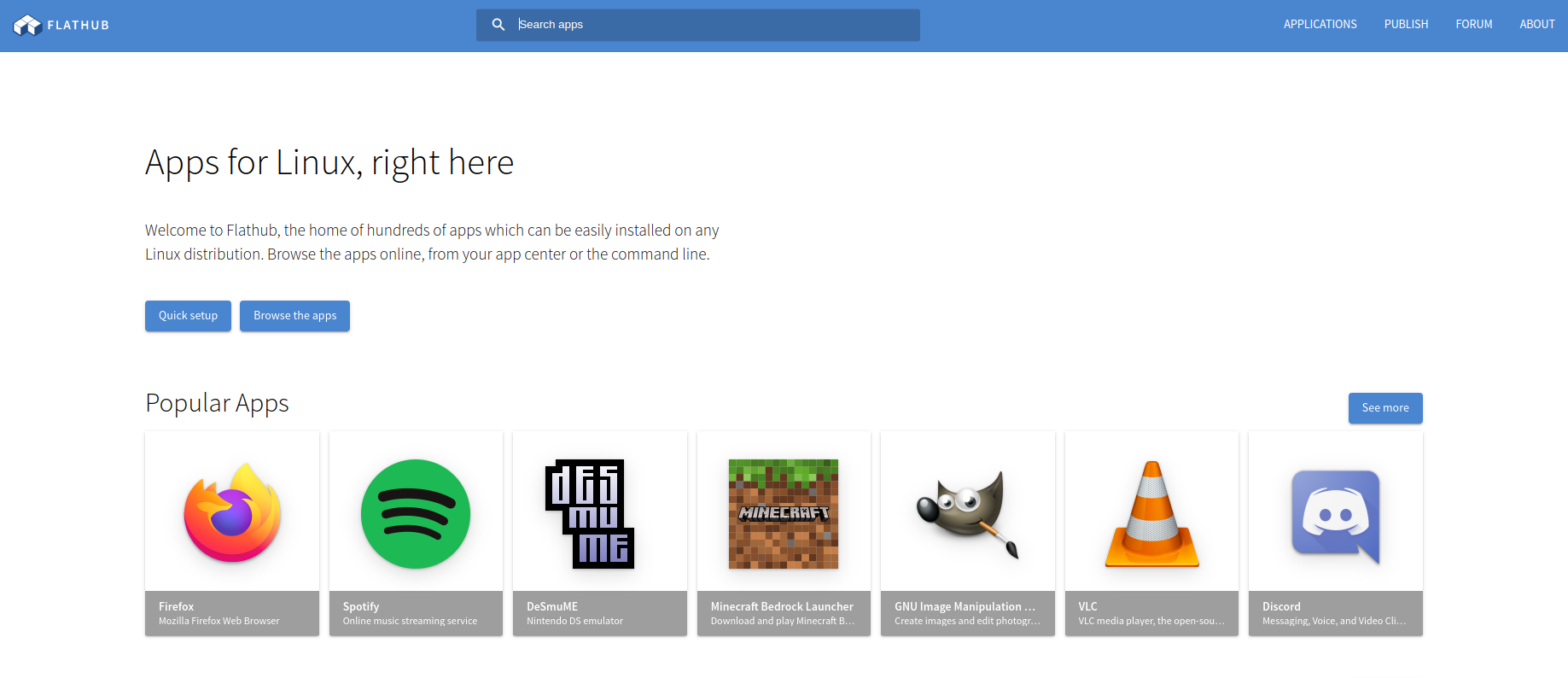
sudo pacman -S flatpakFlathub เป็นบริการสร้างและจัดจำหน่ายสำหรับแอปพลิเคชัน Flatpak
ฟอรัม Flathub
การติดตั้ง Snap บน Arch Linux
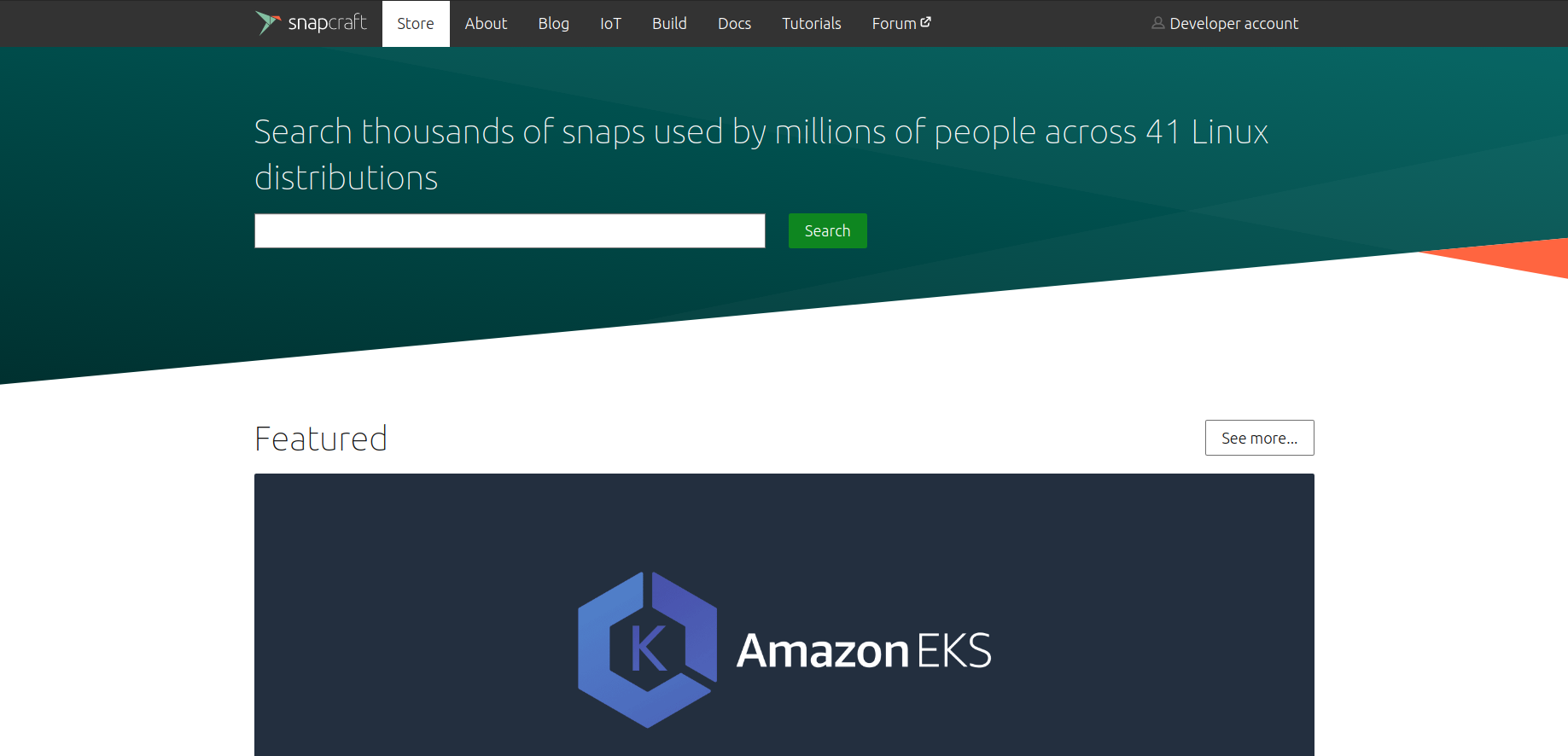
Snap Store เป็นบริการสร้างและจัดจำหน่ายสำหรับแอปพลิเคชัน SNAP
ฟอรัม Snapcraft
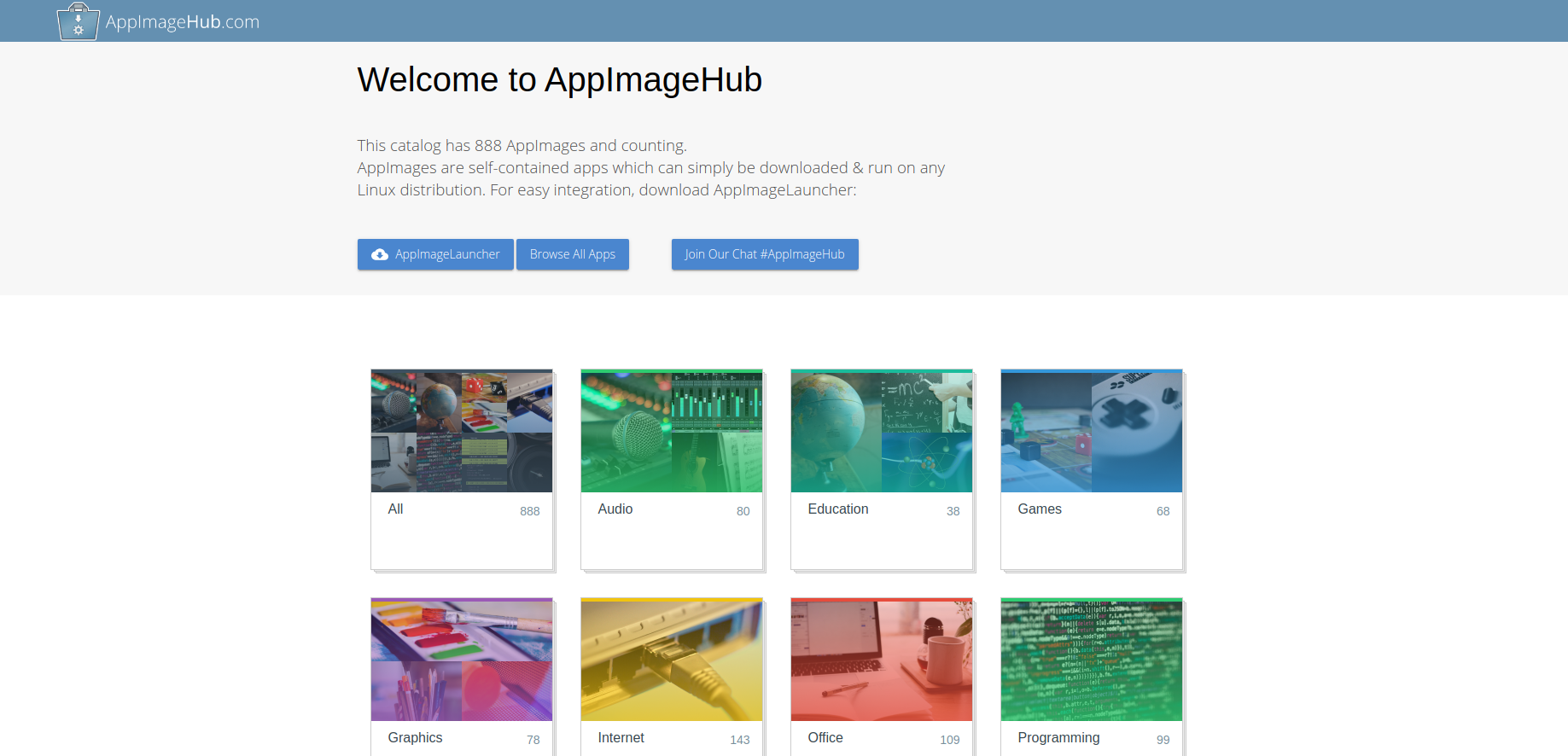
AppImageHub เป็นบริการสร้างและจัดจำหน่ายสำหรับแอปพลิเคชัน AppImage
AppImage Manager เป็นผู้จัดการแพ็คเกจสำหรับ AppImages
ฟอรัม Appimage
กลับไปด้านบน
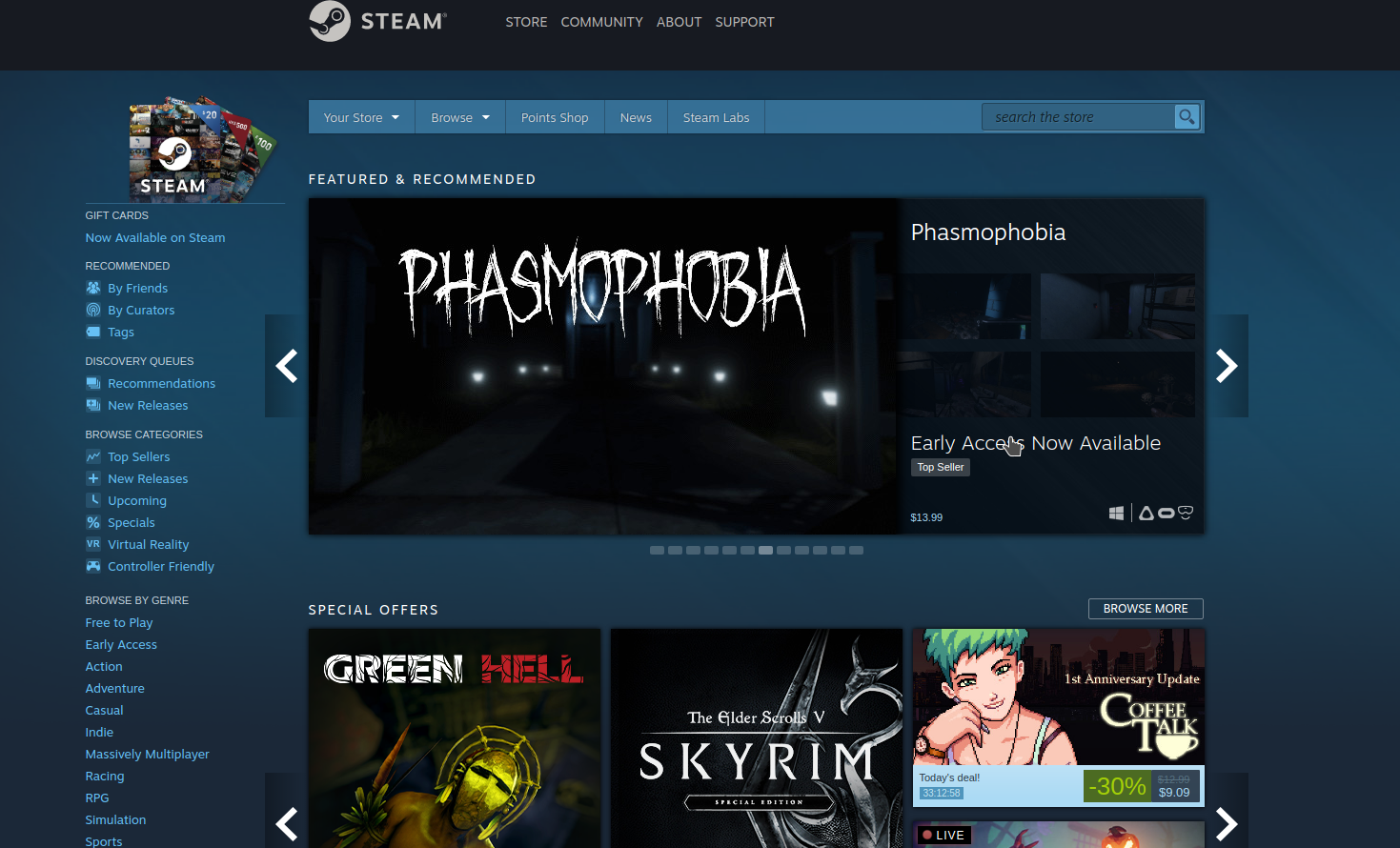
ไอน้ำในอาร์วิกิ
ไอน้ำ flatpak
Proton เป็นเครื่องมือสำหรับใช้กับไคลเอนต์ Steam ซึ่งอนุญาตให้เกมที่เป็นเอกสิทธิ์ของ Windows ในการทำงานบนระบบปฏิบัติการ Linux มันใช้ไวน์เพื่ออำนวยความสะดวกในสิ่งนี้
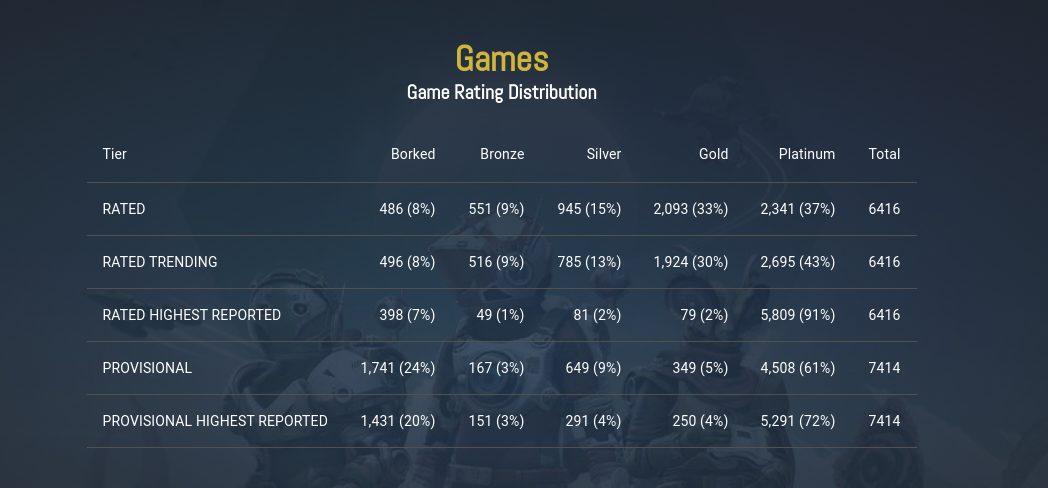
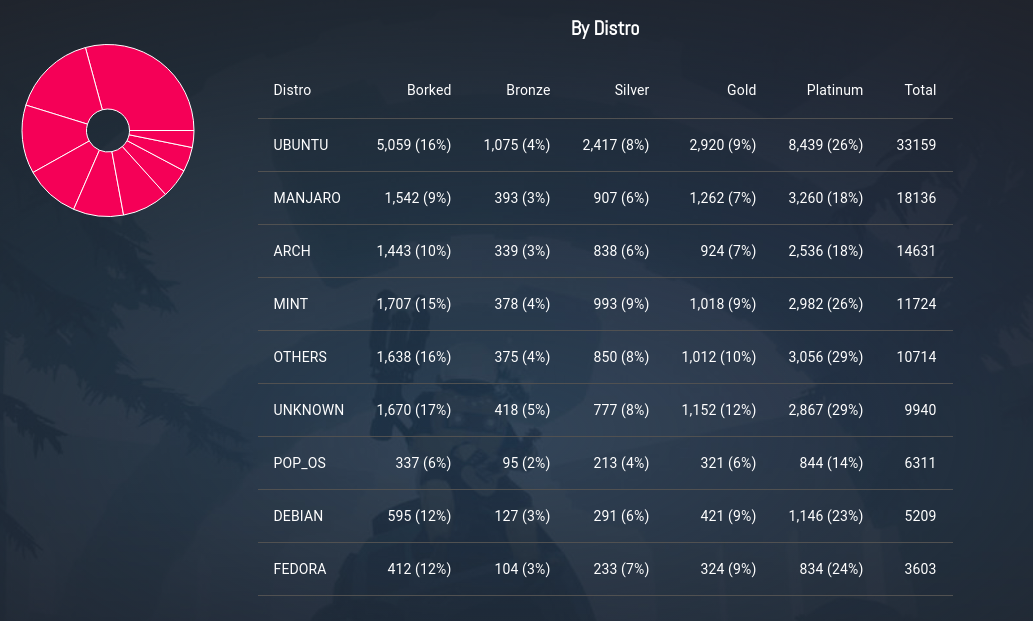
ProtondB เป็นคอลเลกชันของรายงานการเล่นเกมมากกว่า 100,000 รายการจากนักเล่นเกมคนอื่น ๆ เนื่องจากพวกเขาทดสอบเกมด้วย Proton on Linux และให้คะแนนรวมของเกมที่เล่นได้ดีแค่ไหน คำแนะนำที่เพิ่มขึ้นให้การปรับแต่งที่คุณสามารถลองเล่นเกมได้ในขณะที่โปรตอนยังคงพัฒนาต่อไป นอกจากนี้คุณสามารถสำรวจแคตตาล็อกเกม Steam บนเว็บไซต์นี้เพื่อเรียกดูและค้นพบชื่อที่หลากหลายซึ่งก่อนหน้านี้ไม่สามารถใช้งานได้กับ Linux
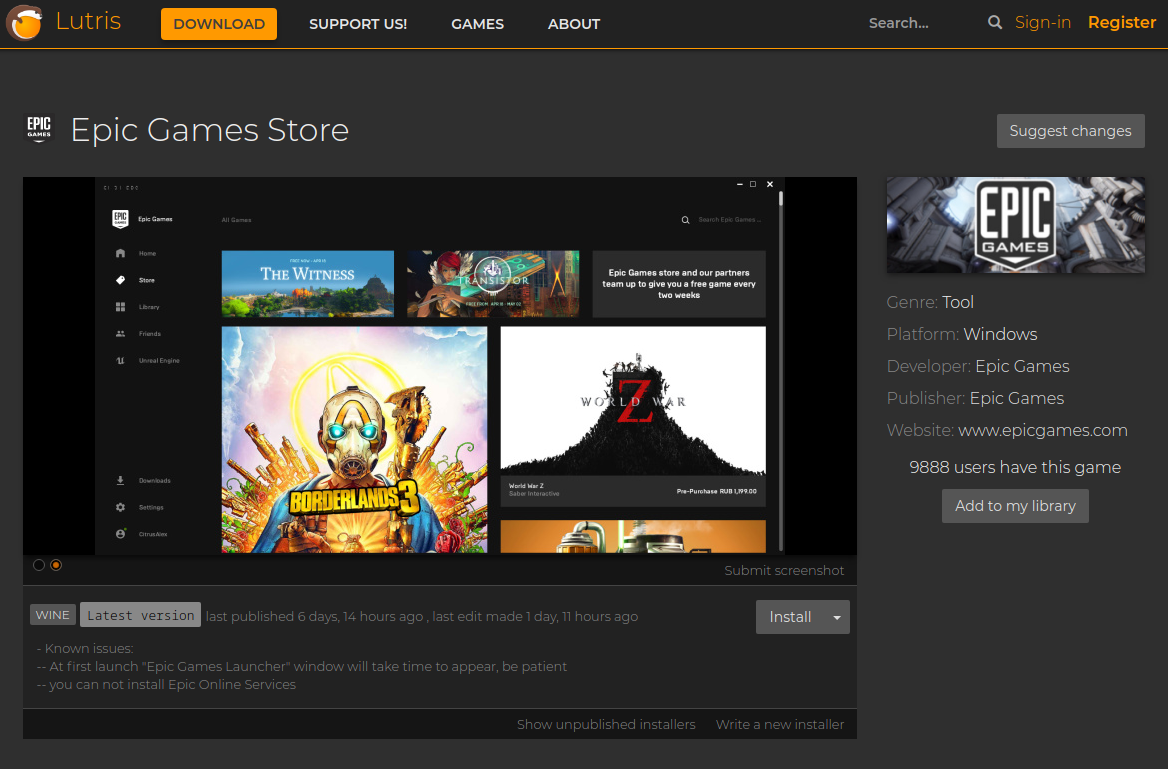
Lutrisis ไคลเอนต์เกมสำหรับ Linux มันช่วยให้คุณเข้าถึงวิดีโอเกมทั้งหมดของคุณยกเว้นการสร้างคอนโซลปัจจุบัน นอกจากนี้ยังรวมเข้ากับร้านค้าอื่น ๆ เช่น GOG, Steam, Battle.net, Origin, Uplay และแหล่งข้อมูลอื่น ๆ อีกมากมายที่ให้คุณนำเข้าห้องสมุดเกมที่มีอยู่
เพิ่ม Epic Games Store
GameHub เป็นห้องสมุดที่เป็นเอกภาพสำหรับทุกเกมของคุณ ช่วยให้คุณสามารถจัดเก็บเกมของคุณจากแพลตฟอร์มที่แตกต่างกันในโปรแกรมเดียวเพื่อให้คุณจัดการเกมของคุณได้ง่ายขึ้น
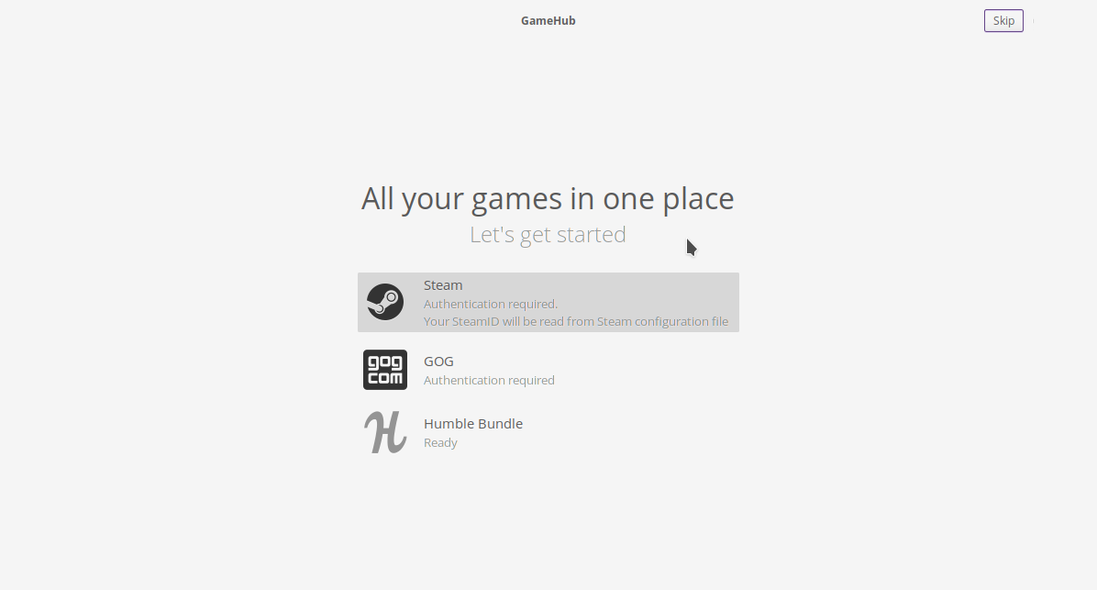
GameHub รองรับ:
เกมพื้นเมืองสำหรับ Linux
ความเข้ากันได้หลายชั้น:
หลายแพลตฟอร์มเกม:
GeForce ใช้ เวอร์ชัน Chromebook เพื่อเล่นเกมทั้งหมดของคุณใน Google Chrome หรือเว็บเบราว์เซอร์ที่ใช้โครเมียมเช่น Brave, Vivaldi และ Microsoft Edge นอกจากนี้ยังมีเป็นแอพเดสก์ท็อปอิเล็กตรอนใน Snap Store GeForce ตอนนี้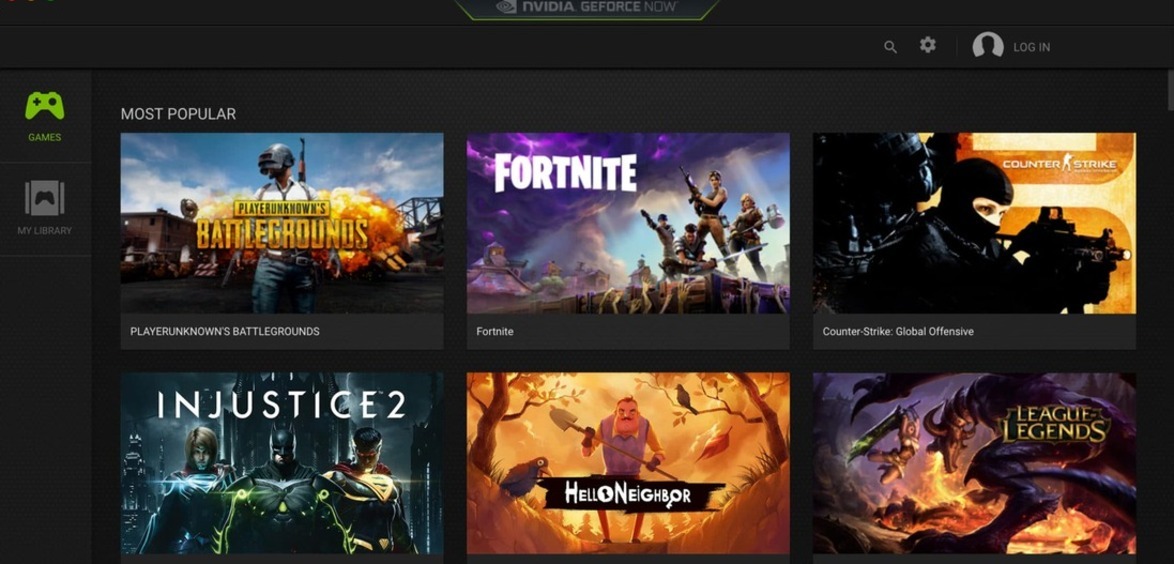
Moonlight Game Streaming เป็นโปรแกรมที่ให้คุณสตรีมจากเกมพีซีทางอินเทอร์เน็ตโดยไม่ต้องกำหนดค่า สตรีมจากเกือบทุกอุปกรณ์ไม่ว่าคุณจะอยู่ในห้องอื่นหรือห่างจากแท่นขุดเจาะเกม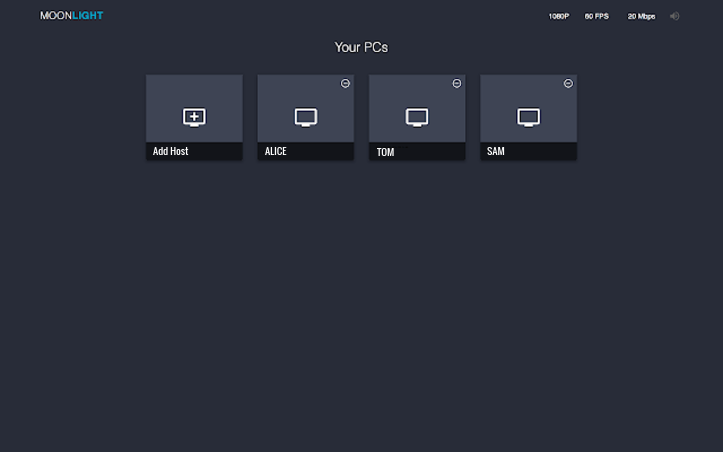
Chiaki เป็นไคลเอนต์ซอฟต์แวร์ฟรีและโอเพ่นซอร์สสำหรับ PlayStation 4 และ PlayStation 5 การเล่นระยะไกลสำหรับ Linux, FreeBSD, OpenBSD, Android, MacOS, Windows, Nintendo Switch และแพลตฟอร์มที่อาจเกิดขึ้นได้มากขึ้น
Xbox Project XCloud เป็นเทคโนโลยีการสตรีมเกม Xbox Game ที่ใช้คลาวด์ของ Microsoft (ปัจจุบันอยู่ในเบต้า) เล่นเกมเช่น Forza Horizon 4, Halo 5: Guardians, Gears of War 4, Sea of Thieves, Cuphead, Red Dead Redemption 2 และเกมอื่น ๆ กว่า 100 เกมบนอุปกรณ์มือถือหรือเว็บเบราว์เซอร์ Chrome ของคุณ Xbox Project ของ Microsoft XCloud ต้องการการสมัครสมาชิก Xbox Game Pass Ultimate

Retroarch เป็นส่วนหน้าสำหรับอีมูเลเตอร์เครื่องยนต์เกมและเครื่องเล่นสื่อ ช่วยให้คุณสามารถเรียกใช้เกมคลาสสิกบนคอมพิวเตอร์และคอนโซลที่หลากหลายผ่านอินเตอร์เฟสกราฟิกที่ลื่นไหล การตั้งค่ายังรวมกันดังนั้นการกำหนดค่าจะเสร็จสิ้นครั้งเดียวและสำหรับทั้งหมด
Dolphin เป็นตัวจำลองสำหรับคอนโซลวิดีโอเกม Nintendo สองเกมล่าสุด: The GameCube และ Wii ช่วยให้นักเล่นเกมพีซีเพลิดเพลินไปกับเกมสำหรับคอนโซลทั้งสองนี้ใน Full HD (1080p) ที่มีการปรับปรุงหลายอย่าง: ความเข้ากันได้กับตัวควบคุมพีซีทั้งหมดความเร็วเทอร์โบผู้เล่นหลายคนในเครือข่ายและอื่น ๆ
Citra เป็นตัวจำลองโอเพนซอร์ซสำหรับ Nintendo 3DS ที่สามารถเล่นเกมโปรดของคุณได้หลายเกม
Yuzu เป็นตัวจำลองโอเพนซอร์ซทดลองสำหรับสวิตช์ Nintendo จากผู้สร้าง Citra
Dosbox เป็นตัวจำลอง DOS โอเพนซอร์ซซึ่งมุ่งเน้นไปที่การเรียกใช้เกม DOS เป็นหลัก
Mame เป็นเครื่องจำลองเครื่องอาร์เคด
Xemu เป็นตัวจำลอง Xbox ดั้งเดิม
Greenwithenvy (GWE) เป็นยูทิลิตี้ระบบ GTK ที่ออกแบบโดย Roberto Leinardi เพื่อให้ข้อมูลควบคุมแฟน ๆ และโอเวอร์คล็อกการ์ดวิดีโอ Nvidia ของคุณเพื่อประสิทธิภาพที่ดีขึ้น มีจำหน่ายในร้านป๊อปเป็น Flatpak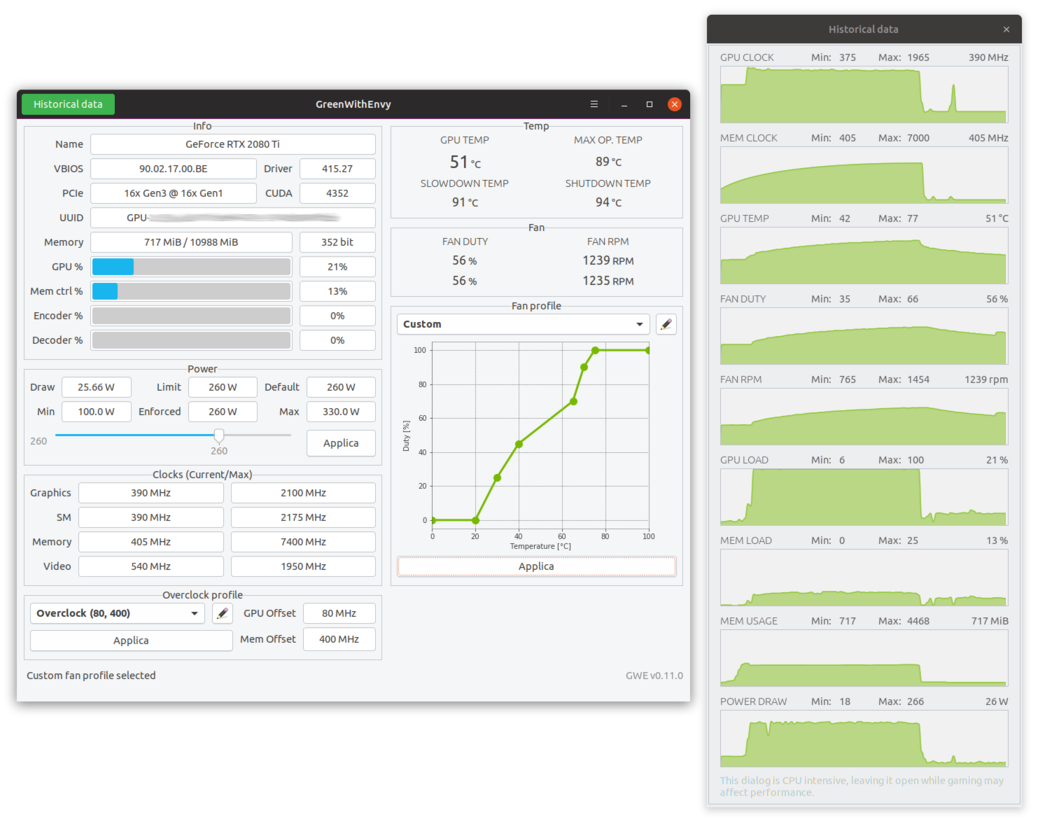
Corectrl เป็นแอปพลิเคชั่น Linux ฟรีและโอเพ่นซอร์สที่ช่วยให้คุณสามารถควบคุมฮาร์ดแวร์คอมพิวเตอร์ของคุณได้อย่างง่ายดายโดยใช้โปรไฟล์แอปพลิเคชันสำหรับแอปพลิเคชันดั้งเดิมและ Windows มีการควบคุม CPU ขั้นพื้นฐานและการควบคุม AMD GPU แบบเต็มรูปแบบ (สำหรับทั้งรุ่นเก่าและใหม่)
กับ Yay, Run:
yay -Sy corectrl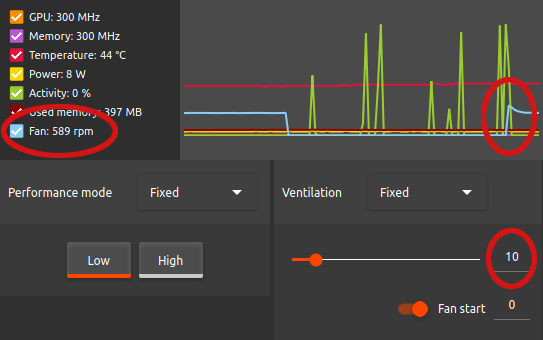
Geekbench 5 เป็นเกณฑ์มาตรฐานข้ามแพลตฟอร์มที่วัดประสิทธิภาพของระบบของคุณด้วยการกดปุ่มเพียงปุ่มเดียว
UNIGINE Superposition เป็นการทดสอบประสิทธิภาพและความเสถียรสำหรับฮาร์ดแวร์พีซี: การ์ดวิดีโอ, แหล่งจ่ายไฟ, ระบบทำความเย็น

ไวน์ (ไวน์ไม่ใช่ตัวจำลอง) เป็นเลเยอร์ความเข้ากันได้ที่สามารถใช้งานแอพพลิเคชั่น Windows ในระบบปฏิบัติการที่สอดคล้องกับ POSIX หลายระบบเช่น Linux, MacOS และ BSD แทนที่จะจำลองตรรกะของ Windows ภายในเช่นเครื่องเสมือนหรืออีมูเลเตอร์ไวน์แปลการโทร Windows API เป็น Posix Calls on-the-fly กำจัดประสิทธิภาพและการลงโทษหน่วยความจำของวิธีการอื่น ๆ และช่วยให้คุณรวมแอปพลิเคชัน Windows เข้ากับเดสก์ท็อปของคุณ
กลับไปด้านบน
ความต้องการ
เปิดเทอร์มินัลแล้วเรียกใช้:
sudo pacman -S qemu uml-utilities virt-manager dmg2img git wget libguestfs-tools p7zip Sosumi เป็นแอพที่ให้คุณดาวน์โหลดและติดตั้ง macOS ใน VM แอพขึ้นอยู่กับ MacOS-Simple-KVM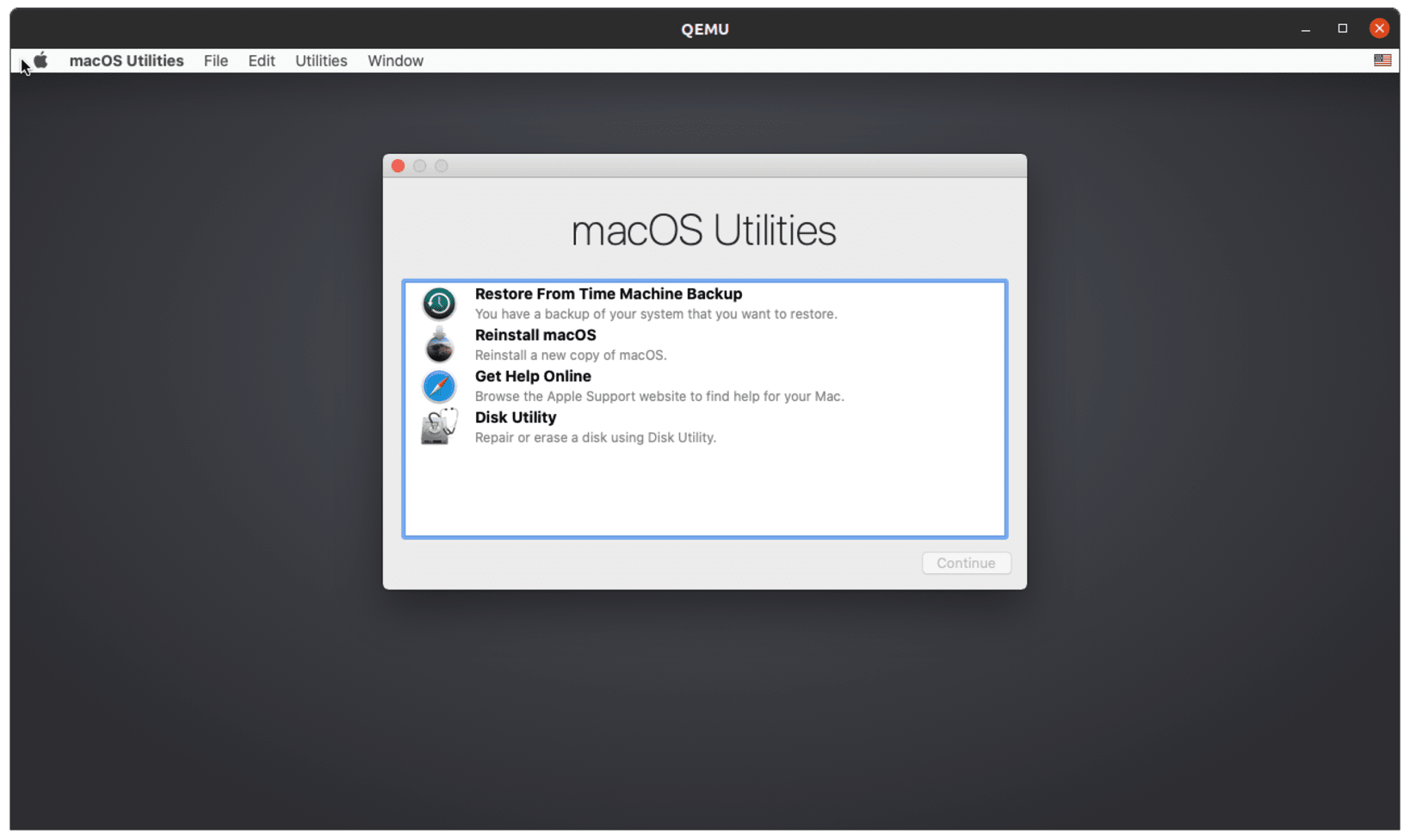
OpenCore สำหรับ macOS
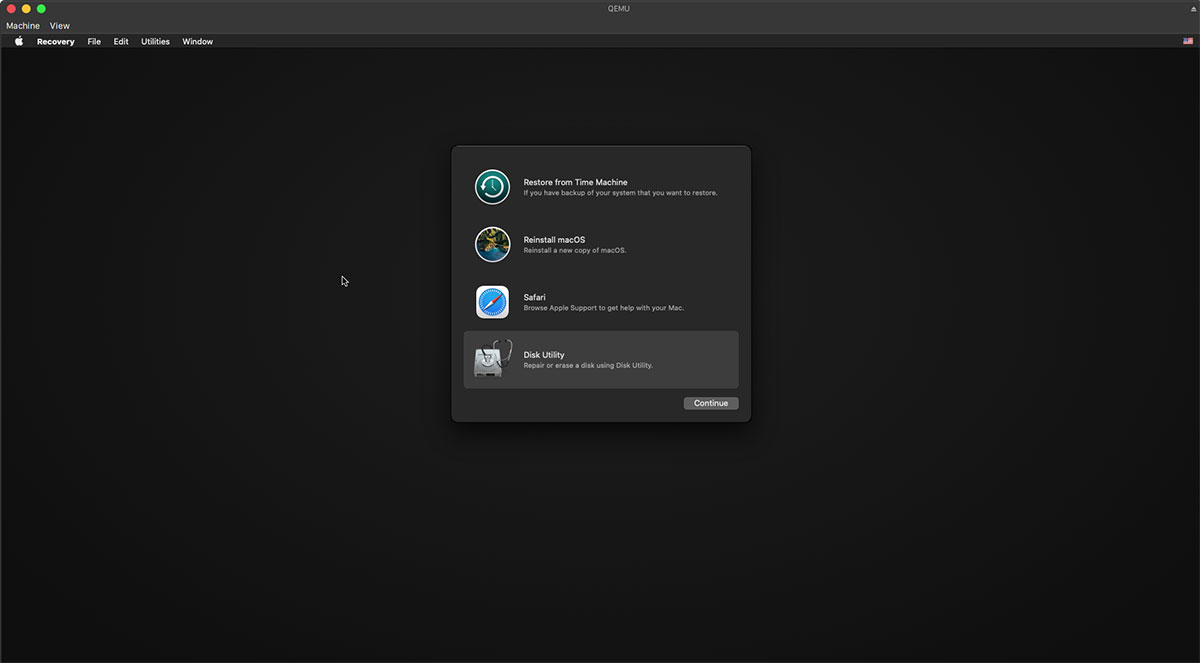
กลับไปด้านบน
ความต้องการ
เปิดเทอร์มินัลแล้วเรียกใช้:
sudo pacman -S qemu uml-utilities virt-manager gnome-boxesGNOME Boxes เป็นแอปพลิเคชั่นที่ให้คุณเข้าถึงเครื่องเสมือนจริงทำงานในพื้นที่หรือจากระยะไกล นอกจากนี้ยังช่วยให้คุณเชื่อมต่อกับการแสดงผลของคอมพิวเตอร์ระยะไกล
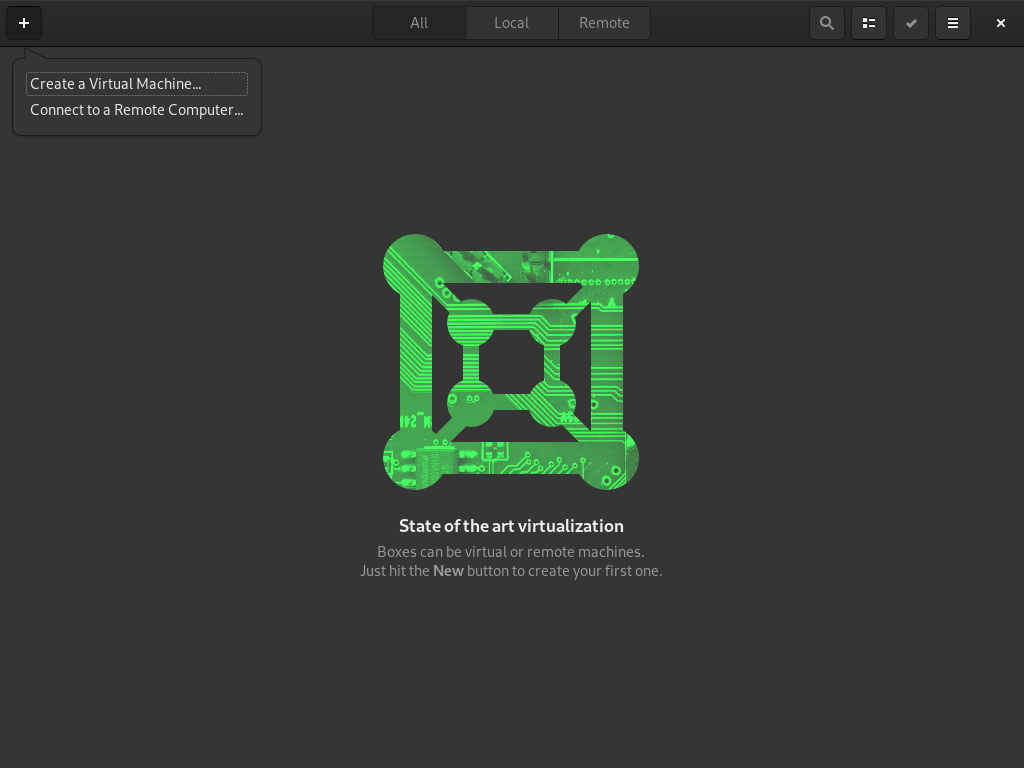
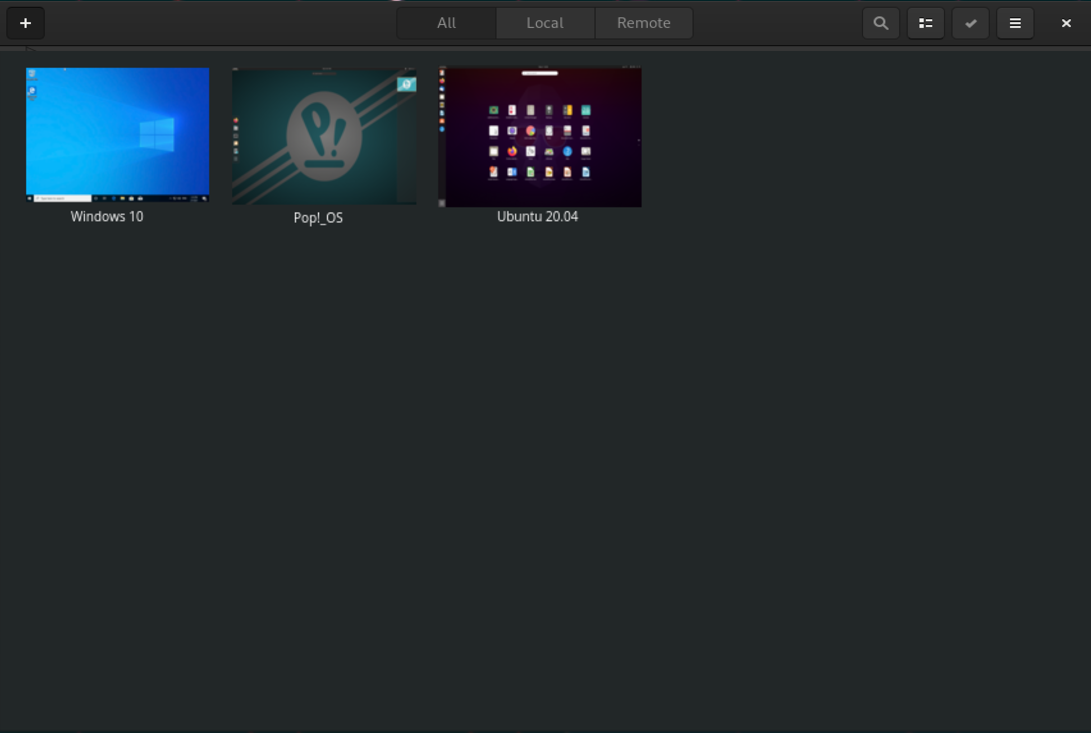
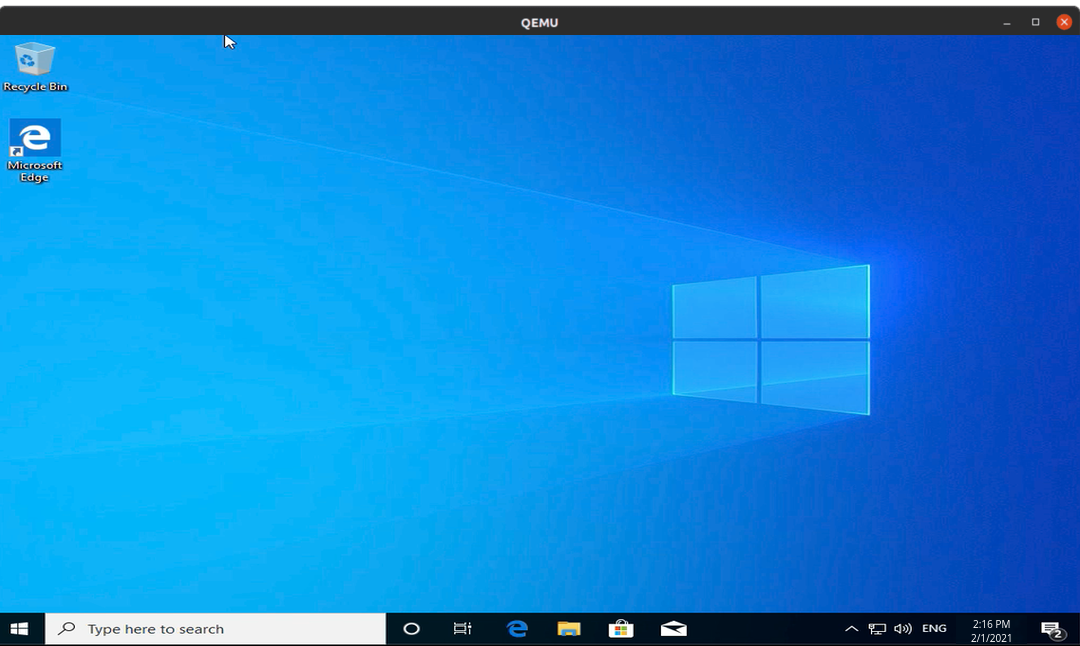
OpenCore สำหรับ Windows 10
กลับไปด้านบน
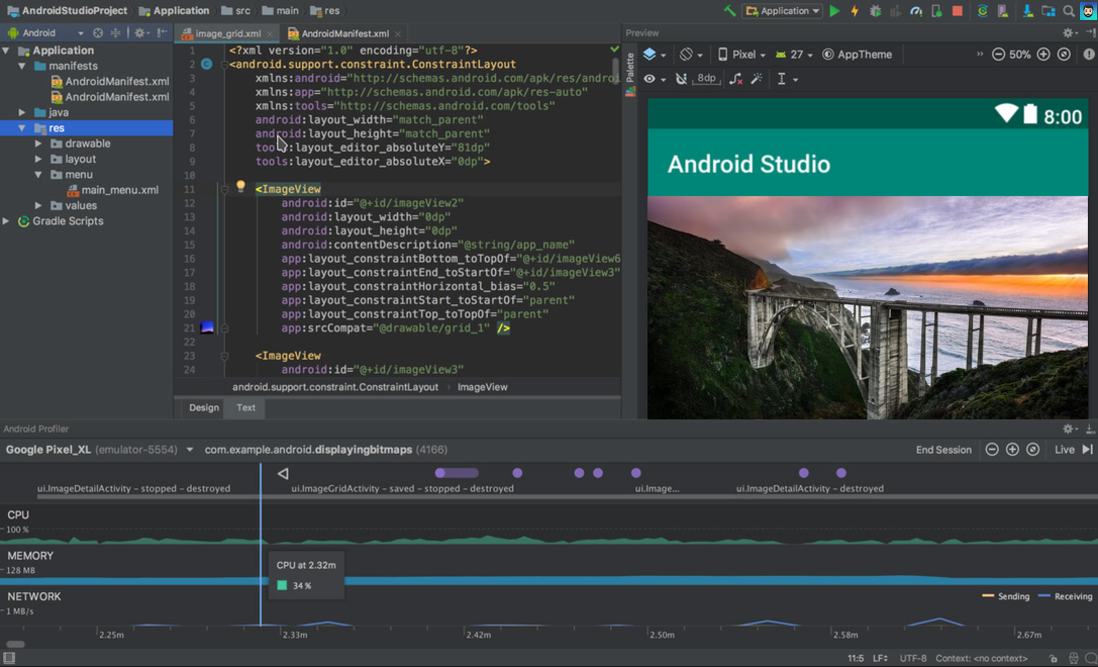
Android Studio เป็นชุดพัฒนาสำหรับระบบปฏิบัติการ Android ของ Google (OS) มันถูกสร้างขึ้นบนซอฟต์แวร์ Jetbrains Intellij Idea และออกแบบมาโดยเฉพาะสำหรับการพัฒนา Android พร้อมให้ดาวน์โหลดบน Windows, MacOS และ Linux
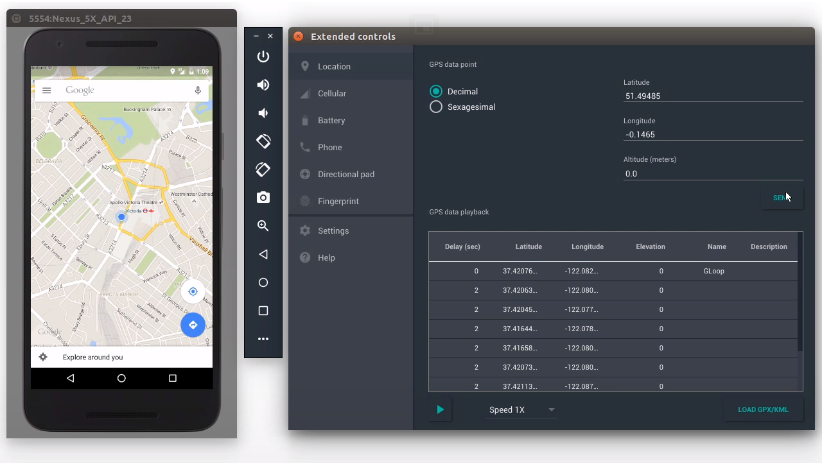
Android Virtual Device (AVD) เป็นการกำหนดค่าใน Android Studio ที่กำหนดคุณสมบัติของโทรศัพท์ Android, แท็บเล็ต, Wear OS, TV Android หรืออุปกรณ์ระบบปฏิบัติการยานยนต์ที่คุณต้องการจำลองในเครื่องจำลอง Android Android Emulator จำลองอุปกรณ์ Android บนคอมพิวเตอร์ของคุณเพื่อให้คุณสามารถทดสอบแอปพลิเคชันของคุณในอุปกรณ์ที่หลากหลายและระดับ Android API โดยไม่จำเป็นต้องมีอุปกรณ์ทางกายภาพแต่ละตัว
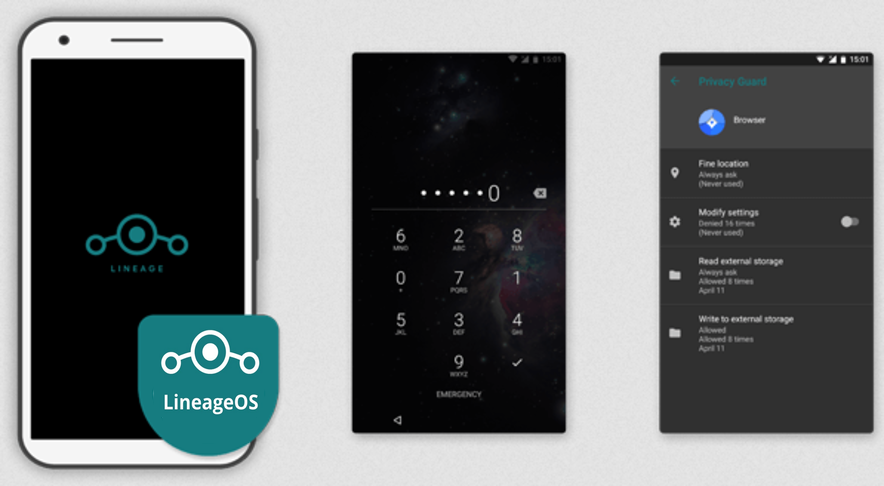
LineageOS เป็นระบบปฏิบัติการฟรีและโอเพ่นซอร์สสำหรับอุปกรณ์ต่าง ๆ ตามแพลตฟอร์มมือถือ Android
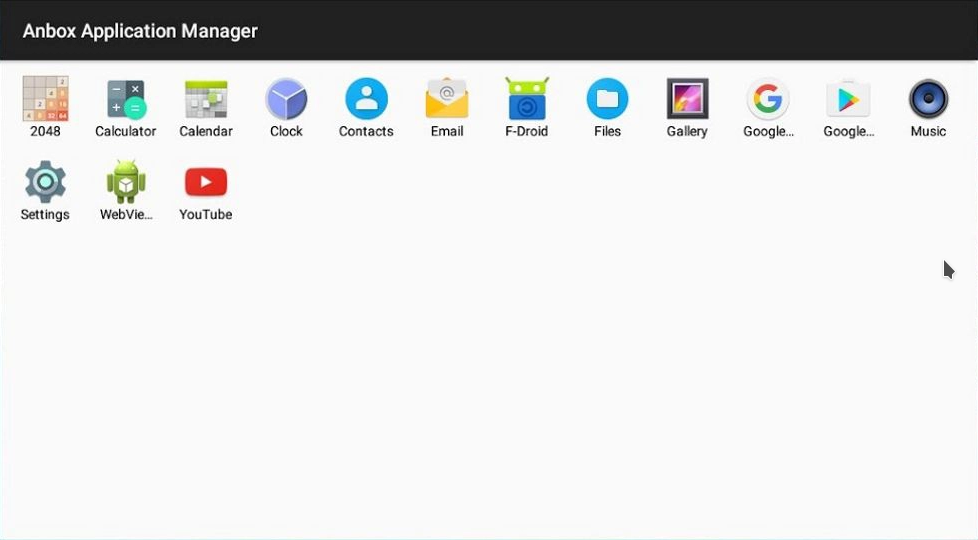
Anbox เป็นแอปพลิเคชั่นที่มีวิธีการที่ใช้คอนเทนเนอร์เพื่อบูตระบบ Android เต็มรูปแบบในระบบ GNU/Linux ปกติเช่น Ubuntu, Debian Fedora และ OpenSuse
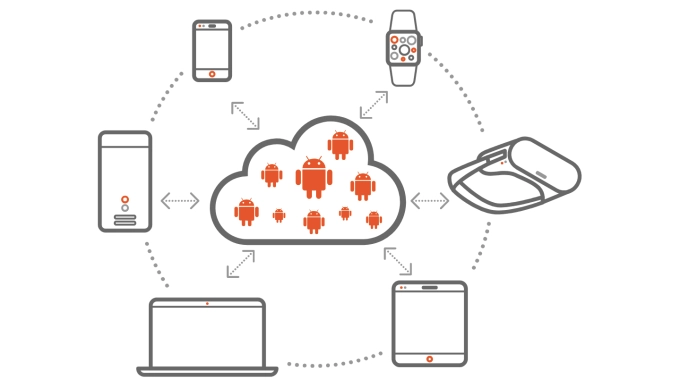
Anbox Cloud เป็นแพลตฟอร์มการประมวลผลคลาวด์มือถือที่จัดส่งโดย Canonical เรียกใช้ Android ในคลาวด์ในระดับสูงและบนฮาร์ดแวร์ทุกประเภท
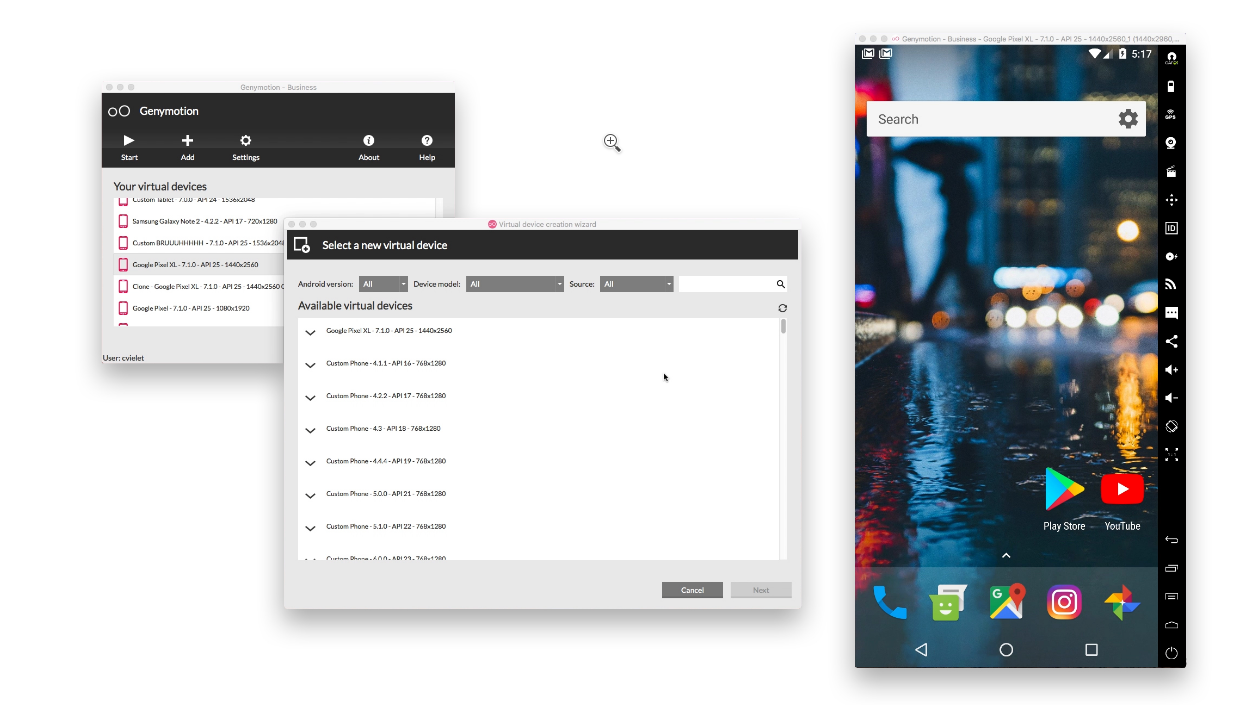
Genymotion เป็นตัวจำลอง Android ที่รวดเร็วมาก โปรแกรมเองขึ้นอยู่กับ VirtualBox และเป็นที่รู้จักกันดีในเรื่องความเร็วที่รวดเร็วและมีประโยชน์สำหรับการรันแอพ Android บนเดสก์ท็อป Windows, Mac และ Linux
เดสก์ท็อป
อุปกรณ์เสมือนจริงในท้องถิ่นที่มีประสิทธิภาพสูง
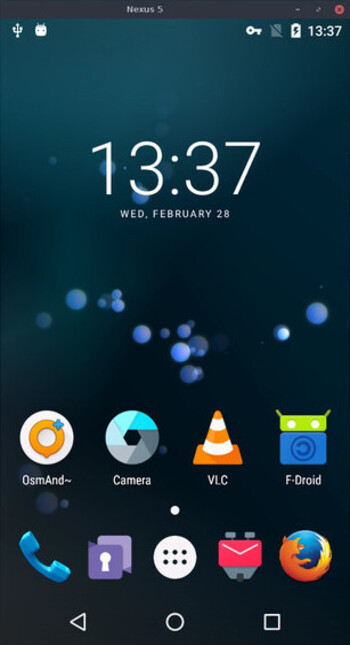
SCRCPY เป็นแอปพลิเคชันโดย genymotion ที่ให้การแสดงและควบคุมอุปกรณ์ Android ที่เชื่อมต่อกับ USB (หรือมากกว่า TCP/IP) ไม่จำเป็นต้องมีการเข้าถึงรูทและทำงานบน GNU/Linux, Windows และ MacOS อุปกรณ์ Android ต้องการอย่างน้อย API 21 (Android 5.0)
กลับไปด้านบน
H.264 (AVC) เป็นมาตรฐานการบีบอัดวิดีโอตามการเข้ารหัสการเข้ารหัสจำนวนเต็มและการชดเชยการเคลื่อนไหวที่กำหนดโปรไฟล์หลายโปรไฟล์ (เครื่องมือ) และระดับ (Bitrates สูงสุดและความละเอียด) ด้วยการสนับสนุนสูงสุด 8K
H.265 (HEVC) เป็นมาตรฐานการบีบอัดวิดีโอที่เป็นผู้สืบทอดของ H.264 (AVC) มีการบีบอัดข้อมูลที่ดีขึ้น 25% ถึง 50% ในระดับคุณภาพวิดีโอระดับเดียวกันหรือปรับปรุงคุณภาพวิดีโอในอัตราบิตเดียวกัน
FFMPEG เป็นเฟรมเวิร์กมัลติมีเดียชั้นนำที่สามารถถอดรหัส, เข้ารหัส, transcode, mux, demux, สตรีม, กรองและเล่นอะไรก็ได้ที่มนุษย์และเครื่องจักรสร้างขึ้น รองรับรูปแบบโบราณที่คลุมเครือมากที่สุดจนถึงรูปแบบที่ทันสมัยในหลายแพลตฟอร์มเช่น Windows, MacOS และ Linux
Handbrake เป็นเครื่องมือสำหรับการแปลงวิดีโอจากเกือบทุกรูปแบบด้วยการเลือกตัวแปลงสัญญาณที่รองรับอย่างกว้างขวาง ได้รับการสนับสนุนบนหน้าต่าง MacOS และ Linux
การสตรีมแบบปรับตัวแบบไดนามิกผ่าน HTTP (DASH) เป็นโปรโตคอลการสตรีมแบบปรับตัวที่ช่วยให้สตรีมวิดีโอสลับระหว่างอัตราบิตบนพื้นฐานของประสิทธิภาพเครือข่ายเพื่อให้การเล่นวิดีโอ
OpenMax ™เป็น API ข้ามแพลตฟอร์มที่ให้บริการตัวแปลงสัญญาณสื่อสตรีมมิ่งที่ครอบคลุมและการพกพาแอปพลิเคชันโดยการเปิดใช้งานส่วนประกอบมัลติมีเดียเร่งความเร็วที่จะพัฒนารวมและโปรแกรมผ่านระบบปฏิบัติการหลายระบบและแพลตฟอร์มซิลิกอน
Davinci Resolve เป็นทางออกเดียวของโลกที่รวมการแก้ไข 8K ระดับมืออาชีพการแก้ไขสีเอฟเฟกต์ภาพและการผลิตโพสต์เสียงทั้งหมดในเครื่องมือซอฟต์แวร์เดียว! คุณสามารถย้ายระหว่างการแก้ไขสีเอฟเฟกต์และเสียงได้ทันทีด้วยการคลิกเพียงครั้งเดียว Davinci Resolve Studio ยังเป็นโซลูชันเดียวที่ออกแบบมาสำหรับการทำงานร่วมกันของผู้ใช้หลายคนดังนั้นบรรณาธิการผู้ช่วยนักระบายสีศิลปิน VFX และนักออกแบบเสียงสามารถทำงานได้ในโครงการเดียวกันในเวลาเดียวกัน
เครื่องปั่นมาพร้อมกับตัวแก้ไขลำดับวิดีโอในตัวช่วยให้คุณสามารถดำเนินการพื้นฐานเช่นการตัดวิดีโอและการประกบรวมถึงงานที่ซับซ้อนมากขึ้นเช่นการปิดบังวิดีโอหรือการให้คะแนนสี ตัวแก้ไขวิดีโอรวมถึง: ตัวอย่างสด, รูปคลื่น Luma, Chroma Vectorscope และการแสดงฮิสโตแกรม การผสมเสียงการซิงค์การขัดและการสร้างภาพของคลื่น
KdenLive เป็นเครื่องมือแก้ไขวิดีโอโอเพนซอร์สที่รองรับไฟล์มัลติมีเดียไม่ จำกัด มันขึ้นอยู่กับ MLT Framework, KDE และ QT ผู้ที่กำลังมองหาเครื่องมือแก้ไขวิดีโออเนกประสงค์ที่มาพร้อมกับคุณสมบัติ การเปิดตัว 20.08 ล่าสุดออกมาพร้อมกับคุณสมบัติที่ดีเช่นเลย์เอาต์อินเตอร์เฟสการสนับสนุนสตรีมเสียงหลายรายการการจัดการข้อมูลแคชและซูมบาร์ในจอภาพคลิปและแผงเอฟเฟกต์ แต่อาจยืนยันว่าไฮไลท์ของรีลีสนี้คือความมั่นคงและการปรับปรุงอินเทอร์เฟซ
OpenShot เป็นเครื่องมือแก้ไขวิดีโอโอเพนซอร์ซที่ออกแบบมาสำหรับผู้ใช้ใหม่ในสภาพแวดล้อมการแก้ไข มันมีคุณสมบัติง่ายๆเช่นฟังก์ชั่นการลากและวางอย่างง่ายมันให้ส่วนต่อประสานผู้ใช้ที่ใช้งานง่ายและรวดเร็ว ตัวแก้ไขวิดีโอที่ทรงพลังมีวิธีการที่มีประสิทธิภาพมากมายในการตัดและตัดแต่งวิดีโอของคุณ คุณสามารถใช้แทร็กไม่ จำกัด , เอ็นเอฟเฟกต์วิดีโอ, เครื่องมือแก้ไขชื่อ, ภาพเคลื่อนไหว 3 มิติ, การเคลื่อนไหวช้าและเอฟเฟกต์เวลา รองรับตัวแปลงสัญญาณวิดีโอที่ใช้กันทั่วไปซึ่งได้รับการสนับสนุนโดย FFMPEG เช่น WebM (VP9), AVCHD (LIBX264), HEVC (LIBX265) และตัวแปลงสัญญาณเสียงเช่น MP3 (libmp3lame) และ AAC (libfaac) โปรแกรมสามารถแสดงผล MPEG4, OGV, Blu-ray และ DVD วิดีโอและวิดีโอ HD แบบเต็มสำหรับการอัปโหลดไปยังเว็บไซต์วิดีโออินเทอร์เน็ตเช่น YouTube
Lightworks เป็นอุปกรณ์ตัดต่อวิดีโอที่ไม่ใช่เชิงเส้นสำหรับการแก้ไขและการเรียนรู้วิดีโอดิจิตอลที่ใช้โดยอุตสาหกรรมภาพยนตร์ รุ่นมืออาชีพของมันถูกใช้สำหรับเพลงฮิตบ็อกซ์ออฟฟิศเช่น Shutter Island, Pulp Fiction และ Mission Impossible การข่มขู่ส่วนต่อประสานผู้ใช้ เช่นเดียวกับบรรณาธิการวิดีโอระดับมืออาชีพเช่น Adobe Premiere Pro Lightworks ค่อนข้างซับซ้อนที่จะใช้สำหรับผู้ใช้ใหม่
Shotcut เป็นตัวแก้ไขวิดีโอแบบหลายแพลตฟอร์มโอเพ่นซอร์ส คุณสามารถดำเนินการต่าง ๆ เช่นการแก้ไขวิดีโอ (รวมถึงคุณภาพวิดีโอ 4K) เพิ่มเอฟเฟกต์สร้างภาพยนตร์ใหม่นำเข้ารูปแบบไฟล์ภาพส่วนใหญ่ส่งออกไปยังรูปแบบไฟล์เกือบทุกรูปแบบและอื่น ๆ อีกมากมาย
โอลีฟเป็นตัวแก้ไขวิดีโอที่ไม่ใช่เชิงเส้นฟรีโดยมีวัตถุประสงค์เพื่อให้ทางเลือกที่มีคุณสมบัติครบถ้วนแก่ซอฟต์แวร์การแก้ไขวิดีโอระดับมืออาชีพระดับไฮเอนด์
OBS (ซอฟต์แวร์ Open Broadcaster) เป็นซอฟต์แวร์ฟรีและโอเพ่นซอร์สสำหรับการบันทึกวิดีโอและการสตรีมสด สตรีมไปยัง Twitch, YouTube และผู้ให้บริการอื่น ๆ หรือบันทึกวิดีโอของคุณเองด้วยการเข้ารหัส H264 / AAC คุณภาพสูง
Reaper เป็นแอพพลิเคชั่นการผลิตเสียงดิจิตอลที่สมบูรณ์สำหรับคอมพิวเตอร์ที่นำเสนอการบันทึกเสียง Multitrack และ MIDI เต็มรูปแบบการแก้ไขการประมวลผลการผสมและการเรียนรู้ชุดเครื่องมือ REAPER รองรับฮาร์ดแวร์ที่หลากหลายรูปแบบดิจิตอลและปลั๊กอิน
Jack Audio Connection Kit AKA Jack เป็นเซิร์ฟเวอร์เสียงมืออาชีพที่ให้การเชื่อมต่อแบบเรียลไทม์และมีความล่าช้าต่ำสำหรับข้อมูลเสียงและ MIDI ระหว่างแอปพลิเคชันที่ใช้ API แจ็คสามารถกำหนดค่าให้ส่งข้อมูลเสียงผ่านเครือข่ายไปยังเครื่อง "มาสเตอร์" ซึ่งจะส่งสัญญาณเสียงไปยังอุปกรณ์ทางกายภาพ สิ่งนี้มีประโยชน์ในการผสมเสียงจากคอมพิวเตอร์ "ทาส" จำนวนหนึ่งโดยไม่ต้องใช้สายเคเบิลเพิ่มเติมหรือเครื่องผสมฮาร์ดแวร์และรักษาเส้นทางเสียงดิจิตอลให้นานที่สุด
Bitwig Studio เป็นเวิร์กสเตชันเสียงดิจิตอลที่มีเวิร์กโฟลว์เชิงเส้นและไม่ใช่เชิงเส้นสำหรับการออกแบบเสียงการบันทึกการแสดงสดและอื่น ๆ พร้อมกับเครื่องมือเอฟเฟกต์และเครื่องมือสร้างสรรค์อื่น ๆ มากกว่า 90 รายการ เป็น Windows, MacOS และ Linux ที่รองรับ
Pipewire เป็นเซิร์ฟเวอร์และพื้นที่ผู้ใช้ API เพื่อจัดการกับท่อมัลติมีเดียมันให้บริการเอ็นจิ้นการประมวลผลที่ใช้กราฟต่ำบนกราฟด้านบนของอุปกรณ์เสียงและวิดีโอที่สามารถใช้เพื่อรองรับกรณีการใช้งานที่จัดการโดยทั้ง Pulseaudio และ Jack Pipewire ได้รับการออกแบบด้วยรูปแบบความปลอดภัยที่ทรงพลังซึ่งทำให้การโต้ตอบกับอุปกรณ์เสียงและวิดีโอจากแอปพลิเคชันคอนเทนเนอร์ได้ง่าย โหนดในกราฟสามารถนำไปใช้เป็นกระบวนการแยกต่างหากการสื่อสารกับซ็อกเก็ตและการแลกเปลี่ยนเนื้อหามัลติมีเดียโดยใช้ FD ผ่าน
Yabridge เป็นวิธีที่ทันสมัยและโปร่งใสในการใช้ปลั๊กอิน Windows VST2 และ VST3 บน Linux Yabridge รองรับได้อย่างราบรื่นโดยใช้ปลั๊กอินทั้งแบบ 32 บิตและ 64 บิตของปลั๊กอิน VST2 และ VST3 ในโฮสต์ Linux VST 64 บิตราวกับว่าพวกเขาเป็นปลั๊กอิน VST2 และ VST3 ดั้งเดิมพร้อมการรองรับกลุ่มปลั๊กอินเสริมเพื่อเปิดใช้งานการสื่อสารระหว่างปลั๊กอินเตอร์สำหรับปลั๊กอิน VST2
Sonobus เป็นแอปพลิเคชั่นที่ใช้งานง่ายสำหรับการสตรีมเสียงที่มีคุณภาพสูงและมีความล่าช้าในการใช้งานระหว่างอุปกรณ์ผ่านอินเทอร์เน็ตหรือเครือข่ายท้องถิ่น
Avid Pro Tools เป็นซอฟต์แวร์การผลิตเสียงมาตรฐานอุตสาหกรรมสำหรับนักแต่งเพลงนักดนตรีผู้ผลิตและวิศวกร
LMMS เป็นโปรแกรมแอพพลิเคชั่นเวิร์กสเตชันเสียงดิจิตอลโอเพนซอร์ส เมื่อ LMM เป็นคู่กับฮาร์ดแวร์คอมพิวเตอร์ที่เหมาะสมจะช่วยให้เพลงสามารถผลิตได้โดยการจัดเรียงตัวอย่างเสียงสังเคราะห์เล่นบนคีย์บอร์ด MIDI และรวมคุณสมบัติของตัวติดตามและซีเควน พัฒนาโดย Paul Giblock และ Tobias Junghans โปรแกรมนี้หมายถึง "Linux Multimedia Studio" และรองรับปลั๊กอินที่มีประโยชน์ที่ช่วยให้สามารถทำงานในระบบปฏิบัติการที่แตกต่างกัน
Ardor เป็นโอเพ่นซอร์สความพยายามร่วมกันของทีมทั่วโลกรวมถึงนักดนตรีโปรแกรมเมอร์และวิศวกรบันทึกเสียงมืออาชีพ การพัฒนามีความโปร่งใส - ทุกคนสามารถดูงานของเราได้ตามที่เกิดขึ้น เช่นเดียวกับฮาร์ดแวร์วินเทจที่ดีคุณสามารถเปิดกล่องและมองเข้าไปข้างใน
Audacity เป็นตัวแก้ไขเสียงที่ใช้งานง่ายและใช้งานได้ง่ายและเครื่องบันทึกสำหรับ Windows, Mac OS X, GNU/Linux และระบบปฏิบัติการอื่น ๆ พัฒนาโดยกลุ่มอาสาสมัครเป็นโอเพ่นซอร์สและเสนอฟรี ชุมชนสนับสนุนที่น่าตื่นตาตื่นใจ
GLIMPSE เป็นตัวแก้ไขกราฟิก Raster กราฟิกข้ามแพลตฟอร์มตามโปรแกรมการจัดการภาพ GNU ที่มีให้สำหรับ Linux, MacOS และ Windows เครื่องมือที่ยอดเยี่ยมสำหรับการทำรูปขนาดย่อวิดีโอ YouTube
กลับไปด้านบน

Kubernetes (K8S) เป็นระบบโอเพ่นซอร์สสำหรับการปรับใช้อัตโนมัติการปรับขนาดและการจัดการแอปพลิเคชันคอนเทนเนอร์
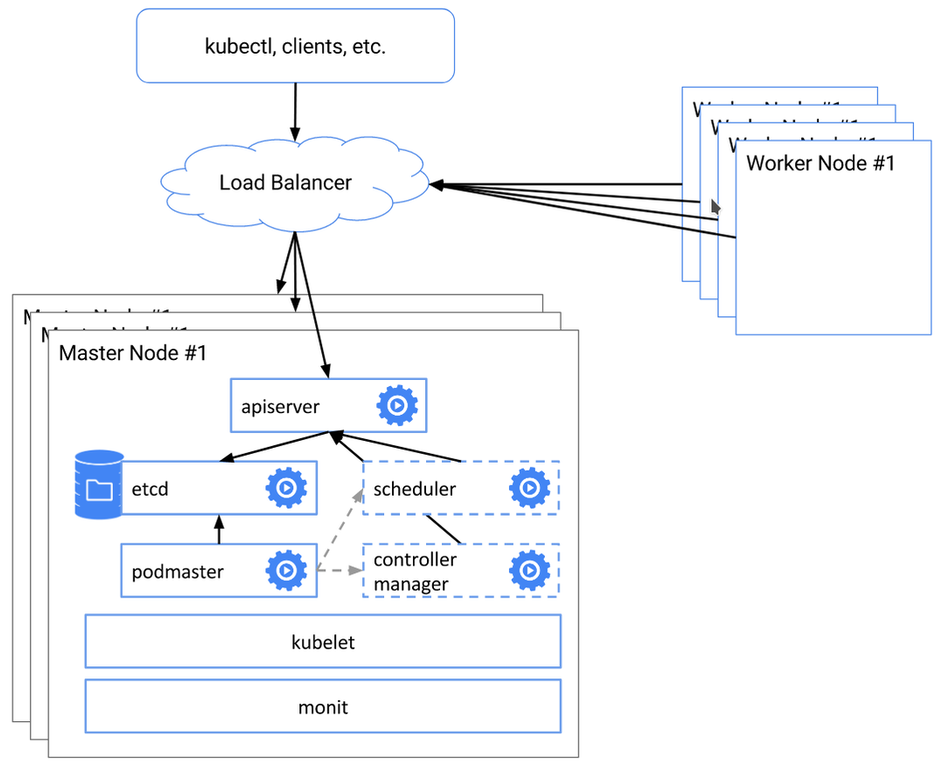
การสร้างกลุ่มที่มีความพร้อมสูง (HA) ด้วย Kubeadm ที่มา: kubernetes.io, 2020
Anthos เป็นแพลตฟอร์มการจัดการแอปพลิเคชันที่ทันสมัยที่ให้ประสบการณ์การพัฒนาและการดำเนินงานที่สอดคล้องกันสำหรับสภาพแวดล้อมคลาวด์และสภาพแวดล้อมในสถานที่
Red Hat OpenShift เป็นแพลตฟอร์ม Kubernetes ที่ได้รับการจัดการอย่างเต็มที่ซึ่งเป็นรากฐานสำหรับการปรับใช้ในสถานที่, ไฮบริดและการปรับใช้แบบหลายระดับ
OKD เป็นการกระจายชุมชนของ Kubernetes ที่ได้รับการปรับให้เหมาะสมสำหรับการพัฒนาแอปพลิเคชันอย่างต่อเนื่องและการปรับใช้ผู้เช่าหลายคน OKD เพิ่มเครื่องมือนักพัฒนาและการดำเนินงานเป็นศูนย์กลางที่ด้านบนของ Kubernetes เพื่อเปิดใช้งานการพัฒนาแอปพลิเคชันอย่างรวดเร็วการปรับใช้และการปรับขนาดได้ง่ายและการบำรุงรักษาระยะเวลาระยะยาวสำหรับทีมขนาดเล็กและใหญ่
Odo เป็นเครื่องมือ CLI ที่รวดเร็วซ้ำและตรงไปตรงมาสำหรับนักพัฒนาที่เขียนสร้างและปรับใช้แอปพลิเคชันบน Kubernetes และ OpenShift
Kata Operator เป็นผู้ดำเนินการในการจัดการวงจรชีวิต (ติดตั้ง/อัปเกรด/ถอนการติดตั้ง) ของ Kata Runtime บน OpenShift รวมถึง Kubernetes Cluster
ธานอสเป็นชุดของส่วนประกอบที่สามารถประกอบไปด้วยระบบเมตริกที่มีอยู่สูงพร้อมความสามารถในการจัดเก็บไม่ จำกัด ซึ่งสามารถเพิ่มได้อย่างราบรื่นบนการปรับใช้โพรที่มีอยู่
OpenShift Hive เป็นผู้ให้บริการที่ทำงานเป็นบริการด้านบนของ Kubernetes/OpenShift บริการ Hive สามารถใช้ในการจัดหาและดำเนินการกำหนดค่าเริ่มต้นของกลุ่ม OpenShift 4
Rook เป็นเครื่องมือที่เปลี่ยนระบบจัดเก็บข้อมูลแบบกระจายให้เป็นการจัดการตนเองการปรับขนาดตนเองและการรักษาด้วยตนเอง โดยอัตโนมัติงานของผู้ดูแลระบบจัดเก็บข้อมูล: การปรับใช้, bootstrapping, การกำหนดค่า, การจัดเตรียม, การปรับขนาด, การอัพเกรด, การย้ายถิ่น, การกู้คืนภัยพิบัติ, การตรวจสอบและการจัดการทรัพยากร
VMware Tanzu เป็นแพลตฟอร์มการจัดการส่วนกลางสำหรับการดำเนินงานอย่างต่อเนื่องและรักษาความปลอดภัยโครงสร้างพื้นฐาน Kubernetes ของคุณและแอพพลิเคชั่นที่ทันสมัยในหลาย ๆ ทีมและคลาวด์ส่วนตัว/สาธารณะ
Kubespray เป็นเครื่องมือที่ผสมผสาน Kubernetes และ Ansible เพื่อติดตั้งกลุ่ม Kubernetes ที่สามารถนำไปใช้กับ AWS, GCE, Azure, OpenStack, vSphere, แพ็คเก็ต (โลหะเปลือย), โครงสร้างพื้นฐานคลาวด์ Oracle (การทดลอง)
Kubeinit จัดเตรียม playbooks และบทบาทสำหรับการปรับใช้และการกำหนดค่าของการแจกแจง Kubernetes หลายรายการ
Rancher เป็นสแต็คซอฟต์แวร์ที่สมบูรณ์สำหรับทีมที่ใช้คอนเทนเนอร์ มันจัดการกับความท้าทายในการปฏิบัติงานและความปลอดภัยของการจัดการกลุ่ม Kubernetes หลายกลุ่มในขณะที่ให้ทีม DevOps ด้วยเครื่องมือแบบบูรณาการสำหรับการทำงานของเวิร์กโหลดคอนเทนเนอร์
K3S เป็นการกระจาย Kubernetes ที่ได้รับการรับรองซึ่งได้รับการรับรองซึ่งออกแบบมาสำหรับภาระงานในการผลิตในสถานที่ห่างไกลที่ไม่ได้รับการดูแลโดยไม่ต้องดูแล
Helm เป็นเครื่องมือจัดการแพ็คเกจ Kubernetes ที่ทำให้การติดตั้งและจัดการแอปพลิเคชัน Kubernetes ง่ายขึ้น
Knative เป็นแพลตฟอร์มที่ใช้ Kubernetes ในการสร้างปรับใช้และจัดการเวิร์กโหลดแบบไร้เซิร์ฟเวอร์ที่ทันสมัย Knative ดูแลรายละเอียดค่าใช้จ่ายในการดำเนินงานของเครือข่ายการปรับสภาพอัตโนมัติ (แม้กระทั่งเป็นศูนย์) และการติดตามการแก้ไข
Kubeflow เป็นเครื่องมือที่ทุ่มเทให้กับการปรับใช้เวิร์กโฟลว์การเรียนรู้ของเครื่องจักร (ML) บน Kubernetes ง่ายพกพาและปรับขนาดได้
ETCD เป็นร้านค้าคีย์-ค่าแบบกระจายซึ่งเป็นวิธีที่เชื่อถือได้ในการจัดเก็บข้อมูลที่จำเป็นต้องเข้าถึงโดยระบบกระจายหรือคลัสเตอร์ของเครื่องจักร ETCD ใช้เป็นแบ็กเอนด์สำหรับการค้นพบบริการและจัดเก็บสถานะคลัสเตอร์และการกำหนดค่าสำหรับ Kubernetes
Openebs เป็นเครื่องมือที่ใช้ Kubernetes เพื่อสร้างแอปพลิเคชันที่เป็นสถานะโดยใช้ที่เก็บข้อมูลที่แนบมาด้วยคอนเทนเนอร์
คอนเทนเนอร์ที่เก็บอินเทอร์เฟซ (CSI) เป็น API ที่ให้แพลตฟอร์มการประสานคอนเทนเนอร์เช่น Kubernetes สื่อสารกับข้อมูลที่เก็บไว้อย่างราบรื่นผ่านปลั๊กอิน
Microk8s เป็นเครื่องมือที่มอบประสบการณ์ Kubernetes เต็มรูปแบบ ในการปรับใช้แบบคอนเทนเนอร์อย่างสมบูรณ์พร้อมการอัปเดตที่ถูกบีบอัดสำหรับการดำเนินงานที่น่าเชื่อถือเป็นพิเศษ รองรับบน Linux, Windows และ MacOS
Charmed Kubernetes เป็นแพลตฟอร์ม Kubernetes แบบเทิร์นคีย์ที่มีการผสมผสานกันอย่างดีซึ่งได้รับการปรับให้เหมาะกับสภาพแวดล้อมแบบหลายคลาวด์ของคุณที่พัฒนาโดย Canonical
แอพ Grafana Kubernetes เป็นผู้โทรที่ช่วยให้คุณตรวจสอบประสิทธิภาพของ Kubernetes Cluster ของคุณ มันมีแดชบอร์ด 4 ตัว, คลัสเตอร์, โหนด, พ็อด/คอนเทนเนอร์และการปรับใช้ ช่วยให้การปรับใช้อัตโนมัติของผู้ส่งออก Prometheus ที่ต้องการและการกำหนดค่าการขูดเริ่มต้นที่จะใช้กับการปรับใช้ในคลัสเตอร์โพร
Kubeedge เป็นระบบโอเพ่นซอร์สสำหรับการขยายความสามารถในการปรับแต่งแอปพลิเคชันแบบคอนเทนเนอร์แบบดั้งเดิมไปยังโฮสต์ที่ Edge.it สร้างขึ้นบน Kubernetes และให้การสนับสนุนโครงสร้างพื้นฐานพื้นฐานสำหรับเครือข่ายแอพ การปรับใช้และการซิงโครไนซ์ข้อมูลเมตาระหว่างคลาวด์และขอบ
เลนส์เป็น IDE ที่ทรงพลังที่สุดสำหรับผู้ที่ต้องการจัดการกับกลุ่ม Kubernetes เป็นประจำทุกวัน มันมีการรองรับระบบปฏิบัติการ MacOS, Windows และ Linux
Kind เป็นเครื่องมือในการเรียกใช้กลุ่ม Kubernetes ในพื้นที่โดยใช้คอนเทนเนอร์ Docker“ โหนด” มันถูกออกแบบมาเป็นหลักสำหรับการทดสอบ Kubernetes เอง แต่อาจใช้สำหรับการพัฒนาในท้องถิ่นหรือ CI
Flux CD เป็นเครื่องมือที่ทำให้มั่นใจได้ว่าสถานะของคลัสเตอร์ Kubernetes ของคุณนั้นตรงกับการกำหนดค่าที่คุณจัดหาใน Git มันใช้ตัวดำเนินการในคลัสเตอร์เพื่อทริกเกอร์การปรับใช้ภายใน Kubernetes ซึ่งหมายความว่าคุณไม่จำเป็นต้องใช้เครื่องมือจัดส่งต่อเนื่องแยกต่างหาก
รับใบรับรอง Kubernetes
เริ่มต้นใช้งาน Kubernetes บน AWS
Kubernetes บน Microsoft Azure
Intro to Azure Kubernetes Service
เริ่มต้นใช้งาน Google Cloud
เริ่มต้นกับ Kubernetes บน Red Hat
เริ่มต้นกับ Kubernetes บน IBM
พื้นฐาน Yaml ใน Kubernetes
เมฆยืดหยุ่นบน Kubernetes
นักเทียบท่าและ Kubernetes
ปรับใช้โมเดลไปยังคลัสเตอร์บริการ Azure Kubernetes
ทำให้การอนุมานการเรียนรู้ของเครื่องง่ายขึ้นกับ Kubernetes กับผู้ให้บริการ Amazon Sagemaker
Running Apache Spark บน Kubernetes
Kubernetes ข้าม VMware VRealize Automation
VMware Tanzu Kubernetes Grid
ทุกวิธี VMware Tanzu ทำงานร่วมกับ AWS
การศึกษา VMware Tanzu
ใช้ Ansible ในสภาพแวดล้อม Kubernetes เมฆ
การจัดการวัตถุ Kubernetes (K8S) ด้วย Ansible
การตั้งค่าคลัสเตอร์ Kubernetes โดยใช้ Vagrant และ Ansible
วิ่ง mongoDB กับ kubernetes
kubernetes fluentd
ทำความเข้าใจกับตัวแทน Gitlab Kubernetes ใหม่
ผู้มีส่วนร่วม Kubernetes
Kubeacademy จาก VMware
กลับไปด้านบน
TensorFlow เป็นแพลตฟอร์มโอเพนซอร์สแบบครบวงจรสำหรับการเรียนรู้ของเครื่อง มันมีระบบนิเวศที่ครอบคลุมและยืดหยุ่นของเครื่องมือห้องสมุดและทรัพยากรชุมชนที่ช่วยให้นักวิจัยผลักดันให้ทันสมัยใน ML และนักพัฒนาสร้างและปรับใช้แอพพลิเคชั่น ML ได้อย่างง่ายดาย
Tensorman เป็นยูทิลิตี้สำหรับการจัดการที่ง่ายของคอนเทนเนอร์ Tensorflow โดยพัฒนาโดย System76.Tensorman ช่วยให้ TensorFlow ทำงานในสภาพแวดล้อมที่แยกได้ซึ่งอยู่ในส่วนที่เหลือของระบบ สภาพแวดล้อมเสมือนจริงนี้สามารถใช้งานได้อย่างอิสระจากระบบพื้นฐานช่วยให้คุณสามารถใช้ TensorFlow เวอร์ชันใด ๆ ในการกระจาย Linux รุ่นใดก็ได้ที่รองรับ Runtime Docker
Keras เป็น Neural Networks API ระดับสูงที่เขียนด้วย Python และสามารถวิ่งบน TensorFlow, CNTK หรือ Theano.it ได้รับการพัฒนาโดยมุ่งเน้นที่การเปิดใช้งานการทดลองอย่างรวดเร็ว มันมีความสามารถในการทำงานบน Tensorflow, Microsoft Cognitive Toolkit, R, Theano หรือ PlaidML
Pytorch เป็นไลบรารีสำหรับการเรียนรู้อย่างลึกซึ้งเกี่ยวกับข้อมูลอินพุตที่ผิดปกติเช่นกราฟ, เมฆจุดและท่อร่วม พัฒนาโดย AI Research Lab ของ Facebook เป็นหลัก
Amazon Sagemaker เป็นบริการที่มีการจัดการอย่างเต็มที่ซึ่งให้นักพัฒนาและนักวิทยาศาสตร์ด้านข้อมูลทุกคนมีความสามารถในการสร้างฝึกอบรมและปรับใช้โมเดลการเรียนรู้ของเครื่อง (ML) อย่างรวดเร็ว Sagemaker ลบการยกที่หนักจากแต่ละขั้นตอนของกระบวนการเรียนรู้ของเครื่องเพื่อให้ง่ายต่อการพัฒนาโมเดลคุณภาพสูง
Azure Databricks เป็นบริการวิเคราะห์ข้อมูลขนาดใหญ่ที่ใช้ Apache Spark ที่ได้รับการออกแบบมาสำหรับวิทยาศาสตร์ข้อมูลและวิศวกรรมข้อมูล Azure DataBricks ตั้งค่าสภาพแวดล้อม Apache Spark ของคุณในไม่กี่นาที autoscale และทำงานร่วมกันในโครงการที่ใช้ร่วมกันในพื้นที่ทำงานเชิงโต้ตอบ Azure Databricks รองรับ Python, Scala, R, Java และ SQL รวมถึงกรอบวิทยาศาสตร์ข้อมูลและห้องสมุดรวมถึง TensorFlow, Pytorch และ Scikit-Learn
Microsoft Cognitive Toolkit (CNTK) เป็นชุดเครื่องมือโอเพ่นซอร์สสำหรับการเรียนรู้ระดับลึกเชิงพาณิชย์ มันอธิบายเครือข่ายประสาทเป็นชุดของขั้นตอนการคำนวณผ่านกราฟกำกับ CNTK ช่วยให้ผู้ใช้ตระหนักถึงและรวมประเภทรุ่นยอดนิยมเช่น DNNs ฟีดไปข้างหน้าเครือข่ายประสาท (CNNS) และเครือข่ายประสาทที่เกิดขึ้นใหม่ (RNNS/LSTMS) CNTK ใช้การไล่ระดับการไล่ระดับสีแบบสุ่ม (SGD, ข้อผิดพลาด backpropagation) การเรียนรู้ด้วยความแตกต่างอัตโนมัติและการทำให้เป็นแบบขนานใน GPU และเซิร์ฟเวอร์หลายตัว
Apache Airflow เป็นแพลตฟอร์มการจัดการเวิร์กโฟลว์โอเพนซอร์ซที่สร้างขึ้นโดยชุมชนเพื่อเขียนโปรแกรมกำหนดเวลาและการตรวจสอบเวิร์กโฟลว์ ติดตั้ง. หลักการ ปรับขนาดได้ Airflow มีสถาปัตยกรรมแบบแยกส่วนและใช้คิวข้อความเพื่อจัดเรียงจำนวนคนงานโดยพลการ การไหลเวียนของอากาศพร้อมที่จะปรับขนาดให้ไม่มีที่สิ้นสุด
Open Neural Network Exchange (ONNX) เป็นระบบนิเวศเปิดที่ให้อำนาจแก่นักพัฒนา AI เพื่อเลือกเครื่องมือที่เหมาะสมเมื่อโครงการของพวกเขาวิวัฒนาการ ONNX จัดทำรูปแบบโอเพ่นซอร์สสำหรับโมเดล AI ทั้งการเรียนรู้ลึกและ ML แบบดั้งเดิม มันกำหนดรูปแบบกราฟการคำนวณที่ขยายได้รวมถึงคำจำกัดความของตัวดำเนินการในตัวและประเภทข้อมูลมาตรฐาน
Apache MXNET เป็นกรอบการเรียนรู้อย่างลึกซึ้งที่ออกแบบมาสำหรับทั้งประสิทธิภาพและความยืดหยุ่น ช่วยให้คุณผสมผสานการเขียนโปรแกรมเชิงสัญลักษณ์และจำเป็นเพื่อเพิ่มประสิทธิภาพและผลผลิตสูงสุด ที่แกนกลางของมัน MXNET มีตัวกำหนดเวลาการพึ่งพาแบบไดนามิกที่ขนานกับการดำเนินงานเชิงสัญลักษณ์และความจำเป็นโดยอัตโนมัติทันที เลเยอร์การเพิ่มประสิทธิภาพกราฟที่ด้านบนของที่ทำให้การดำเนินการเชิงสัญลักษณ์อย่างรวดเร็วและมีประสิทธิภาพหน่วยความจำ MXNET เป็นแบบพกพาและน้ำหนักเบาปรับขนาดได้อย่างมีประสิทธิภาพไปยัง GPU หลายตัวและเครื่องหลายเครื่อง สนับสนุน Python, R, Julia, Scala, GO, JavaScript และอีกมากมาย
Autogluon เป็นชุดเครื่องมือสำหรับการเรียนรู้อย่างลึกซึ้งที่ทำให้งานการเรียนรู้ของเครื่องอัตโนมัติช่วยให้คุณสามารถบรรลุประสิทธิภาพการทำนายที่แข็งแกร่งในแอปพลิเคชันของคุณได้อย่างง่ายดาย ด้วยรหัสเพียงไม่กี่บรรทัดคุณสามารถฝึกอบรมและปรับใช้โมเดลการเรียนรู้ลึกที่มีความแม่นยำสูงในข้อมูลแบบตารางภาพและข้อความ
Anaconda เป็นแพลตฟอร์มวิทยาศาสตร์ข้อมูลยอดนิยมสำหรับการเรียนรู้ของเครื่องและการเรียนรู้อย่างลึกซึ้งซึ่งช่วยให้ผู้ใช้สามารถพัฒนาโมเดลฝึกอบรมและปรับใช้
PlaidML เป็นคอมไพเลอร์เทนเซอร์แบบพกพาและพกพาสำหรับการเปิดใช้งานการเรียนรู้อย่างลึกซึ้งเกี่ยวกับแล็ปท็อปอุปกรณ์ฝังตัวหรืออุปกรณ์อื่น ๆ ที่ฮาร์ดแวร์คอมพิวเตอร์ที่มีอยู่ไม่รองรับหรือซอฟต์แวร์ที่มีอยู่มีข้อ จำกัด ใบอนุญาตที่ไม่สามารถชำระได้
OpenCV เป็นห้องสมุดที่ได้รับการปรับปรุงอย่างสูงโดยมุ่งเน้นไปที่แอพพลิเคชั่นการมองเห็นคอมพิวเตอร์แบบเรียลไทม์ อินเทอร์เฟซ C ++, Python และ Java รองรับ Linux, MacOS, Windows, iOS และ Android
Scikit-learn เป็นโมดูล Python สำหรับการเรียนรู้ของเครื่องที่สร้างขึ้นบน Scipy, Numpy และ Matplotlib ทำให้ง่ายต่อการใช้งานที่แข็งแกร่งและเรียบง่ายของอัลกอริทึมการเรียนรู้ของเครื่องจักรยอดนิยมมากมาย
Weka เป็นซอฟต์แวร์การเรียนรู้ของเครื่องโอเพนซอร์สที่สามารถเข้าถึงได้ผ่านส่วนต่อประสานผู้ใช้กราฟิกแอปพลิเคชันเทอร์มินัลมาตรฐานหรือ Java API มีการใช้กันอย่างแพร่หลายสำหรับการสอนการวิจัยและการใช้งานอุตสาหกรรมมีเครื่องมือในตัวมากมายสำหรับงานการเรียนรู้ของเครื่องมาตรฐานและยังช่วยให้สามารถเข้าถึงกล่องเครื่องมือที่รู้จักกันดีเช่น Scikit-Learn, R และ Deeplearning4J
คาเฟอีนเป็นกรอบการเรียนรู้ที่ลึกล้ำที่ทำด้วยการแสดงออกความเร็วและความเป็นโมดูลในใจ มันได้รับการพัฒนาโดย Berkeley AI Research (BAIR)/Berkeley Vision and Learning Center (BVLC) และผู้สนับสนุนชุมชน
Theano เป็นไลบรารี Python ที่ช่วยให้คุณกำหนดเพิ่มประสิทธิภาพและประเมินการแสดงออกทางคณิตศาสตร์ที่เกี่ยวข้องกับอาร์เรย์หลายมิติได้อย่างมีประสิทธิภาพรวมถึงการรวมเข้าด้วยกันอย่างแน่นหนากับ NumPy
NGRAPH เป็นไลบรารีโอเพนซอร์ส C ++ คอมไพเลอร์และรันไทม์สำหรับการเรียนรู้ลึก คอมไพเลอร์ NGRAPH มีจุดมุ่งหมายเพื่อเร่งการพัฒนาเวิร์กโหลด AI โดยใช้กรอบการเรียนรู้อย่างลึกซึ้งและปรับใช้กับเป้าหมายฮาร์ดแวร์ที่หลากหลายมันให้อิสระประสิทธิภาพและการใช้งานง่ายสำหรับนักพัฒนา AI
Nvidia Cudnn เป็นห้องสมุดที่เร่งด้วย GPU ของดั้งเดิมสำหรับเครือข่ายประสาทลึก CUDNN ให้การใช้งานที่ปรับสูงสำหรับกิจวัตรมาตรฐานเช่นการยึดไปข้างหน้าและย้อนหลังการรวมการรวมการทำให้เป็นมาตรฐานและเลเยอร์การเปิดใช้งาน CUDNN เร่งกรอบการเรียนรู้ที่ใช้กันอย่างแพร่หลายรวมถึง Caffe2, Chainer, Keras, Matlab, MxNet, Pytorch และ Tensorflow
Jupyter Notebook เป็นเว็บแอปพลิเคชันโอเพนซอร์ซที่อนุญาตให้คุณสร้างและแชร์เอกสารที่มีรหัสสดสมการการสร้างภาพและข้อความบรรยาย Jupyter ใช้กันอย่างแพร่หลายในอุตสาหกรรมที่ทำการทำความสะอาดและแปลงข้อมูลการจำลองเชิงตัวเลขการสร้างแบบจำลองทางสถิติการสร้างภาพข้อมูลวิทยาศาสตร์ข้อมูลและการเรียนรู้ของเครื่อง
Apache Spark เป็นเอ็นจิ้นการวิเคราะห์แบบครบวงจรสำหรับการประมวลผลข้อมูลขนาดใหญ่ มันให้ API ระดับสูงใน Scala, Java, Python และ R และเครื่องมือที่ได้รับการปรับปรุงให้ดีที่สุดซึ่งรองรับกราฟการคำนวณทั่วไปสำหรับการวิเคราะห์ข้อมูล นอกจากนี้ยังรองรับชุดเครื่องมือระดับสูงกว่าชุดรวมถึง Spark SQL สำหรับ SQL และ DataFrames, MLLIB สำหรับการเรียนรู้ของเครื่อง, กราฟซ์สำหรับการประมวลผลกราฟและการสตรีมที่มีโครงสร้างสำหรับการประมวลผลสตรีม
Apache Spark Connector สำหรับ SQL Server และ Azure SQL เป็นตัวเชื่อมต่อประสิทธิภาพสูงที่ช่วยให้คุณสามารถใช้ข้อมูลธุรกรรมในการวิเคราะห์ข้อมูลขนาดใหญ่และยังคงมีผลลัพธ์สำหรับการค้นหาหรือการรายงาน ตัวเชื่อมต่อช่วยให้คุณใช้ฐานข้อมูล SQL ใด ๆ ในสถานที่หรือในคลาวด์เป็นแหล่งข้อมูลอินพุตหรืออ่างข้อมูลเอาต์พุตสำหรับงาน Spark
Apache Predictionio เป็นกรอบการเรียนรู้ของเครื่องโอเพนซอร์สสำหรับนักพัฒนานักวิทยาศาสตร์ข้อมูลและผู้ใช้ปลายทาง รองรับการรวบรวมเหตุการณ์การปรับใช้อัลกอริทึมการประเมินผลการสอบถามผลการทำนายผ่าน REST API มันขึ้นอยู่กับบริการโอเพ่นซอร์สที่ปรับขนาดได้เช่น Hadoop, HBase (และ DBS อื่น ๆ ), Elasticsearch, Spark และใช้สิ่งที่เรียกว่าสถาปัตยกรรมแลมบ์ดา
Cluster Manager สำหรับ Apache Kafka (CMAK) เป็นเครื่องมือสำหรับการจัดการกลุ่ม Apache Kafka
BigDL เป็นห้องสมุดการเรียนรู้เชิงลึกแบบกระจายสำหรับ Apache Spark ด้วย BIGDL ผู้ใช้สามารถเขียนแอปพลิเคชั่นการเรียนรู้อย่างลึกซึ้งเป็นโปรแกรม Spark มาตรฐานซึ่งสามารถทำงานได้โดยตรงบน Spark หรือ Hadoop Clusters ที่มีอยู่
Koalas เป็นโครงการทำให้นักวิทยาศาสตร์ด้านข้อมูลมีประสิทธิผลมากขึ้นเมื่อมีปฏิสัมพันธ์กับข้อมูลขนาดใหญ่โดยใช้ API Pandas Dataframe API ที่ด้านบนของ Apache Spark
Apache Spark ™ MLFlow เป็นแพลตฟอร์มโอเพ่นซอร์สในการจัดการวงจรชีวิต ML รวมถึงการทดลองการทำซ้ำการปรับใช้และรีจิสทรีโมเดลกลาง ปัจจุบัน MLFLOW เสนอสี่องค์ประกอบ:
การติดตาม MLFLOW : การทดลองบันทึกและสอบถาม: รหัสข้อมูลการกำหนดค่าและผลลัพธ์
โครงการ MLFLOW : แพ็คเกจข้อมูลวิทยาศาสตร์ในรูปแบบเพื่อทำซ้ำการทำงานบนแพลตฟอร์มใด ๆ
โมเดล MLFlow : ปรับใช้โมเดลการเรียนรู้ของเครื่องในสภาพแวดล้อมการให้บริการที่หลากหลาย
รุ่นรีจิสทรี : จัดเก็บคำอธิบายประกอบค้นพบและจัดการโมเดลในที่เก็บกลาง
Eclipse Deeplearning4J (DL4J) เป็นชุดของโครงการที่มีวัตถุประสงค์เพื่อสนับสนุนความต้องการทั้งหมดของแอปพลิเคชั่นการเรียนรู้เชิงลึก (Scala, Kotlin, Clojure และ Groovy) ซึ่งหมายถึงการเริ่มต้นด้วยข้อมูลดิบการโหลดและการประมวลผลล่วงหน้าจากที่ใดก็ตามและรูปแบบใดก็ตามที่อยู่ในการสร้างและปรับความหลากหลายของเครือข่ายการเรียนรู้ลึกที่เรียบง่ายและซับซ้อน
NUMBA เป็นโอเพนซอร์สคอมไพเลอร์ที่เพิ่มประสิทธิภาพ NUMPY ที่รับรู้สำหรับ Python ที่ได้รับการสนับสนุนจาก Anaconda, Inc. มันใช้โครงการคอมไพเลอร์ LLVM เพื่อสร้างรหัสเครื่องจาก Python Syntax Numba สามารถรวบรวมชุดย่อยขนาดใหญ่ของงูหลามที่เน้นตัวเลขรวมถึงฟังก์ชั่น numpy จำนวนมาก นอกจากนี้ NUMBA ยังมีการสนับสนุนการทำให้เป็นแบบขนานโดยอัตโนมัติของลูปการสร้างรหัสเร่งความเร็ว GPU และการสร้าง UFUNCS และ C การเรียกกลับ C
Chainer เป็นกรอบการเรียนรู้เชิงลึกที่ใช้งูเหลือมซึ่งมีความยืดหยุ่น มันให้ APIs ความแตกต่างอัตโนมัติตามวิธีการกำหนดโดยการวิ่ง (กราฟการคำนวณแบบไดนามิก) รวมถึง API ระดับสูงที่มุ่งเน้นวัตถุเพื่อสร้างและฝึกอบรมเครือข่ายประสาท นอกจากนี้ยังรองรับ CUDA/CUDNN โดยใช้ Cupy สำหรับการฝึกอบรมประสิทธิภาพสูงและการอนุมาน
CUML เป็นชุดของห้องสมุดที่ใช้อัลกอริทึมการเรียนรู้ของเครื่องและฟังก์ชั่นดั้งเดิมทางคณิตศาสตร์ที่แบ่งปัน APIs ที่เข้ากันได้กับโครงการ Rapids อื่น ๆ CUML ช่วยให้นักวิทยาศาสตร์ด้านข้อมูลนักวิจัยและวิศวกรซอฟต์แวร์ทำงานแบบตาราง ML แบบดั้งเดิมบน GPU โดยไม่ต้องลงรายละเอียดของการเขียนโปรแกรม CUDA ในกรณีส่วนใหญ่ Python API ของ Cuml จับคู่ API จาก Scikit-Learn
การเรียนรู้ด้วยเครื่องจักรโดยมหาวิทยาลัยสแตนฟอร์ดจาก Coursera
หลักสูตรการเรียนรู้ของเครื่องจักรออนไลน์จาก Coursera
หลักสูตรการเรียนรู้ของเครื่องจักรออนไลน์จาก Udemy
เรียนรู้การเรียนรู้ของเครื่องด้วยหลักสูตรออนไลน์และชั้นเรียนจาก EDX
กลับไปด้านบน

ROS เป็นหุ่นยนต์มิดเดิลแวร์ แม้ว่า ROS จะไม่ใช่ระบบปฏิบัติการ แต่ก็ให้บริการที่ออกแบบมาสำหรับคลัสเตอร์คอมพิวเตอร์ที่แตกต่างกันเช่นฮาร์ดแวร์นามธรรมการควบคุมอุปกรณ์ระดับต่ำการใช้งานฟังก์ชั่นที่ใช้กันทั่วไปการผ่านข้อความระหว่างกระบวนการและการจัดการแพ็คเกจ
ROS2 เป็นชุดของไลบรารีซอฟต์แวร์และเครื่องมือที่ช่วยให้คุณสร้างแอปพลิเคชันหุ่นยนต์ ตั้งแต่ไดรเวอร์ไปจนถึงอัลกอริทึมที่ล้ำสมัยและด้วยเครื่องมือนักพัฒนาที่มีประสิทธิภาพ ROS มีสิ่งที่คุณต้องการสำหรับโครงการหุ่นยนต์ต่อไปของคุณ และเป็นโอเพ่นซอร์สทั้งหมด
Robot Framework เป็นเฟรมเวิร์กอัตโนมัติโอเพ่นซอร์สทั่วไป มันสามารถใช้สำหรับการทดสอบอัตโนมัติและระบบอัตโนมัติกระบวนการหุ่นยนต์ มันมีไวยากรณ์ง่าย ๆ โดยใช้คำหลักที่มนุษย์อ่านได้ ความสามารถของมันสามารถขยายได้โดยห้องสมุดที่ใช้กับ Python หรือ Java
ห้องสมุดหุ่นยนต์ (RL) เป็นห้องสมุด C ++ ที่มีอยู่ในตัวเองสำหรับจลนศาสตร์หุ่นยนต์การวางแผนการเคลื่อนไหวและการควบคุม มันครอบคลุมคณิตศาสตร์จลนศาสตร์และพลวัต, ฮาร์ดแวร์ที่เป็นนามธรรม, การวางแผนการเคลื่อนไหว, การตรวจจับการชนและการสร้างภาพข้อมูล RL ทำงานบนระบบที่แตกต่างกันมากมายรวมถึง Linux, MacOS และ Windows มันใช้ CMAKE เป็นระบบสร้างและสามารถรวบรวมด้วยเสียงดังก้อง GCC และ Visual Studio
MoveIt เป็นซอฟต์แวร์ที่ใช้กันอย่างแพร่หลายมากที่สุดสำหรับการจัดการและใช้กับหุ่นยนต์กว่า 100 หุ่นยนต์ มันมีแพลตฟอร์มหุ่นยนต์ที่ใช้งานง่ายสำหรับการพัฒนาแอพพลิเคชั่นขั้นสูงประเมินการออกแบบใหม่และการสร้างผลิตภัณฑ์แบบบูรณาการสำหรับอุตสาหกรรมการค้าการวิจัยและพัฒนาและโดเมนอื่น ๆ
Autogluon เป็นชุดเครื่องมือสำหรับการเรียนรู้อย่างลึกซึ้งที่ทำให้งานการเรียนรู้ของเครื่องอัตโนมัติช่วยให้คุณสามารถบรรลุประสิทธิภาพการทำนายที่แข็งแกร่งในแอปพลิเคชันของคุณได้อย่างง่ายดาย ด้วยรหัสเพียงไม่กี่บรรทัดคุณสามารถฝึกอบรมและปรับใช้โมเดลการเรียนรู้ลึกที่มีความแม่นยำสูงในข้อมูลแบบตารางภาพและข้อความ
ศาลาจำลองอย่างแม่นยำและมีประสิทธิภาพจำลองหุ่นยนต์ในร่มและกลางแจ้ง คุณจะได้รับเอ็นจิ้นฟิสิกส์ที่แข็งแกร่งกราฟิกคุณภาพสูงและอินเทอร์เฟซแบบเป็นโปรแกรมและกราฟิก
กล่องเครื่องมือระบบหุ่นยนต์จัดเตรียมเครื่องมือและอัลกอริทึมสำหรับการออกแบบการจำลองและการทดสอบผู้ควบคุมหุ่นยนต์มือถือและหุ่นยนต์มนุษย์ สำหรับผู้ควบคุมและหุ่นยนต์ Humanoid กล่องเครื่องมือรวมอัลกอริทึมสำหรับการตรวจสอบการชนการสร้างวิถีการส่งไปข้างหน้าและจลนศาสตร์ผกผันและการเปลี่ยนแปลงโดยใช้การแสดงต้นไม้ร่างกายที่แข็ง สำหรับหุ่นยนต์มือถือจะมีอัลกอริทึมสำหรับการทำแผนที่การแปลการวางแผนเส้นทางการติดตามเส้นทางและการควบคุมการเคลื่อนไหว กล่องเครื่องมือให้ตัวอย่างอ้างอิงของแอปพลิเคชันหุ่นยนต์อุตสาหกรรมทั่วไป นอกจากนี้ยังมีห้องสมุดของหุ่นยนต์อุตสาหกรรมที่มีวางจำหน่ายทั่วไปที่คุณสามารถนำเข้าแสดงภาพและจำลอง
Intel Robot Devkit เป็นเครื่องมือในการสร้างชุดพัฒนาซอฟต์แวร์หุ่นยนต์ (RDK) ที่ออกแบบมาสำหรับอุปกรณ์อัตโนมัติรวมถึง ROS2 Core และแพ็คเกจความสามารถเช่นการรับรู้การวางแผนไดรเวอร์ควบคุม ฯลฯ มันให้การกำหนดค่าการสร้าง/รันไทม์ที่ยืดหยุ่น
Arduino เป็นแพลตฟอร์มโอเพ่นซอร์สที่ใช้สำหรับการสร้างโครงการอิเล็กทรอนิกส์ Arduino ประกอบด้วยทั้งแผงวงจรที่ตั้งโปรแกรมได้ทางกายภาพ (มักเรียกว่าไมโครคอนโทรลเลอร์) และซอฟต์แวร์ชิ้นหนึ่งหรือ IDE (สภาพแวดล้อมการพัฒนาแบบบูรณาการ) ที่ทำงานบนคอมพิวเตอร์ของคุณใช้ในการเขียนและอัปโหลดรหัสคอมพิวเตอร์ไปยังบอร์ดทางกายภาพ
Ardupilot ช่วยให้สามารถสร้างและใช้ระบบยานพาหนะที่เชื่อถือได้เป็นอิสระและไร้คนขับเพื่อประโยชน์อย่างสงบสุขของทุกคน Ardupilot จัดเตรียมชุดเครื่องมือที่ครอบคลุมเหมาะสำหรับยานพาหนะและแอปพลิเคชันเกือบทุกแห่ง
Airsim เป็นเครื่องจำลองสำหรับโดรนรถยนต์และอื่น ๆ ที่สร้างขึ้นบนเครื่องยนต์ Unreal (ตอนนี้เรายังมีการเปิดตัว Unity ทดลอง) มันเป็นโอเพนซอร์ซแพลตฟอร์มข้ามและรองรับฮาร์ดแวร์ในวงพร้อมตัวควบคุมเที่ยวบินยอดนิยมเช่น PX4 สำหรับการจำลองทางร่างกายและทางสายตา
F´(F Prime) เป็นเฟรมเวิร์กที่ขับเคลื่อนด้วยส่วนประกอบที่ช่วยให้การพัฒนาอย่างรวดเร็วและการปรับใช้ SpaceFlight และแอพพลิเคชั่นซอฟต์แวร์แบบฝังตัวอื่น ๆ เดิมทีพัฒนาขึ้นที่ห้องปฏิบัติการ Jet Propulsion F´ได้รับการปรับใช้ในแอพพลิเคชั่นอวกาศหลายครั้ง
JPL Open Source Rover เป็นโอเพ่นซอร์สสร้างตัวเองปรับขนาดของการออกแบบ 6 ล้อรถแลนด์โรเวอร์รุ่นที่ JPL ใช้ในการสำรวจพื้นผิวของดาวอังคาร โอเพนซอร์สโรเวอร์ได้รับการออกแบบเกือบทั้งหมดจากผู้บริโภคออกจากชิ้นส่วนชั้นวาง (COTS) โครงการนี้มีวัตถุประสงค์เพื่อเป็นประสบการณ์การสอนและการเรียนรู้สำหรับผู้ที่ต้องการมีส่วนร่วมในด้านวิศวกรรมเครื่องกลซอฟต์แวร์อิเล็กทรอนิกส์หรือหุ่นยนต์
การตรวจจับแสงและการให้แสง (LIDAR) เป็นวิธีการตรวจจับระยะไกลที่ใช้แสงในรูปแบบของเลเซอร์พัลซิ่งที่วัตถุและใช้เวลาและความยาวคลื่นของลำแสงสะท้อนแสงเพื่อประเมินระยะทางและในบางแอปพลิเคชัน (การถ่ายภาพด้วยเลเซอร์) เทคโนโลยีนี้ใช้กันทั่วไปในเครื่องบินและยานพาหนะขับเคลื่อนด้วยตนเอง
Alicevision เป็นเฟรมเวิร์กการมองเห็นคอมพิวเตอร์โฟโตแกรมเมทริกซึ่งให้การสร้างแบบ 3 มิติและอัลกอริทึมการติดตามกล้อง Alicevision มีจุดมุ่งหมายเพื่อให้ซอฟต์แวร์พื้นฐานที่แข็งแกร่งด้วยอัลกอริทึมการมองเห็นคอมพิวเตอร์ที่ล้ำสมัยซึ่งสามารถทดสอบวิเคราะห์และนำกลับมาใช้ใหม่ได้ โครงการนี้เป็นผลมาจากการทำงานร่วมกันระหว่างสถาบันการศึกษาและอุตสาหกรรมเพื่อให้อัลกอริทึมที่ทันสมัยกับความแข็งแกร่งและคุณภาพที่จำเป็นสำหรับการใช้งานการผลิต
คาร์ล่าเป็นเครื่องจำลองโอเพนซอร์ซสำหรับการวิจัยการขับขี่แบบอิสระ คาร์ล่าได้รับการพัฒนาจากพื้นเพื่อสนับสนุนการพัฒนาการฝึกอบรมและการตรวจสอบความถูกต้องของระบบขับขี่แบบอิสระ นอกเหนือจากรหัสโอเพนซอร์ซและโปรโตคอล Carla ยังมีสินทรัพย์ดิจิตอลแบบเปิด (เลย์เอาต์ในเมืองอาคารยานพาหนะ) ที่สร้างขึ้นเพื่อจุดประสงค์นี้และสามารถใช้งานได้อย่างอิสระ แพลตฟอร์มการจำลองสนับสนุนข้อมูลจำเพาะที่ยืดหยุ่นของห้องสวีทเซ็นเซอร์และสภาพแวดล้อม
ROS Bridge เป็นแพ็คเกจสำหรับสะพาน ROS สำหรับ Carla Simulator
Ros-Industrial เป็นโครงการโอเพ่นซอร์สที่ขยายขีดความสามารถขั้นสูงของซอฟต์แวร์ ROS ไปสู่การผลิต
AWS Robomaker เป็นโซลูชันคลาวด์ที่สมบูรณ์ที่สุดสำหรับนักพัฒนาหุ่นยนต์ในการจำลองทดสอบและปรับใช้แอพพลิเคชั่นหุ่นยนต์อย่างปลอดภัยในระดับ Robomaker จัดทำโครงสร้างพื้นฐานที่มีการจัดการอย่างเต็มที่และปรับขนาดได้สำหรับการจำลองที่ลูกค้าใช้สำหรับการจำลองแบบหลายหุ่นยนต์และการรวม CI/CD ด้วยการทดสอบการถดถอยในการจำลอง
Microsoft Robotics Developer Studio เป็นสภาพแวดล้อมการเขียนโปรแกรมที่ใช้. NET ฟรีสำหรับการสร้างแอพพลิเคชั่นหุ่นยนต์
Extension Visual Studio Code สำหรับ ROS เป็นส่วนขยายให้การสนับสนุนการพัฒนาระบบปฏิบัติการหุ่นยนต์ (ROS)
Azure Kinect ROS Driver เป็นโหนดที่เผยแพร่ข้อมูลเซ็นเซอร์จากชุดนักพัฒนา Azure Kinect ไปยังระบบปฏิบัติการหุ่นยนต์ (ROS) นักพัฒนาที่ทำงานร่วมกับ ROS สามารถใช้โหนดนี้เพื่อเชื่อมต่อชุดนักพัฒนา Azure Kinect กับการติดตั้ง ROS ที่มีอยู่
Azure IoT Hub for ROS เป็นแพ็คเกจ ROS ที่ทำงานร่วมกับ Microsoft Azure IoT Hub Service เพื่อถ่ายทอดข้อความ telemetry จากหุ่นยนต์ไปยัง Azure IoT Hub หรือสะท้อนคุณสมบัติจาก Digital Twin ไปยังหุ่นยนต์โดยใช้การกำหนดค่าใหม่แบบไดนามิก
ROS 2 กับ ONNX Runtime เป็นโปรแกรมที่ใช้ ROS 2 เพื่อทำงานบนแพลตฟอร์มฮาร์ดแวร์ที่แตกต่างกันโดยใช้ไลบรารี AI Acceleration ตามลำดับสำหรับการดำเนินการที่ดีที่สุดของรุ่น ONNX
Azure Cognitive Services Luis ROS Node เป็นโหนด ROS ที่เชื่อมโยงระหว่าง ROS และบริการการทำความเข้าใจภาษา Azure สามารถกำหนดค่าให้ประมวลผลเสียงได้โดยตรงจากไมโครโฟนหรือสามารถสมัครสมาชิกหัวข้อเสียง ROS จากนั้นประมวลผลคำพูดและสร้างข้อความ "เจตนา" ROS ซึ่งสามารถประมวลผลได้โดยโหนด ROS อื่นเพื่อสร้างคำสั่ง ROS
หลักสูตรหุ่นยนต์จาก Coursera
เรียนรู้หุ่นยนต์ด้วยหลักสูตรออนไลน์และชั้นเรียนจาก EDX
หลักสูตรหุ่นยนต์ชั้นนำออนไลน์จาก Udemy
หลักสูตร AI และหุ่นยนต์ออนไลน์ฟรี
การรับรองอุตสาหกรรม REC Foundation Robotics
Carnegie Mellon Robotics Academy
โปรแกรมการรับรอง Road Robotic Integrator Integrator
AWS Robomaker - พัฒนาทดสอบปรับใช้และจัดการแอพหุ่นยนต์อัจฉริยะ
โรงเรียน Microsoft AI
ความเข้าใจภาษา (Luis) สำหรับบริการความรู้ความเข้าใจ Azure
เทมเพลต Azure VM ไปยัง Bootstrap ROS และ ROS 2 Environment
Google Robotics Research
กลับไปด้านบน

Open Source Security Foundation (OPENSSF) เป็นความร่วมมือข้ามอุตสาหกรรมที่รวบรวมผู้นำเพื่อปรับปรุงความปลอดภัยของซอฟต์แวร์โอเพนซอร์สโดยการสร้างชุมชนที่กว้างขึ้นโครงการริเริ่มเป้าหมายและแนวทางปฏิบัติที่ดีที่สุด OPENSSF รวบรวมความคิดริเริ่มด้านความปลอดภัยของโอเพ่นซอร์สภายใต้รากฐานเดียวเพื่อเร่งการทำงานผ่านการสนับสนุนข้ามอุตสาหกรรม นอกเหนือจากความคิดริเริ่มโครงสร้างพื้นฐานหลักและพันธมิตรด้านความปลอดภัยโอเพ่นซอร์สและจะรวมถึงกลุ่มทำงานใหม่ที่จัดการกับการเปิดเผยข้อมูลช่องโหว่เครื่องมือรักษาความปลอดภัยและอื่น ๆ
Benchmarks - คู่มือการใช้งานด้านเทคนิคการรักษาความปลอดภัย
CIS Benchmarks - CIS Center เพื่อความปลอดภัยทางอินเทอร์เน็ต
NIST - FIPS ปัจจุบัน
แคตตาล็อกมาตรฐาน ISO
เกณฑ์ทั่วไปสำหรับการประเมินความปลอดภัยของเทคโนโลยีสารสนเทศ (CC) เป็นมาตรฐานสากล (ISO / IEC 15408) สำหรับความปลอดภัยของคอมพิวเตอร์ ช่วยให้การประเมินวัตถุประสงค์เพื่อตรวจสอบว่าผลิตภัณฑ์เฉพาะนั้นเป็นไปตามข้อกำหนดด้านความปลอดภัยที่กำหนดไว้
ISO 22301 เป็นมาตรฐานสากลที่ให้กรอบการปฏิบัติที่ดีที่สุดสำหรับการใช้ BCMS ที่ได้รับการปรับปรุง (ระบบการจัดการความต่อเนื่องทางธุรกิจ)
ISO27001 เป็นมาตรฐานสากลที่อธิบายข้อกำหนดสำหรับ ISMS (ระบบการจัดการความปลอดภัยของข้อมูล) เฟรมเวิร์กได้รับการออกแบบมาเพื่อช่วยให้องค์กรจัดการแนวทางปฏิบัติด้านความปลอดภัยของพวกเขาในที่เดียวอย่างสม่ำเสมอและคุ้มค่า
ISO 27701 ระบุข้อกำหนดสำหรับ PIMS (ระบบการจัดการข้อมูลความเป็นส่วนตัว) ตามข้อกำหนดของ ISO 27001 มันถูกขยายโดยชุดของข้อกำหนดเฉพาะความเป็นส่วนตัววัตถุประสงค์การควบคุมและการควบคุม บริษัท ที่ดำเนินการ ISO 27001 จะสามารถใช้ ISO 27701 เพื่อขยายความพยายามด้านความปลอดภัยเพื่อครอบคลุมการจัดการความเป็นส่วนตัว
GDPR ของสหภาพยุโรป (กฎระเบียบคุ้มครองข้อมูลทั่วไป) เป็นกฎหมายความเป็นส่วนตัวและการคุ้มครองข้อมูลที่แทนที่กฎหมายการคุ้มครองข้อมูลระดับชาติที่มีอยู่ทั่วสหภาพยุโรปนำมาซึ่งความสม่ำเสมอโดยการแนะนำกฎหมายคุ้มครองข้อมูลหลักเพียงข้อเดียวสำหรับ บริษัท/องค์กรที่จะปฏิบัติตาม
CCPA (พระราชบัญญัติความเป็นส่วนตัวของผู้บริโภคแคลิฟอร์เนีย) เป็นกฎหมายความเป็นส่วนตัวของข้อมูลที่มีผลในวันที่ 1 มกราคม 2563 ในรัฐแคลิฟอร์เนีย มันใช้กับธุรกิจที่รวบรวมข้อมูลส่วนบุคคลของผู้อยู่อาศัยในแคลิฟอร์เนียและข้อกำหนดความเป็นส่วนตัวนั้นคล้ายคลึงกับ GDPR ของสหภาพยุโรป (ระเบียบการป้องกันข้อมูลทั่วไป)
อุตสาหกรรมบัตรชำระเงิน (PCI) มาตรฐานความปลอดภัยข้อมูล (DSS) เป็นมาตรฐานความปลอดภัยของข้อมูลทั่วโลกที่ออกแบบมาเพื่อป้องกันการฉ้อโกงผ่านการควบคุมข้อมูลบัตรเครดิตที่เพิ่มขึ้น
SOC 2 เป็นขั้นตอนการตรวจสอบที่ช่วยให้ผู้ให้บริการของคุณจัดการข้อมูลของคุณอย่างปลอดภัยเพื่อปกป้องผลประโยชน์ของ Comapny/องค์กรของคุณและความเป็นส่วนตัวของลูกค้า
NIST CSF เป็นกรอบความสมัครใจเป็นหลักสำหรับองค์กรโครงสร้างพื้นฐานที่สำคัญในการจัดการและลดความเสี่ยงด้านความปลอดภัยทางไซเบอร์ตามแนวปฏิบัติที่ดีที่สุดที่มีอยู่
Apparmor เป็นระบบความปลอดภัยแอปพลิเคชัน Linux ที่มีประสิทธิภาพและใช้งานง่าย Apparmor ปกป้องระบบปฏิบัติการและแอปพลิเคชันจากภัยคุกคามภายนอกหรือภายในอย่างไม่หยุดยั้งแม้กระทั่งการโจมตีแบบไม่มีวันโดยการบังคับใช้พฤติกรรมที่ดีและป้องกันข้อบกพร่องของแอปพลิเคชันที่รู้จักและไม่รู้จักจากการถูกเอาเปรียบ AppArmor เสริมแบบจำลองการควบคุมการเข้าถึงแบบดุลยพินิจแบบดั้งเดิม (DAC) แบบดั้งเดิมโดยให้การควบคุมการเข้าถึงบังคับ (MAC) มันถูกรวมไว้ในเคอร์เนล Mainline Linux ตั้งแต่เวอร์ชัน 2.6.36 และการพัฒนาได้รับการสนับสนุนโดย Canonical ตั้งแต่ปี 2009
Selinux เป็นการปรับปรุงความปลอดภัยให้กับ Linux ซึ่งช่วยให้ผู้ใช้และผู้ดูแลระบบควบคุมการควบคุมการเข้าถึงได้มากขึ้น การเข้าถึงสามารถถูก จำกัด ในตัวแปรดังกล่าวซึ่งผู้ใช้และแอปพลิเคชันสามารถเข้าถึงทรัพยากรใด ทรัพยากรเหล่านี้อาจอยู่ในรูปแบบของไฟล์ การควบคุมการเข้าถึง Linux มาตรฐานเช่นโหมดไฟล์ (-rwxr-Xr-X) สามารถแก้ไขได้โดยผู้ใช้และแอปพลิเคชันที่ผู้ใช้ทำงาน ในทางกลับกันการควบคุมการเข้าถึง Selinux จะถูกกำหนดโดยนโยบายที่โหลดในระบบซึ่งอาจไม่เปลี่ยนแปลงโดยผู้ใช้ที่ประมาทหรือแอปพลิเคชันที่ทำงานผิดปกติ
Control Groups(Cgroups) is a Linux kernel feature that allows you to allocate resources such as CPU time, system memory, network bandwidth, or any combination of these resources for user-defined groups of tasks (processes) running on a system.
EarlyOOM is a daemon for Linux that enables users to more quickly recover and regain control over their system in low-memory situations with heavy swap usage.
Libgcrypt is a general purpose cryptographic library originally based on code from GnuPG.
Kali Linux is an open source project that is maintained and funded by Offensive Security, a provider of world-class information security training and penetration testing services.
Pi-hole is a DNS sinkhole that protects your devices from unwanted content, without installing any client-side software, intended for use on a private network. It is designed for use on embedded devices with network capability, such as the Raspberry Pi, but it can be used on other machines running Linux and cloud implementations.
Aircrack-ng is a network software suite consisting of a detector, packet sniffer, WEP and WPA/WPA2-PSK cracker and analysis tool for 802.11 wireless LANs. It works with any wireless network interface controller whose driver supports raw monitoring mode and can sniff 802.11a, 802.11b and 802.11g traffic.
Burp Suite is a leading range of cybersecurity tools.
KernelCI is a community-based open source distributed test automation system focused on upstream kernel development. The primary goal of KernelCI is to use an open testing philosophy to ensure the quality, stability and long-term maintenance of the Linux kernel.
Continuous Kernel Integration project helps find bugs in kernel patches before they are commited to an upstram kernel tree. We are team of kernel developers, kernel testers, and automation engineers.
eBPF is a revolutionary technology that can run sandboxed programs in the Linux kernel without changing kernel source code or loading kernel modules. By making the Linux kernel programmable, infrastructure software can leverage existing layers, making them more intelligent and feature-rich without continuing to add additional layers of complexity to the system.
Cilium uses eBPF to accelerate getting data in and out of L7 proxies such as Envoy, enabling efficient visibility into API protocols like HTTP, gRPC, and Kafka.
Hubble is a Network, Service & Security Observability for Kubernetes using eBPF.
Istio is an open platform to connect, manage, and secure microservices. Istio's control plane provides an abstraction layer over the underlying cluster management platform, such as Kubernetes and Mesos.
Certgen is a convenience tool to generate and store certificates for Hubble Relay mTLS.
Scapy is a python-based interactive packet manipulation program & library.
syzkaller is an unsupervised, coverage-guided kernel fuzzer.
SchedViz is a tool for gathering and visualizing kernel scheduling traces on Linux machines.
oss-fuzz aims to make common open source software more secure and stable by combining modern fuzzing techniques with scalable, distributed execution.
OSSEC is a free, open-source host-based intrusion detection system. It performs log analysis, integrity checking, Windows registry monitoring, rootkit detection, time-based alerting, and active response.
Metasploit Project is a computer security project that provides information about security vulnerabilities and aids in penetration testing and IDS signature development.
Wfuzz was created to facilitate the task in web applications assessments and it is based on a simple concept: it replaces any reference to the FUZZ keyword by the value of a given payload.
Nmap is a security scanner used to discover hosts and services on a computer network, thus building a "map" of the network.
Patchwork is a web-based patch tracking system designed to facilitate the contribution and management of contributions to an open-source project.
pfSense is a free and open source firewall and router that also features unified threat management, load balancing, multi WAN, and more.
Snowpatch is a continuous integration tool for projects using a patch-based, mailing-list-centric git workflow. This workflow is used by a number of well-known open source projects such as the Linux kernel.
Snort is an open-source, free and lightweight network intrusion detection system (NIDS) software for Linux and Windows to detect emerging threats.
Wireshark is a free and open-source packet analyzer. It is used for network troubleshooting, analysis, software and communications protocol development, and education.
OpenSCAP is US standard maintained by National Institute of Standards and Technology (NIST). It provides multiple tools to assist administrators and auditors with assessment, measurement, and enforcement of security baselines. OpenSCAP maintains great flexibility and interoperability by reducing the costs of performing security audits. Whether you want to evaluate DISA STIGs, NIST's USGCB, or Red Hat's Security Response Team's content, all are supported by OpenSCAP.
Tink is a multi-language, cross-platform, open source library that provides cryptographic APIs that are secure, easy to use correctly, and harder to misuse.
OWASP is an online community, produces freely-available articles, methodologies, documentation, tools, and technologies in the field of web application security.
Open Vulnerability and Assessment Language is a community effort to standardize how to assess and report upon the machine state of computer systems. OVAL includes a language to encode system details, and community repositories of content. Tools and services that use OVAL provide enterprises with accurate, consistent, and actionable information to improve their security.
ClamAV is an open source antivirus engine for detecting trojans, viruses, malware & other malicious threats.
Microsoft Open Source Software Security
Cloudflare Open Source Security
The Seven Properties of Highly Secure Devices
How Layer 7 of the Internet Works
The 7 Kinds of Security
The Libgcrypt Reference Manual
The Open Web Application Security Project(OWASP) Foundation Top 10
Best Practices for Using Open Source Code from The Linux Foundation
AWS Certified Security - Specialty Certification
Microsoft Certified: Azure Security Engineer Associate
Google Cloud Certified Professional Cloud Security Engineer
Cisco Security Certifications
The Red Hat Certified Specialist in Security: Linux
Linux Professional Institute LPIC-3 Enterprise Security Certification
Cybersecurity Training and Courses from IBM Skills
Cybersecurity Courses and Certifications by Offensive Security
RSA Certification Program
Check Point Certified Security Expert(CCSE) Certification
Check Point Certified Security Administrator(CCSA) Certification
Check Point Certified Security Master (CCSM) Certification
Certified Cloud Security Professional(CCSP) Certification
Certified Information Systems Security Professional (CISSP) Certification
CCNP Routing and Switching
Certified Information Security Manager(CISM)
Wireshark Certified Network Analyst (WCNA)
Juniper Networks Certification Program Enterprise (JNCP)
Security Training Certifications and Courses from Udemy
Security Training Certifications and Courses from Coursera
Security Certifications Training from Pluarlsight
กลับไปด้านบน
GitHub provides hosting for software development version control using Git. It offers all of the distributed version control and source code management functionality of Git as well as adding its own features. It provides access control and several collaboration features such as bug tracking, feature requests, task management, and wikis for every project.
GitHub Codespaces is an integrated development environment(IDE) on GitHub. That allows developers to develop entirely in the cloud using Visual Studio and Visual Studio Code.
GitHub Actions will automate, customize, and execute your software development workflows right in your repository with GitHub Actions. You can discover, create, and share actions to perform any job you'd like, including CI/CD, and combine actions in a completely customized workflow.GitHub Actions for Azure you can create workflows that you can set up in your repository to build, test, package, release and deploy to Azure.Learn more about all other integrations with Azure.
GitLab is a web-based DevOps lifecycle tool that provides a Git-repository manager providing wiki, issue-tracking and CI/CD pipeline features, using an open-source license, developed by GitLab Inc.
Jenkins is a free and open source automation server. Jenkins helps to automate the non-human part of the software development process, with continuous integration and facilitating technical aspects of continuous delivery.
Bitbucket is a web-based version control repository hosting service owned by Atlassian, for source code and development projects that use either Mercurial or Git revision control systems. Bitbucket offers both commercial plans and free accounts. It offers free accounts with an unlimited number of private repositories. Bitbucket integrates with other Atlassian software like Jira, HipChat, Confluence and Bamboo.
Bamboo is a continuous integration (CI) server that can be used to automate the release management for a software application, creating a continuous delivery pipeline.
Codecov is the leading, dedicated code coverage solution. It provides highly integrated tools to group, merge, archive and compare coverage reports. Whether your team is comparing changes in a pull request or reviewing a single commit, Codecov will improve the code review workflow and quality.
Drone is a Continuous Delivery system built on container technology. Drone uses a simple YAML configuration file, a superset of docker-compose, to define and execute Pipelines inside Docker containers.
Travis CI is a hosted continuous integration service used to build and test software projects hosted at GitHub.
Circle CI is a continuous integration and continuous delivery platform that helps software teams work smarter, faster.
Zuul-CI is a program that drives continuous integration, delivery, and deployment systems with a focus on project gating and interrelated projects. Using the same Ansible playbooks to deploy your system and run your tests.
Artifactory is a Universal Artifact Repository Manager developed by JFrog. It supports all major packages, enterprise ready security, clustered, HA, Docker registry, multi-site replication and scalable.
Azure DevOps is a set of services for teams to share code, track work, and ship software; CLIs Build, deploy, diagnose, and manage multi-platform, scalable apps and services; Azure Pipelines Continuously build, test, and deploy to any platform and cloud; Azure Lab Services Set up labs for classrooms, trials, development and testing, and other scenarios.
Team City is a build management and continuous integration server from JetBrains.
Shippable simplifies DevOps and makes it systematic with an Assembly Line platform that is heterogeneous, flexible, and provides complete visibility across your DevOps workflows.
Spinnaker is an open source, multi-cloud continuous delivery platform for releasing software changes with high velocity and confidence.
AWS CodeBuild is a fully managed continuous integration service that compiles source code, runs tests, and produces software packages that are ready to deploy. With CodeBuild, you don't need to provision, manage, and scale your own build servers.
Selenium is a free (open source) automated testing suite for web applications across different browsers and platforms.
Cucumber is a tool based on Behavior Driven Development (BDD) framework which is used to write acceptance tests for the web application. It allows automation of functional validation in easily readable and understandable format (like plain English) to Business Analysts, Developers, and Testers.
JUnit is a unit testing framework for the Java programming language.
Mocha is a JavaScript test framework for Node.js programs, featuring browser support, asynchronous testing, test coverage reports, and use of any assertion library.
Karma is a simple tool that allows you to execute JavaScript code in multiple real browsers.
Jasmine is an open source testing framework for JavaScript. It aims to run on any JavaScript-enabled platform, to not intrude on the application nor the IDE, and to have easy-to-read syntax.
Maven is a build automation tool used primarily for Java projects. Maven can also be used to build and manage projects written in C#, Ruby, Scala, and other languages. The Maven project is hosted by the Apache Software Foundation.
Gradle is an open-source build-automation system that builds upon the concepts of Apache Ant and Apache Maven and introduces a Groovy-based domain-specific language instead of the XML form used by Apache Maven for declaring the project configuration.
Chef is an effortless Infrastructure Suite offers visibility into security and compliance status across all infrastructure and makes it easy to detect and correct issues long before they reach production.
Puppet is an open source tool that makes continuous integration and delivery of your software on traditional or containerized infrastructure easy by pulling together all your existing tools and giving you flexibility to deploy your way.
Ansible is an open-source software provisioning, configuration management, and application-deployment tool. It runs on many Unix-like systems, and can configure both Unix-like systems as well as Microsoft Windows.
KubeInit provides Ansible playbooks and roles for the deployment and configuration of multiple Kubernetes distributions.
Salt is Python-based, open-source software for event-driven IT automation, remote task execution, and configuration management. Supporting the "Infrastructure as Code" approach to data center system and network deployment and management, configuration automation, SecOps orchestration, vulnerability remediation, and hybrid cloud control.
Terraform is an open-source infrastructure as code software tool created by HashiCorp.It enables users to define and provision a datacenter infrastructure using a high-level configuration language known as Hashicorp Configuration Language (HCL), or optionally JSON.
Consul is a service networking solution to connect and secure services across any runtime platform and public or private cloud.
Packer is lightweight, runs on every major operating system, and is highly performant, creating machine images for multiple platforms in parallel. Packer does not replace configuration management like Chef or Puppet. In fact, when building images, Packer is able to use tools like Chef or Puppet to install software onto the image.
Nomad is a highly available, distributed, data-center aware cluster and application scheduler designed to support the modern datacenter with support for long-running services, batch jobs, and much more.
Vagrant is a tool for building and managing virtual machine environments in a single workflow. With an easy-to-use workflow and focus on automation, Vagrant lowers development environment setup time and increases production parity.
Vault is a tool for securely accessing secrets. A secret is anything that you want to tightly control access to, such as API keys, passwords, certificates, and more. Vault provides a unified interface to any secret, while providing tight access control and recording a detailed audit log.
CFEngine is an open-source configuration management system, written by Mark Burgess.Its primary function is to provide automated configuration and maintenance of large-scale computer systems, including the unified management of servers, desktops, consumer and industrial devices, embedded networked devices, mobile smartphones, and tablet computers.
Octpus Deploy is the deployment automation server for your entire team, designed to make it easy to orchestrate releases and deploy applications, whether on-premises or in the cloud.
AWS CodeDeploy is a fully managed deployment service that automates software deployments to a variety of compute services such as Amazon EC2, AWS Fargate, AWS Lambda, and your on-premises servers. AWS CodeDeploy makes it easier for you to rapidly release new features, helps you avoid downtime during application deployment, and handles the complexity of updating your applications.
Kubernetes is an open-source container-orchestration system for automating application deployment, scaling, and management. It was originally designed by Google, and is now maintained by the Cloud Native Computing Foundation.
Docker is a set of platform as a service products that use OS-level virtualization to deliver software in packages called containers. Containers are isolated from one another and bundle their own software, libraries and configuration files; they can communicate with each other through well-defined channels. All containers are run by a single operating-system kernel and are thus more lightweight than virtual machines.
PowerShell/PowerShell Core is a cross-platform (Windows, Linux, and macOS) automation and configuration tool/framework that works well with your existing tools and is optimized for dealing with structured data (eg JSON, CSV, XML, etc.), REST APIs, and object models. It includes a command-line shell, an associated scripting language and a framework for processing cmdlets.
Hyper-V creates virtual machines on Windows 10. Hyper-V can be enabled in many ways including using the Windows 10 control panel, PowerShell or using the Deployment Imaging Servicing and Management tool (DISM).
Cloud Hypervisor is an open source Virtual Machine Monitor (VMM) that runs on top of KVM. The project focuses on exclusively running modern, cloud workloads, on top of a limited set of hardware architectures and platforms. Cloud workloads refers to those that are usually run by customers inside a cloud provider. Cloud Hypervisor is implemented in Rust and is based on the rust-vmm crates.
VMware vSphere Hypervisor is a bare-metal hypervisor that virtualizes servers; allowing you to consolidate your applications while saving time and money managing your IT infrastructure.
VMware vSphere is the industry-leading compute virtualization platform, and your first step to application modernization. It has been rearchitected with native Kubernetes to allow customers to modernize the 70 million+ workloads now running on vSphere.
VMware Tanzu is a centralized management platform for consistently operating and securing your Kubernetes infrastructure and modern applications across multiple teams and private/public clouds.
Rancher is a complete software stack for teams adopting containers. It addresses the operational and security challenges of managing multiple Kubernetes clusters, while providing DevOps teams with integrated tools for running containerized workloads.
K3s is a highly available, certified Kubernetes distribution designed for production workloads in unattended, resource-constrained, remote locations or inside IoT appliances.
Rook is an open source cloud-native storage orchestrator for Kubernetes that turns distributed storage systems into self-managing, self-scaling, self-healing storage services. It automates the tasks of a storage administrator: deployment, bootstrapping, configuration, provisioning, scaling, upgrading, migration, disaster recovery, monitoring, and resource management.
Google Kubernetes Engine (GKE) is a managed, production-ready environment for deploying containerized applications.
Anthos เป็นแพลตฟอร์มการจัดการแอปพลิเคชันที่ทันสมัยที่ให้ประสบการณ์การพัฒนาและการดำเนินงานที่สอดคล้องกันสำหรับสภาพแวดล้อมคลาวด์และสภาพแวดล้อมในสถานที่
AWS ECS is a highly scalable, high-performance container orchestration service that supports Docker containers and allows you to easily run and scale containerized applications on AWS. Amazon ECS eliminates the need for you to install and operate your own container orchestration software, manage and scale a cluster of virtual machines, or schedule containers on those virtual machines.
Apache Mesos is a cluster manager that provides efficient resource isolation and sharing across distributed applications, or frameworks. It can run Hadoop, Jenkins, Spark, Aurora, and other frameworks on a dynamically shared pool of nodes.
Apache Spark is a unified analytics engine for big data processing, with built-in modules for streaming, SQL, machine learning and graph processing.
Apache Hadoop is a framework that allows for the distributed processing of large data sets across clusters of computers using simple programming models. It is designed to scale up from single servers to thousands of machines, each offering local computation and storage. Rather than rely on hardware to deliver high-availability, the library itself is designed to detect and handle failures at the application layer, so delivering a highly-available service on top of a cluster of computers, each of which may be prone to failures.
Microsoft Azure is a cloud computing service created by Microsoft for building, testing, deploying, and managing applications and services through Microsoft-managed data centers.
Azure Functions is a solution for easily running small pieces of code, or "functions," in the cloud. You can write just the code you need for the problem at hand, without worrying about a whole application or the infrastructure to run it.
Rkt is a pod-native container engine for Linux. It is composable, secure, and built on standards.
AWS Lambda is an event-driven, serverless computing platform provided by Amazon as a part of the Amazon Web Services. It is a computing service that runs code in response to events and automatically manages the computing resources required by that code.
Helm is the Kubernetes Package Manager.
Kubespray is a tool that combines Kubernetes and Ansible to easily install Kubernetes clusters that can be deployed on AWS, GCE, Azure, OpenStack, vSphere, Packet (bare metal), Oracle Cloud Infrastructure (Experimental), or Baremetal
Red Hat OpenShift is focused on security at every level of the container stack and throughout the application lifecycle. It includes long-term, enterprise support from one of the leading Kubernetes contributors and open source software companies.
OpenShift Hive is an operator which runs as a service on top of Kubernetes/OpenShift. The Hive service can be used to provision and perform initial configuration of OpenShift 4 clusters.
OKD is a community distribution of Kubernetes optimized for continuous application development and multi-tenant deployment. OKD adds developer and operations-centric tools on top of Kubernetes to enable rapid application development, easy deployment and scaling, and long-term lifecycle maintenance for small and large teams.
Odo is a fast, iterative, and straightforward CLI tool for developers who write, build, and deploy applications on Kubernetes and OpenShift.
Kata Operator is an operator to perform lifecycle management (install/upgrade/uninstall) of Kata Runtime on Openshift as well as Kubernetes cluster.
Knative is a Kubernetes-based platform to build, deploy, and manage modern serverless workloads. Knative takes care of the operational overhead details of networking, autoscaling (even to zero), and revision tracking.
Etcd is a distributed key-value store that provides a reliable way to store data that needs to be accessed by a distributed system or cluster of machines. Etcd is used as the backend for service discovery and stores cluster state and configuration for Kubernetes.
OpenStack is a free and open-source software platform for cloud computing, mostly deployed as infrastructure-as-a-service that controls large pools of compute, storage, and networking resources throughout a datacenter, managed through a dashboard or via the OpenStack API. OpenStack works with popular enterprise and open source technologies making it ideal for heterogeneous infrastructure.
Cloud Foundry is an open source, multi cloud application platform as a service that makes it faster and easier to build, test, deploy and scale applications, providing a choice of clouds, developer frameworks, and application services. It is an open source project and is available through a variety of private cloud distributions and public cloud instances.
Splunk software is used for searching, monitoring, and analyzing machine-generated big data, via a Web-style interface.
Prometheus is a free software application used for event monitoring and alerting. It records real-time metrics in a time series database (allowing for high dimensionality) built using a HTTP pull model, with flexible queries and real-time alerting.
Loki is a horizontally-scalable, highly-available, multi-tenant log aggregation system inspired by Prometheus. It is designed to be very cost effective and easy to operate. It does not index the contents of the logs, but rather a set of labels for each log stream.
Thanos is a set of components that can be composed into a highly available metric system with unlimited storage capacity, which can be added seamlessly on top of existing Prometheus deployments.
Container Storage Interface (CSI) is an API that lets container orchestration platforms like Kubernetes seamlessly communicate with stored data via a plug-in.
OpenEBS is a Kubernetes-based tool to create stateful applications using Container Attached Storage.
ElasticSearch is a search engine based on the Lucene library. It provides a distributed, multitenant-capable full-text search engine with an HTTP web interface and schema-free JSON documents. Elasticsearch is developed in Java.
Logstash is a tool for managing events and logs. When used generically, the term encompasses a larger system of log collection, processing, storage and searching activities.
Kibana is an open source data visualization plugin for Elasticsearch. It provides visualization capabilities on top of the content indexed on an Elasticsearch cluster. Users can create bar, line and scatter plots, or pie charts and maps on top of large volumes of data.
New Relic is a SaaS-based monitoring tool that fully supports the way DevOps teams work in the modern enterprise by streamlining your workflows with today's collaboration software and orchestration tools like Puppet, Chef, and Ansible.
Nagios is a free and open source computer-software application that monitors systems, networks and infrastructure. Nagios offers monitoring and alerting services for servers, switches, applications and services. It alerts users when things go wrong and alerts them a second time when the problem has been resolved.
SonarQube is an open-source platform developed by SonarSource for continuous inspection of code quality to perform automatic reviews with static analysis of code to detect bugs, code smells, and security vulnerabilities on 20+ programming languages.
Genie is a federated job orchestration engine developed by Netflix. Genie provides REST APIs to run a variety of big data jobs like Hadoop, Pig, Hive, Spark, Presto, Sqoop and more. It also provides APIs for managing the metadata of many distributed processing clusters and the commands and applications which run on them.
Inviso is a lightweight tool that provides the ability to search for Hadoop jobs, visualize the performance, and view cluster utilization.
Fenzo is a scheduler Java library for Apache Mesos frameworks that supports plugins for scheduling optimizations and facilitates cluster autoscaling.
Dynomite is a thin, distributed dynamo layer for different storage engines and protocols, which includes Redis and Memcached. Dynomite supports multi-datacenter replication and is designed for High Availability(HA).
Dyno is a tool that is used to scale a Java client application utilizing Dynomite.
Raigad is a process/tool that runs alongside Elasticsearch to automate backup/recovery, Deployments and Centralized Configuration management.
Priam is a process/tool that runs alongside Apache Cassandra to automate backup/recovery, Deployments and Centralized Configuration management.
Chaos Monkey is a resiliency tool used to randomly terminates virtual machine instances and containers that run inside of your production environment. Chaos Monkey should work with any backend that Spinnaker supports (AWS, Google Compute Engine, Microsoft Azure, Kubernetes, and Cloud Foundry).
Falcor is a JavaScript library for efficient data fetching. Falcor lets you represent all your remote data sources as a single domain model via a virtual JSON graph, whether in memory on the client or over the network on the server.
Restify is a framework, utilizing connect style middleware for building REST APIs.
Traefik is an open source Edge Router that makes publishing your services a fun and easy experience. It receives requests on behalf of your system and finds out which components are responsible for handling them. What sets Traefik apart, besides its many features, is that it automatically discovers the right configuration for your services.
Jira is a proprietary issue tracking product developed by Atlassian that allows bug tracking and agile project management.
Pivotal Tracker is the agile project management tool of choice for developers around the world for real-time collaboration around a shared, prioritized backlog.
Trello is a web-based Kanban-style list-making application that gives you perspective over all your projects, at work and at home.
Microsoft Teams is the hub for team collaboration in Office 365 that integrates the people, content, and tools your team needs to be more engaged and effective.
Slack is a cloud-based proprietary instant messaging platform developed by Slack Technologies.
OpsGenie is a cloud-based service for dev & ops teams, providing reliable alerts, on-call schedule management and escalations. OpsGenie integrates with monitoring tools & services, ensures the right people are notified.
Pagerduty automates processes built on best practices, allowing you to focus on higher value parts of incident response. Granular and scalable permissions enable teams to administer and operate independently while controlling visibility.
Veracode is a leading provider of enterprise-class application security, seamlessly integrating agile security solutions for organizations around the globe. In addition to application security services and secure devops services, Veracode provides a full security assessment to ensure your website and applications are secure, and ensures full enterprise data protection.
DevOps Engineering on AWS from AWS Training
AWS Certified DevOps Engineer - Professional from A Cloud Guru
Microsoft Certified: DevOps Engineer Expert Cert.
Introduction to Azure DevOps from A Cloud Guru
Architecting with Google Compute Engine
Architecting with Google Kubernetes Engine in Google Cloud
VMware Training and Certification Program
Cloudera Certification Program
Salesforce Certification Program
Salesforce Superbadges
Red Hat Training and Certification Program
Linux Foundation Training and Certification Program
Linux Professional Institute(LPI) Training and Certification
Learn DevOps with Online Courses and Lessons from edX
Top DevOps Courses Online from Udemy
Devops Courses from Coursera
กลับไปด้านบน

Flutter เป็นชุดเครื่องมือ UI ของ Google สำหรับการสร้างแอพพลิเคชั่นที่สวยงามและรวบรวมได้สำหรับมือถือ (Andorid และ iOS) เว็บและเดสก์ท็อป (Windows, MacOS, Linux และ Google Fuchsia) จาก codebase เดียว Flutter ทำงานร่วมกับรหัสที่มีอยู่ใช้โดยนักพัฒนาและองค์กรทั่วโลกและเป็นฟรีและโอเพ่นซอร์ส
Flutter Gems เป็นคู่มือแพ็คเกจที่ดูแลสำหรับ Flutter ซึ่งจัดหมวดหมู่แพ็คเกจ Flutter ที่มีประโยชน์และเป็นที่นิยมมากที่สุดในการใช้งานบน Pub.dev Flutter Gems คู่มือภูมิทัศน์แพ็คเกจ Flutter ซึ่งประกอบด้วยแพ็คเกจที่มีประโยชน์และยอดนิยม
DART เป็นภาษาโอเพ่นซอร์สและการเขียนโปรแกรมที่ปรับขนาดได้พร้อมไลบรารีที่แข็งแกร่งและรันเชือกสำหรับการสร้างเว็บเซิร์ฟเวอร์และแอพมือถือโดยใช้เฟรมเวิร์ก Flutter
เอกสาร Flutter
คู่มือสไตล์สำหรับ Flutter
การสร้างแอพ Flutter แรกของคุณ
สร้างและปล่อยแอพ Android โดยใช้ Flutter
เครื่องมือและเทคนิค Flutter
Dart and Flutter: คู่มือนักพัฒนาที่สมบูรณ์ใน Udemy
การสร้างเรื่องราวแบบโต้ตอบด้วย Flutter on Coursera
Flutter for Beginners Course on Pluralsight
หลักสูตรการฝึกอบรมออนไลน์ Flutter เกี่ยวกับการเรียนรู้ LinkedIn
Bootcamp พัฒนาแอพพลิเคชั่น Flutter ที่สมบูรณ์พร้อม DART โดย App Brewery
การเพิ่ม firebase ลงในแอป Flutter ของคุณ
ใช้ Firebase และ Firestore กับ Flutter
Fuchsia Project
เริ่มต้นใช้งาน Fuchsia
การอ้างอิงสีน้ำเงิน
มีส่วนร่วมใน Fuchsia
Firebase เป็นแพลตฟอร์มการพัฒนาแอพ Backend-as-A-Service (BAAS) ที่ให้บริการแบ็กเอนด์โฮสต์เช่นฐานข้อมูลเรียลไทม์, ที่เก็บข้อมูลบนคลาวด์, การตรวจสอบความถูกต้อง, การรายงานความผิดพลาด, การเรียนรู้ของเครื่อง, การกำหนดค่าระยะไกลและโฮสติ้งสำหรับไฟล์คงที่ของคุณ
Flutterfire เป็นชุดของปลั๊กอิน flutter ที่เปิดใช้งานแอพพลิเคชั่น Flutter เพื่อใช้บริการ Firebase คุณสามารถติดตามตัวอย่างที่แสดงวิธีการใช้ปลั๊กอินเหล่านี้ใน Firebase สำหรับ Flutter Codelab
Flutterboost เป็นปลั๊กอิน Flutter ซึ่งช่วยให้การรวมไฮบริดของ Flutter สำหรับแอพดั้งเดิมที่มีอยู่ของคุณด้วยความพยายามขั้นต่ำ
Go-Flutter เป็นแพ็คเกจที่นำมาสู่เดสก์ท็อป โครงการใช้ API ฝังตัวของ Flutter โดยใช้ฐานรหัสเดียวที่ทำงานบน Windows, MacOS และ Linux สำหรับการเรนเดอร์ GLFW เหมาะกับงานเพราะมันให้นามธรรมที่ถูกต้องเหนือบัฟเฟอร์/เมาส์/คีย์บอร์ดของ OpenGL สำหรับแต่ละแพลตฟอร์ม
AppWrite เป็นเซิร์ฟเวอร์แบ็คเอนด์แบบ end-to-end ที่ปลอดภัยสำหรับนักพัฒนาเว็บมือถือและนักพัฒนาที่บรรจุไว้เป็นชุดของคอนเทนเนอร์ Docker เพื่อการปรับใช้ที่ง่าย
Fluro เป็นไลบรารีการกำหนดเส้นทาง Flutter ที่เพิ่มตัวเลือกการกำหนดเส้นทางที่ยืดหยุ่นเช่นไวด์การ์ดชื่อพารามิเตอร์และคำจำกัดความเส้นทางที่ชัดเจน
กลับไปด้านบน
AWS Certified Security - Specialty Certification
Microsoft Certified: Azure Security Engineer Associate
Google Cloud Certified Professional Cloud Security Engineer
Cisco Security Certifications
The Red Hat Certified Specialist in Security: Linux
Linux Professional Institute LPIC-3 Enterprise Security Certification
Cybersecurity Training and Courses from IBM Skills
Cybersecurity Courses and Certifications by Offensive Security
Citrix Certified Associate – Networking(CCA-N)
Citrix Certified Professional – Virtualization(CCP-V)
CCNP Routing and Switching
Certified Information Security Manager(CISM)
Wireshark Certified Network Analyst (WCNA)
Juniper Networks Certification Program Enterprise (JNCP)
Networking courses and specializations from Coursera
Network & Security Courses from Udemy
Network & Security Courses from edX
 • Connection: In networking, a connection refers to pieces of related information that are transferred through a network. This generally infers that a connection is built before the data transfer (by following the procedures laid out in a protocol) and then is deconstructed at the at the end of the data transfer.

• Packet: A packet is, generally speaking, the most basic unit that is transferred over a network. When communicating over a network, packets are the envelopes that carry your data (in pieces) from one end point to the other.
Packets have a header portion that contains information about the packet including the source and destination, timestamps, network hops. The main portion of a packet contains the actual data being transferred. It is sometimes called the body or the payload.
• Network Interface: A network interface can refer to any kind of software interface to networking hardware. For instance, if you have two network cards in your computer, you can control and configure each network interface associated with them individually.
A network interface may be associated with a physical device, or it may be a representation of a virtual interface. The "loop-back" device, which is a virtual interface to the local machine, is an example of this.
 • LAN: LAN stands for "local area network". It refers to a network or a portion of a network that is not publicly accessible to the greater internet. A home or office network is an example of a LAN.

• WAN: WAN stands for "wide area network". It means a network that is much more extensive than a LAN. While WAN is the relevant term to use to describe large, dispersed networks in general, it is usually meant to mean the internet, as a whole.
If an interface is connected to the WAN, it is generally assumed that it is reachable through the internet.
• Protocol: A protocol is a set of rules and standards that basically define a language that devices can use to communicate. There are a great number of protocols in use extensively in networking, and they are often implemented in different layers.
Some low level protocols are TCP, UDP, IP, and ICMP. Some familiar examples of application layer protocols, built on these lower protocols, are HTTP (for accessing web content), SSH, TLS/SSL, and FTP.
 • Port: A port is an address on a single machine that can be tied to a specific piece of software. It is not a physical interface or location, but it allows your server to be able to communicate using more than one application.

• Firewall: A firewall is a program that decides whether traffic coming into a server or going out should be allowed. A firewall usually works by creating rules for which type of traffic is acceptable on which ports. Generally, firewalls block ports that are not used by a specific application on a server.

• NAT: Network address translation is a way to translate requests that are incoming into a routing server to the relevant devices or servers that it knows about in the LAN. This is usually implemented in physical LANs as a way to route requests through one IP address to the necessary backend servers.

• VPN: Virtual private network is a means of connecting separate LANs through the internet, while maintaining privacy. This is used as a means of connecting remote systems as if they were on a local network, often for security reasons.
 While networking is often discussed in terms of topology in a horizontal way, between hosts, its implementation is layered in a vertical fashion throughout a computer or network. This means is that there are multiple technologies and protocols that are built on top of each other in order for communication to function more easily. Each successive, higher layer abstracts the raw data a little bit more, and makes it simpler to use for applications and users. It also allows you to leverage lower layers in new ways without having to invest the time and energy to develop the protocols and applications that handle those types of traffic.

As data is sent out of one machine, it begins at the top of the stack and filters downwards. At the lowest level, actual transmission to another machine takes place. At this point, the data travels back up through the layers of the other computer. Each layer has the ability to add its own "wrapper" around the data that it receives from the adjacent layer, which will help the layers that come after decide what to do with the data when it is passed off.

One method of talking about the different layers of network communication is the OSI model. OSI stands for Open Systems Interconnect.This model defines seven separate layers. The layers in this model are:

• Application: The application layer is the layer that the users and user-applications most often interact with. Network communication is discussed in terms of availability of resources, partners to communicate with, and data synchronization.

• Presentation: The presentation layer is responsible for mapping resources and creating context. It is used to translate lower level networking data into data that applications expect to see.

• Session: The session layer is a connection handler. It creates, maintains, and destroys connections between nodes in a persistent way.

• Transport: The transport layer is responsible for handing the layers above it a reliable connection. In this context, reliable refers to the ability to verify that a piece of data was received intact at the other end of the connection. This layer can resend information that has been dropped or corrupted and can acknowledge the receipt of data to remote computers.

• Network: The network layer is used to route data between different nodes on the network. It uses addresses to be able to tell which computer to send information to. This layer can also break apart larger messages into smaller chunks to be reassembled on the opposite end.

• Data Link: This layer is implemented as a method of establishing and maintaining reliable links between different nodes or devices on a network using existing physical connections.

• Physical: The physical layer is responsible for handling the actual physical devices that are used to make a connection. This layer involves the bare software that manages physical connections as well as the hardware itself (like Ethernet).
The TCP/IP model, more commonly known as the Internet protocol suite, is another layering model that is simpler and has been widely adopted.It defines the four separate layers, some of which overlap with the OSI model:
• Application: In this model, the application layer is responsible for creating and transmitting user data between applications. The applications can be on remote systems, and should appear to operate as if locally to the end user.
The communication takes place between peers network.
 • Transport: The transport layer is responsible for communication between processes. This level of networking utilizes ports to address different services. It can build up unreliable or reliable connections depending on the type of protocol used.

• Internet: The internet layer is used to transport data from node to node in a network. This layer is aware of the endpoints of the connections, but does not worry about the actual connection needed to get from one place to another. IP addresses are defined in this layer as a way of reaching remote systems in an addressable manner.

• Link: The link layer implements the actual topology of the local network that allows the internet layer to present an addressable interface. It establishes connections between neighboring nodes to send data.
Interfaces are networking communication points for your computer. Each interface is associated with a physical or virtual networking device. Typically, your server will have one configurable network interface for each Ethernet or wireless internet card you have. In addition, it will define a virtual network interface called the "loopback" or localhost interface. This is used as an interface to connect applications and processes on a single computer to other applications and processes. You can see this referenced as the "lo" interface in many tools.
Networking works by piggybacks on a number of different protocols on top of each other. In this way, one piece of data can be transmitted using multiple protocols encapsulated within one another.
Media access control is a communications protocol that is used to distinguish specific devices. Each device is supposed to get a unique MAC address during the manufacturing process that differentiates it from every other device on the internet. Addressing hardware by the MAC address allows you to reference a device by a unique value even when the software on top may change the name for that specific device during operation. Media access control is one of the only protocols from the link layer that you are likely to interact with on a regular basis.
The IP protocol is one of the fundamental protocols that allow the internet to work. IP addresses are unique on each network and they allow machines to address each other across a network. It is implemented on the internet layer in the IP/TCP model. Networks can be linked together, but traffic must be routed when crossing network boundaries. This protocol assumes an unreliable network and multiple paths to the same destination that it can dynamically change between. There are a number of different implementations of the protocol. The most common implementation today is IPv4, although IPv6 is growing in popularity as an alternative due to the scarcity of IPv4 addresses available and improvements in the protocols capabilities.
ICMP: internet control message protocol is used to send messages between devices to indicate the availability or error conditions. These packets are used in a variety of network diagnostic tools, such as ping and traceroute. Usually ICMP packets are transmitted when a packet of a different kind meets some kind of a problem. Basically, they are used as a feedback mechanism for network communications.
TCP: Transmission control protocol is implemented in the transport layer of the IP/TCP model and is used to establish reliable connections. TCP is one of the protocols that encapsulates data into packets. It then transfers these to the remote end of the connection using the methods available on the lower layers. On the other end, it can check for errors, request certain pieces to be resent, and reassemble the information into one logical piece to send to the application layer. The protocol builds up a connection prior to data transfer using a system called a three-way handshake. This is a way for the two ends of the communication to acknowledge the request and agree upon a method of ensuring data reliability. After the data has been sent, the connection is torn down using a similar four-way handshake. TCP is the protocol of choice for many of the most popular uses for the internet, including WWW, FTP, SSH, and email. It is safe to say that the internet we know today would not be here without TCP.
UDP: User datagram protocol is a popular companion protocol to TCP and is also implemented in the transport layer. The fundamental difference between UDP and TCP is that UDP offers unreliable data transfer. It does not verify that data has been received on the other end of the connection. This might sound like a bad thing, and for many purposes, it is. However, it is also extremely important for some functions. It's not required to wait for confirmation that the data was received and forced to resend data, UDP is much faster than TCP. It does not establish a connection with the remote host, it simply fires off the data to that host and doesn't care if it is accepted or not. Since UDP is a simple transaction, it is useful for simple communications like querying for network resources. It also doesn't maintain a state, which makes it great for transmitting data from one machine to many real-time clients. This makes it ideal for VOIP, games, and other applications that cannot afford delays.
HTTP: Hypertext transfer protocol is a protocol defined in the application layer that forms the basis for communication on the web. HTTP defines a number of functions that tell the remote system what you are requesting. For instance, GET, POST, and DELETE all interact with the requested data in a different way.
JSON Web Token (JWT) is a compact URL-safe means of representing claims to be transferred between two parties. The claims in a JWT are encoded as a JSON object that is digitally signed using JSON Web Signature (JWS).
OAuth 2.0 is an open source authorization framework that enables applications to obtain limited access to user accounts on an HTTP service, such as Amazon, Google, Facebook, Microsoft, Twitter GitHub, and DigitalOcean. It works by delegating user authentication to the service that hosts the user account, and authorizing third-party applications to access the user account.
FTP: File transfer protocol is in the application layer and provides a way of transferring complete files from one host to another. It is inherently insecure, so it is not recommended for any externally facing network unless it is implemented as a public, download-only resource.
DNS: Domain name system is an application layer protocol used to provide a human-friendly naming mechanism for internet resources. It is what ties a domain name to an IP address and allows you to access sites by name in your browser.
SSH: Secure shell is an encrypted protocol implemented in the application layer that can be used to communicate with a remote server in a secure way. Many additional technologies are built around this protocol because of its end-to-end encryption and ubiquity. There are many other protocols that we haven't covered that are equally important. However, this should give you a good overview of some of the fundamental technologies that make the internet and networking possible.
KVM (for Kernel-based Virtual Machine) is a full virtualization solution for Linux on x86 hardware containing virtualization extensions (Intel VT or AMD-V). It consists of a loadable kernel module, kvm.ko, that provides the core virtualization infrastructure and a processor specific module, kvm-intel.ko or kvm-amd.ko.
QEMU is a fast processor emulator using a portable dynamic translator. QEMU emulates a full system, including a processor and various peripherals. It can be used to launch a different Operating System without rebooting the PC or to debug system code.
Hyper-V enables running virtualized computer systems on top of a physical host. These virtualized systems can be used and managed just as if they were physical computer systems, however they exist in virtualized and isolated environment. Special software called a hypervisor manages access between the virtual systems and the physical hardware resources. Virtualization enables quick deployment of computer systems, a way to quickly restore systems to a previously known good state, and the ability to migrate systems between physical hosts.
VirtManager is a graphical tool for managing virtual machines via libvirt. Most usage is with QEMU/KVM virtual machines, but Xen and libvirt LXC containers are well supported. Common operations for any libvirt driver should work.
oVirt is an open-source distributed virtualization solution, designed to manage your entire enterprise infrastructure. oVirt uses the trusted KVM hypervisor and is built upon several other community projects, including libvirt, Gluster, PatternFly, and Ansible.Founded by Red Hat as a community project on which Red Hat Enterprise Virtualization is based allowing for centralized management of virtual machines, compute, storage and networking resources, from an easy-to-use web-based front-end with platform independent access.
Xen is focused on advancing virtualization in a number of different commercial and open source applications, including server virtualization, Infrastructure as a Services (IaaS), desktop virtualization, security applications, embedded and hardware appliances, and automotive/aviation.
Ganeti is a virtual machine cluster management tool built on top of existing virtualization technologies such as Xen or KVM and other open source software. Once installed, the tool assumes management of the virtual instances (Xen DomU).
Packer is an open source tool for creating identical machine images for multiple platforms from a single source configuration. Packer is lightweight, runs on every major operating system, and is highly performant, creating machine images for multiple platforms in parallel. Packer does not replace configuration management like Chef or Puppet. In fact, when building images, Packer is able to use tools like Chef or Puppet to install software onto the image.
Vagrant is a tool for building and managing virtual machine environments in a single workflow. With an easy-to-use workflow and focus on automation, Vagrant lowers development environment setup time, increases production parity, and makes the "works on my machine" excuse a relic of the past. It provides easy to configure, reproducible, and portable work environments built on top of industry-standard technology and controlled by a single consistent workflow to help maximize the productivity and flexibility of you and your team.
VMware Workstation is a hosted hypervisor that runs on x64 versions of Windows and Linux operating systems; it enables users to set up virtual machines on a single physical machine, and use them simultaneously along with the actual machine.
VirtualBox is a powerful x86 and AMD64/Intel64 virtualization product for enterprise as well as home use. Not only is VirtualBox an extremely feature rich, high performance product for enterprise customers.
กลับไปด้านบน
SQL is a standard language for storing, manipulating and retrieving data in relational databases.
SQL Tutorial by W3Schools
Learn SQL Skills Online from Coursera
SQL Courses Online from Udemy
SQL Online Training Courses from LinkedIn Learning
Learn SQL For Free from Codecademy
GitLab's SQL Style Guide
OracleDB SQL Style Guide Basics
Tableau CRM: BI Software and Tools
ฐานข้อมูลบน AWS
Best Practices and Recommendations for SQL Server Clustering in AWS EC2.
Connecting from Google Kubernetes Engine to a Cloud SQL instance.
Educational Microsoft Azure SQL resources
MySQL Certifications
SQL vs. NoSQL Databases: What's the Difference?
What is NoSQL?
Azure Data Studio is an open source data management tool that enables working with SQL Server, Azure SQL DB and SQL DW from Windows, macOS and Linux.
Azure SQL Database is the intelligent, scalable, relational database service built for the cloud. It's evergreen and always up to date, with AI-powered and automated features that optimize performance and durability for you. Serverless compute and Hyperscale storage options automatically scale resources on demand, so you can focus on building new applications without worrying about storage size or resource management.
Azure SQL Managed Instance is a fully managed SQL Server Database engine instance that's hosted in Azure and placed in your network. This deployment model makes it easy to lift and shift your on-premises applications to the cloud with very few application and database changes. Managed instance has split compute and storage components.
Azure Synapse Analytics is a limitless analytics service that brings together enterprise data warehousing and Big Data analytics. It gives you the freedom to query data on your terms, using either serverless or provisioned resources at scale. It brings together the best of the SQL technologies used in enterprise data warehousing, Spark technologies used in big data analytics, and Pipelines for data integration and ETL/ELT.
MSSQL for Visual Studio Code is an extension for developing Microsoft SQL Server, Azure SQL Database and SQL Data Warehouse everywhere with a rich set of functionalities.
SQL Server Data Tools (SSDT) is a development tool for building SQL Server relational databases, Azure SQL Databases, Analysis Services (AS) data models, Integration Services (IS) packages, and Reporting Services (RS) reports. With SSDT, a developer can design and deploy any SQL Server content type with the same ease as they would develop an application in Visual Studio or Visual Studio Code.
Bulk Copy Program is a command-line tool that comes with Microsoft SQL Server. BCP, allows you to import and export large amounts of data in and out of SQL Server databases quickly snd efficeiently.
SQL Server Migration Assistant is a tool from Microsoft that simplifies database migration process from Oracle to SQL Server, Azure SQL Database, Azure SQL Database Managed Instance and Azure SQL Data Warehouse.
SQL Server Integration Services is a development platform for building enterprise-level data integration and data transformations solutions. Use Integration Services to solve complex business problems by copying or downloading files, loading data warehouses, cleansing and mining data, and managing SQL Server objects and data.
SQL Server Business Intelligence(BI) is a collection of tools in Microsoft's SQL Server for transforming raw data into information businesses can use to make decisions.
Tableau is a Data Visualization software used in relational databases, cloud databases, and spreadsheets. Tableau was acquired by Salesforce in August 2019.
DataGrip is a professional DataBase IDE developed by Jet Brains that provides context-sensitive code completion, helping you to write SQL code faster. Completion is aware of the tables structure, foreign keys, and even database objects created in code you're editing.
RStudio is an integrated development environment for R and Python, with a console, syntax-highlighting editor that supports direct code execution, and tools for plotting, history, debugging and workspace management.
MySQL is a fully managed database service to deploy cloud-native applications using the world's most popular open source database.
PostgreSQL is a powerful, open source object-relational database system with over 30 years of active development that has earned it a strong reputation for reliability, feature robustness, and performance.
Amazon DynamoDB is a key-value and document database that delivers single-digit millisecond performance at any scale. It is a fully managed, multiregion, multimaster, durable database with built-in security, backup and restore, and in-memory caching for internet-scale applications.
FoundationDB is an open source distributed database designed to handle large volumes of structured data across clusters of commodity servers. It organizes data as an ordered key-value store and employs ACID transactions for all operations. It is especially well-suited for read/write workloads but also has excellent performance for write-intensive workloads. FoundationDB was acquired by Apple in 2015.
CouchbaseDB is an open source distributed multi-model NoSQL document-oriented database. It creates a key-value store with managed cache for sub-millisecond data operations, with purpose-built indexers for efficient queries and a powerful query engine for executing SQL queries.
IBM DB2 is a collection of hybrid data management products offering a complete suite of AI-empowered capabilities designed to help you manage both structured and unstructured data on premises as well as in private and public cloud environments. Db2 is built on an intelligent common SQL engine designed for scalability and flexibility.
MongoDB is a document database meaning it stores data in JSON-like documents.
OracleDB is a powerful fully managed database helps developers manage business-critical data with the highest availability, reliability, and security.
MariaDB is an enterprise open source database solution for modern, mission-critical applications.
SQLite is a C-language library that implements a small, fast, self-contained, high-reliability, full-featured, SQL database engine.SQLite is the most used database engine in the world. SQLite is built into all mobile phones and most computers and comes bundled inside countless other applications that people use every day.
SQLite Database Browser is an open source SQL tool that allows users to create, design and edits SQLite database files. It lets users show a log of all the SQL commands that have been issued by them and by the application itself.
dbWatch is a complete database monitoring/management solution for SQL Server, Oracle, PostgreSQL, Sybase, MySQL and Azure. Designed for proactive management and automation of routine maintenance in large scale on-premise, hybrid/cloud database environments.
Cosmos DB Profiler is a real-time visual debugger allowing a development team to gain valuable insight and perspective into their usage of Cosmos DB database. It identifies over a dozen suspicious behaviors from your application's interaction with Cosmos DB.
Adminer is an SQL management client tool for managing databases, tables, relations, indexes, users. Adminer has support for all the popular database management systems such as MySQL, MariaDB, PostgreSQL, SQLite, MS SQL, Oracle, Firebird, SimpleDB, Elasticsearch and MongoDB.
DBeaver is an open source database tool for developers and database administrators. It offers supports for JDBC compliant databases such as MySQL, Oracle, IBM DB2, SQL Server, Firebird, SQLite, Sybase, Teradata, Firebird, Apache Hive, Phoenix, and Presto.
DbVisualizer is a SQL management tool that allows users to manage a wide range of databases such as Oracle, Sybase, SQL Server, MySQL, H3, and SQLite.
AppDynamics Database is a management product for Microsoft SQL Server. With AppDynamics you can monitor and trend key performance metrics such as resource consumption, database objects, schema statistics and more, allowing you to proactively tune and fix issues in a High-Volume Production Environment.
Toad is a SQL Server DBMS toolset developed by Quest. It increases productivity by using extensive automation, intuitive workflows, and built-in expertise. This SQL management tool resolve issues, manage change and promote the highest levels of code quality for both relational and non-relational databases.
Lepide SQL Server is an open source storage manager utility to analyse the performance of SQL Servers. It provides a complete overview of all configuration and permission changes being made to your SQL Server environment through an easy-to-use, graphical user interface.
Sequel Pro is a fast MacOS database management tool for working with MySQL. This SQL management tool helpful for interacting with your database by easily to adding new databases, new tables, and new rows.
กลับไปด้านบน
Note: GNOME Extenions allow you customize your Desktop layout anyway you want.
Easily turn GNOME Extensions On/Off using the GNOME Shell integration add-on in the Firefox web browser.
Caffeine is a GNOME Shell extension that disables the screensaver and auto suspend
Arc Menu is a GNOME Shell extension that adds an Application Menu for GNOME.
Material Shell is a GNOME Shell extension that adds a modern desktop interface for Linux - packaged as an extension for GNOME Shell. Improve your user experience and get rid of the anarchy of traditional desktop workflows. Designed to simplify navigation and reduce the need to manipulate windows in order to improve productivity. It's meant to be 100% predictable and bring the benefits of tools coveted by professionals to everyone.
Clipboard Indicator is a GNOME Shell extension that adds a clipboard indicator to the top panel, and caches clipboard history.
Blur My Shell is a GNOME Shell extension that adds a blur look to different parts of the GNOME Shell, including the top panel, dash and overview.
GSConnect is a GNOME Shell extension that adds a complete implementation of KDE Connect especially for GNOME Shell with Nautilus, Chrome and Firefox integration. It does not rely on the KDE Connect desktop application and will not work with it installed.
Compiz alike windows effect is a GNOME Shell extension that adds wobbly windows effect inspired by the Compiz one
CPU Power Manager is a GNOME Shell extension that enables you to manage Intel_pstate CPU Frequency scaling driver.
CPU Power Governor is a GNOME Shell extension that enables the ability to swap between kernel governors for the CPU useful for laptops.
CPUFreq is a GNOME Shell extension for System Monitor and Power Manager.
Dash to Panel is a GNOME Shell extension that shows an icon taskbar for the Gnome Shell. This extension moves the dash into the gnome main panel so that the application launchers and system tray are combined into a single panel, similar to that found in KDE Plasma and Windows 7+. A separate dock is no longer needed for easy access to running and favorited applications.
Dash to Dock is a GNOME Shell extension that shows a dock for the Gnome Shell. This extension moves the dash out of the overview transforming it in a dock for an easier launching of applications and a faster switching between windows and desktops. Side and bottom placement options are available.
Removable Drive Menu is a GNOME Shell extension that shows a status menu for accessing and unmounting removable devices.
Snap Manager is a GNOME Shell extension that shows a popup menu in the top bar to easily manage snap tasks (list, changes, refresh, remove, install...). Update notification at session startup.
Sound Input & Output Device Chooser is a GNOME Shell extension that shows a list of sound output and input devices (similar to gnome sound settings) in the status menu below the volume slider. Various active ports like HDMI , Speakers etc. of the same device are also displayed for selection. V20+ needs python as dependency. If you want to continue with the old method without Python, use options to switch off New Port identification. But it works with only English
User Themes is a GNOME Shell extension that lets you load shell themes from user directory.
WinTile: Windows 10 window tiling for GNOME is a hotkey driven window tiling system for GNOME that imitates the standard Win-Arrow keys of Windows 10, allowing you to maximize, maximize to sides, or 1/4 sized to corner across a single or multiple monitors using just Super+Arrow.
Gnome Extensions Sync is a GNOME Shell extension that syncs gnome shell keybindings, tweaks settings and extensions with their configuration across all gnome installations.
Tray Icons: Reloaded is a GNOME Shell extension which bring back Tray Icons to top panel, with additional features.
GitLab extension is a GNOME Shell extension that lets you utilizes the official GitLab API to provide a comfortable overview about your projects, commits & pipelines.
กลับไปด้านบน
แจกจ่ายภายใต้ใบอนุญาตสาธารณะ Creative Commons Attribution 4.0 International (CC By 4.0)





