Text Classification
1.0.0

โดยการฝึกอบรมข้อความด้วยแท็กที่มีอยู่การจำแนกประเภทของข้อความใหม่จะเกิดขึ้นได้
2019.3.25: โครงการเดิมเป็นธุรกิจการวิเคราะห์ความคิดเห็นสาธารณะของ บริษัท แต่ต่อมามันเข้าร่วมในการแข่งขันบางอย่างและเพิ่มฟังก์ชั่นเล็ก ๆ น้อย ๆ ในเวลานั้นฉันแค่ต้องการรวมรูปแบบง่าย ๆ ของการเรียนรู้ของเครื่องจักรและการเรียนรู้อย่างลึกซึ้งเพื่อใช้ทักษะด้านวิศวกรรมของฉัน หลังจากสื่อสารกับชาวเน็ตบางคนฉันรู้สึกว่าไม่จำเป็นต้องสร้างโมดูลทั่วไป (ไม่มีใครใช้มันต่อไปฮ่าฮ่า ~) เมื่อเร็ว ๆ นี้ฉันค่อนข้างสบายดังนั้นฉันจึงลบพารามิเตอร์และฟังก์ชั่นแฟนซีที่ไร้ประโยชน์ทั้งหมดเพื่อจุดประสงค์ในการเป็นแบบง่ายขึ้น
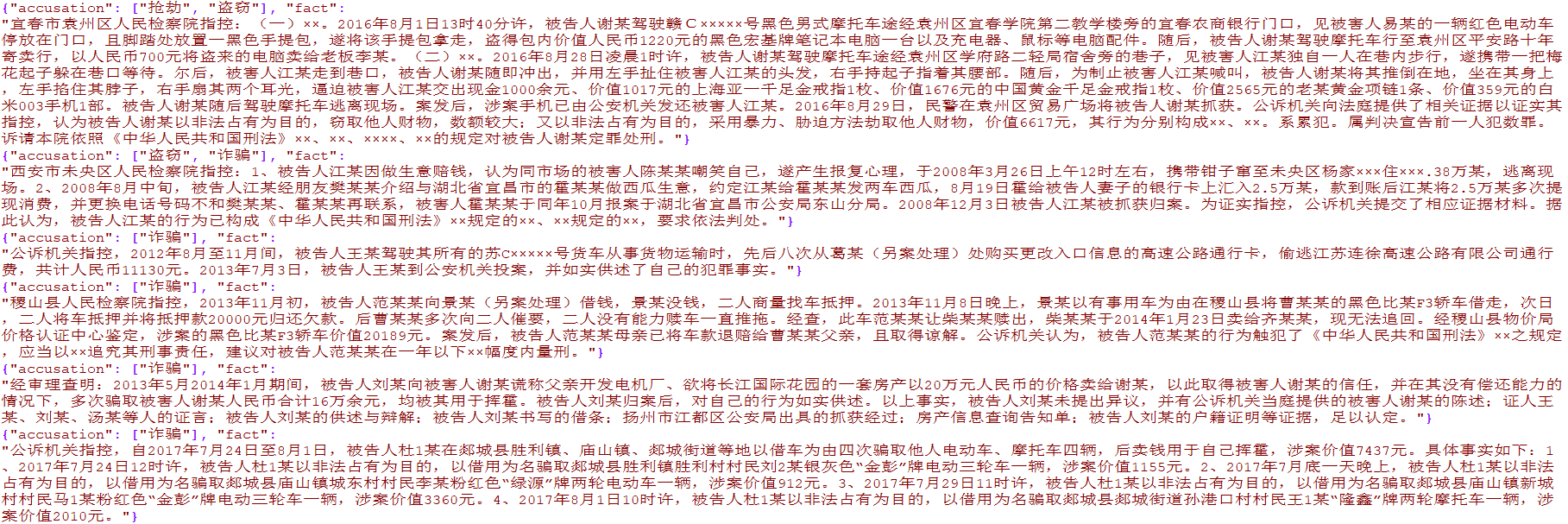
ข้อมูลอีคอมเมิร์ซแบบฉลากเดี่ยวมากกว่า 4,000 ข้อมูลและข้อมูลอาชญากรรมตุลาการหลายคนได้รับการจัดทำขึ้นมากกว่า 15,000 ครั้ง ข้อมูลมีไว้สำหรับการวิจัยเชิงวิชาการเท่านั้นและห้ามเผยแพร่เชิงพาณิชย์
 from TextClassification . load_data import load_data

# 单标签
data = load_data ( 'single' )
x = data [ 'evaluation' ]
y = [[ i ] for i in data [ 'label' ]]

# 多标签
data = load_data ( 'multiple' )
x = [ i [ 'fact' ] for i in data ]
y = [ i [ 'accusation' ] for i in data ]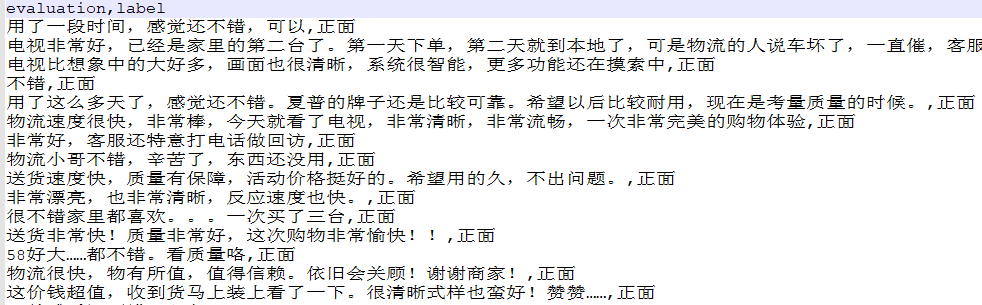
ใช้ในการประมวลผลข้อมูลข้อความต้นฉบับล่วงหน้ารวมถึงการแบ่งส่วนคำ, การเข้ารหัสการแปลง, ความสม่ำเสมอความยาวและวิธีการอื่น ๆ
 preprocess = DataPreprocess ()

# 处理文本
texts_cut = preprocess . cut_texts ( texts , word_len )
preprocess . train_tokenizer ( texts_cut , num_words )
texts_seq = preprocess . text2seq ( texts_cut , sentence_len )

# 得到标签
preprocess . creat_label_set ( labels )
labels = preprocess . creat_labels ( labels ) รวมการประมวลผลล่วงหน้าการฝึกอบรมเครือข่ายและการทำนายเครือข่าย โปรดดูสคริปต์ตัวอย่างสองรายการสำหรับการสาธิต
วิธีนี้มีดังนี้:
 from TextClassification import TextClassification

clf = TextClassification ()
texts_seq , texts_labels = clf . get_preprocess ( x_train , y_train ,
                                             word_len = 1 ,
                                             num_words = 2000 ,
                                             sentence_len = 50 )
clf . fit ( texts_seq = texts_seq ,
        texts_labels = texts_labels ,
        output_type = data_type ,
        epochs = 10 ,
        batch_size = 64 ,
        model = None )

# 保存整个模块,包括预处理和神经网络
with open ( './%s.pkl' % data_type , 'wb' ) as f :
    pickle . dump ( clf , f )

# 导入刚才保存的模型
with open ( './%s.pkl' % data_type , 'rb' ) as f :
    clf = pickle . load ( f )
y_predict = clf . predict ( x_test )
y_predict = [[ clf . preprocess . label_set [ i . argmax ()]] for i in y_predict ]
score = sum ( y_predict == np . array ( y_test )) / len ( y_test )
print ( score )  # 0.9288




