Text Classification
1.0.0

By training the text with existing tags, the classification of new text is realized.
2019.3.25: The project was originally a public opinion analysis business of the company, but later it participated in some competitions and added some small functions. At that time, I just wanted to integrate some simple models of machine learning and deep learning to exercise my engineering skills. After communicating with some netizens, I felt that there was no need to build a general module (no one uses it anyway, haha~). I happened to be quite leisurely recently, so I deleted all the useless fancy parameters and functions for the purpose of being simpler, and only preprocessing and convolutional networks were retained.
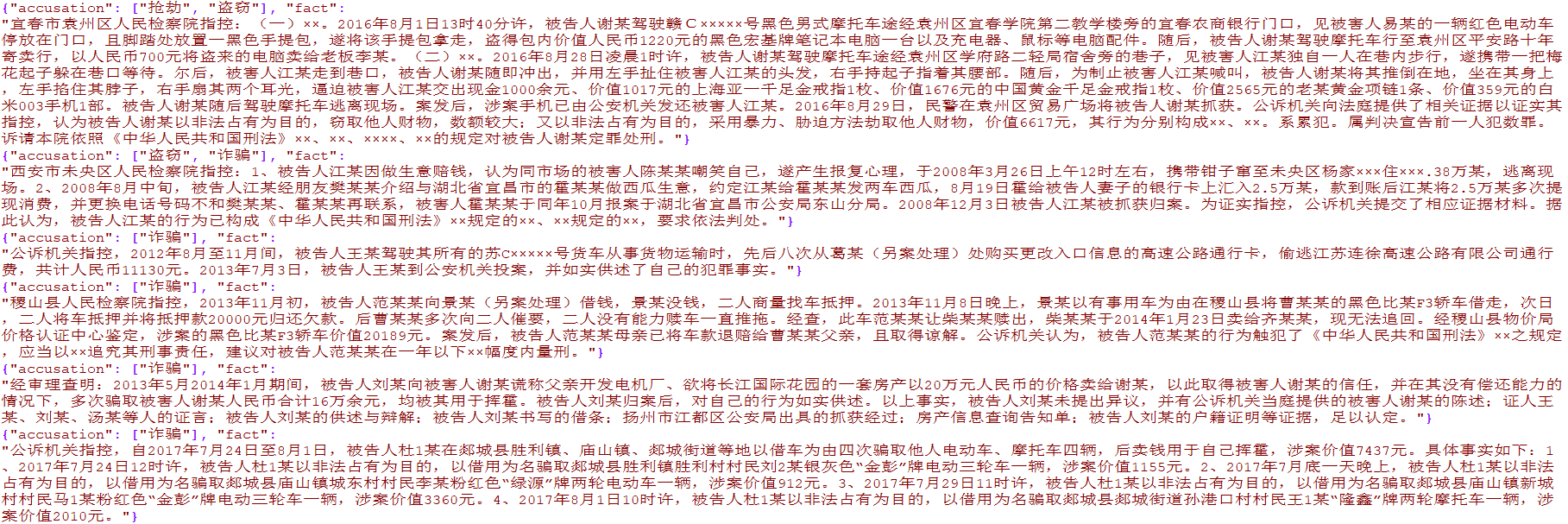
More than 4,000 single-label e-commerce data and more than 15,000 multi-label judicial crime data have been prepared. The data are for academic research only and commercial dissemination is prohibited.
 from TextClassification . load_data import load_data

# 单标签
data = load_data ( 'single' )
x = data [ 'evaluation' ]
y = [[ i ] for i in data [ 'label' ]]

# 多标签
data = load_data ( 'multiple' )
x = [ i [ 'fact' ] for i in data ]
y = [ i [ 'accusation' ] for i in data ]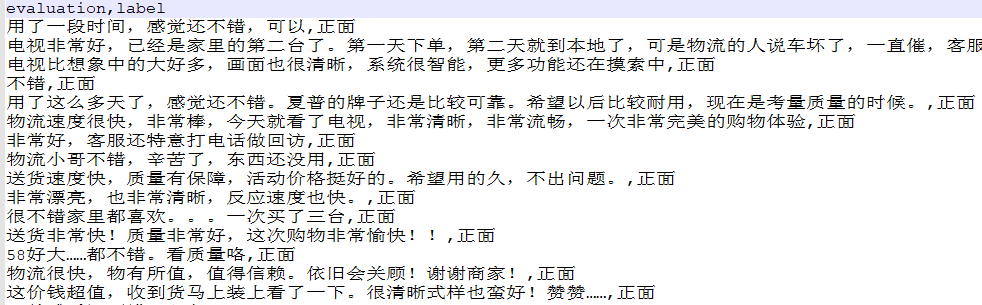
Used to preprocess the original text data, including word segmentation, conversion encoding, length uniformity and other methods, which have been encapsulated into TextClassification.py
 preprocess = DataPreprocess ()

# 处理文本
texts_cut = preprocess . cut_texts ( texts , word_len )
preprocess . train_tokenizer ( texts_cut , num_words )
texts_seq = preprocess . text2seq ( texts_cut , sentence_len )

# 得到标签
preprocess . creat_label_set ( labels )
labels = preprocess . creat_labels ( labels ) Integrate preprocessing, network training, and network prediction. Please refer to two demo scripts for demo
The method is as follows:
 from TextClassification import TextClassification

clf = TextClassification ()
texts_seq , texts_labels = clf . get_preprocess ( x_train , y_train ,
                                             word_len = 1 ,
                                             num_words = 2000 ,
                                             sentence_len = 50 )
clf . fit ( texts_seq = texts_seq ,
        texts_labels = texts_labels ,
        output_type = data_type ,
        epochs = 10 ,
        batch_size = 64 ,
        model = None )

# 保存整个模块,包括预处理和神经网络
with open ( './%s.pkl' % data_type , 'wb' ) as f :
    pickle . dump ( clf , f )

# 导入刚才保存的模型
with open ( './%s.pkl' % data_type , 'rb' ) as f :
    clf = pickle . load ( f )
y_predict = clf . predict ( x_test )
y_predict = [[ clf . preprocess . label_set [ i . argmax ()]] for i in y_predict ]
score = sum ( y_predict == np . array ( y_test )) / len ( y_test )
print ( score )  # 0.9288




