pytorch msssim
v1.0.0

MS-SSIM y SSIM rápido y diferenciable para Pytorch.
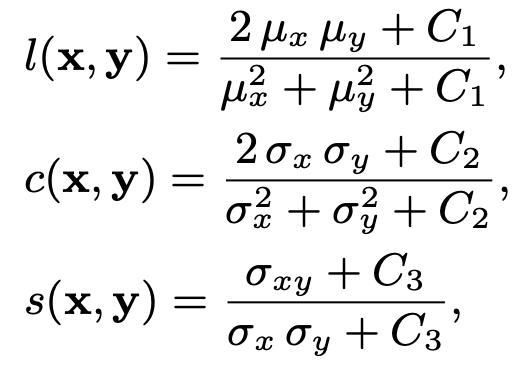


Los núcleos gaussianos utilizados en SSIM y MS-SSIM son separables. Un filtro separable en el procesamiento de imágenes se puede escribir como producto de dos filtros más simples. Típicamente, una operación de convolución bidimensional se separa en dos filtros unidimensionales. Esto reduce los costos computacionales en un
Solo un lanzamiento. Escriba sugerencias de @iyume
Soporte de imagen 3D de @fynnbe!
Ahora (V0.2), SSIM y MS-SSIM pueden producir resultados consistentes como flujo tensor y skimage . Se puede encontrar un punto de referencia (Pytorch-Msssim, TensorFlow y Skimage) en la sección Pruebas.
pip install pytorch-msssim from pytorch_msssim import ssim , ms_ssim , SSIM , MS_SSIM
# X: (N,3,H,W) a batch of non-negative RGB images (0~255)
# Y: (N,3,H,W)
# calculate ssim & ms-ssim for each image
ssim_val = ssim ( X , Y , data_range = 255 , size_average = False ) # return (N,)
ms_ssim_val = ms_ssim ( X , Y , data_range = 255 , size_average = False ) #(N,)
# set 'size_average=True' to get a scalar value as loss. see tests/tests_loss.py for more details
ssim_loss = 1 - ssim ( X , Y , data_range = 255 , size_average = True ) # return a scalar
ms_ssim_loss = 1 - ms_ssim ( X , Y , data_range = 255 , size_average = True )
# reuse the gaussian kernel with SSIM & MS_SSIM.
ssim_module = SSIM ( data_range = 255 , size_average = True , channel = 3 ) # channel=1 for grayscale images
ms_ssim_module = MS_SSIM ( data_range = 255 , size_average = True , channel = 3 )
ssim_loss = 1 - ssim_module ( X , Y )
ms_ssim_loss = 1 - ms_ssim_module ( X , Y )Si necesita calcular MS-SSIM/SSIM en imágenes normalizadas, primero denormalizarlas al rango de [0, 1] o [0, 255].
 # X: (N,3,H,W) a batch of normalized images (-1 ~ 1)
# Y: (N,3,H,W)
X = ( X + 1 ) / 2  # [-1, 1] => [0, 1]
Y = ( Y + 1 ) / 2
ms_ssim_val = ms_ssim ( X , Y , data_range = 1 , size_average = False ) #(N,) Para SSIM, se recomienda establecer nonnegative_ssim=True para evitar resultados negativos. Sin embargo, esta opción se establece en False de forma predeterminada para mantenerla consistente con TensorFlow y Skimage.
Para MS-SSIM, no existe una opción no negativa_SSIM y los respuestas SSIM se ven obligados a no ser negativos para evitar los resultados de NAN.
cd tests # requires tf2
python tests_comparisons_tf_skimage.py
# or skimage only
# python tests_comparisons_skimage.py Salidas:
 Downloading test image...
===================================
             Test SSIM
===================================
====> Single Image
Repeat 100 times
sigma=0.0 ssim_skimage=1.000000 (147.2605 ms), ssim_tf=1.000000 (343.4146 ms), ssim_torch=1.000000 (92.9151 ms)
sigma=10.0 ssim_skimage=0.932423 (147.5198 ms), ssim_tf=0.932661 (343.5191 ms), ssim_torch=0.932421 (95.6283 ms)
sigma=20.0 ssim_skimage=0.785744 (152.6441 ms), ssim_tf=0.785733 (343.4085 ms), ssim_torch=0.785738 (87.5639 ms)
sigma=30.0 ssim_skimage=0.636902 (145.5763 ms), ssim_tf=0.636902 (343.5312 ms), ssim_torch=0.636895 (90.4084 ms)
sigma=40.0 ssim_skimage=0.515798 (147.3798 ms), ssim_tf=0.515801 (344.8978 ms), ssim_torch=0.515791 (96.4440 ms)
sigma=50.0 ssim_skimage=0.422011 (148.2900 ms), ssim_tf=0.422007 (345.4076 ms), ssim_torch=0.422005 (86.3799 ms)
sigma=60.0 ssim_skimage=0.351139 (146.2039 ms), ssim_tf=0.351139 (343.4428 ms), ssim_torch=0.351133 (93.3445 ms)
sigma=70.0 ssim_skimage=0.296336 (145.5341 ms), ssim_tf=0.296337 (345.2255 ms), ssim_torch=0.296331 (92.6771 ms)
sigma=80.0 ssim_skimage=0.253328 (147.6655 ms), ssim_tf=0.253328 (343.1386 ms), ssim_torch=0.253324 (82.5985 ms)
sigma=90.0 ssim_skimage=0.219404 (142.6025 ms), ssim_tf=0.219405 (345.8275 ms), ssim_torch=0.219400 (100.9946 ms)
sigma=100.0 ssim_skimage=0.192681 (144.5597 ms), ssim_tf=0.192682 (346.5489 ms), ssim_torch=0.192678 (85.0229 ms)
Pass!
====> Batch
Pass!


===================================
             Test MS-SSIM
===================================
====> Single Image
Repeat 100 times
sigma=0.0 msssim_tf=1.000000 (671.5363 ms), msssim_torch=1.000000 (125.1403 ms)
sigma=10.0 msssim_tf=0.991137 (669.0296 ms), msssim_torch=0.991086 (113.4078 ms)
sigma=20.0 msssim_tf=0.967292 (670.5530 ms), msssim_torch=0.967281 (107.6428 ms)
sigma=30.0 msssim_tf=0.934875 (668.7717 ms), msssim_torch=0.934875 (111.3334 ms)
sigma=40.0 msssim_tf=0.897660 (669.0801 ms), msssim_torch=0.897658 (107.3700 ms)
sigma=50.0 msssim_tf=0.858956 (671.4629 ms), msssim_torch=0.858954 (100.9959 ms)
sigma=60.0 msssim_tf=0.820477 (670.5424 ms), msssim_torch=0.820475 (103.4489 ms)
sigma=70.0 msssim_tf=0.783511 (671.9357 ms), msssim_torch=0.783507 (113.9048 ms)
sigma=80.0 msssim_tf=0.749522 (672.3925 ms), msssim_torch=0.749518 (120.3891 ms)
sigma=90.0 msssim_tf=0.716221 (672.9066 ms), msssim_torch=0.716217 (118.3788 ms)
sigma=100.0 msssim_tf=0.684958 (675.2075 ms), msssim_torch=0.684953 (117.9481 ms)
Pass
====> Batch
Pass
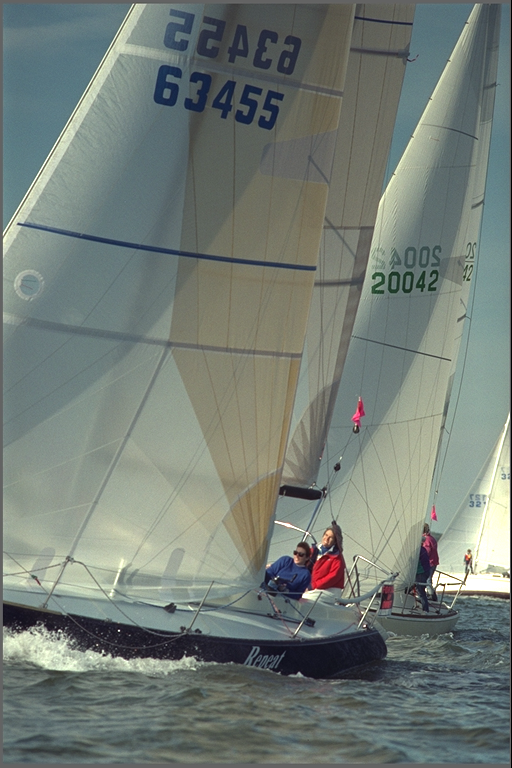 SSIM = 1.0000
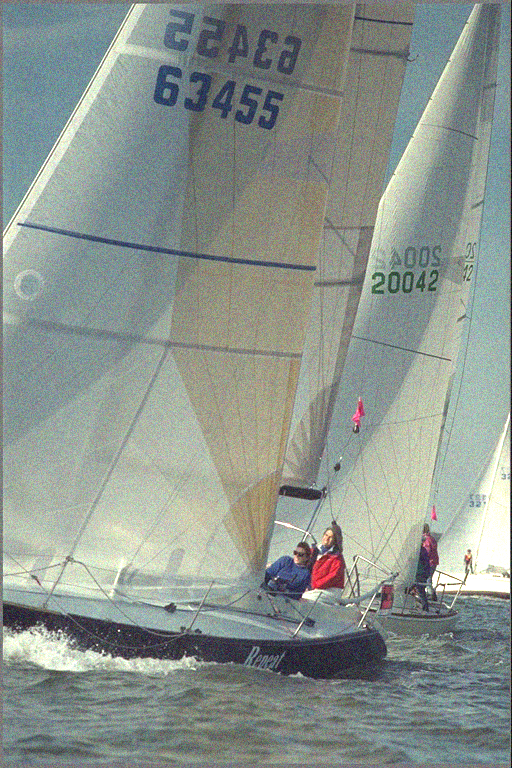 SSIM = 0.4225
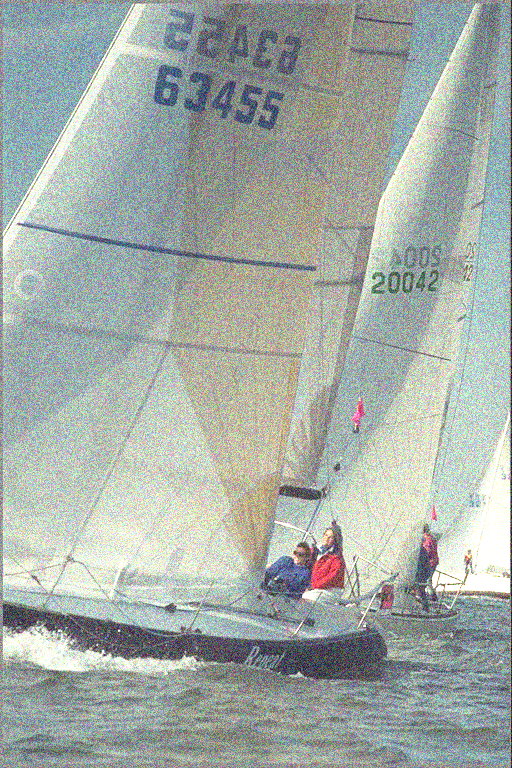 SSIM = 0.1924
Consulte 'Tests/Tests_loss.py' para obtener más detalles sobre cómo usar SSIM o MS_SSIM como funciones de pérdida
Ver 'Pruebas/ae_example'
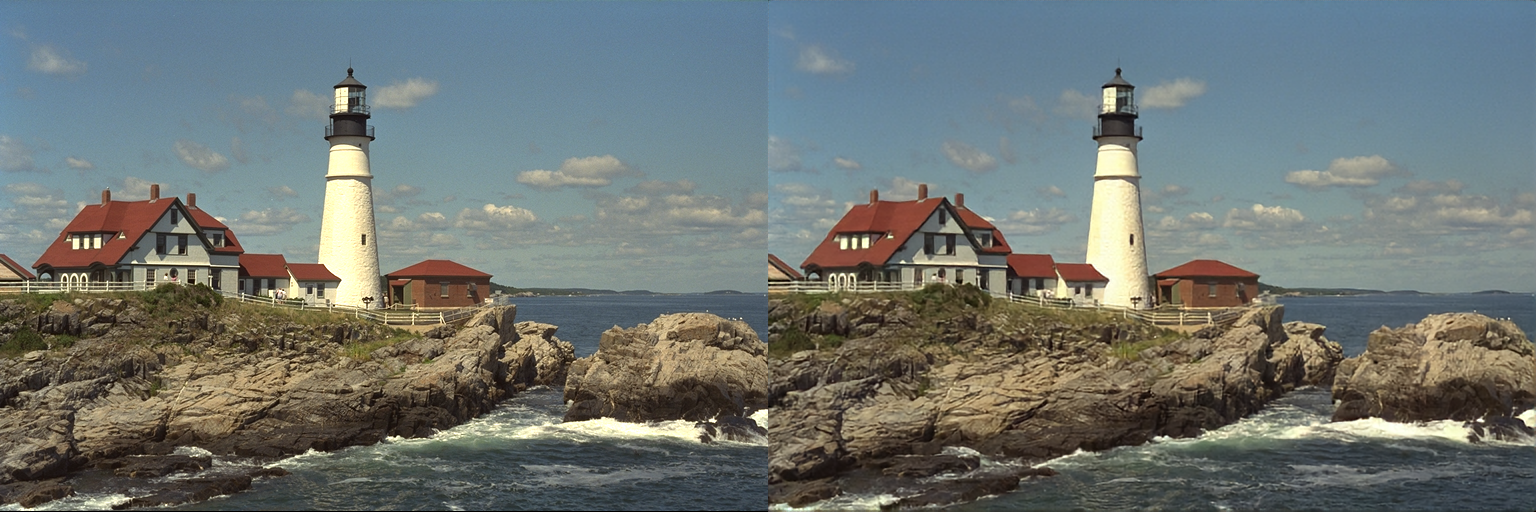 Izquierda: la imagen original, derecha: la imagen reconstruida
https://github.com/jorge-pessoa/pytorch-msssim
https://ece.uwaterloo.ca/~z70wang/research/ssim/
https://ece.uwaterloo.ca/~z70wang/publications/msssim.pdf
Código MATLAB
SSIM y MS-SSIM de TensorFlow