nPerlinNoise
Stable Version 0.1.4-alpha

Details:
Status:
v0.1.4-alphafocusing on all issues Getting Involved, follows PEP440
All Packages: releases
CHANGELOGTested on Python 3.10, Windows 10
optimization for octave noise
writing unit tests
writing API docs
writing pending docs
writing ReadTheDocs
blogging
finishing left in-code docs
dimensional octaves
Screenshots:

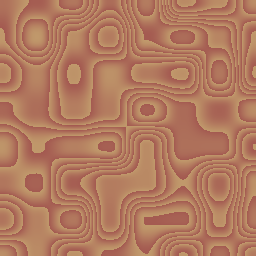
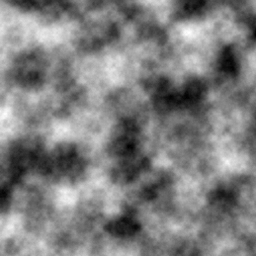
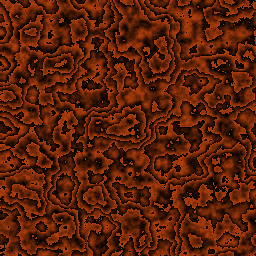

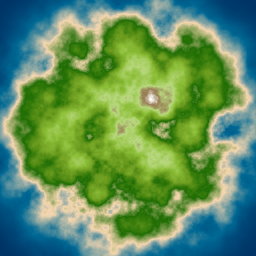
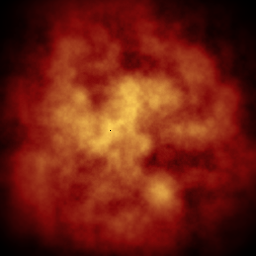
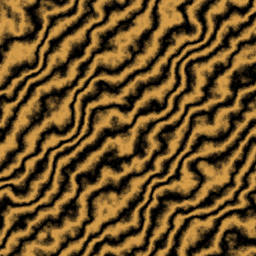
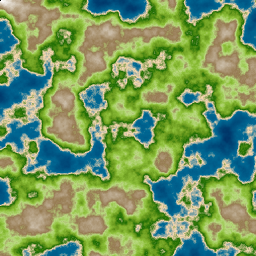
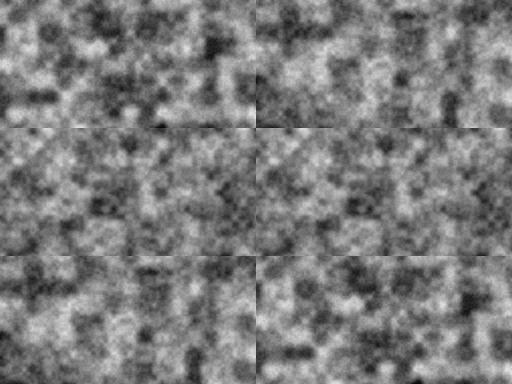
Python>=3.10.0for production dependencies see Requirements
for development dependencies see Dev-Requirements
$ pip install nPerlinNoisefor detailed instruction on installation see INSTALLATION.
Setup
import NPerlinNoise as nPN refer #24>>> import nPerlinNoise as nPN
>>> noise = nPN.Noise(seed=69420)Basic usage
Get noise values at given n-dimensional coordinates by calling noise(...),
coordinates can be single value, or an iterable
noise(..., l, m, n, ...)
where l, m, n, ..., are single values
>>> noise(73)
array(0.5207113, dtype=float32)
>>> noise(73, 11, 7)
array(0.5700986, dtype=float32)
>>> noise(0, 73, 7, 11, 0, 3)
array(0.5222712, dtype=float32)noise(...., [l1, l2, ..., lx], [m1, m2, ..., mx], [n1, n2, ..., nx], ....)
where ...., are iterable of homogeneous-dimensions and lx, mx, nx, ..., are single values the output will be of same shape of input homogeneous-dimensions
>>> noise([73, 49])
array([0.52071124, 0.6402224 ], dtype=float32)
>>> noise([73, 49], [2, 2])
array([0.4563121 , 0.63378346], dtype=float32)
>>> noise([[73], [49], [0]],
...       [[2 ], [2 ], [2]],
...       [[0 ], [1 ], [2]])
array([[0.4563121 ],
       [0.6571784 ],
       [0.16369209]], dtype=float32)
>>> noise([[1, 2], [2, 3]],
...       [[1, 1], [1, 1]],
...       [[2, 2], [2, 2]])
array([[0.08666219, 0.09778494],
       [0.09778494, 0.14886124]], dtype=float32)
noise(..., l, m, n, ...) has same values with trailing dimensions having zero as coordinate
noise(..., l, m, n) = noise(..., l, m, n, 0) = noise(..., l, m, n, 0, 0) = noise(..., l, m, n, 0, 0, ...)
>>> noise(73)
array(0.5207113, dtype=float32)
>>> noise(73, 0)
array(0.5207113, dtype=float32)
>>> noise(73, 0, 0)
array(0.5207113, dtype=float32)
>>> noise(73, 0, 0, 0, 0)
array(0.5207113, dtype=float32)
grid mode allows for computing noise for every combination of coords
use noise(..., gridMode=True) gridMode is key-word only argument, default=False
the output will be of shape equal to the length(s) of coords in that order
>>> noise([73, 49], [2, 2], [0, 1], gridMode=True)
array([[[0.4563121 , 0.63378346],
        [0.4563121 , 0.63378346]],

       [[0.44594935, 0.6571784 ],
        [0.44594935, 0.6571784 ]]], dtype=float32)
>>> noise([1, 20, 32, 64], [1, 1, 2], 0, [1, 2], gridMode=True)
array([[[[0.06459193, 0.5110498 , 0.669962  , 0.47636804],
         [0.06459193, 0.5110498 , 0.669962  , 0.47636804],
         [0.09864856, 0.5013973 , 0.62935597, 0.47954425]]],


       [[[0.07678645, 0.50853723, 0.6778991 , 0.4679888 ],
         [0.07678645, 0.50853723, 0.6778991 , 0.4679888 ],
         [0.14069612, 0.47582665, 0.6663638 , 0.48764956]]]],
      dtype=float32)
for detailed usage see EXAMPLE
to see all tests see Tests
No Known BugsNPerlin.findBounds is bottlenecknoise(a, b, c, d, e, f, ...) is slow for single value coordinatesIf you have questions, concerns, bug reports, etc. please file an issue in this repository's Issue Tracker or open a discussion in this repository's Discussion section.
Looking for Contributors for feature additionsLooking for Contributors for optimization #11Looking for Contributors for unit testing #12Looking for Contributors for ReadTheDocs #13Looking for Contributors for WebApp #14Looking for Contributors for API docs #15General instructions on how to contribute CONTRIBUTING and CODE OF CONDUCT
Maintainer:
| Amith M |
Contributors:
| Shravan Revanna |





