Dermoscopic Image ICL GPT4
1.0.0

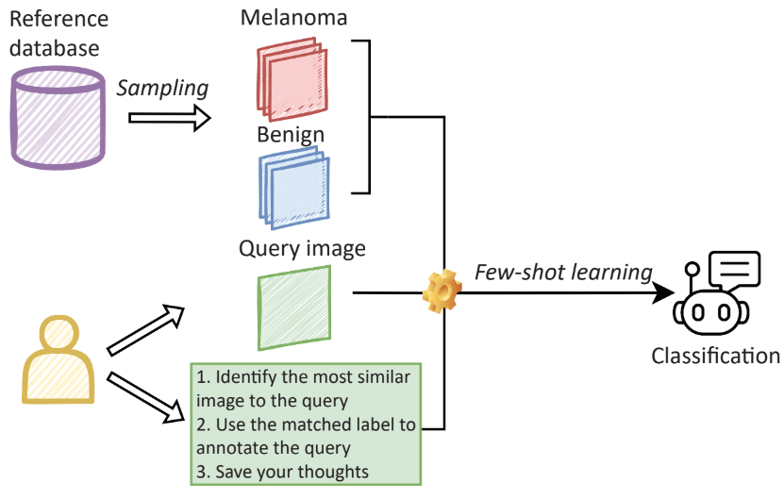
該存儲庫包含用於使用GPT-4V在皮膚鏡圖像上執行內部文化學習(ICL)的代碼和數據。該項目旨在使用少量學習技術將皮膚鏡圖像分類為黑色素瘤或良性。
?閱讀論文
 .
├── data                                 # Contains subdirectories for processed data
│   ├── all
│   ├── all_resized
│   ├── bn
│   ├── bn_resized
│   ├── bn_resized_label
│   ├── mm
│   ├── mm_resized
│   ├── mm_resized_label
│   └── selected_images.xlsx            # Image names
├── RAW                                 # Contains raw data downloaded from ISCI Archive
├── result                              # Results from running API_calling will be stored here as .json files
│   ├── 1_shot_v3.0_KNN
│   ├── 1_shot_v3.0_Random
│   └── ...
├── API_calling.py                       # Call OpenAI API for classification
├── data_labeling.py                     # Add label to the resized data
├── data_resizing.py                     # Resize the data with the original aspect ratio
├── data_selection.py                    # Select data from RAW
├── README.md
├── result_analysis.py                   # Compute stats for AI-generated content
├── result_visualization.ipynb           # Visualize the results
└── topK_finding.py                      # Find the top-k similar images to the query image
所有皮膚鏡圖像均從ISIC存檔下載。
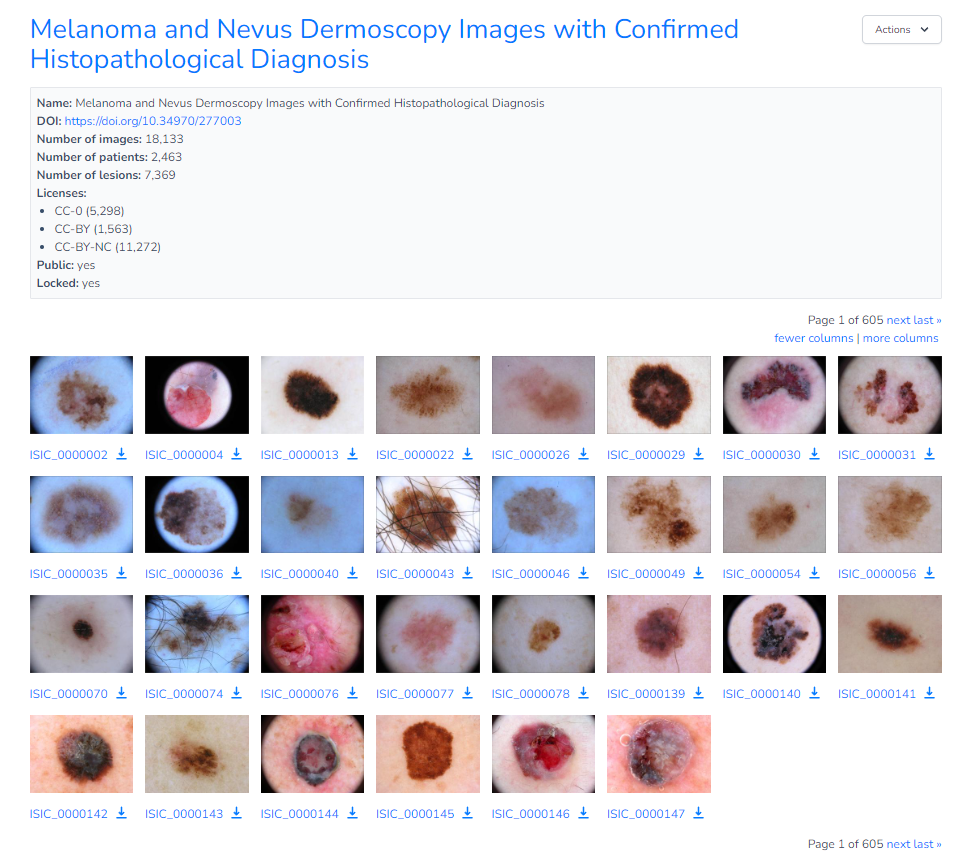
該項目僅用於學術研究目的。此存儲庫中的代碼按MIT許可發布。如果使用提供的數據,請引用ISIC存檔。
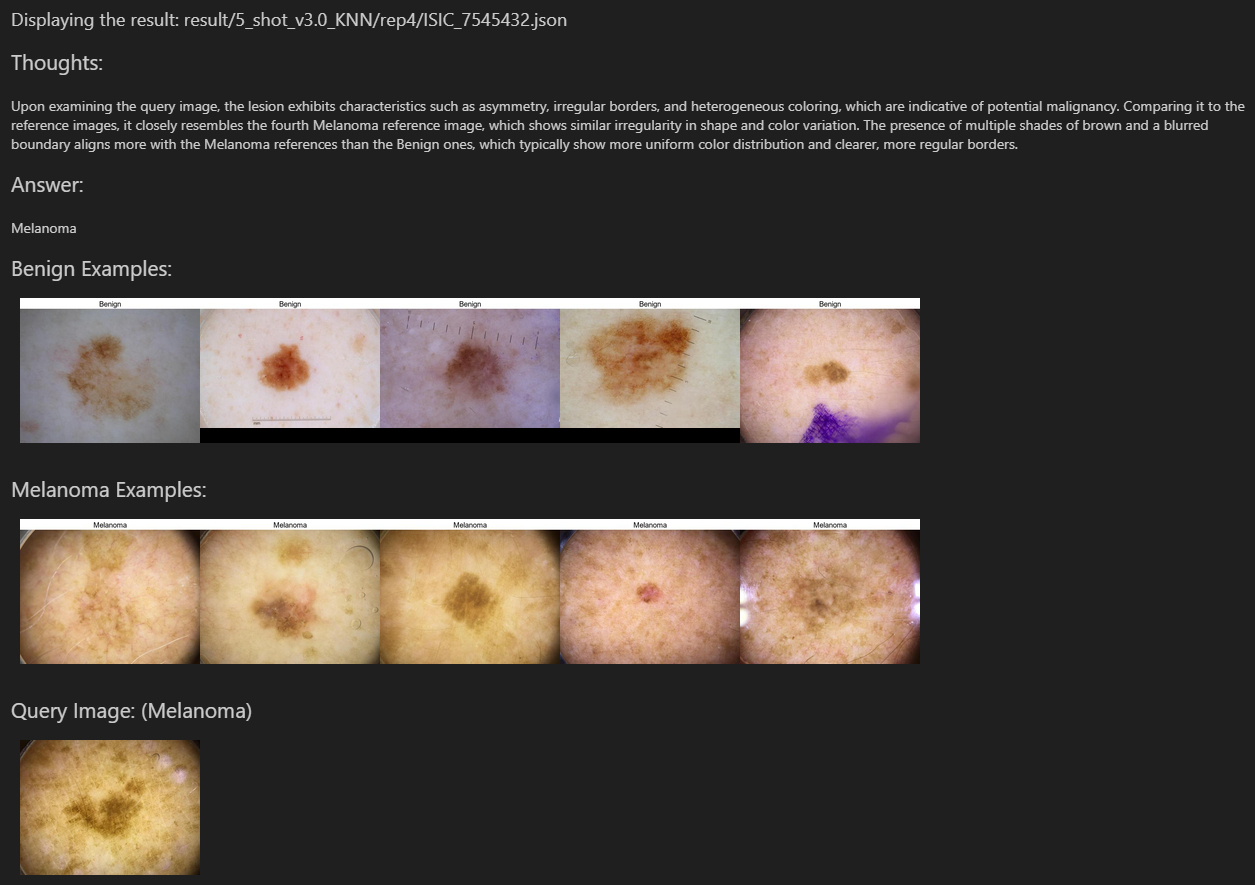
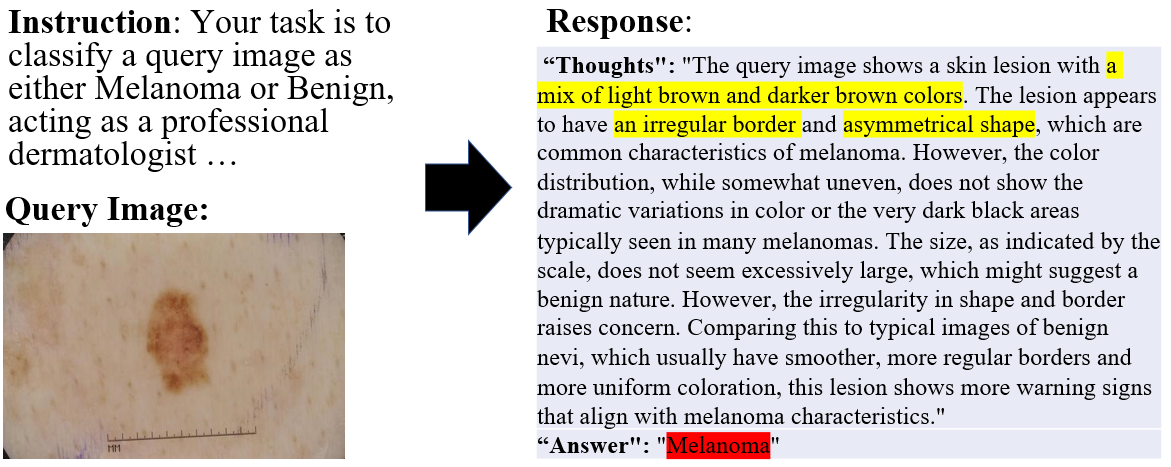
GPT4V自然使用“ ABCD”規則進行皮膚鏡圖像分類。
域知識在零射門學習中沒有正確適用:
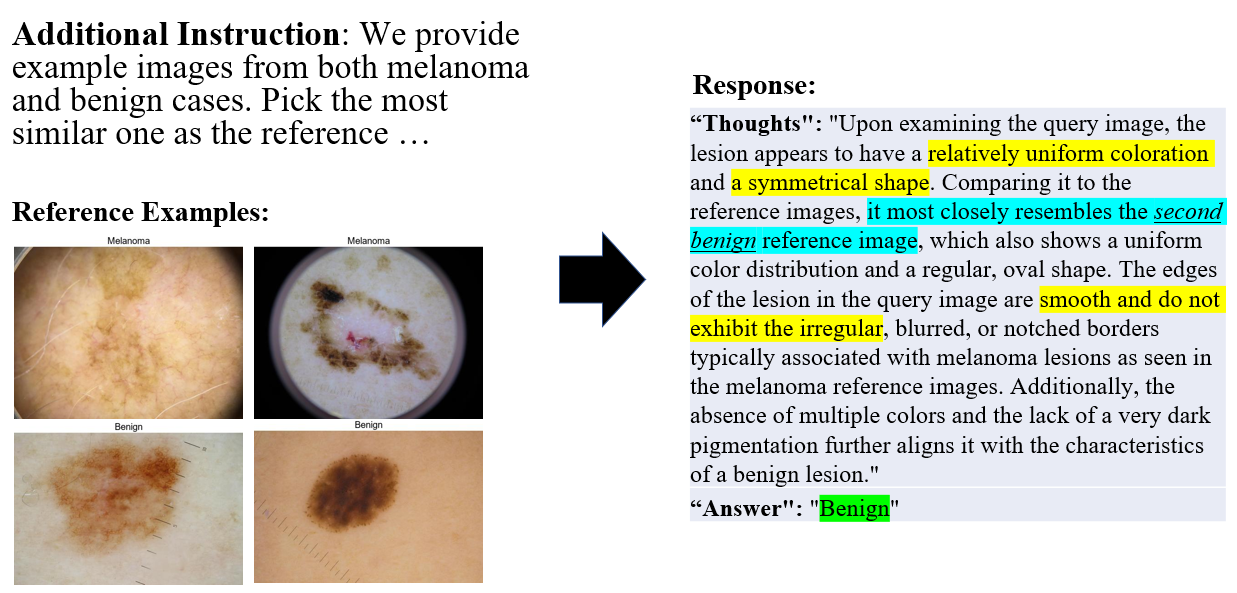
在幾次學習中正確使用的領域知識:
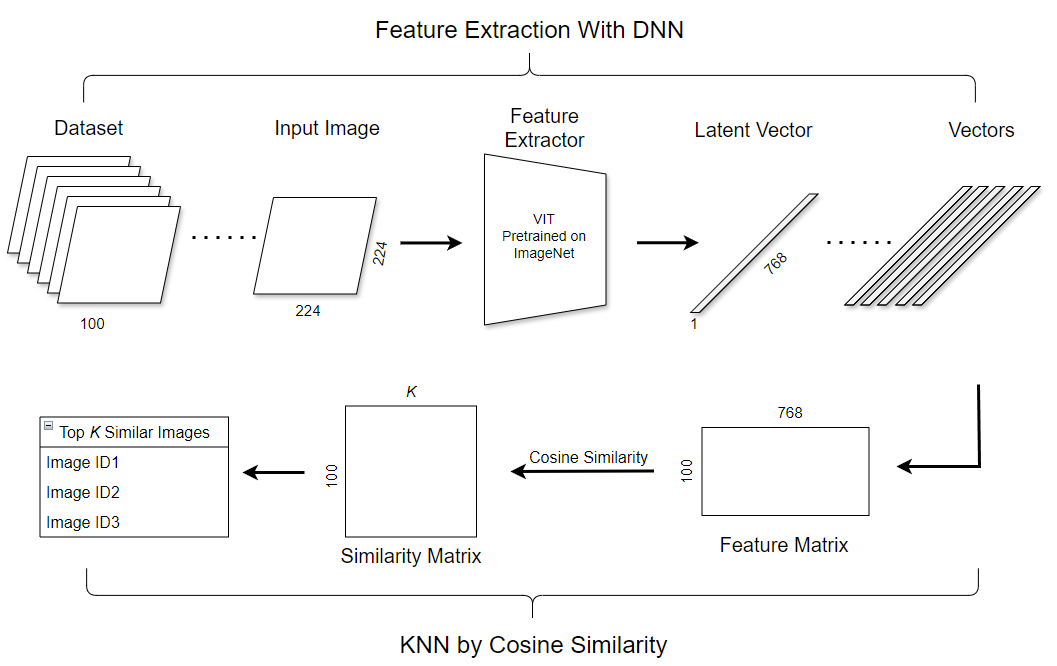
隨機選擇參考圖像以進行幾次學習。為了確定更多的代表性示例是否有助於GPT4V做出正確的決定,我們採用了KNN相似性,以在每個類別中找到作為參考文獻的頂部K相似圖像。
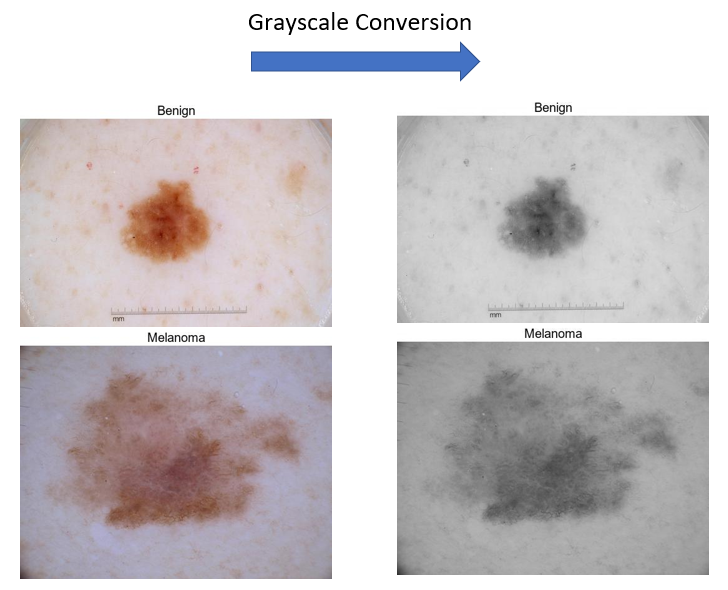
為了確定顏色如何影響分類結果,我們對顏色進行了消融測試。
很少有節目的學習很容易將分類準確性從約50%提高到75%的水平,只有2個或3個示例。
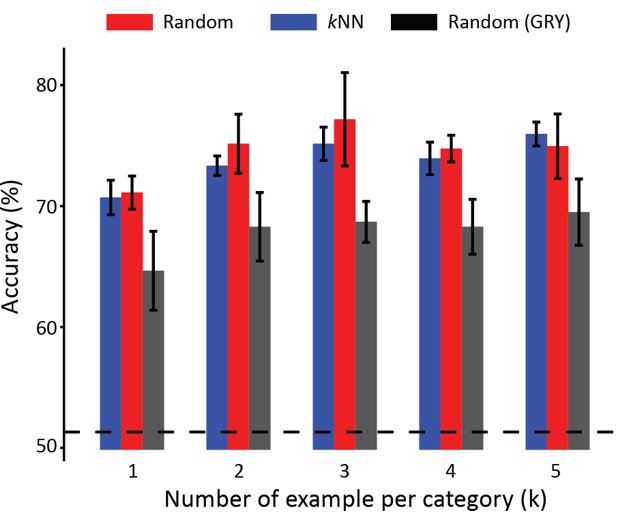
令人驚訝的是,KNN無助於準確性。
我們探索了將KNN和隨機抽樣應用於兩個參考集的各種組合,以隨機抽樣為基準,以簡單為基準

作為用於皮膚癌診斷的重要模式,顏色對結果有重大影響。