summarizer
1.0.0

该项目实施了一种自定义算法,以从西班牙语和英语新闻文章中提取最重要的句子和关键词。
它是在Python中充分开发的,它的灵感来自使用Reddit News Subreddits上的类似项目,这些项目使用术语频率 - 内部文档频率( tf–idf )。
最重要的3个文件是:
scraper.py :在给定的HTML源上执行Web刮擦的Python脚本,它提取文章标题,日期和主体。
summary.py :将自定义算法应用于文本的字符串并提取顶级句子和单词的Python脚本。
bot.py :一个reddit bot,该机器人检查其最新提交的子reddit。它管理已经处理过的提交的清单,以避免重复。
该项目使用以下Python库
spaCy :习惯将文章纳入句子和单词。PRAW :使Reddit API的使用非常容易。Requests :要执行HTTP get文章URL请求。BeautifulSoup :用于提取文章文本。html5lib :与BeautifulSoup一起使用时,这款解析器获得了更好的兼容性。tldextract :用于从URL提取域。wordcloud :用文章文本创建单词云。安装spaCy库后,您必须安装语言模型才能使文章化。
对于Spanish您可以运行此:
python -m spacy download es_core_news_sm
有关其他语言,请检查以下链接:https://spacy.io/usage/models
机器人本质上很简单,它使用了PRAW库,该库非常简单。该机器人每10分钟进行一次调查,以获取其最新提交的内容。
它首先检测是否尚未处理提交,然后检查提交URL是否在白名单中。这位白名单目前由我自己策划。
如果帖子及其URL通过两者进行了检查,则将网络刮擦过程应用于URL,这是事物开始变得有趣的地方。
在回复原始提交之前,它会检查所达到的减少百分比,如果它太低或太高,它会跳过它并移至下一个提交。
目前在白名单中,已经有300多个新闻文章和博客网站。为每个制作专门的网络刮板根本不可行。
第二个最好的事情是使刮板尽可能准确。
我们以通常的方式和BeautifulSoup Requests库以通常的方式启动Web刮板。
 with requests . get ( article_url ) as response :

    if response . encoding == "ISO-8859-1" :
        response . encoding = "utf-8"

    html_source = response . text

for item in [ "</p>" , "</blockquote>" , "</div>" , "</h2>" , "</h3>" ]:
    html_source = html_source . replace ( item , item + " n " )

soup = BeautifulSoup ( html_source , "html5lib" )几次,我遇到了编码不正确的猜测引起的编码问题。为了避免此问题,我强制Requests用utf-8解码。
现在,我们已经将文章分解为soup对象,我们将首先提取标题并发布时间。
我使用了类似的方法来提取这两个值,我首先检查了最常见的标签,并退回了下一个常见替代方案。
并非所有网站都揭露其已发布的日期,有时我们以一个空字符串结尾。
 article_title = soup . find ( "title" ). text . replace ( " n " , " " ). strip ()

# If our title is too short we fallback to the first h1 tag.
if len ( article_title ) <= 5 :
    article_title = soup . find ( "h1" ). text . replace ( " n " , " " ). strip ()

article_date = ""

# We look for the first meta tag that has the word 'time' in it.
for item in soup . find_all ( "meta" ):

    if "time" in item . get ( "property" , "" ):

        clean_date = item [ "content" ]. split ( "+" )[ 0 ]. replace ( "Z" , "" )

        # Use your preferred time formatting.
        article_date = "{:%d-%m-%Y a las %H:%M:%S}" . format (
            datetime . fromisoformat ( clean_date ))
        break

# If we didn't find any meta tag with a datetime we look for a 'time' tag.
if len ( article_date ) <= 5 :
    try :
        article_date = soup . find ( "time" ). text . strip ()
    except :
        pass
从不同标签中提取文本时,我经常在不分开的情况下得到字符串。我实现了一些黑客攻击,以在通常包含文本的每个标签中添加新行。这大大提高了令牌仪的整体准确性。
我最初的想法是仅接受使用<article>标签的网站。对于我测试的第一个网站,它可以正常运行,但是我很快意识到很少有网站使用它,而使用它的网站也不正确。
article = soup . find ( "article" ). text访问<article>标签的.text属性时,我注意到我还将获取JavaScript代码。我回溯了一点,并删除了所有可以在文章文本中添加噪音的标签。
[ tag . extract () for tag in soup . find_all (
        [ "script" , "img" , "ul" , "time" , "h1" , "h2" , "h3" , "iframe" , "style" , "form" , "footer" , "figcaption" ])]


# These class names/ids are known to add noise or duplicate text to the article.
noisy_names = [ "image" , "img" , "video" , "subheadline" ,
                "hidden" , "tract" , "caption" , "tweet" , "expert" ]

for tag in soup . find_all ( "div" ):

    tag_id = tag [ "id" ]. lower ()

    for item in noisy_names :
        if item in tag_id :
            tag . extract ()
以上代码删除了大多数字幕,通常重复文章中的内容。
之后,我应用了一个三步过程来获取文章文本。
首先,我检查了所有<article>标签,并用最长的文字抓住了标签。
 article = ""

for article_tag in soup . find_all ( "article" ):

    if len ( article_tag . text ) >= len ( article ):
article = article_tag . text对于正确使用<article>标签的网站,这很好。最长的标签几乎总是包含主要文章。
但这并没有像预期的那样完全奏效,我注意到结果的质量差,有时我会为其他文章摘录。
那时我决定添加后备,只需寻找<article>标签的Lnstead,我将寻找具有常用id's的<div>和<section>标签。
 # These names commonly hold the article text.
common_names = [ "artic" , "summary" , "cont" , "note" , "cuerpo" , "body" ]

# If the article is too short we look somewhere else.
if len ( article ) <= 650 :

    for tag in soup . find_all ([ "div" , "section" ]):

        tag_id = tag [ "id" ]. lower ()

        for item in common_names :
            if item in tag_id :
                # We guarantee to get the longest div.
                if len ( tag . text ) >= len ( article ):
article = tag . text这提高了准确性,我重复了代码,但是我还在寻找class属性的id属性。
 # The article is still too short, let's try one more time.
if len ( article ) <= 650 :

    for tag in soup . find_all ([ "div" , "section" ]):

        tag_class = "" . join ( tag [ "class" ]). lower ()

        for item in common_names :
            if item in tag_class :
                # We guarantee to get the longest div.
                if len ( tag . text ) >= len ( article ):
                    article = tag . text
使用所有以前的方法,大大提高了刮板的整体准确性。在某些情况下,我使用的是用英语和西班牙语共享相同字母的部分单词(ARTIC-> artic/articulo)。现在,刮板与我测试的所有URL兼容。
我们进行最终检查,如果文章仍然太短,我们将中止该过程并转到下一个URL,否则我们转到摘要算法。
该算法旨在主要从事西班牙书面文章。它由几个步骤组成:
在开始之前,我们需要初始化spaCy库。
NLP = spacy . load ( "es_core_news_sm" )那条代码线将加载我使用的Spanish型号。如果您使用其他语言,请参考Requirements部分,以便您知道如何安装适当的模型。
从文章中提取文本时,我们通常会得到很多白色空间,主要是从线路断开( n )。
我们将文本分开,然后剥离所有空格,然后再次加入。这不是严格要求这样做的,但是在调试整个过程时会有所帮助。
在脚本的顶部,我们声明了停止单词文本文件的路径。这些停止单词将被添加到一个set中,保证不重复。
我还添加了一个列表,其中包含一些西班牙语和英语单词,这些单词不是停止单词,但它们并没有为文章添加任何实质性。我个人的偏爱是用小写形式进行硬编码。
然后,我在大写和标题表单中添加了每个单词的副本。这意味着该set将是原始尺寸的3倍。
 with open ( ES_STOPWORDS_FILE , "r" , encoding = "utf-8" ) as temp_file :
    for word in temp_file . read (). splitlines ():
        COMMON_WORDS . add ( word )

with open ( EN_STOPWORDS_FILE , "r" , encoding = "utf-8" ) as temp_file :
    for word in temp_file . read (). splitlines ():
        COMMON_WORDS . add ( word )

extra_words = list ()

for word in COMMON_WORDS :
    extra_words . append ( word . title ())
    extra_words . append ( word . upper ())

for word in extra_words :
COMMON_WORDS . add ( word )在开始对我们的单词进行引导之前,我们必须首先将清洁的文章传递到NLP管道中,这是用一行代码完成的。
doc = NLP ( cleaned_article )该doc对象包含几个迭代器,我们将使用的2个是tokens和sents (句子)。
在这一点上,我为算法添加了个人风格。首先,我制作了文章的副本,然后从中删除了所有常见的单词。
之后,我使用了一个collections.Counter对象进行初始评分。
然后,我将乘数奖励应用于大写字母启动的单词,并且等于或更长的时间超过4个字符。大多数时候,这些词是地方,人或组织的名称。
最后,我将所有实际数字的单词的分数设置为零。
 words_of_interest = [
        token . text for token in doc if token . text not in COMMON_WORDS ]

scored_words = Counter ( words_of_interest )

for word in scored_words :

    if word [ 0 ]. isupper () and len ( word ) >= 4 :
        scored_words [ word ] *= 3

    if word . isdigit ():
scored_words [ word ] = 0现在,我们已经有了每个单词的最终分数,是时候从文章中获得每个句子了。
为此,我们首先需要将文章分为句子。我尝试了各种方法,包括RegEx ,但最有效的方法是spaCy Library。
我们将再次迭代上一步中定义的doc对象,但是这次我们将迭代其sents属性。
需要注意的是,我们创建了一个句子tokens列表,在这些令牌内部,我们可以通过访问其text属性来检索句子文本。
 article_sentences = [ sent for sent in doc . sents ]

scored_sentences = list ()

or index , sent in enumerate ( article_sentences ):

    # In some edge cases we have duplicated sentences, we make sure that doesn't happen.
    if sent . text not in [ sent for score , index , sent in scored_sentences ]:
        scored_sentences . append (
[ score_line ( sent , scored_words ), index , sent . text ]) scored_sentences是列表。每个内部列表包含3个值。句子得分,其索引和句子本身。这些值将在下一步中使用。
下面的代码显示了如何评分行。
 def score_line ( line , scored_words ):

    # We remove the common words.
    cleaned_line = [
        token . text for token in line if token . text not in COMMON_WORDS ]

    # We now sum the total number of ocurrences for all words.
    temp_score = 0

    for word in cleaned_line :
        temp_score += scored_words [ word ]

    # We apply a bonus score to sentences that contain financial information.
    line_lowercase = line . text . lower ()

    for word in FINANCIAL_WORDS :
        if word in line_lowercase :
            temp_score *= 1.5
            break

    return temp_score
我们将乘数应用于包含任何指金或财务的句子。
这是算法的最后一部分,我们利用sorted()函数来获取顶部句子,然后将其重新排序以其原始位置。
我们以相反的顺序对scored_sentences进行排序,这将为我们提供首先评分的句子。我们启动一个小的计数器变量,因此一旦达到5。我们还丢弃了所有3个字符或以下的句子(有时有偷偷摸摸的零宽度字符)。
 top_sentences = list ()
counter = 0

for score , index , sentence in sorted ( scored_sentences , reverse = True ):

    if counter >= 5 :
        break

    # When the article is too small the sentences may come empty.
    if len ( sentence ) >= 3 :

        # We append the sentence and its index so we can sort in chronological order.
        top_sentences . append ([ index , sentence ])
        counter += 1

return [ sentence for index , sentence in sorted ( top_sentences )]
最后,我们使用列表理解仅返回已经按时间顺序排序的句子。
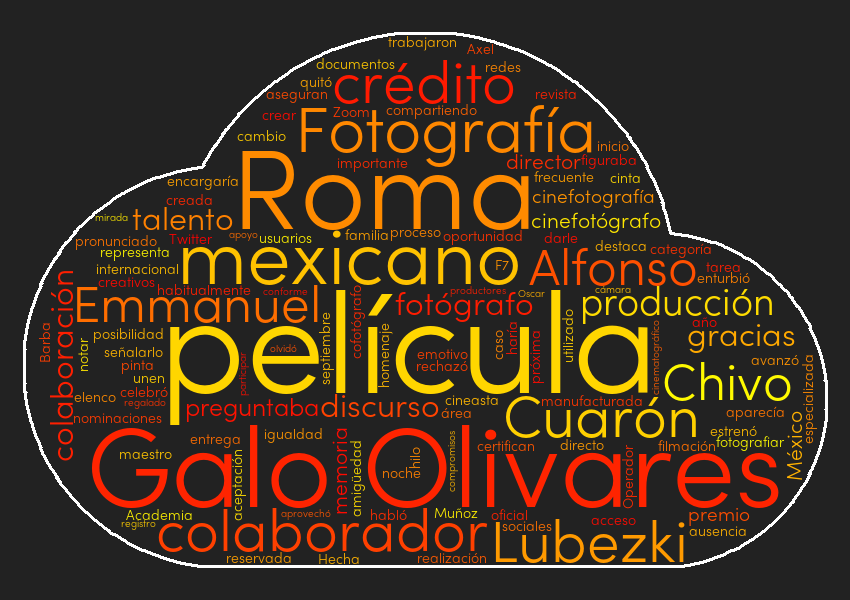
只是为了好玩,我在每篇文章中添加了一个单词云。为此,我使用了wordcloud库。该库非常易于使用,您只需要声明WordCloud对象,然后将具有文本字符串作为其参数的generate方法使用。
 wc = wordcloud . WordCloud () # See cloud.py for full parameters.
wc . generate ( prepared_article )
wc . to_file ( "./temp.png" )生成图像后,我将其上传到Imgur ,然后返回URL链接并将其添加到Markdown消息中。
这是一个非常有趣且有趣的项目。我可能已经重新发明了轮子,但至少我学到了一些很酷的东西。
我对结果的整体质量感到满意,我将继续调整算法并应用兼容性提高。
附带说明,在测试脚本时,我不小心要求推文,Facebook帖子和英文书面文章。所有这些都获得了可接受的输出,但是由于这些站点不是目标,所以我将它们从白名单中删除。
经过几周的反馈,我决定增加对英语的支持。这需要一些重构。
为了使其与其他语言一起使用,您只需要一个文本文件,其中包含该语言中的所有停止单词并复制几行代码(请参阅“删除通用单词”部分)。





