
In the field of artificial intelligence, an open source project called "Second Me" has recently attracted widespread attention on the X platform. This AI tool, known as the "new species that can imitate your thinking", quickly attracted the interest of technology enthusiasts and ordinary users with its highly personalized functions and fully localized operation. The emergence of Second Me may bring a new change to the field of AI assistants.
The core function of Second Me is to build a digital clone that is highly suitable for the individual by learning users' behavioral habits, expressions and interests. It not only remembers the user's writing style and code habits, but also accurately captures the catchphrases in daily terms. For example, if the user is used to adding "hehe" to the end of the message, Second Me will automatically incorporate it into text generation; if the user often uses "laughing and crying" expressions on social media, this feature will be recognized by AI and applied in time. This highly personalized design makes Second Me perform well in user experience.
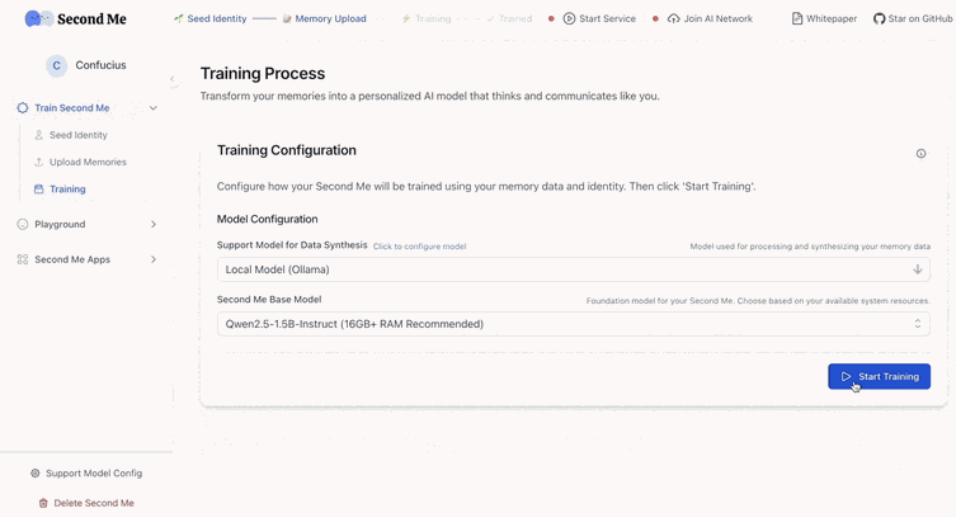
What is even more impressive is that through self-learning mechanism, Second Me can continuously summarize users' thinking patterns and form long-term memory. It can also make independent decisions based on these habits, such as first greetings when drafting emails and then getting to the point, or prioritizing content that users are interested in when filtering news, rather than general random recommendations. In addition, the AI can interact with other AI instances and share knowledge, showing strong expansion potential. This intelligent decision-making ability allows Second Me to provide users with more considerate services in daily life and work.
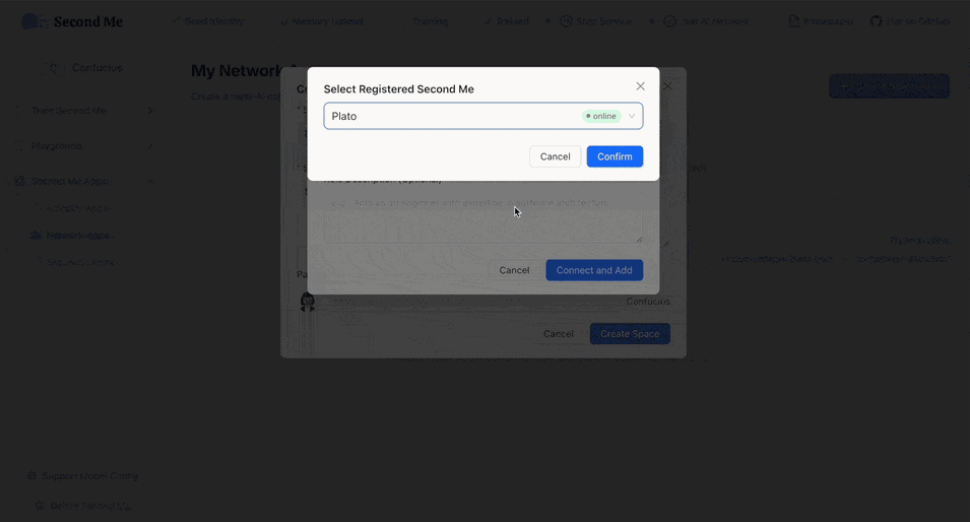
Unlike many AI tools that rely on cloud computing, Second Me chose to run completely locally, a design that not only ensures the privacy and security of user data, but also provides technology enthusiasts with open source customization space. Whether programmers want to adjust the code style or ordinary users want an intelligent assistant that understands themselves, Second Me can meet diverse needs. This localized way of running gives Second Me a significant advantage in data security and user privacy.
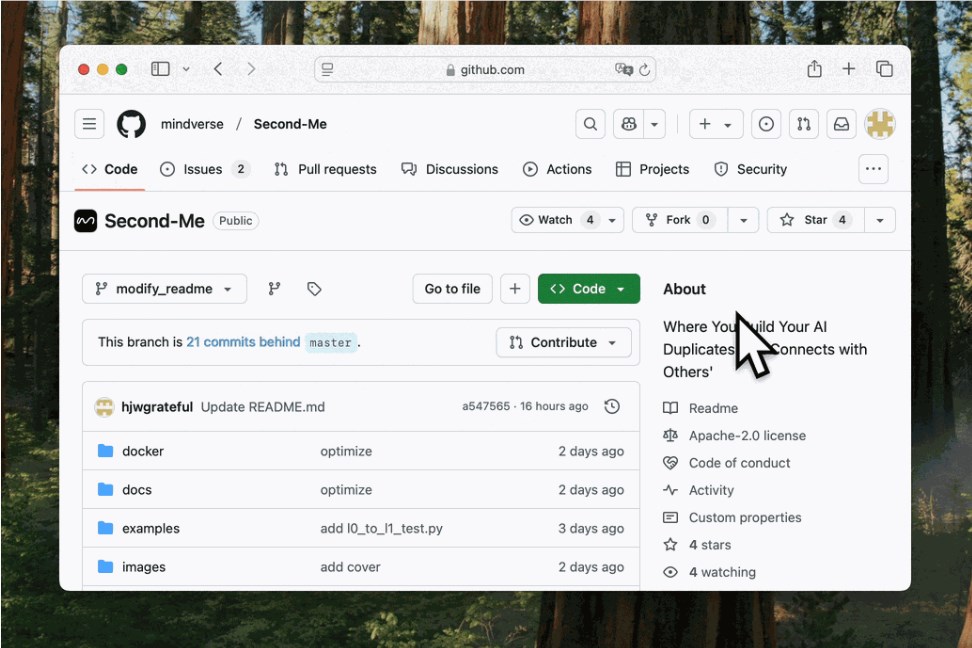
Industry insiders pointed out that the emergence of Second Me marks a step forward in AI technology towards a highly personalized and decentralized direction. It not only improves the efficiency of daily tasks, but may also play an important role in content creation, social interaction and information management. With the participation of the open source community, this project is expected to iterate rapidly, further promoting the transformation of AI from a general tool to a personalized partner. In the future, whether Second Me can truly become the "second self" of users is worthy of continuous attention.
Project address: https://github.com/mindverse/Second-Me