
Recently, the National Supercomputing Internet Platform announced an important update: Alibaba QwQ-32B inference model is officially integrated into its Chatbot visual dialogue service and API online call service. This progress means that users can experience smarter and diverse dialogue services through the platform, covering multiple scenarios such as academic research, code generation and daily consultation.
It is understood that the QwQ-32B model was developed by Alibaba Qwen team and is built based on Qwen2.5-32B and reinforcement learning technology. It performed well in both math and code capability tests, especially on the AIME24 review set and LiveCodeBench, the QwQ-32B not only performs comparable to DeepSeek-R1, but even surpasses other similar models. This has made QwQ-32B attract much attention in the industry.
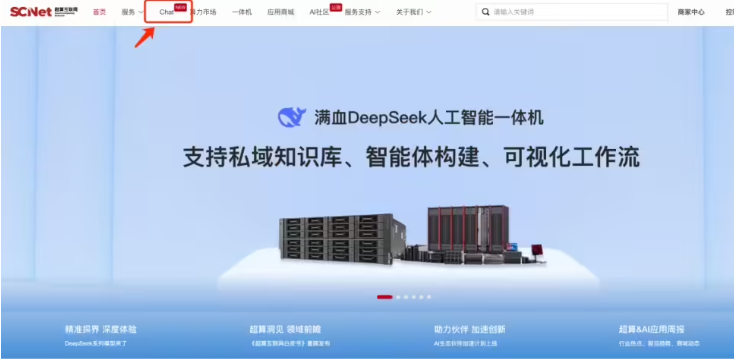
In order to allow more users to experience this cutting-edge technology, the National Supercomputing Internet Platform provides a free event of 1 million Tokens for newly registered users, encouraging users to explore their powerful multi-round interaction capabilities and long text resolution capabilities. The newly added Chat dialogue portal on the platform allows users to start interacting with QwQ-32B with just a simple click, without complicated operations. This threshold-free experience will greatly reduce the threshold for users to use smart dialogue systems and broaden their application scenarios.
In the past period of time, the API interface service of the national supercomputing Internet platform has accumulated more than one million calls, showing the huge demand for this service in the market. With the addition of QwQ-32B, the platform hopes to further improve the user experience and meet a wider range of usage needs.
With the rapid development of artificial intelligence, being able to provide efficient and intelligent dialogue services has become the goal that major companies are pursuing. The launch of Alibaba QwQ-32B undoubtedly adds help to the realization of this goal and opens up new possibilities for future AI application scenarios.