
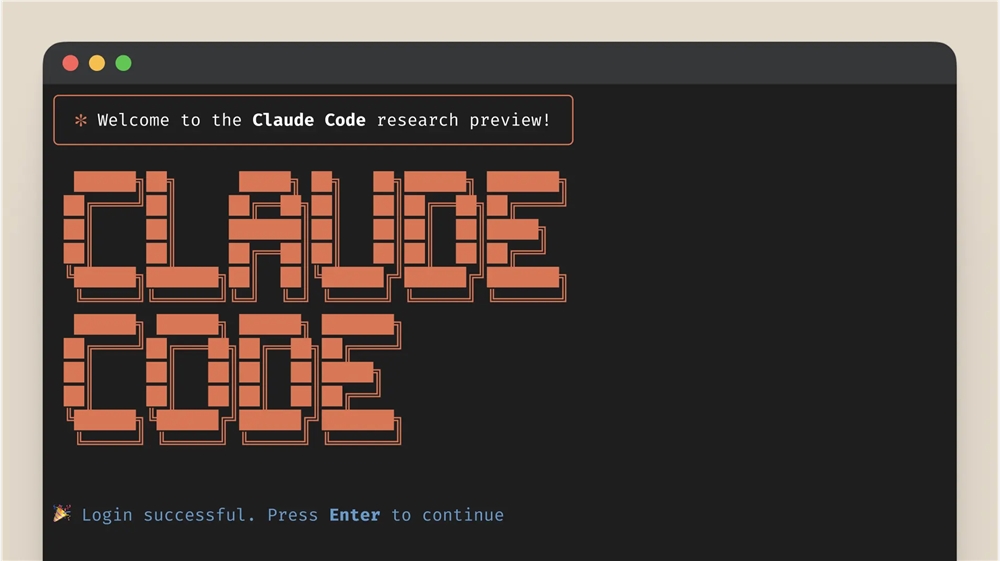
Anthropic recently released the Claude 3.7 Sonnet and Claude Code, which have attracted widespread attention in the field of artificial intelligence. As the world's first hybrid inference model, Claude 3.7 Sonnet provides users with a new intelligent experience with its unique inference model and excellent performance. Claude Code is an intelligent coding tool designed for developers, which can significantly improve programming efficiency. The release of these two products marks another major breakthrough for Anthropic in the field of AI technology.

Claude 3.7 Sonnet is Anthropic's smartest model to date and the world's first hybrid inference model. It combines two modes of standard thinking and extended thinking, and can flexibly switch according to task needs. In standard mode, it responds quickly to user requests, while in extended mind mode, the model reflects itself, thus performing excellently in complex tasks such as mathematics, physics, instructional compliance and coding. In addition, API users can further optimize the user experience by controlling the model's thinking budget, weighing speed and answer quality.
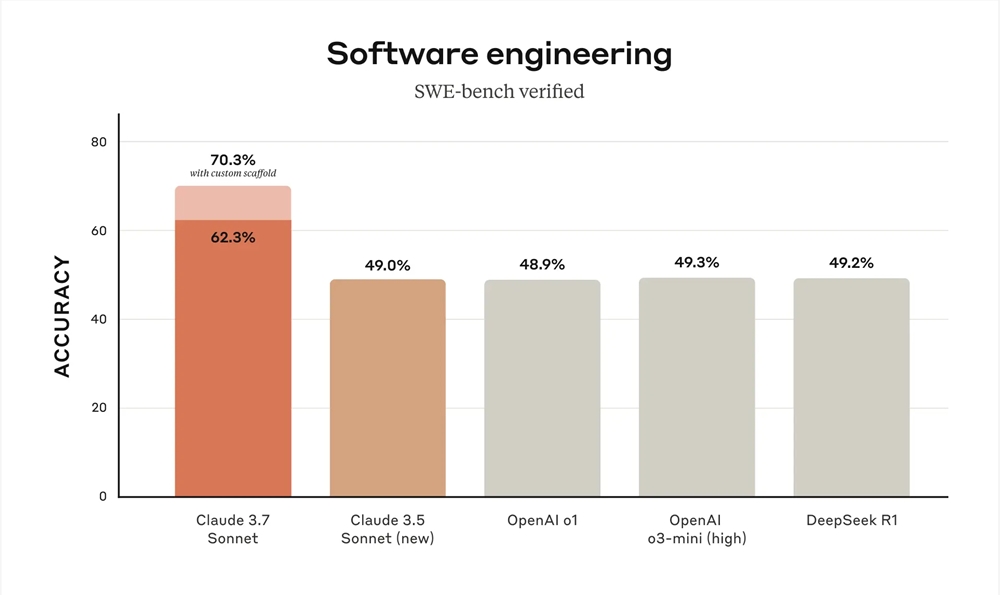
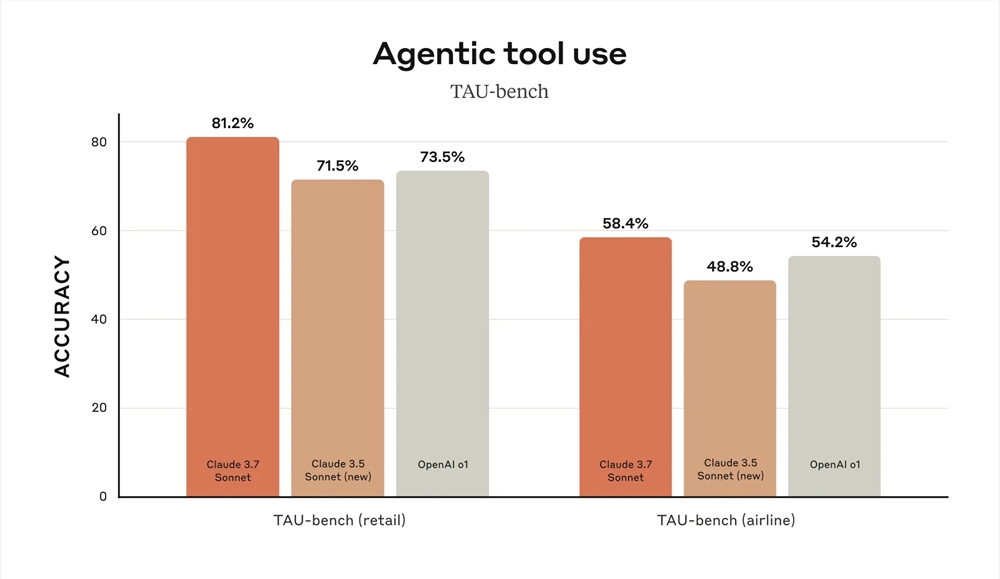
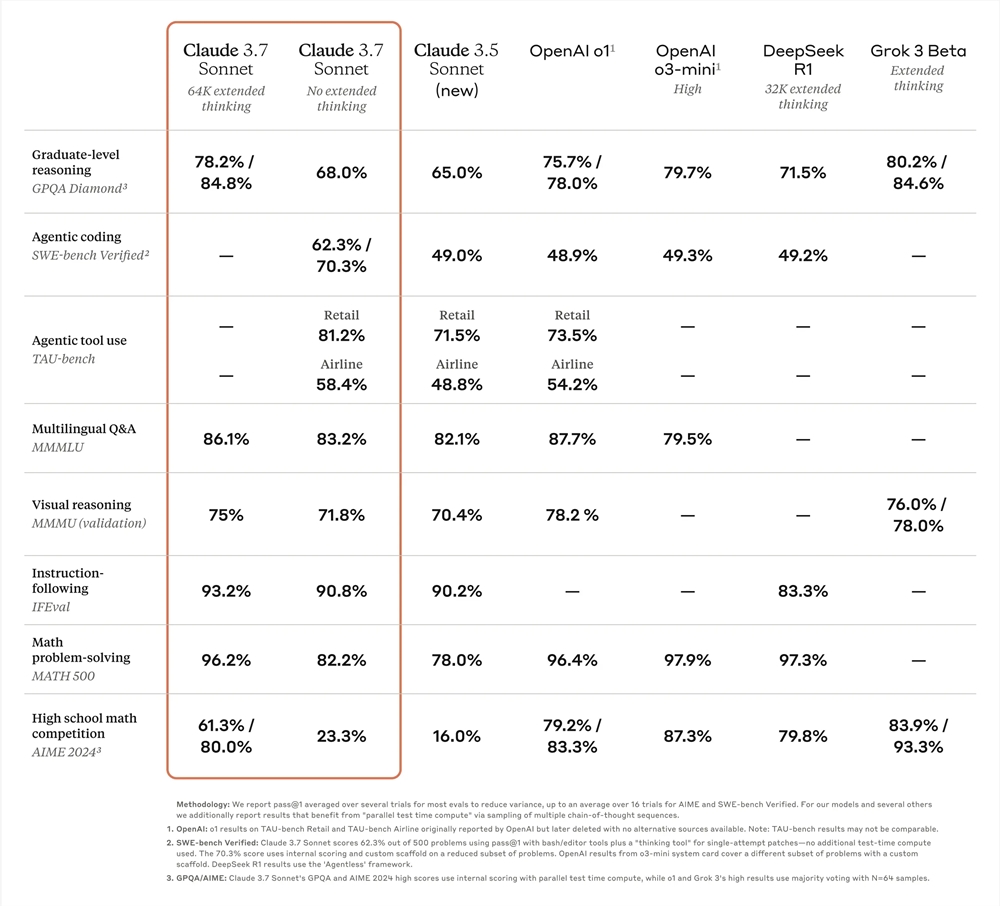
Claude 3.7 Sonnet demonstrates its powerful capabilities in multiple fields. In the extended thinking mode, it can gradually reason about complex problems. For example, when answering the Montihall problem in game theory, the model will show the thinking process in detail to help users understand the problem in depth. In terms of coding and front-end web development, Claude 3.7 Sonnet scored 70.3% in the SWE-bench Verified benchmark, far exceeding other models and helping developers complete programming tasks efficiently. In addition, it also performs excellently in multimodal tasks, instruction understanding and execution, multilingual support, etc., and can meet the needs of different users.
The Claude 3.7 Sonnet has a wide range of applicable scenarios. In programming development, it can help developers write code, debug programs and optimize code structure, significantly improving development efficiency. In the field of academic research, it can assist scientific researchers in literature review, research problem analysis and experimental design, providing professional logical analysis support. In addition, it can also be applied in the fields of content creation, intelligent customer service, data analysis and education, providing users with efficient and intelligent services.
Using Claude 3.7 Sonnet is very easy. Users can access it through the Claude.ai platform, the Anthropic API, Amazon Bedrock, or the Vertex AI of Google Cloud. When using it for the first time, the user needs to complete the registration and log in to the account. Depending on the complexity of the problem, users can choose standard modes or extended mindsets. After entering the question, the model will process it according to the selected pattern and quickly give the answer. For API users, you can also control the thinking time of the model by setting a thinking budget to further optimize the user experience.
The release of Claude 3.7 Sonnet and Claude Code is not only an important breakthrough for Anthropic in AI technology, but also brings users a new intelligent experience. Claude 3.7 Sonnet is widely used in multiple fields with its hybrid inference mode and powerful features, while Claude Code provides developers with efficient coding assistance tools. The release of these two products further promoted the development of the AI industry and demonstrated Anthropic's strength in technological innovation.
With the continuous evolution of AI technology, there are more possibilities waiting to be explored in the future. If you have any novel discoveries, interesting experiences or valuable suggestions during use, please share and communicate in the comment area.