
With the rapid development of artificial intelligence technology, its reshaping of the global market is no longer a prediction, but a fact that is happening. SimilarWeb's latest Global Artificial Intelligence Tracking Report reveals winners and losers in the AI field by tracking the 12-week traffic data as of February 28, 2025, providing valuable insights to industry strategists and investors. From the explosive growth of developer tools to the rapid decline of education technology, AI is redefining the boundaries of competition.

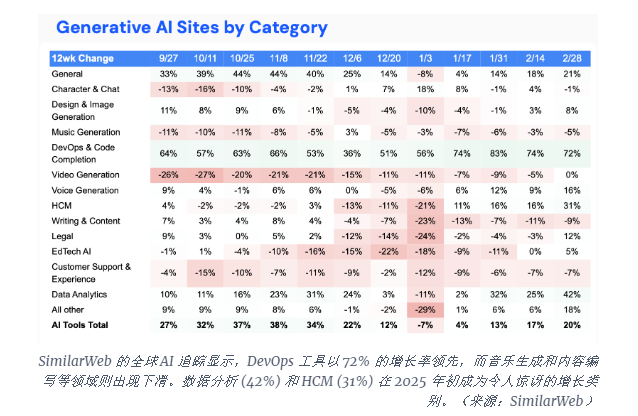
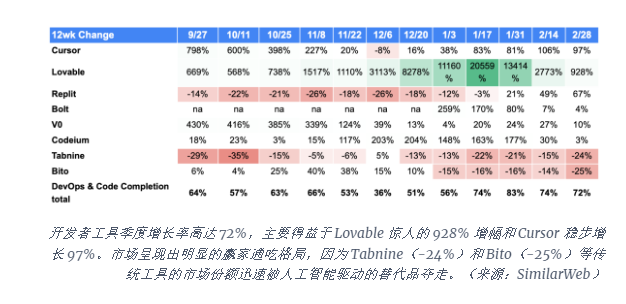
Developer tools lead the AI revolution and have strong growth momentum. SimilarWeb's latest report shows that in the 12 weeks ending February 28, 2025, DevOps and code completion tools led the AI field with a year-on-year growth rate of 72%. Tools such as Cursor (97% growth) and Replit (67% growth) highlight the direct impact of AI in software development and form a virtuous cycle to accelerate the construction of more advanced AI systems. This trend suggests that AI's most transformative role in the near term may be hidden behind the scenes, but is crucial to technological advancement.
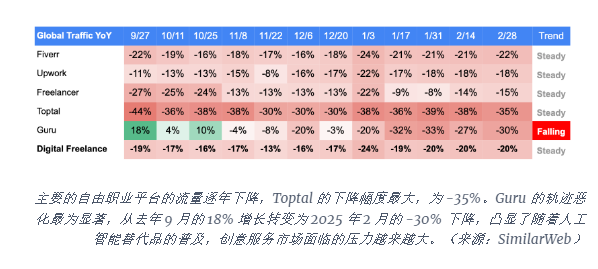
The traffic of digital freelancer platforms has plummeted, and the threat of AI replacement has intensified. During the reporting period, the traffic of digital freelancer platforms fell by 20%, and Fiverr (-22%), Upwork (-18%), Freelancer (-15%) and Toptal (-35%) were all affected. Guru even changed from 18% growth in September last year to a decline of -30% in February this year. This model shows that companies are turning their budgets to AI tools, especially in content creation and design tasks, challenging traditional freelancing models.
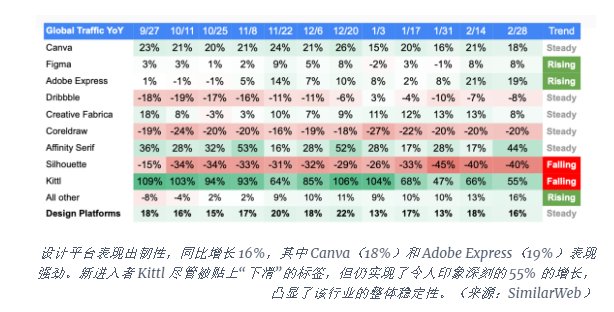
Design platforms show resilience, and AI symbiosis with tradition. Despite the 8% increase in AI image generation tools, traditional design platforms still achieved a year-on-year growth of 16%. Canva (18%), Adobe Express (19%) and Figma (8%) performed strongly, with new entrant Kittl rising 55%. Data show that mature platforms have formed complementary relationships with generation technology by integrating AI functions rather than being replaced, challenging the assumption that AI cannibalizes traditional tools.
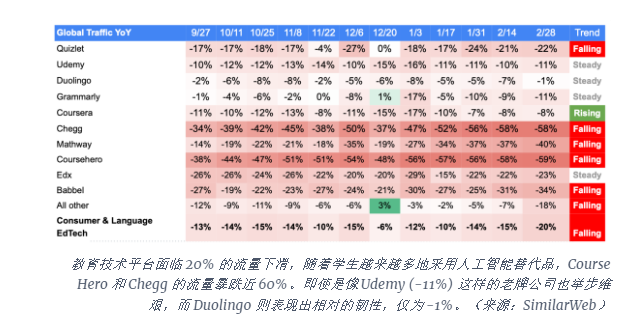
Traditional educational technology is accelerating its decline, and AI alternatives are rising. Education technology platform traffic fell by 20%, Chegg and Course Hero plummeted by nearly 60%, Udemy fell by 11%, and Duolingo only remained relatively stable (-1%). As AI provides instant personalized help, traditional models that rely on manual tutoring and crowdsourcing materials face severe challenges, highlighting the disruptive impact of AI alternatives on the education industry.
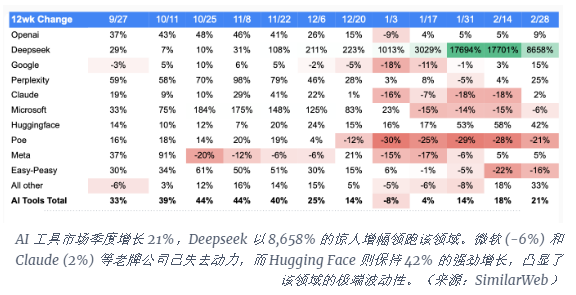
Niche AI challengers emerged, and market dynamics changed drastically. Deepseek achieved an amazing growth of 8658% in 12 weeks, far exceeding OpenAI's 9%, becoming a dark horse in the general AI field. In the DevOps category, Lovable grew by 928%, Cursor rose by 97%, while traditional tools such as Tabnine (-24%) and Bito (-25%) lost power. This shows that the AI market is full of vitality and niche tools are seizing market share with their specialized capabilities.
Summary: AI-driven economic restructuring. The SimilarWeb report reveals that AI is not only a technological advancement, but also a catalyst for economic restructuring. Developer tools innovate software development, freelancing platforms are impacted by automation, design tools and AI symbiosis, education technology is replaced, and niche challengers are rising. The key to success is to use AI to create new value, rather than simply replacing human resources. In the future, understanding usage patterns will become the core of strategic decision-making.