
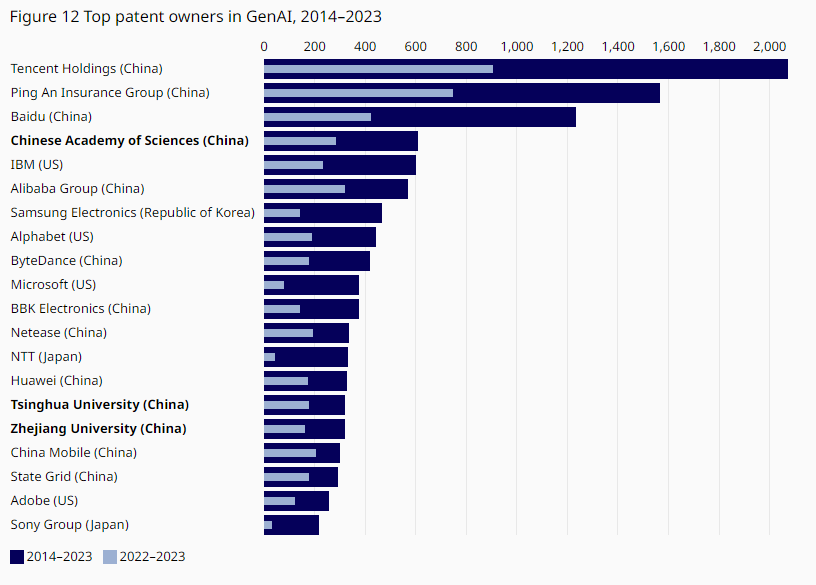
China's patent applications in the field of generative artificial intelligence (GenAI) reached an astonishing 38,210 between 2014 and 2023, far exceeding the 6,300 in the United States, making it a leading country in the world. This achievement not only demonstrates China's strong strength in scientific and technological innovation, but also reflects its continued investment and strategic layout in this field.
Globally, China has dominated GenAI patent application activities. Since 2017, China has published more patents in this field every year than other countries combined. As the second largest research location, the United States has achieved remarkable results, but it still has a large gap in quantity compared with China. Asian countries such as South Korea, Japan and India also performed well in GenAI research, ranking in the top five in the world respectively.
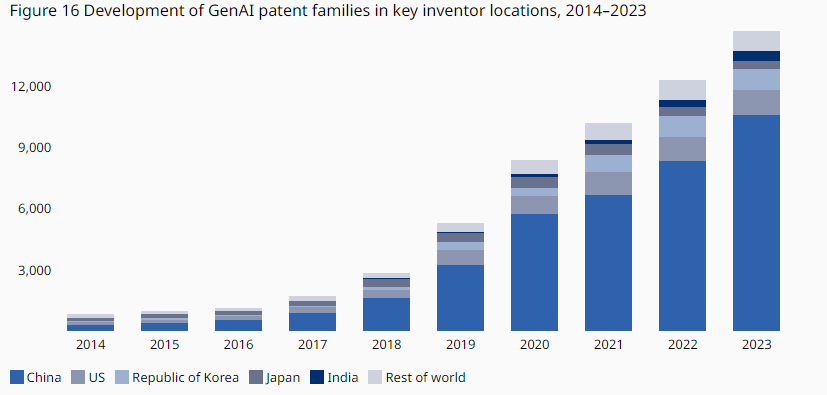
Over the past decade, Tencent, Ping An Insurance Group and Baidu have become the companies with the largest number of GenAI patents in China. In addition, top academic institutions such as the Chinese Academy of Sciences, Tsinghua University and Zhejiang University also occupy an important position in the global rankings. Well-known companies such as Alibaba, ByteDance, and Huawei also performed outstandingly, further consolidating China's leading position in the GenAI field. In contrast, although American companies such as IBM, Google, and Microsoft also occupy a place in the list, their overall number is still lower than that of China.
The number of patent applications in the GenAI field has seen explosive growth over the past decade, from less than 800 in 2014 to more than 14,000 in 2023. This growth trend is closely related to the launch of the Transformer architecture in 2017, with an average annual growth rate of about 45% since then. As of the end of 2023, the total number of patent families in the GenAI field worldwide reached 54,358, of which about 89% were considered active, showing the vigorous development and wide application prospects in the field.
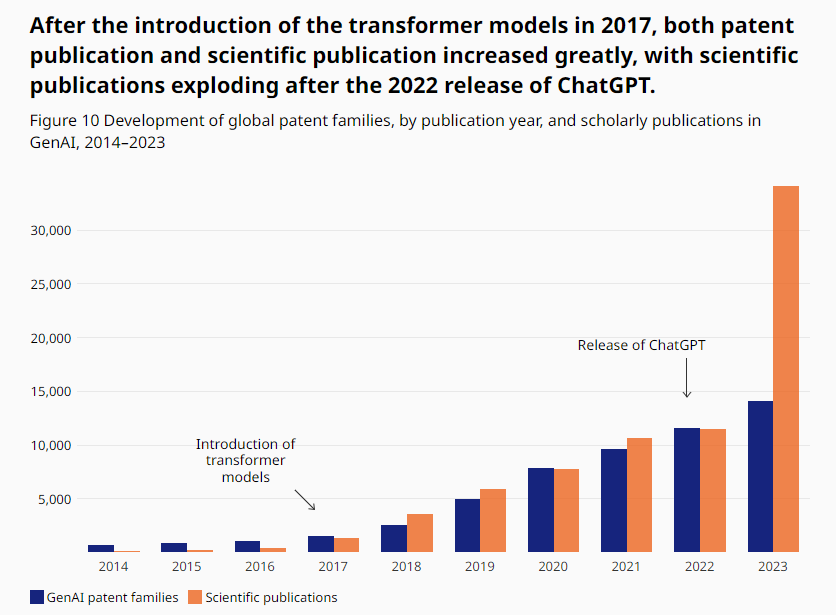
Surprisingly, OpenAI only announced six patents in the first quarter of 2024, in sharp contrast to its influence in the field of generative AI. Generative AI technology has developed rapidly in recent years by imitating human creativity and thinking methods. The emergence of the Transformer architecture in 2017 and the release of ChatGPT in 2022 are two important factors that drive progress in this field.
China's leading position in generative AI patent applications has been widely recognized by the academic community and the media. China's top academic institutions and technology ecosystems provide strong support for the development of generative AI, and the broad application scenarios and commercialization also provide continuous impetus for enterprises. In the future, with the continuous advancement of technology, China is expected to continue to maintain its leadership in the field of generative AI and make greater contributions to global scientific and technological innovation.
Report address entrance: https://www.wipo.int/web-publications/patent-landscape-report-generated-artificial-intelligence-genai/index.html