
WhatsApp, one of the world's most popular messaging applications, is planning to introduce a revolutionary generative AI feature that allows users to create personalized digital avatars. This new feature is similar to Apple's Image Playground, aiming to provide users with a richer way of self-expression. This feature allows users to generate unique AI images in WhatsApp and apply them to profiles or share them with friends.
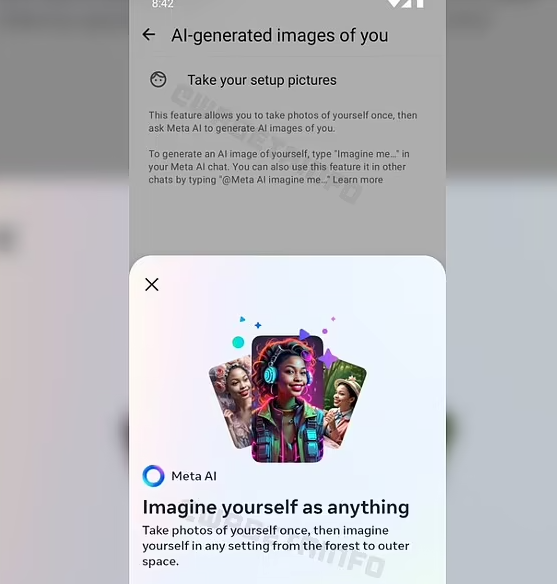
It is reported that Meta's WhatsApp is actively developing this feature, allowing users to create their own personalized avatars in any virtual environment. Users only need to upload a series of photos, and WhatsApp's AI system will generate realistic digital renderings based on these photos. Although this feature is still in its early stages of testing, it has striking conceptual similarities with Apple's Image Playground tool, heralding a fierce competition for future social platforms in the AI field.
This feature was first discovered by WABetaInfo and was hidden in the latest beta version of WhatsApp. According to the leaked screenshots, users can generate virtual avatars in any scene, from forests to outer space, by taking their own photos. The sample image shows a diverse rendering of a female avatar in different styles and backgrounds. Users can not only set these AI-generated avatars as profile photos, but also send them to friends, further enriching the possibility of social interaction.
To use this feature, users need to upload at least one photo of themselves and activate Meta's AI service by typing specific instructions in the chat. For example, users can enter "@Meta AI imagine me..." in the chat to start the avatar generation process. These uploaded photos will be used to train Meta's Llama generative AI model to generate an image that matches the user's description. The whole process is simple and intuitive. The user only needs to enter the description and the AI will generate the corresponding avatar according to the prompts.
It is worth noting that after uploading photos, users can delete these reference images at any time through Meta AI settings to ensure privacy and security. In addition, this feature is completely optional and users need to manually activate it to use it. Currently, the feature is still in beta and Meta has not yet determined the date for its full launch. Currently, Meta AI is only trialled with a small number of users in the U.S., but is expected to be open to a wider user base later this year.
Similar to the “Dream” feature of Lensa AI and Snapchat, WhatsApp’s new features combine user-generated images and text prompts to create a unique AI avatar. However, the most striking similarity is Apple's Image Playground, which also allows users to generate AI avatars based on real photos. The launch of this feature marks further exploration of Meta in the field of AI and also provides users with more personalized social experiences.
Key points:
WhatsApp is developing a generative AI feature where users can create personalized digital avatars by uploading photos.
Users need to upload their own photos to train Meta's AI model and generate avatars through text prompts within the application.
This feature is similar to Apple's Image Playground, allowing users to generate AI avatars based on real photos, further enriching the possibility of social interaction.