
Alibaba Group Holdings Co., Ltd. (NYSE:BABA)'s stock price surged by more than 50% recently, a significant increase mainly due to investors' optimistic expectations for the development of artificial intelligence (AI). Although Alibaba's core retail business has weak growth and faced geopolitical risks in China, which has led to its long-term low valuation, this has not hindered its strong rebound in stock prices. It is generally believed that Alibaba is undergoing a strategic transformation from retail-led to AI innovation, and its capital expenditure growth is accelerating.
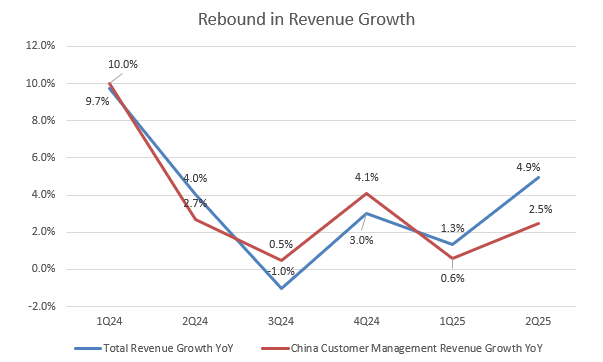
In recent financial reports, Alibaba's core retail business showed signs of stability, especially the revenue of China's customer management business increased by 2.5% year-on-year. Revenues in other businesses such as direct sales fell by 5% despite overall economic weakness. However, management is optimistic about this, believing that the government's stimulus measures will help businesses resume growth. This positive expectation provides investors with confidence and further drives the stock price to rise.
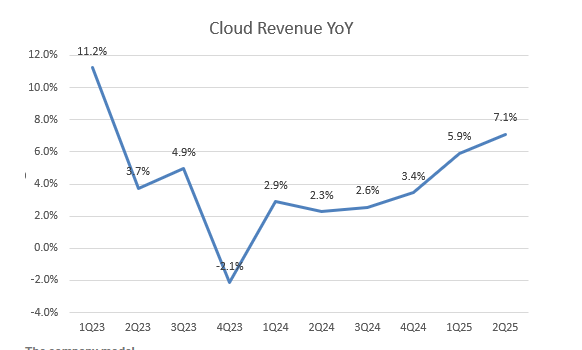
The strong growth of Alibaba Cloud's smart business has become an important driving force for the rebound in revenue, with the revenue of the cloud smart group increasing by 7.1% year-on-year. Management also mentioned that revenue from AI-related products has achieved triple-digit growth for five consecutive quarters, indicating that Alibaba's investment in the AI field is achieving fruitful results. In addition, the potential partnership reached by Alibaba and Apple also provides a positive impetus for its stock price, further enhancing the market's confidence in its future development.
Despite the sharp rise in stock prices over the past month, Alibaba's price-to-earnings ratio remains in an attractive range. Currently, its forward-looking price-to-earnings ratio under non-GAAP is 13.9 times, which is 20% lower than the industry average. Analysts pointed out that Alibaba's valuation still has a certain premium compared to competitors such as Baidu and JD.com, reflecting the market's optimistic expectations for its AI growth. This valuation advantage provides investors with further investment opportunities.
However, despite the optimistic outlook, Alibaba's share price may experience volatility and technical consolidation in the near term, especially as the share price approaches a 52-week high. Investors need to pay attention to changes in market sentiment, especially the impact of AI-related news on stock prices. In general, Alibaba is in a critical period of transformation, and with the continued growth of its cloud business, it still has great upward potential in the future. Investors should pay close attention to the progress of their strategic transformation to seize potential investment opportunities.