
Former U.S. President Trump recently issued a statement on his campaign platform that if he is re-elected, he will revoke the AI executive order signed by incumbent President Biden. Trump believes the order is "dangerous", hinders AI innovation and carries "extreme left-leaning thinking." This move has attracted widespread attention and indicates that AI regulation may be significantly relaxed in the future. The Biden administration's AI regulatory measures require technology companies to conduct "red team tests" of large AI models and report results to assess security and potential risks. Trump and his supporters believe the move slowed down AI and forced companies to disclose trade secrets. This article will conduct an in-depth analysis of this statement by Trump and its potential impact.
Former U.S. President Trump recently stated on his campaign platform that if he is re-elected, he will revoke the executive order on artificial intelligence (AI) signed by incumbent President Biden. The order was described by Trump as "dangerous", hindering innovation in AI technology and including what he calls "extreme leftist thinking." This promise from Trump has attracted widespread attention because it may mean that AI development will face less regulation in the future.
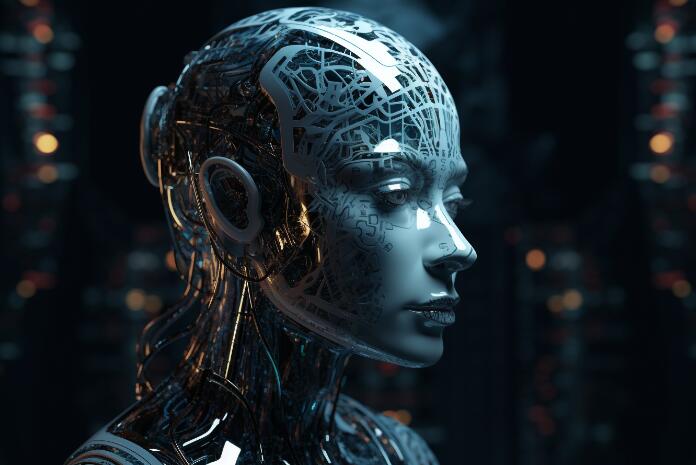
Image source notes: The image is generated by AI, and the image authorized service provider Midjourney
Biden administration signed existing AI regulatory measures under the 1950 National Defense Act in October 2023, requiring tech companies to conduct so-called "red team tests" when developing large AI models and report test results to the federal government Governments to assess the security and potential risks of these AI models. Trump and his supporters believe that the process not only slowed down the pace of AI but also forced companies to disclose their trade secrets.
In addition, Biden's executive order also requires the National Institute of Standards and Technology (NIST) to provide guidance to ensure that AI models do not carry biases such as race or gender. Trump and his supporters viewed the demand as a "radical leftist philosophy."
Tesla CEO Elon Musk, who is closely related to Trump, has also criticized large AI models, who believe that some models such as ChatGPT are too "awakened". Musk recently launched his own AI startup project, aiming to promote the technological development of "understanding the universe". As a major supporter and donor of Trump, Musk's interests in easing AI regulation are obvious.
Trump's election means more relaxed regulation may occur in the tech industry, especially in the cryptocurrency space. Although antitrust lawsuits by the Federal Trade Commission against major tech companies such as Google and Amazon continued during Trump’s first term, Trump has expressed doubts about the actions recently, especially the Justice Department led by Biden Trying to break Google's monopoly position in the search engine market.
It is unclear how Trump plans to replace Biden's AI executive order, and his campaign platform does not provide detailed policy options, only mentioning that regulation will be relaxed. However, it is predictable that future AI development may enter a more laissez-faire era, which is indeed worrying for a technology that has the potential to subvert human society.
Key points:
Trump pledged to revoke Biden's AI regulation, calling it a "dangerous" executive order.
Biden's AI regulations require technology companies to conduct risk assessments and report test results, which Trump believes will slow down technological progress.
Musk is close to Trump and Musk's AI projects may benefit from relaxed regulation.
All in all, Trump’s position on AI regulation and its potential impact deserve close attention. Its relaxation of AI regulation may accelerate the development of AI technology, but it may also bring new risks and challenges that need to be dealt with carefully. The future development direction of AI will largely depend on the policy choices of the US government.