
Canadian self-driving truck company Waabi recently announced it has received $200 million in Series B financing, led by Uber and Khosla Ventures, with Nvidia, Porsche and Volvo also participating. The round brings Waabi’s total funding over three years to $280 million, furthering its plans to deploy fully driverless trucks in Texas by 2025. This move is particularly eye-catching in the context of the successive failures of companies such as Embark and TuSimple, highlighting Waabi's technical strength and market prospects.
Canadian artificial intelligence company Waabi has announced $200 million in new funding to accelerate the development and deployment of its self-driving trucks. The Toronto startup's new Series B funding round was led by Uber and Silicon Valley's Khosla Ventures, with support from big-name companies including Nvidia, Porsche and Volvo.
The funding round brings the company’s total investment in just three years to $280 million and brings it closer to plans to deploy fully driverless trucks powered by generative AI in Texas by 2025. .
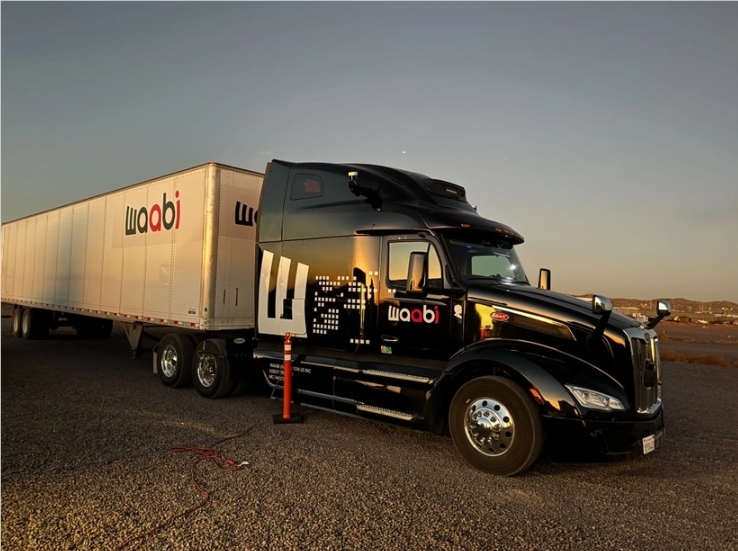
Note: Picture from Waabi
Waabi's progress is particularly impressive considering the past few years have seen some major failures in the self-driving truck space, such as Embark's closure and TuSimple's withdrawal from the U.S. market. The company attributes its success to what it calls a "revolutionary approach to unleashing generative AI in the real world."
Through an end-to-end AI system, the company claims to be able to reason like humans and formulate problems that even the human brain cannot imagine. This focus on AI is significantly different from the route taken by many other developers of self-driving technology, which often involves humans identifying potential problem scenarios in advance and then deploying fleets on the road to see how they respond to those situations.
Similarly, Wayve, a company headquartered in the UK, has also received huge funding of up to $1 billion in 2024 in hopes of developing technology that can drive autonomous vehicles.
According to Waabi, the focus on AI brings some key benefits. First, its system requires far less training data and computing resources. Waabi also says its technology is fully explainable and can be verified and verified. When paired with the company's Waabi World closed-loop simulator, it reduces the need for road testing, enabling a safe and scalable solution that speeds up and reduces the cost of the development process.
Waabi’s successful financing and its unique AI-driven autonomous driving technology have brought new hope to the autonomous truck industry and heralded a new direction for the development of autonomous driving technology in the future. Its innovative approach based on generative AI is expected to solve long-term challenges facing the industry and ultimately enable safe and efficient commercial deployment of driverless trucks.