
With his extraordinary creativity, Turkish high school student Selin Alara Ornek used Nvidia technology to develop a revolutionary AI-driven machine guide dog, bringing new hope to the lives of the visually impaired. This robotic guide dog is not a simple replacement, but an innovative work that combines advanced robotics and artificial intelligence, aiming to provide high-tech assistance and supplements to traditional guide dogs. It can not only detect obstacles, but also help visually impaired people shop, provide product information, and even conduct price comparisons with online retailers. It is powerful and extremely practical. Ornek's outstanding achievements demonstrate the unlimited potential of the younger generation in the field of science and technology, and also provide a new direction for the application of artificial intelligence technology in social welfare.
Ornek, from Istanbul, Turkey, uses Nvidia Jetson Nano chip driver, combined with AI camera and sound sensor, to enable robotic guide dogs to accurately identify objects, such as the color of traffic lights. She overcame technical challenges and continued to improve, upgrading from early ultrasonic sensors to AI cameras, significantly improving the robotic guide dog's environmental perception capabilities. Ornek's innovation is not only reflected in the technical level, but more importantly, her social responsibility and care for the visually impaired. She is committed to making AI and robot development more inclusive, and plans to deploy robotic guide dogs in smart cities in the future to benefit more people. Her story is inspiring and indicates that artificial intelligence technology will bring more positive changes to human society in the future.
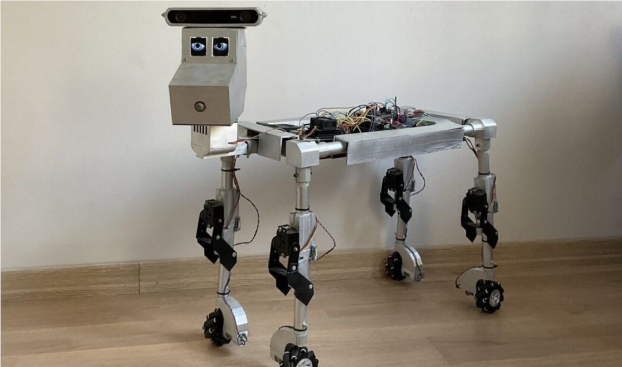
Earlier robotic guide dogs used ultrasonic sensors to detect obstacles, but Ornek switched to AI cameras that allow it to better process sound and visual information. A self-taught robotics developer, Ornek leverages Nvidia's Jetson developer toolkit as a sandbox for testing improved processing capabilities.
The quadruped robot now uses AI cameras and sound sensors, powered by an Nvidia Jetson Nano chip, allowing it to accurately detect and identify objects, such as the color of traffic lights. Robotic guide dogs can also help visually impaired people shop, providing detailed information about items, including costs, and comparing them to other inventory from online retailers.
Ornek is a member of AI4ALL, a non-profit organization dedicated to making AI and robotics development more inclusive. She has been recognized at events such as the European Youth Awards and the Global Women in Technology Awards, and took first place in the 2021 Bosphorus Robotics Cup.
Ornek began thinking about developing robotic guide dogs after the death of her dog Korsan. While traveling in France, she observed how guide dogs assisted their owners, and she wanted to provide the visually impaired with a companion that was not limited by age or health. She said: "I started thinking that if a visually impaired person loses their dog, not only do they lose their best friend, they also lose their eye.
In addition to guide dogs, Ornek has built several other robots, including BB4All, designed to prevent bullying by providing real-time notifications and health monitoring capabilities.
Ornek plans to continue developing robotic guide dogs and hopes to deploy them in smart cities in the future. She will begin studying computer science at the University of British Columbia in the fall on a Karen McKellin International Leadership Tomorrow Award Scholarship.
Highlight:
**AI Machine Guide Dog**: Turkish high school students use Nvidia technology to develop a machine guide dog to assist the visually impaired.
?️ **Technology Upgrade**: From ultrasonic sensors to AI cameras, improve obstacle detection and environment recognition capabilities.
? **Social Recognition**: Ornek has been recognized in multiple awards and plans to deploy robotic guide dogs in smart cities in the future.
Selin Alara Ornek's innovative achievements not only bring good news to the visually impaired, but also set a new benchmark for the application of artificial intelligence technology in the field of social welfare, demonstrating the infinite possibilities of technology to change the world.